

THAI RESTAURANT TABLEWARE RESEARCH · 2026 EDITION
Thai Restaurant Tableware Guide: Plates, Bowls & Servingware
Thai restaurant tableware combines personal plates and utensils with shared curry bowls, soup vessels, platters, dipping dishes and menu-specific serviceware. Shared curry, stir-fried noodles and whole fish need different shapes, depths and serving access.
This guide helps owners, chefs and purchasing teams specify full-service, high-volume, noodle-focused and regional Thai menus. Compare complete portions, usable surface, liquid containment, table footprint, material, visual coordination and quantities. ERS connects commercial tableware sourcing and specification experience with the way Thai food reaches the guest, building practical workhorse assortments with justified specialties rather than treating all Asian servingware as interchangeable.
A shared curry bowl needs room for a serving spoon. A khao soi bowl needs space for noodles and toppings. A whole-fish platter needs usable length. Specify each for the food it carries—and the table it must share.
Build the essential Thai restaurant tabletop with individual dining plates, forks and spoons; communal curry and soup bowls; shared serving plates for stir-fries, som tam and larb; dipping dishes for nam jim, jaew and prik nam pla; and platters for grilled meats, seafood and whole fish. Add open plates and shallow bowls for pad Thai and pad see ew, distinct noodle bowls for khao soi and small-format boat noodles, and sticky-rice serviceware where regional menus justify it.
Drawing on Eden Restaurant Supply's commercial tableware expertise, this guide explains how to select usable sizes, capacities, shapes, materials and coordinated finishes around the actual menu and dining experience. Compare full-service, high-volume, noodle-focused, Northern and Isan, and contemporary Thai restaurant requirements—then plan opening quantities by seats, shared tables and simultaneous orders. Explore complete commercial assortments built for practical service, durability, storage, replacement and long-term purchasing continuity.
Different food and service jobs require different vessel geometry.
 Personal plate9-1/2" Square Plate, White Ceramicceramic$9.25 current selling priceA 9½-inch square personal plate keeps rice and shared portions on a quiet white foundation.View Product
 Shared plate16"X8.75" Oval Plateceramic$17.00 current selling priceShared Thai dishes: preserve useful food area and access from several seats.View Product
 Curry bowlJapanese Shallow Bowl - 46 fl. oz. / 9.5"D x 3"H46 oz catalog capacity · ceramic$21.99 current selling price46 oz open communal service; a 9½-inch outside diameter makes shared-spoon access the key test.View Product
 Noodle bowlJapanese Noodle Bowl - 48 fl. oz / 8.25"D x 3.5"H48 oz catalog capacity · ceramic$21.99 current selling priceReserve the 48 oz format for larger finished noodle recipes and topping-heavy khao soi.View Product
 Dipping dish4" Melamine Hexagonal Sauce Dish 3oz, Gold Orchid3 oz catalog capacity · melamine$5.05 current selling priceA 3 oz dipping dish adds controlled Gold Orchid pattern at a small, repeatable position.View Product
 Statement platter16" x 7" Leaf Ceramic Serving Platter, Green, Brownceramic$48.99 current selling priceThe green/brown 16 × 7-inch leaf form carries selected shared grill or signature presentations.View Product
 Dining spoonDinner Spoon 18-8 Shangarila (12pcs)stainless steel · 12-piece selling set$22.95 current selling priceGuest-contact fork-and-spoon service; purchase the stated selling set.View Product
In This Guide Thai service → complete tabletop
A Thai restaurant tabletop has to do more than hold the food. It has to support individual rice service, multiple shared dishes, curries and soups, wok dishes, noodles, dipping sauces, grilled foods, whole fish, regional specialties, and whatever level of presentation the restaurant intends to deliver.
ERS specifies Thai restaurant tableware around the menu first: what is eaten individually, what is served communally, which dishes require dedicated vessels, how much table space the assortment consumes, how the pieces handle in service, and whether the restaurant can continue replacing them years later.
This guide covers the plates, bowls, servingware, sauce dishes, utensils, specialty pieces, sizes, materials, quantities, and complete assortments required to build a Thai restaurant tabletop properly.
Typical Thai tabletop:
Dining Plates · Shared Plates · Curry & Serving Bowls · Soup & Noodle Bowls · Sauce Dishes · Platters · Forks & Spoons · Serving Utensils · Specialty Serviceware
24 Years of Restaurant Tableware Experience
- Years
- 24
- Restaurant & hospitality locations
- 24,000+
- Organizations
- 14,000+
- U.S. states
- 45+
- Cumulative tabletop purchasing
- $230M+
- Pieces supplied
- 55M+
For 24 years, Eden Restaurant Supply has specified, selected, sourced, evaluated, and supplied commercial tableware for more than 24,000 restaurant and hospitality locations operated by 14,000+ organizations across 45+ U.S. states—representing more than $230 million in cumulative tabletop purchasing and 55 million+ pieces supplied.
ERS's experience spans independent restaurants, chef-driven concepts, Michelin-recognized dining, hotels, institutional foodservice, high-volume operations, and regional and national multi-unit restaurant groups. Its particular depth in Asian-influenced foodservice includes sushi bars, omakase restaurants, ramen and udon shops, izakaya and yakitori concepts, Korean BBQ and Korean restaurants, hot pot and shabu-shabu, Chinese and dim sum restaurants, Vietnamese and pho concepts, Thai restaurants, and Asian-fusion and pan-Asian dining.
Experience Beyond the Sale
ERS's recommendations are informed by 24 years of first-party transaction and reorder history, hands-on product evaluation, direct manufacturer and importer relationships, and real restaurant specification work.
That experience encompasses decisions involving:
menu fit · portion presentation · plate and bowl size · shape · material · color · finish · assortment coordination · presentation level · durability · weight and handling · dishroom workflow · stacking and storage · replacement availability · reorder continuity · opening quantities · budget
ERS therefore sees restaurant tabletop not as a collection of individual products, but as a complete operating system that must work visually, commercially, and operationally.
First-Party Restaurant Tableware Intelligence
ERS's purchasing history provides a direct view into what restaurants actually buy and continue to use.
Across 55 million+ pieces supplied to 24,000+ restaurant and hospitality locations, ERS can analyze patterns such as:
most-purchased product families · common sizes and shapes · colors and finishes · material preferences · concept-specific assortments · products purchased together · opening assortment breadth · repeat purchasing · replenishment behavior · replacement patterns · changes in presentation level · changes in restaurant tabletop preferences over time
This allows ERS recommendations to be informed by observed commercial purchasing behavior, rather than trend reporting or manufacturer claims alone.
Direct Sourcing & Supply-Chain Knowledge
ERS's tableware expertise extends upstream into the supply chain through decades of direct manufacturer, factory, importer, and distributor relationships.
That includes practical knowledge of:
factory capabilities · custom decoration · custom colors and finishes · custom shapes and molds · production minimums · lead times · commercial availability · pricing architecture · discontinued patterns · replacement compatibility · replenishment risk · alternative sourcing
A tabletop specification is only successful if the restaurant can purchase it, operate with it, replace it, and continue sourcing it as the business grows.
Full Restaurant Tabletop Lifecycle
ERS has worked with restaurant tabletop throughout its complete commercial lifecycle:
- Concept & Design Determining the desired restaurant identity, guest experience, menu presentation, and appropriate tabletop investment level.
- Specification Selecting the pieces, dimensions, shapes, materials, colors, finishes, and combinations appropriate for the menu and service model.
- Purchasing Coordinating manufacturers, sourcing, pricing, availability, minimums, and project requirements.
- Opening Quantities Determining practical opening pars around seat count, menu usage, service volume, dish cycles, storage, and backup requirements.
- Operation & Replenishment Supporting ongoing purchases as pieces break, disappear, wear, or simply require additional inventory.
- Replacement & Discontinuation Finding exact replacements, compatible alternatives, or coordinated substitutes when products or patterns become unavailable.
- Expansion Reproducing or adapting established tabletop systems as restaurant groups add locations.
- Assortment Refresh Updating individual pieces or complete tabletop programs as menus, concepts, presentation standards, or restaurant positioning evolve.
What This Experience Means for the Buyer
ERS does not simply know which tableware exists.
It knows:
what restaurants buy · what different concepts actually need · what pieces work together · what is repeatedly reordered · where higher tabletop investment is worthwhile · where economical workhorse pieces make more sense · what can survive commercial service · what can be replenished later · and how to build a complete assortment around a restaurant's menu, operation, aesthetic, and budget.
That combination of 24 years of specification experience, 24,000+ locations, 14,000+ operators, $230M+ in commercial tabletop purchasing, 55M+ pieces supplied, first-party reorder evidence, hands-on product knowledge, and direct sourcing expertise is the foundation of ERS's restaurant tableware research and recommendations.
Selection basis
The Thai guide applies ERS's 2002–2026 tableware specification and sourcing experience to individual dining, communal dishes and menu-specific service. Comparisons use the complete dish and its guest or shared-serving role, including utensil access and occupied table space. Dimensions and capacities follow the identified ERS product. Regional examples explain different menu requirements; the recommendations connect those requirements with materials, quantities and a coherent commercial assortment.
01THAI RESTAURANT TABLEWARE
Start With How Thai Food Is Served
For a broad full-service Thai restaurant, the first distinction is simple: some tableware belongs to the diner; much of the tableware belongs to the table.
Thai meals commonly combine individual rice service with multiple dishes placed in the center of the table. Curries, stir-fries, salads, grilled foods and other preparations move through communal servingware while each diner works from a personal plate or rice vessel. That shared structure is well documented in Thai dining practice and remains visible from regional restaurants to contemporary Thai dining. TAT Newsroom
That immediately changes the specification. A Thai restaurant cannot be built around the Western assumption that every guest needs one large entrée plate and everything else is secondary.
One-Dish and Wok Service
Pad Thai, pad see ew, fried rice, basil dishes and other one-dish meals are different. Here, the primary vessel does most of the work.
A restaurant built heavily around lunch, takeout, single-dish service or fast turns can—and should—operate with a tighter tabletop assortment than a full-service evening concept.
Noodle Service
Noodle restaurants deserve separate treatment. Broth noodles, dry noodles, khao soi and small-format boat noodles do not belong in one generic “Asian bowl.”
The bowl program should reflect those differences.
Northern and Isan Service
Northern and Northeastern Thai menus introduce another set of requirements: sticky rice, chili dips, grilled meats, som tam, larb, fresh vegetables and dishes such as khao soi. TAT's regional descriptions specifically connect Isan cuisine with grilled meat, sticky rice, som tam and fresh vegetables, while Northern dining includes khao soi, nam phrik and sticky-rice traditions. TAT Newsroom
Those are purchasing differences—not merely regional trivia.
Contemporary and Elevated Thai
Contemporary Thai restaurants do not abandon shared service.
The food still determines the vessel. The restaurant's positioning determines how far the vessel should go beyond pure utility.
ERS recommendation: Specify the service first. Do not buy a dinnerware pattern and then try to force the menu into it.
- Full-Service Shared
- Diner + tablePersonal plates; several shared forms
- One-Dish / Wok
- Finished mealOpen primary vessel with containment
- Noodle
- Recipe + profileDistinct broth, boat and dry-noodle forms
- Regional
- Menu additionsDips, grill length and actual rice service
- Elevated
- Signature foodSelective course and shared anchors
02THAI RESTAURANT TABLEWARE
What a Thai Restaurant Actually Needs
A broad Thai restaurant should begin with a dependable core assortment and add the pieces created by its menu. Buying every possible vessel produces unnecessary SKU count. Buying too little produces the opposite problem: curries in noodle bowls, whole fish on undersized plates, sauce service improvised from whatever small dish happens to be available.
The core assortment should cover the jobs the restaurant performs every day.
Personal Dining Plates
For shared rice-centered meals, ERS generally favors a moderately sized plate, low coupe or shallow vessel with some containment over an oversized Western dinner plate.
The diner needs enough surface for rice and successive portions from communal dishes. The restaurant does not need a 12-inch plate consuming the table while several shared bowls and platters compete for the same space.
For most full-service Thai programs, begin the search in approximately the 8½- to 9½-inch range, then move larger where individual entrée portions require it.
Contain rice and successive shared portions without crowding the center of the table.
 Neutral coupe9’’ Coupe Plate Splash BlanchCase pack 24$5.50 current selling priceFit the actual Thai dish and service position before consolidating forms.View Product
Square personal plate9-1/2" Square Plate, White Ceramicceramic$9.25 current selling priceA 9½-inch square personal plate keeps rice and shared portions on a quiet white foundation.View Product
Neutral coupe9’’ Coupe Plate Splash BlanchCase pack 24$5.50 current selling priceFit the actual Thai dish and service position before consolidating forms.View Product
Square personal plate9-1/2" Square Plate, White Ceramicceramic$9.25 current selling priceA 9½-inch square personal plate keeps rice and shared portions on a quiet white foundation.View Product
 Blue / brown personal plateStony Round Plate 9-1/2", Blue/Brownporcelain$12.50 current selling pricePersonal rice service or a complete one-dish meal, according to the portion.View Product
 White ceramic square8-3/4" Square Plate, White Ceramicceramic$6.25 current selling priceThe smaller 8¾-inch square preserves eating area on a crowded shared table.View Product
 Melamine personal plateMelamine Round Plate 8-1/4", Tenmokumelamine$18.75 current selling pricePersonal rice service or a complete one-dish meal, according to the portion.View Product
Shared Plates
Thai stir-fries, grilled foods, fried items, salads and other relatively dry shared dishes need plates and low serving vessels that give the food room without wasting tabletop area.
ERS recommends building at least two useful shared sizes rather than trying to make one plate perform every role:
smaller shared service: approximately 7–9 inches;
general shared service: approximately 9–12 inches.
The menu determines whether a larger platter tier is also required.
Match the usable food field to salads, stir-fries and grilled portions; retain sauce without hiding the food.
 Compact shared plate7-7/8" Round Plate, White Ceramicceramic$3.50 current selling priceA compact 7⅞-inch shared plate for appetizers and smaller repeat orders.View Product
 General shared plate10-1/2" Round Plate, White Ceramicceramic$7.00 current selling priceThe 10½-inch white plate covers general stir-fry, salad and grilled-food service.View Product
 Contained coupe10"x8-1/2" Wavy Rectangular Coup Plate, White Ceramicceramic$9.50 current selling priceFit the actual Thai dish and service position before consolidating forms.View Product
 Rectangular shared plate10.5"X6.5"X1.5"H Rectangular Porcelain Plate Deep, Black/Greenporcelain$9.95 current selling priceShared Thai dishes: preserve useful food area and access from several seats.View Product
 Elongated shared plate11-1/4"X5" Melamine Rectangular Plate, Whitemelamine$8.50 current selling priceShared Thai dishes: preserve useful food area and access from several seats.View Product
 Shallow shared bowlCeramic Shallow Bowl — 18 fl. oz.18 oz catalog capacity · ceramic$6.49 current selling priceShared Thai dishes: preserve useful food area and access from several seats.View Product
Curry & Wet-Dish Serving Bowls
Curries need depth, but depth alone is not enough.
A shared curry bowl should have a stable base, good serving-spoon access, sensible table footprint and enough opening to make the food visible. Tall, narrow noodle-bowl geometry can hold curry, but that does not make it a good communal curry vessel.
Useful purchasing bands to investigate are:
small shared wet dish: approximately 24–40 oz;
general shared curry/soup: approximately 40–64 oz;
large communal service: approximately 64–80+ oz.
These are commercial specification ranges, not rules of Thai cuisine.
Specify working fill and serving-spoon access separately from the catalog capacity.
 Compact wet dishCeramic Bowl — 28 fl. oz., Brown28 oz catalog capacity · ceramic$5.09 current selling price28 oz compact wet-dish service; consolidate smaller curries and sauced portions only after a fill test.View Product
 General curryCeramic Bowl — 40 fl. oz., Brown40 oz catalog capacity · ceramic$8.99 current selling price40 oz brown ceramic offers a general shared wet-dish option between the smaller and larger formats.View Product
Open communal bowlJapanese Shallow Bowl - 46 fl. oz. / 9.5"D x 3"H46 oz catalog capacity · ceramic$21.99 current selling price46 oz open communal service; a 9½-inch outside diameter makes shared-spoon access the key test.View Product
General curryCeramic Bowl — 40 fl. oz., Brown40 oz catalog capacity · ceramic$8.99 current selling price40 oz brown ceramic offers a general shared wet-dish option between the smaller and larger formats.View Product
Open communal bowlJapanese Shallow Bowl - 46 fl. oz. / 9.5"D x 3"H46 oz catalog capacity · ceramic$21.99 current selling price46 oz open communal service; a 9½-inch outside diameter makes shared-spoon access the key test.View Product
 Larger curry portionCeramic Bowl — 62 fl. oz., Brown62 oz catalog capacity · ceramic$10.39 current selling price62 oz brown ceramic adds larger shared wet-dish capacity without adding another finish.View Product
 Large group service9-3/4" Melamine Rimless Bowl, Peacock 70oz70 oz catalog capacity · melamine$16.60 current selling priceFit the actual Thai dish and service position before consolidating forms.View Product
Sauce & Dipping Dishes
For Thai restaurants, sauce dishes are not an accessory purchase. They are part of the working tabletop.
A small restaurant may need separate pieces for:
prik nam pla · nam jim · jaew · relishes · pickles · table condiments · individual dipping portions · shared dips
One generic ramekin rarely handles all of those jobs well.
Use small concentrated condiment portions and wider, deeper service for dipping or solids.
 Compact condiment3-3/4" Melamine Rectangular Sauce Dish, White2 oz catalog capacity · melamine$3.25 current selling priceThai sauces and accompaniments: match opening and depth to the actual portion.View Product
 Individual dipRamekin Fluted Sauce Cup SS 2.5oz2.5 oz catalog capacity · stainless steel$0.30 current selling priceThai sauces and accompaniments: match opening and depth to the actual portion.View Product
Larger dipping portion4" Melamine Hexagonal Sauce Dish 3oz, Gold Orchid3 oz catalog capacity · melamine$5.05 current selling priceA 3 oz dipping dish adds controlled Gold Orchid pattern at a small, repeatable position.View Product
Individual dipRamekin Fluted Sauce Cup SS 2.5oz2.5 oz catalog capacity · stainless steel$0.30 current selling priceThai sauces and accompaniments: match opening and depth to the actual portion.View Product
Larger dipping portion4" Melamine Hexagonal Sauce Dish 3oz, Gold Orchid3 oz catalog capacity · melamine$5.05 current selling priceA 3 oz dipping dish adds controlled Gold Orchid pattern at a small, repeatable position.View Product
 Relish / accompanimentCeramic Bowl — 4 fl. oz., Brown4 oz catalog capacity · ceramic$2.79 current selling priceThai sauces and accompaniments: match opening and depth to the actual portion.View Product
Forks, Spoons & Serving Utensils
A broad Thai full-service tabletop should be built around fork and spoon service, with proper serving utensils for shared dishes.
Chopsticks belong where the noodle service warrants them—not as a generic symbol of Asian dining.
Fork and spoon form the guest-contact pair; shared bowls need a separate serving utensil.
 Dining forkDinner Fork 18-8 Shangarila (12pcs)stainless steel · 12-piece selling set$26.50 current selling priceGuest-contact fork-and-spoon service; purchase the stated selling set.View Product
Dining spoonDinner Spoon 18-8 Shangarila (12pcs)stainless steel · 12-piece selling set$22.95 current selling priceGuest-contact fork-and-spoon service; purchase the stated selling set.View Product
Dining forkDinner Fork 18-8 Shangarila (12pcs)stainless steel · 12-piece selling set$26.50 current selling priceGuest-contact fork-and-spoon service; purchase the stated selling set.View Product
Dining spoonDinner Spoon 18-8 Shangarila (12pcs)stainless steel · 12-piece selling set$22.95 current selling priceGuest-contact fork-and-spoon service; purchase the stated selling set.View Product
 Serving spoonMelamine Serving Spoon 8-1/2", Whitemelamine$6.50 current selling priceCommunal service: match utensil reach to the selected bowl.View Product
03THAI RESTAURANT TABLEWARE
Add Only What the Menu Requires
One-Dish Service
Restaurants with heavy pad Thai, fried-rice, pad-see-ew or rice-plate volume need strong primary plates and broad shallow bowls more than they need a sprawling collection of communal ware.
The goal is fewer SKUs doing more work.
Investigate:
9½–11-inch plates
8½–10½-inch broad coupes/shallow bowls
with enough usable area for a complete portion and enough containment for sauced wok dishes.
Fit the finished pad Thai, fried-rice or wok portion before committing to a single primary vessel.
 White entrée plate10.25"D Round Plate, White Ceramicceramic$5.75 current selling priceFit the actual Thai dish and service position before consolidating forms.View Product
 Broad shallow meal bowlJapanese Large Shallow Bowl - 9.75"D x 2"Hceramic$21.99 current selling priceThe 9¾-inch low ceramic form gives pad Thai and sauced mains open eating access.View Product
 Deep coupe10.5’’ Deep Coupe Plate Splash BlanchCase pack 12$9.95 current selling priceFit the actual Thai dish and service position before consolidating forms.View Product
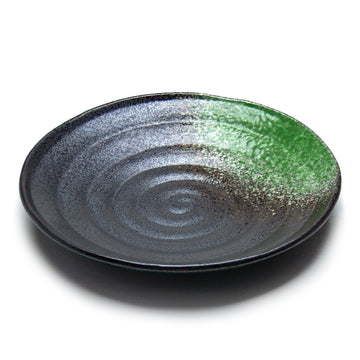 Contained porcelain field8.75"Dx1.25"H Porcelain Plate, Black/Greenporcelain$8.75 current selling priceFit the actual Thai dish and service position before consolidating forms.View Product
 High-volume entrée plate10-1/2" Melamine Round Dinner Plate, Tenmokumelamine$27.75 current selling priceFit the actual Thai dish and service position before consolidating forms.View Product
Noodle Service
Do not buy “a noodle bowl.” Buy bowls for the actual noodle program.
A serious Thai noodle assortment may need:
general broth bowl
larger khao-soi bowl
smaller boat-noodle bowl
broad dry-noodle bowl
soup spoon
chopsticks
small accompaniment dishes
For general full-size broth noodles, 32–48 oz is the main commercial range to investigate. Generous khao-soi service may justify 40–56+ oz, depending on portion and garnish load. Boat noodles should be specified independently rather than automatically inheriting those larger capacities.
The compact bowl, standard broth bowl and generous garnish bowl solve different menu jobs.
 Compact boat-noodle portion5-7/8" Melamine Noodle Bowl 19oz, White19 oz catalog capacity · melamine$3.50 current selling priceThe 19 oz format gives deliberately small boat-noodle portions their own vessel.View Product
 Standard brothJapanese Noodle Bowl - 36 fl. oz. / 7.5"D x 3.25"H36 oz catalog capacity · ceramic$15.99 current selling price36 oz broth service; blue and beige connect with warm-neutral shared ware.View Product
Broth and garnishJapanese Noodle Bowl - 48 fl. oz / 8.25"D x 3.5"H48 oz catalog capacity · ceramic$21.99 current selling priceReserve the 48 oz format for larger finished noodle recipes and topping-heavy khao soi.View Product
Standard brothJapanese Noodle Bowl - 36 fl. oz. / 7.5"D x 3.25"H36 oz catalog capacity · ceramic$15.99 current selling price36 oz broth service; blue and beige connect with warm-neutral shared ware.View Product
Broth and garnishJapanese Noodle Bowl - 48 fl. oz / 8.25"D x 3.5"H48 oz catalog capacity · ceramic$21.99 current selling priceReserve the 48 oz format for larger finished noodle recipes and topping-heavy khao soi.View Product
 Generous noodle serviceLarge Bowl - 50 fl. oz. / 8.65"D x 3.35"H50 oz catalog capacity$17.19 current selling priceKhao soi: test broth, noodles, protein and crisp topping together.View Product
 Large khao-soi candidateCeramic Noodle Bowl — 50 fl. oz., Gray50 oz catalog capacity · ceramic$15.99 current selling priceKhao soi: test broth, noodles, protein and crisp topping together.View Product
 40 oz broth service8’’ Black Ramen Bowl 40 Oz.40 oz catalog capacity · Case pack 12$8.25 current selling priceCurry or broth service: test finished fill, utensil access and carrying headspace.View Product
Soup Service
Individual soup and communal soup are different specifications.
Do not force the same bowl into both roles.
Individual soup needs manageable capacity and easy personal access. Communal soup needs more volume, a stable center-of-table footprint and room for a serving utensil.
Large-format Thai soup service can be substantial.
Keep broth and solids accessible in a personal portion.
 Personal soupCeramic Soup Bowl — 18 fl. oz., Black, Silver18 oz catalog capacity · ceramic$5.09 current selling priceCurry or broth service: test finished fill, utensil access and carrying headspace.View Product
 Ceramic individual soupJapanese Hime Kobiki Large Bowl - 22 fl. oz. / 6.25"D x 3"H22 oz catalog capacity · ceramic$9.99 current selling priceCurry or broth service: test finished fill, utensil access and carrying headspace.View Product
 Melamine individual soup6" Melamine Soup Bowl 16oz, Gold Orchid16 oz catalog capacity · melamine$13.50 current selling priceCurry or broth service: test finished fill, utensil access and carrying headspace.View Product
A shared soup vessel must accommodate a serving utensil and the table’s portion.
 Medium shared soup9" Melamine Soup Bowl 45oz, White45 oz catalog capacity · melamine$14.00 current selling priceCurry or broth service: test finished fill, utensil access and carrying headspace.View Product
 Open larger soupJapanese Shallow Bowl - 62 fl. oz. / 9.15"D x 3"H62 oz catalog capacity · ceramic$34.99 current selling priceCurry or broth service: test finished fill, utensil access and carrying headspace.View Product
 Large group soup9-1/4"D Melamine Noodle Bowl 88oz, White88 oz catalog capacity · melamine$13.95 current selling priceCurry or broth service: test finished fill, utensil access and carrying headspace.View Product
Northern & Isan Service
Regional menus may add:
sticky-rice containers
som-tam / larb bowls or deep plates
grilled-meat platters
fresh-vegetable servingware
additional small dipping dishes
Isan menus commonly combine sticky rice, som tam, larb, grilled meats and jaew.
Add dip capacity, grill length and dressing containment before adding decorative breadth.
 Nam-phrik / jaew dishJapanese Side Dish - 4fl. oz. / 3.5"Dx1.65"H4 oz catalog capacity · ceramic$5.79 current selling price4 oz small accompaniment service; the blue line pattern connects with other restrained blue ware.View Product
 Grilled-meat platter16"x5-1/4" Oval Plate, White Ceramicceramic$11.50 current selling priceShared Thai dishes: preserve useful food area and access from several seats.View Product
 Som-tam / larb bowlJapanese Shallow Bowl - 28 fl. oz. / 7"D x 2.5"H28 oz catalog capacity · ceramic$13.19 current selling priceFit the actual Thai dish and service position before consolidating forms.View Product
Whole Fish & Large Seafood
Whole-fish service should be specified by usable interior length, not by the outside dimension in the product title.
A restaurant that routinely serves whole branzino, barramundi or similarly sized fish should have dedicated elongated or large-format pieces rather than improvising with oversized round plates.
Investigate:
14–16-inch smaller/standard platters
16–18-inch larger platters
18–22+ inch centerpiece service
depending actual usable well length.
External length is only the starting point: confirm the interior well against the actual fish.
 Compact fish platter14 x 5’’ Black Porcelain Rectangular Plateporcelain · Case pack 12$6.95 current selling priceWhole fish: verify the food-bearing well against the actual fish.View Product
 Standard fish platter16" x 8.75" Rectangular Porcelain Plate, Whiteporcelain$22.99 current selling priceA white 16 × 8¾-inch fish or seafood platter; verify the food-bearing interior.View Product
 Large centerpiece platter22-3/4"x10" Oval Plate, White Ceramicceramic$30.00 current selling priceThe 22¾-inch oval earns its table footprint for large whole-fish and centerpiece orders.View Product
04THAI RESTAURANT TABLEWARE
Match the Vessel to the Dish
Thai Curry
Use a vessel with real depth and a broad enough opening for communal serving.
Avoid narrow, steep-sided bowls unless the restaurant is serving curry as an individual composed dish.
Best forms:
deep serving bowl · low deep bowl · wide communal bowl.
ERS recommendation: Carry at least two communal curry capacities if curry is a major part of the menu.
Depth and an accessible opening matter more than choosing a bowl because its title says noodle.
 Broad compact curry10.5’’ Deep Coupe Plate 42 Oz.42 oz catalog capacity · Case pack 12$8.85 current selling priceThe 1½-inch-high coupe combines open meal access with containment; test curry working fill independently.View Product
 Deep shared curry10"x4" Round Noodle Bowl, White Ceramicceramic$11.75 current selling priceCurry or broth service: test finished fill, utensil access and carrying headspace.View Product
Melamine shared curry9" Melamine Soup Bowl 45oz, White45 oz catalog capacity · melamine$14.00 current selling priceCurry or broth service: test finished fill, utensil access and carrying headspace.View Product
Larger curryCeramic Bowl — 62 fl. oz., Brown62 oz catalog capacity · ceramic$10.39 current selling price62 oz brown ceramic adds larger shared wet-dish capacity without adding another finish.View Product
Deep shared curry10"x4" Round Noodle Bowl, White Ceramicceramic$11.75 current selling priceCurry or broth service: test finished fill, utensil access and carrying headspace.View Product
Melamine shared curry9" Melamine Soup Bowl 45oz, White45 oz catalog capacity · melamine$14.00 current selling priceCurry or broth service: test finished fill, utensil access and carrying headspace.View Product
Larger curryCeramic Bowl — 62 fl. oz., Brown62 oz catalog capacity · ceramic$10.39 current selling price62 oz brown ceramic adds larger shared wet-dish capacity without adding another finish.View Product
Tom Yum & Tom Kha
Individual service and communal service should use different vessels.
For individual portions, prioritize manageable depth, heat handling and spoon access.
For table service, prioritize capacity, stability and open access to broth and solids.
Separate personal soup from table service; qualify hot handling and serving-spoon fit.
 Individual broth5-7/8" Melamine Noodle Bowl 19oz, Ivory19 oz catalog capacity · melamine$3.50 current selling price19 oz individual soup service in an ivory melamine format.View Product
 Individual ceramic soupCeramic Soup Bowl — 18 fl. oz., Black, Silver18 oz catalog capacity · ceramic$5.09 current selling priceCurry or broth service: test finished fill, utensil access and carrying headspace.View Product
Personal soupJapanese Hime Kobiki Large Bowl - 22 fl. oz. / 6.25"D x 3"H22 oz catalog capacity · ceramic$9.99 current selling priceCurry or broth service: test finished fill, utensil access and carrying headspace.View Product
Open communal soupJapanese Shallow Bowl - 46 fl. oz. / 9.5"D x 3"H46 oz catalog capacity · ceramic$21.99 current selling price46 oz open communal service; a 9½-inch outside diameter makes shared-spoon access the key test.View Product
Individual ceramic soupCeramic Soup Bowl — 18 fl. oz., Black, Silver18 oz catalog capacity · ceramic$5.09 current selling priceCurry or broth service: test finished fill, utensil access and carrying headspace.View Product
Personal soupJapanese Hime Kobiki Large Bowl - 22 fl. oz. / 6.25"D x 3"H22 oz catalog capacity · ceramic$9.99 current selling priceCurry or broth service: test finished fill, utensil access and carrying headspace.View Product
Open communal soupJapanese Shallow Bowl - 46 fl. oz. / 9.5"D x 3"H46 oz catalog capacity · ceramic$21.99 current selling price46 oz open communal service; a 9½-inch outside diameter makes shared-spoon access the key test.View Product
 Large communal soup9" Melamine Swirl Bowl 72oz, Peacock72 oz catalog capacity · melamine$15.40 current selling priceCurry or broth service: test finished fill, utensil access and carrying headspace.View Product
 Large serving bowl11-7/8"x4-1/2" Round Noodle Bowl, White Ceramicceramic$17.25 current selling priceFit the actual Thai dish and service position before consolidating forms.View Product
Stir-Fries
The best service form is generally a plate, coupe or broad shallow bowl with enough rim to retain sauce.
Deep bowls hide food and make communal access worse.
Sauce containment and open communal access favor low forms.
 Broad shared plate11-3/4" Rectangular Plate, White Ceramicceramic$13.25 current selling priceShared Thai dishes: preserve useful food area and access from several seats.View Product
 Melamine shared fieldMelamine Rectangular Plate 11-3/8"x7-1/4", Autumn Grassmelamine$9.99 current selling priceShared Thai dishes: preserve useful food area and access from several seats.View Product
 Contained porcelain plate10"Dx1.5"H Round Porcelain Plate, Black/Greenporcelain$13.95 current selling priceFit the actual Thai dish and service position before consolidating forms.View Product
Som Tam
Som tam benefits from a broad, moderately deep bowl or deep plate. The vessel needs to control dressing while allowing the papaya, vegetables and garnishes to spread rather than mound vertically.
Let papaya and garnishes spread while controlling dressing.
Moderate-depth bowlJapanese Shallow Bowl - 28 fl. oz. / 7"D x 2.5"H28 oz catalog capacity · ceramic$13.19 current selling priceFit the actual Thai dish and service position before consolidating forms.View Product
Broad shallow bowlJapanese Large Shallow Bowl - 9.75"D x 2"Hceramic$21.99 current selling priceThe 9¾-inch low ceramic form gives pad Thai and sauced mains open eating access.View Product
 Contained irregular plate8.5"X2"H Irregular Plate, White Ceramicceramic$8.25 current selling priceFit the actual Thai dish and service position before consolidating forms.View Product
Yum & Larb
Use broad shallow forms that hold juices without turning the presentation into soup.
Larb, herbs and fresh accompaniments also benefit from room around the food.
Retain juices without making the food read as a soup.
 Neutral shallow bowl8-3/4"x1-1/2"H Round Shallow Bowl, White Ceramicceramic$5.25 current selling priceFit the actual Thai dish and service position before consolidating forms.View Product
 Broad glazed field8.75"Dx1.25"H Porcelain Plate, Reactive Glaze - Blue/Blackporcelain$8.75 current selling priceFit the actual Thai dish and service position before consolidating forms.View Product
 Rectangular contained bowl9 x 6.5’’ Rectangular Bowl 25 Oz. Splash Blanch25 oz catalog capacity · porcelain · Case pack 12$6.25 current selling priceFit the actual Thai dish and service position before consolidating forms.View Product
Fried Foods & Appetizers
Open plates and platters are usually stronger than deep forms.
Where dipping sauce is integral, either pair the platter with a separate sauce dish or select ware with enough space to stage the sauce vessel cleanly.
Use an open presentation field and a separate, appropriately sized dipping dish.
 Elongated appetizer plate9-1/2"x4-1/4" Rectangular Plate, White Ceramicceramic$3.75 current selling priceFit the actual Thai dish and service position before consolidating forms.View Product
 Melamine appetizer plate8-1/2" Melamine Rectangular Plate, Gold Orchid12 oz catalog capacity · melamine$19.40 current selling priceFit the actual Thai dish and service position before consolidating forms.View Product
 Dark porcelain appetizer field8.75"X5" Rectangular Porcelain Plate, Blackporcelain$6.50 current selling priceFit the actual Thai dish and service position before consolidating forms.View Product
Grilled Chicken, Pork & Beef
Use broad serving plates or platters with room for cutting, herbs, vegetables and accompanying sauce.
Regional Thai and Isan restaurants frequently pair grilled meats with sticky rice, vegetables and jaew-style sauces. TAT Newsroom
Leave usable area for the protein, herbs and accompanying vegetables.
 Broad grill platter14-1/4"x7" Rectangular Plate, White Ceramicceramic$11.50 current selling priceShared Thai dishes: preserve useful food area and access from several seats.View Product
 Melamine group platter14"X10" Melamine Oval Platter, Peacockmelamine$19.95 current selling priceShared Thai dishes: preserve useful food area and access from several seats.View Product
 Leaf-shaped grill accent16" x 7" Leaf Ceramic Serving Platter, Black, Brownceramic$48.99 current selling priceA black/brown leaf form differentiates a signature grill presentation without changing routine ware.View Product
Skewers
Long skewers belong on long ware.
Elongated rectangular plates and narrow platters will generally outperform a large round plate because they use tabletop area more efficiently.
An elongated format uses table area more efficiently than a large round plate.
 Narrow shared skewer plate16"x4-1/4" Rectangular Plate, White Ceramicceramic$12.25 current selling priceSkewers: an elongated field keeps the table footprint controlled.View Product
 Compact skewer course13.25"X4"X1.25"H Rectangular Porcelain Platter, Reactive Glaze - Blue/Blackporcelain$9.25 current selling priceSkewers: an elongated field keeps the table footprint controlled.View Product
 Long skewer platter17-1/4" x 3-1/2" Rectangular Porcelain Plate, Whiteporcelain$11.49 current selling priceSkewers: an elongated field keeps the table footprint controlled.View Product
Whole Fish
ERS recommends three practical size tiers where the menu supports them:
compact fish platter
standard whole-fish platter
large centerpiece platter
The published dimension is not enough. Measure or confirm the usable food area whenever possible.
Select from the fish’s food-bearing length; do not treat the external dimension as usable length.
Compact oval fish service16"X8.75" Oval Plateceramic$17.00 current selling priceWhole fish: verify the food-bearing well against the actual fish.View Product
 Long fish presentationRectangular Platter 18.5", Black/Greenporcelain$23.50 current selling priceWhole fish: verify the food-bearing well against the actual fish.View Product
 Large fish centerpiece20"X6.25" Rectangular Porcelain Platter, Black Oribeporcelain$19.75 current selling priceThe 20-inch Black Oribe rectangle gives large fish service a deliberate dark anchor.View Product
Pad Thai
Pad Thai should be easy to eat.
ERS favors:
plate · coupe · broad shallow bowl
over a deep noodle bowl.
The vessel should hold the portion without compressing the noodles into a narrow center.
Keep the finished noodles spread and accessible rather than compressed in a deep narrow bowl.
 Open entrée plate10-1/2" Round Plate, White Ceramicceramic$8.45 current selling priceFit the actual Thai dish and service position before consolidating forms.View Product
 Low coupe7.85"Dx2.35"H Coup/Shallow Bowlsporcelain$18.99 current selling priceFit the actual Thai dish and service position before consolidating forms.View Product
Shallow meal bowlJapanese Large Shallow Bowl - 9.75"D x 2"Hceramic$21.99 current selling priceThe 9¾-inch low ceramic form gives pad Thai and sauced mains open eating access.View Product
Contained deep coupe10.5’’ Deep Coupe Plate Splash BlanchCase pack 12$9.95 current selling priceFit the actual Thai dish and service position before consolidating forms.View Product
Low coupe7.85"Dx2.35"H Coup/Shallow Bowlsporcelain$18.99 current selling priceFit the actual Thai dish and service position before consolidating forms.View Product
Shallow meal bowlJapanese Large Shallow Bowl - 9.75"D x 2"Hceramic$21.99 current selling priceThe 9¾-inch low ceramic form gives pad Thai and sauced mains open eating access.View Product
Contained deep coupe10.5’’ Deep Coupe Plate Splash BlanchCase pack 12$9.95 current selling priceFit the actual Thai dish and service position before consolidating forms.View Product
Pad See Ew & Other Wok Noodles
Treat similarly to pad Thai, but allow slightly more containment where sauce and vegetables make it useful.
Allow slightly more containment for sauce and vegetables.
Contained white coupe10"x8-1/2" Wavy Rectangular Coup Plate, White Ceramicceramic$9.50 current selling priceFit the actual Thai dish and service position before consolidating forms.View Product
Contained porcelain field8.75"Dx1.25"H Porcelain Plate, Black/Greenporcelain$8.75 current selling priceFit the actual Thai dish and service position before consolidating forms.View Product
Fried Rice
Use an open plate or broad shallow bowl. Deep bowls add no value unless presentation specifically calls for them.
Keep rice accessible on an open food-bearing surface.
Melamine meal plate10-1/2" Melamine Round Dinner Plate, Tenmokumelamine$27.75 current selling priceFit the actual Thai dish and service position before consolidating forms.View Product
 White ceramic meal plate10-1/2" Round Plate, White Ceramicceramic$8.75 current selling priceFit the actual Thai dish and service position before consolidating forms.View Product
Khao Soi
Khao soi needs room for broth, noodles, protein and toppings without forcing the garnish into a narrow opening.
Begin around 40–56+ oz, but prioritize usable geometry over the stated capacity.
Qualify the finished broth, noodles, protein and crisp topping with carrying headspace.
48 oz broad bowlJapanese Noodle Bowl - 48 fl. oz / 8.25"D x 3.5"H48 oz catalog capacity · ceramic$21.99 current selling priceReserve the 48 oz format for larger finished noodle recipes and topping-heavy khao soi.View Product
50 oz generous bowlCeramic Noodle Bowl — 50 fl. oz., Gray50 oz catalog capacity · ceramic$15.99 current selling priceKhao soi: test broth, noodles, protein and crisp topping together.View Product
 42 oz noodle bowlCeramic Ramen Bowl — 42 fl. oz., Black42 oz catalog capacity · ceramic$10.99 current selling priceFit the actual Thai dish and service position before consolidating forms.View Product
 41 oz low-profile bowlJapanese Hime Kobiki Large Bowl - 41 fl. oz. / 7.75"D x 2.75"H41 oz catalog capacity · ceramic$18.99 current selling priceFit the actual Thai dish and service position before consolidating forms.View Product
50 oz generous bowlLarge Bowl - 50 fl. oz. / 8.65"D x 3.35"H50 oz catalog capacity$17.19 current selling priceKhao soi: test broth, noodles, protein and crisp topping together.View Product
41 oz low-profile bowlJapanese Hime Kobiki Large Bowl - 41 fl. oz. / 7.75"D x 2.75"H41 oz catalog capacity · ceramic$18.99 current selling priceFit the actual Thai dish and service position before consolidating forms.View Product
50 oz generous bowlLarge Bowl - 50 fl. oz. / 8.65"D x 3.35"H50 oz catalog capacity$17.19 current selling priceKhao soi: test broth, noodles, protein and crisp topping together.View Product
Boat Noodles
Boat noodles deserve a smaller format when the restaurant serves them as multiple compact bowls.
Do not force a 40-ounce restaurant noodle bowl into that service.
Specify the restaurant’s intentionally small portion independently from full-size noodle service.
19 oz compact bowl5-7/8" Melamine Noodle Bowl 19oz, White19 oz catalog capacity · melamine$3.50 current selling priceThe 19 oz format gives deliberately small boat-noodle portions their own vessel.View Product
 16 oz compact bowlCeramic Bowl — 16 fl. oz., Gray16 oz catalog capacity · ceramic$6.79 current selling priceFit the actual Thai dish and service position before consolidating forms.View Product
 22 oz larger small portionJapanese Hime Kobiki Medium Bowl - 22 fl. oz. / 5.5"D x 2.85"H22 oz catalog capacity · ceramic$11.49 current selling priceFit the actual Thai dish and service position before consolidating forms.View Product
Other Broth Noodles
For full-size broth noodles, 32–48 oz is the main ERS search band.
Look for an opening wide enough to handle noodles, protein and garnishes comfortably.
Choose within the full-size broth range, then test opening, recipe fill and carrying headspace.
 32 oz broth bowlCeramic Bowl — 32 fl. oz.32 oz catalog capacity · ceramic$10.99 current selling priceCurry or broth service: test finished fill, utensil access and carrying headspace.View Product
 36 oz broth bowlJapanese Noodle Bowl - 36 fl. oz. / 7.5"D x 3.25"H36 oz catalog capacity · ceramic$14.99 current selling priceCurry or broth service: test finished fill, utensil access and carrying headspace.View Product
 44 oz broth bowlCeramic Bowl — 44 fl. oz., Black44 oz catalog capacity · ceramic$11.49 current selling priceCurry or broth service: test finished fill, utensil access and carrying headspace.View Product
Dry Noodles
Dry noodles generally need less depth and more access.
Broad shallow bowls are usually stronger than deep broth bowls.
Less depth and more access; match the actual serving footprint.
Broad shallow main8-3/4"x1-1/2"H Round Shallow Bowl, White Ceramicceramic$5.25 current selling priceWok or dry noodles: open eating access with controlled containment.View Product
 Compact dry-noodle portionJapanese Shallow Bowl - 7.75"D x 1.65"Hceramic$11.49 current selling priceA smaller, lower ceramic profile for dry noodles; sample the actual portion.View Product
Shallow smaller portionCeramic Shallow Bowl — 18 fl. oz.18 oz catalog capacity · ceramic$6.49 current selling priceFit the actual Thai dish and service position before consolidating forms.View Product
Compact dry-noodle portionJapanese Shallow Bowl - 7.75"D x 1.65"Hceramic$11.49 current selling priceA smaller, lower ceramic profile for dry noodles; sample the actual portion.View Product
Shallow smaller portionCeramic Shallow Bowl — 18 fl. oz.18 oz catalog capacity · ceramic$6.49 current selling priceFit the actual Thai dish and service position before consolidating forms.View Product
Sticky Rice
Sticky-rice serviceware should be selected for the actual service, not for décor.
If using woven ware, confirm suitability, cleaning, drying, storage and replacement.
Thai Desserts
Specify dessert ware from the dessert menu.
Mango sticky rice, coconut-rich spoon desserts, custards and plated pastries do not need one universal Thai dessert vessel.
Choose from the actual dessert’s moisture, shape and accompaniment requirements.
 Contained spoon dessertJapanese Hime Kobiki Rice Bowl - 12 fl. oz. / 5"D x 2.35"H12 oz catalog capacity · ceramic$7.19 current selling priceA small signature or dessert course; keep routine support restrained.View Product
 Small dessert bowl6'' Dish SeaStone 6 Oz.6 oz catalog capacity · stoneware · Case pack 24$5.25 current selling priceA small signature or dessert course; keep routine support restrained.View Product
 Plated mango-sticky-rice field6-7/8" Round Plate, White Ceramicceramic$2.75 current selling priceFit the actual Thai dish and service position before consolidating forms.View Product
05THAI RESTAURANT TABLEWARE
Tableware by Thai Restaurant Type
High-Volume / Single-Dish Thai
High-volume restaurants should resist unnecessary tabletop breadth.
A tight program built around a few excellent plates, shallow bowls, sauce dishes and utensils improves:
storage · dishroom sorting · replacement · purchasing · stacking · staff familiarity
The pieces still need to look deliberate. Economical does not mean generic or careless.
Recommended emphasis:
workhorse plate · shallow bowl · small side plate · sauce dish · fork · spoon · limited shared service.
A compact role comparison; the complete purchasing program follows in Complete Thai Restaurant Tabletop Sets.
 Primary plate10-1/2" Melamine Round Dinner Plate, Tenmoku
melamine
Personal rice service or a complete one-dish meal, according to the portion.
$27.75
View Product
Primary plate10-1/2" Melamine Round Dinner Plate, Tenmoku
melamine
Personal rice service or a complete one-dish meal, according to the portion.
$27.75
View Product
 Small side8-1/2" Melamine Wave Rectangular Plate, Tenmoku
melamine
Fit the actual Thai dish and service position before consolidating forms.
$19.40
View Product
Small side8-1/2" Melamine Wave Rectangular Plate, Tenmoku
melamine
Fit the actual Thai dish and service position before consolidating forms.
$19.40
View Product
 Sauced meal bowl8" Melamine Round Soup Bowl 40oz, Tenmoku
40 oz catalog capacity · melamine
Thai sauces and accompaniments: match opening and depth to the actual portion.
$20.50
View Product
Sauced meal bowl8" Melamine Round Soup Bowl 40oz, Tenmoku
40 oz catalog capacity · melamine
Thai sauces and accompaniments: match opening and depth to the actual portion.
$20.50
View Product
 Sauce dish3-3/4" Melamine Rectangular Sauce Dish, Tenmoku
melamine
Thai sauces and accompaniments: match opening and depth to the actual portion.
$6.05
View Product
Sauce dish3-3/4" Melamine Rectangular Sauce Dish, Tenmoku
melamine
Thai sauces and accompaniments: match opening and depth to the actual portion.
$6.05
View Product
 Dining spoonDinner Spoon 7"L (24pc) (2Dz)
stainless steel · 24-piece selling set
Guest-contact fork-and-spoon service; purchase the stated selling set.
$8.75
View Product
Dining spoonDinner Spoon 7"L (24pc) (2Dz)
stainless steel · 24-piece selling set
Guest-contact fork-and-spoon service; purchase the stated selling set.
$8.75
View Product
 Dining forkDinner Fork 7"L (24pc) (2Dz)
stainless steel · 24-piece selling set
Guest-contact fork-and-spoon service; purchase the stated selling set.
$7.95
View Product
Dining forkDinner Fork 7"L (24pc) (2Dz)
stainless steel · 24-piece selling set
Guest-contact fork-and-spoon service; purchase the stated selling set.
$7.95
View Product
Thai Noodle Restaurant
The bowl program is the restaurant.
Specify by actual menu:
standard broth bowl · larger khao-soi bowl · small boat-noodle bowl · dry-noodle vessel · side dish · soup spoon · chopsticks · sauce/condiment ware
Do not buy three bowls that differ only by color.
A compact role comparison; the complete purchasing program follows in Complete Thai Restaurant Tabletop Sets.
 Broth bowlJapanese Noodle Bowl - 36 fl. oz. / 7.5"D x 3.25"H
36 oz catalog capacity · ceramic
36 oz broth service; blue and beige connect with warm-neutral shared ware.
$15.99
View Product
Broth bowlJapanese Noodle Bowl - 36 fl. oz. / 7.5"D x 3.25"H
36 oz catalog capacity · ceramic
36 oz broth service; blue and beige connect with warm-neutral shared ware.
$15.99
View Product
 Generous khao soiJapanese Noodle Bowl - 48 fl. oz / 8.25"D x 3.5"H
48 oz catalog capacity · ceramic
Reserve the 48 oz format for larger finished noodle recipes and topping-heavy khao soi.
$21.99
View Product
Generous khao soiJapanese Noodle Bowl - 48 fl. oz / 8.25"D x 3.5"H
48 oz catalog capacity · ceramic
Reserve the 48 oz format for larger finished noodle recipes and topping-heavy khao soi.
$21.99
View Product
 Boat noodles5-7/8" Melamine Noodle Bowl 19oz, White
19 oz catalog capacity · melamine
The 19 oz format gives deliberately small boat-noodle portions their own vessel.
$3.50
View Product
Boat noodles5-7/8" Melamine Noodle Bowl 19oz, White
19 oz catalog capacity · melamine
The 19 oz format gives deliberately small boat-noodle portions their own vessel.
$3.50
View Product
 Dry noodlesJapanese Shallow Bowl - 7.75"D x 1.65"H
ceramic
A smaller, lower ceramic profile for dry noodles; sample the actual portion.
$11.49
View Product
Dry noodlesJapanese Shallow Bowl - 7.75"D x 1.65"H
ceramic
A smaller, lower ceramic profile for dry noodles; sample the actual portion.
$11.49
View Product
 AccompanimentJapanese Side Dish - 4fl. oz. / 3.5"Dx1.65"H
4 oz catalog capacity · ceramic
4 oz small accompaniment service; the blue line pattern connects with other restrained blue ware.
$5.79
View Product
AccompanimentJapanese Side Dish - 4fl. oz. / 3.5"Dx1.65"H
4 oz catalog capacity · ceramic
4 oz small accompaniment service; the blue line pattern connects with other restrained blue ware.
$5.79
View Product
 Soup spoonSoup Spoon 5-1/4", White Ceramic
ceramic
A ceramic soup spoon for the noodle program; test access inside the chosen bowl.
$0.75
View Product
Soup spoonSoup Spoon 5-1/4", White Ceramic
ceramic
A ceramic soup spoon for the noodle program; test access inside the chosen bowl.
$0.75
View Product
 ChopsticksChopsticks – Matte Black with Silver Accent
1 pair
Noodle service where the menu requires chopsticks.
$2.00
View Product
ChopsticksChopsticks – Matte Black with Silver Accent
1 pair
Noodle service where the menu requires chopsticks.
$2.00
View Product
Classic Full-Service Thai
This is the broadest and most demanding mainstream assortment.
It should cover:
personal rice/eating plate · shared serving plates · curry bowls · soup/noodle bowls · sauce dishes · platters · whole-fish service where relevant · fork/spoon service · serving utensils
This is where versatility matters most.
A good full-service program should have enough range to make the menu look intentional without requiring a dedicated vessel for every single dish.
A compact role comparison; the complete purchasing program follows in Complete Thai Restaurant Tabletop Sets.
 Personal plate9-1/2" Square Plate, White Ceramic
ceramic
A 9½-inch square personal plate keeps rice and shared portions on a quiet white foundation.
$9.25
View Product
Personal plate9-1/2" Square Plate, White Ceramic
ceramic
A 9½-inch square personal plate keeps rice and shared portions on a quiet white foundation.
$9.25
View Product
 Small shared plate7-7/8" Round Plate, White Ceramic
ceramic
A compact 7⅞-inch shared plate for appetizers and smaller repeat orders.
$3.50
View Product
Small shared plate7-7/8" Round Plate, White Ceramic
ceramic
A compact 7⅞-inch shared plate for appetizers and smaller repeat orders.
$3.50
View Product
 General shared plate10-1/2" Round Plate, White Ceramic
ceramic
The 10½-inch white plate covers general stir-fry, salad and grilled-food service.
$7.00
View Product
General shared plate10-1/2" Round Plate, White Ceramic
ceramic
The 10½-inch white plate covers general stir-fry, salad and grilled-food service.
$7.00
View Product
 Curry bowlJapanese Shallow Bowl - 46 fl. oz. / 9.5"D x 3"H
46 oz catalog capacity · ceramic
46 oz open communal service; a 9½-inch outside diameter makes shared-spoon access the key test.
$21.99
View Product
Curry bowlJapanese Shallow Bowl - 46 fl. oz. / 9.5"D x 3"H
46 oz catalog capacity · ceramic
46 oz open communal service; a 9½-inch outside diameter makes shared-spoon access the key test.
$21.99
View Product
 Large wet dishCeramic Bowl — 62 fl. oz., Brown
62 oz catalog capacity · ceramic
62 oz brown ceramic adds larger shared wet-dish capacity without adding another finish.
$10.39
View Product
Large wet dishCeramic Bowl — 62 fl. oz., Brown
62 oz catalog capacity · ceramic
62 oz brown ceramic adds larger shared wet-dish capacity without adding another finish.
$10.39
View Product
 Sauce dish3-1/4" Round Sauce Plate, White Ceramic
ceramic
Repeat the compact white sauce plate rather than adding a different accent to every setting.
$1.00
View Product
Sauce dish3-1/4" Round Sauce Plate, White Ceramic
ceramic
Repeat the compact white sauce plate rather than adding a different accent to every setting.
$1.00
View Product
 Fish / grill platter16" x 8.75" Rectangular Porcelain Plate, White
porcelain
A white 16 × 8¾-inch fish or seafood platter; verify the food-bearing interior.
$22.99
View Product
Fish / grill platter16" x 8.75" Rectangular Porcelain Plate, White
porcelain
A white 16 × 8¾-inch fish or seafood platter; verify the food-bearing interior.
$22.99
View Product
 Dining forkDinner Fork 18-8 Shangarila (12pcs)
stainless steel · 12-piece selling set
Guest-contact fork-and-spoon service; purchase the stated selling set.
$26.50
View Product
Dining forkDinner Fork 18-8 Shangarila (12pcs)
stainless steel · 12-piece selling set
Guest-contact fork-and-spoon service; purchase the stated selling set.
$26.50
View Product
 Dining spoonDinner Spoon 18-8 Shangarila (12pcs)
stainless steel · 12-piece selling set
Guest-contact fork-and-spoon service; purchase the stated selling set.
$22.95
View Product
Dining spoonDinner Spoon 18-8 Shangarila (12pcs)
stainless steel · 12-piece selling set
Guest-contact fork-and-spoon service; purchase the stated selling set.
$22.95
View Product
 Serving spoonMelamine Serving Spoon 8-1/2", White
melamine
Communal service: match utensil reach to the selected bowl.
$6.50
View Product
Serving spoonMelamine Serving Spoon 8-1/2", White
melamine
Communal service: match utensil reach to the selected bowl.
$6.50
View Product
Regional Thai
Regional restaurants should spend their additional SKU complexity on pieces that actually reflect the menu.
Northern and Isan programs may justify sticky-rice ware, additional dip dishes, grill platters and specific noodle bowls. Southern programs often need more serious curry, seafood and whole-fish service.
Do not express regionality by adding decorative motifs to otherwise inappropriate forms.
A compact role comparison; the complete purchasing program follows in Complete Thai Restaurant Tabletop Sets.
 Dressed saladJapanese Shallow Bowl - 28 fl. oz. / 7"D x 2.5"H
28 oz catalog capacity · ceramic
Fit the actual Thai dish and service position before consolidating forms.
$12.99
View Product
Dressed saladJapanese Shallow Bowl - 28 fl. oz. / 7"D x 2.5"H
28 oz catalog capacity · ceramic
Fit the actual Thai dish and service position before consolidating forms.
$12.99
View Product
 Grilled meats16"x5-1/4" Oval Plate, White Ceramic
ceramic
Shared Thai dishes: preserve useful food area and access from several seats.
$11.50
View Product
Small chili dipJapanese Side Dish - 4fl. oz. / 3.5"Dx1.65"H
4 oz catalog capacity · ceramic
4 oz small accompaniment service; the blue line pattern connects with other restrained blue ware.
$5.79
View Product
Grilled meats16"x5-1/4" Oval Plate, White Ceramic
ceramic
Shared Thai dishes: preserve useful food area and access from several seats.
$11.50
View Product
Small chili dipJapanese Side Dish - 4fl. oz. / 3.5"Dx1.65"H
4 oz catalog capacity · ceramic
4 oz small accompaniment service; the blue line pattern connects with other restrained blue ware.
$5.79
View Product
 Shared jaew4" Melamine Hexagonal Sauce Dish 3oz, Gold Orchid
3 oz catalog capacity · melamine
A 3 oz dipping dish adds controlled Gold Orchid pattern at a small, repeatable position.
$5.05
View Product
Shared jaew4" Melamine Hexagonal Sauce Dish 3oz, Gold Orchid
3 oz catalog capacity · melamine
A 3 oz dipping dish adds controlled Gold Orchid pattern at a small, repeatable position.
$5.05
View Product
Modern / Contemporary Thai
Modern Thai tableware works best when the restaurant controls variation.
A strong program may use:
neutral foundational ware · reactive or matte serving pieces · varied bowl profiles · restrained color · selected statement shapes
A compact role comparison; the complete purchasing program follows in Complete Thai Restaurant Tabletop Sets.
 Personal plateStony Round Plate 9-1/2", Blue/Brown
porcelain
Personal rice service or a complete one-dish meal, according to the portion.
$12.50
View Product
Personal plateStony Round Plate 9-1/2", Blue/Brown
porcelain
Personal rice service or a complete one-dish meal, according to the portion.
$12.50
View Product
 Shallow mainJapanese Large Shallow Bowl - 9.75"D x 2"H
ceramic
The 9¾-inch low ceramic form gives pad Thai and sauced mains open eating access.
$21.99
View Product
Noodle bowlJapanese Noodle Bowl - 48 fl. oz / 8.25"D x 3.5"H
48 oz catalog capacity · ceramic
Reserve the 48 oz format for larger finished noodle recipes and topping-heavy khao soi.
$21.99
View Product
Shallow mainJapanese Large Shallow Bowl - 9.75"D x 2"H
ceramic
The 9¾-inch low ceramic form gives pad Thai and sauced mains open eating access.
$21.99
View Product
Noodle bowlJapanese Noodle Bowl - 48 fl. oz / 8.25"D x 3.5"H
48 oz catalog capacity · ceramic
Reserve the 48 oz format for larger finished noodle recipes and topping-heavy khao soi.
$21.99
View Product
 Shared plate10.5"X6.5"X1.5"H Rectangular Porcelain Plate Deep, Black/Green
porcelain
Shared Thai dishes: preserve useful food area and access from several seats.
$9.95
View Product
Shared plate10.5"X6.5"X1.5"H Rectangular Porcelain Plate Deep, Black/Green
porcelain
Shared Thai dishes: preserve useful food area and access from several seats.
$9.95
View Product
 Relish bowlCeramic Bowl — 5 fl. oz., Green
5 oz catalog capacity · ceramic
5 oz of catalog capacity for a green relish or accompaniment accent.
$6.49
View Product
Relish bowlCeramic Bowl — 5 fl. oz., Green
5 oz catalog capacity · ceramic
5 oz of catalog capacity for a green relish or accompaniment accent.
$6.49
View Product
 Statement shared platter16" x 7" Leaf Ceramic Serving Platter, Green, Brown
ceramic
The green/brown 16 × 7-inch leaf form carries selected shared grill or signature presentations.
$48.99
View Product
Statement shared platter16" x 7" Leaf Ceramic Serving Platter, Green, Brown
ceramic
The green/brown 16 × 7-inch leaf form carries selected shared grill or signature presentations.
$48.99
View Product
Elevated / Chef-Driven Thai
At the highest presentation level, dedicated vessels become easier to justify.
Use them where the dish earns the specificity:
signature curry
tasting course
premium seafood
special appetizer
dessert
heritage presentation.
Do not premiumize every utility piece. Expensive sauce dishes and rice bowls do not create value merely because they are expensive.
Spend where the guest can see the difference.
A compact role comparison; the complete purchasing program follows in Complete Thai Restaurant Tabletop Sets.
 Small course6.38" Ceramic Plate, Red — Fish, Sakura Design
ceramic
A small signature or dessert course; keep routine support restrained.
$7.19
View Product
Small course6.38" Ceramic Plate, Red — Fish, Sakura Design
ceramic
A small signature or dessert course; keep routine support restrained.
$7.19
View Product
 Signature small courseTurquoise Glazed Japanese Bowl 5"Dx3"H BOWL
14 oz catalog capacity · ceramic
A 14 oz turquoise small-course or dessert accent; not a full-size entrée bowl.
$17.19
View Product
Signature small courseTurquoise Glazed Japanese Bowl 5"Dx3"H BOWL
14 oz catalog capacity · ceramic
A 14 oz turquoise small-course or dessert accent; not a full-size entrée bowl.
$17.19
View Product
 Noodle courseJapanese Large Bowl - 42 fl. oz. / 8.25"D x 3.35"H
42 oz catalog capacity · ceramic
A small signature or dessert course; keep routine support restrained.
$24.99
View Product
Noodle courseJapanese Large Bowl - 42 fl. oz. / 8.25"D x 3.35"H
42 oz catalog capacity · ceramic
A small signature or dessert course; keep routine support restrained.
$24.99
View Product
 Seafood / grill16.5" x 5.25" Rectangular Ceramic Plate, Green, Brown, Gold
ceramic
Shared Thai dishes: preserve useful food area and access from several seats.
$55.99
View Product
Seafood / grill16.5" x 5.25" Rectangular Ceramic Plate, Green, Brown, Gold
ceramic
Shared Thai dishes: preserve useful food area and access from several seats.
$55.99
View Product
 Sauce accentCeramic Bowl — 3 fl. oz.
3 oz catalog capacity · ceramic
A 3 oz ceramic accompaniment keeps a warm-neutral support position compact.
$2.89
View Product
Sauce accentCeramic Bowl — 3 fl. oz.
3 oz catalog capacity · ceramic
A 3 oz ceramic accompaniment keeps a warm-neutral support position compact.
$2.89
View Product
 Dessert6'' Dish SeaStone 6 Oz.
6 oz catalog capacity · stoneware · Case pack 24
A small signature or dessert course; keep routine support restrained.
$5.25
View Product
Dessert6'' Dish SeaStone 6 Oz.
6 oz catalog capacity · stoneware · Case pack 24
A small signature or dessert course; keep routine support restrained.
$5.25
View Product
06THAI RESTAURANT TABLEWARE
Regional Thai Tableware Differences
Central & Broad Thai
The broad Central/full-service program is the baseline:
jasmine-rice service · curries · soups · stir-fries · shared plates · wok dishes · sauces
The largest assortment need is versatility.
A versatile foundation supports curries, soups, rice and repeated shared dishes.
Shared plate10-1/2" Round Plate, White Ceramicceramic$7.00 current selling priceThe 10½-inch white plate covers general stir-fry, salad and grilled-food service.View Product
Curry bowlJapanese Shallow Bowl - 46 fl. oz. / 9.5"D x 3"H46 oz catalog capacity · ceramic$21.99 current selling price46 oz open communal service; a 9½-inch outside diameter makes shared-spoon access the key test.View Product
Smaller wet dishCeramic Bowl — 28 fl. oz., Brown28 oz catalog capacity · ceramic$5.09 current selling price28 oz compact wet-dish service; consolidate smaller curries and sauced portions only after a fill test.View Product
Condiment3-3/4" Melamine Rectangular Sauce Dish, White2 oz catalog capacity · melamine$3.25 current selling priceThai sauces and accompaniments: match opening and depth to the actual portion.View Product
Northern / Lanna
Northern Thai restaurants should pay particular attention to:
khao-soi bowls · sticky-rice service · nam-phrik dishes · small accompaniments · vegetable service · curry bowls
Khantoke presentation can be appropriate when the restaurant intentionally offers that service, but it should not be reduced to an ornamental prop. Traditional khantoke dining places multiple individual bowls around a low round table/tray. TAT Newsroom
Spend regional breadth on noodle geometry, chili dips and accompaniments.
Khao-soi bowlCeramic Noodle Bowl — 50 fl. oz., Gray50 oz catalog capacity · ceramic$15.99 current selling priceKhao soi: test broth, noodles, protein and crisp topping together.View Product
Nam-phrik dishJapanese Side Dish - 4fl. oz. / 3.5"Dx1.65"H4 oz catalog capacity · ceramic$5.79 current selling price4 oz small accompaniment service; the blue line pattern connects with other restrained blue ware.View Product
 Vegetable plate8-1/2"x5-3/4" Rectangular Plate, White Ceramicceramic$6.50 current selling priceFit the actual Thai dish and service position before consolidating forms.View Product
 Relish / accompaniment4-1/2" Melamine Round Saucer Dish, White4 oz catalog capacity · melamine$2.95 current selling priceThai sauces and accompaniments: match opening and depth to the actual portion.View Product
Isan / Northeastern
Isan service creates one of the clearest tabletop differences:
sticky rice · som tam · larb · grilled chicken/meat · fresh vegetables · jaew
TAT identifies grilled meats, sticky rice, som tam and fresh vegetables as characteristic Isan foods, while current Isan menus continue to pair grilled meats and skewers with jaew-style sauces. TAT Newsroom
That means more emphasis on:
shallow salad ware · grill platters · small sauce dishes · vegetable service · sticky-rice ware
Dressing containment, grill area and several dip portions distinguish the program.
Som-tam bowlJapanese Shallow Bowl - 28 fl. oz. / 7"D x 2.5"H28 oz catalog capacity · ceramic$13.19 current selling priceFit the actual Thai dish and service position before consolidating forms.View Product
Grill platter14-1/4"x7" Rectangular Plate, White Ceramicceramic$11.50 current selling priceShared Thai dishes: preserve useful food area and access from several seats.View Product
 Individual jaewCeramic Bowl — 3 fl. oz.3 oz catalog capacity · ceramic$2.89 current selling priceA 3 oz ceramic accompaniment keeps a warm-neutral support position compact.View Product
 Shared dipMelamine Hexagon Sauce Bowl - 3 fl. oz. / 4.25"L x 3.75"W x 0.85"H3 oz catalog capacity · melamine$4.29 current selling priceThai sauces and accompaniments: match opening and depth to the actual portion.View Product
Southern Thai
Southern Thai menus commonly create strong demand for:
shared curries · seafood service · whole fish · sauce/relish ware · substantial serving bowls and platters
There is no requirement for one “Southern Thai” decorative vessel. The differences are functional.
Larger wet dishes and food-bearing fish length are the useful differences.
Large curryCeramic Bowl — 62 fl. oz., Brown62 oz catalog capacity · ceramic$10.39 current selling price62 oz brown ceramic adds larger shared wet-dish capacity without adding another finish.View Product
Large shared soup9" Melamine Swirl Bowl 72oz, Peacock72 oz catalog capacity · melamine$15.40 current selling priceCurry or broth service: test finished fill, utensil access and carrying headspace.View Product
Whole-fish centerpiece22-3/4"x10" Oval Plate, White Ceramicceramic$30.00 current selling priceThe 22¾-inch oval earns its table footprint for large whole-fish and centerpiece orders.View Product
Seafood platter16" x 8.75" Rectangular Porcelain Plate, Whiteporcelain$22.99 current selling priceA white 16 × 8¾-inch fish or seafood platter; verify the food-bearing interior.View Product
 Shared relish4-1/2" Melamine Round Saucer Dish, Black4 oz catalog capacity · melamine$4.00 current selling priceThai sauces and accompaniments: match opening and depth to the actual portion.View Product
07THAI RESTAURANT TABLEWARE
Sauce, Condiment & Utensil Service
Thai sauce service should be specified with the same attention as plates and bowls.
A single generic 2-ounce ramekin may work for one job. It should not automatically become the answer for every sauce, condiment, relish and accompaniment.
1–2 oz: Table Condiments
Best suited to concentrated, small-portion service where table footprint matters.
Typical applications can include:
prik nam pla · chili condiments · concentrated individual sauces
Choose a compact footprint for concentrated prik nam pla and chili condiments.
 2 oz condimentMelamine Shallow Bowl - 2 fl. oz. / 3.25"D x 1.15"H2 oz catalog capacity · melamine$4.29 current selling priceThai sauces and accompaniments: match opening and depth to the actual portion.View Product
2 oz rectangular dish3-3/4" Melamine Rectangular Sauce Dish, White2 oz catalog capacity · melamine$3.25 current selling priceFit the actual Thai dish and service position before consolidating forms.View Product
2 oz condimentMelamine Shallow Bowl - 2 fl. oz. / 3.25"D x 1.15"H2 oz catalog capacity · melamine$4.29 current selling priceThai sauces and accompaniments: match opening and depth to the actual portion.View Product
2 oz rectangular dish3-3/4" Melamine Rectangular Sauce Dish, White2 oz catalog capacity · melamine$3.25 current selling priceFit the actual Thai dish and service position before consolidating forms.View Product
 2 oz broad dish3.75'' Black Round Dish 2 Oz.2 oz catalog capacity · Case pack 48$2.05 current selling priceFit the actual Thai dish and service position before consolidating forms.View Product
 2 oz ramekinRound Ramekin Sauce Cup 2oz, Ivory White2 oz catalog capacity · melamine$1.25 current selling priceFit the actual Thai dish and service position before consolidating forms.View Product
2–3 oz: Individual Dipping Sauces
This is the workhorse range for many restaurant dipping applications.
The opening should be wide enough for actual dipping—not merely large enough to hold the liquid.
Match the opening to the actual food being dipped, not capacity alone.
2.5 oz stainless dipRamekin Fluted Sauce Cup SS 2.5oz2.5 oz catalog capacity · stainless steel$0.30 current selling priceThai sauces and accompaniments: match opening and depth to the actual portion.View Product
3 oz open dipMelamine Hexagon Sauce Bowl - 3 fl. oz. / 4.25"L x 3.75"W x 0.85"H3 oz catalog capacity · melamine$4.29 current selling priceThai sauces and accompaniments: match opening and depth to the actual portion.View Product
3 oz patterned dip4" Melamine Hexagonal Sauce Dish 3oz, Gold Orchid3 oz catalog capacity · melamine$5.05 current selling priceA 3 oz dipping dish adds controlled Gold Orchid pattern at a small, repeatable position.View Product
 2 oz low dipMelamine Round Soy Sauce Plate 3-1/2"x3/4", Black2 oz catalog capacity · melamine$3.00 current selling priceThai sauces and accompaniments: match opening and depth to the actual portion.View Product
3–5+ oz: Shared Dips, Relishes & Accompaniments
Use larger ware when the table shares the condiment or when the accompaniment contains solids, pickles, vegetables or spoonable relish.
Shared relishes and vegetable accompaniments need usable depth and opening.
4 oz ceramic relishCeramic Bowl — 4 fl. oz., Brown4 oz catalog capacity · ceramic$2.79 current selling priceThai sauces and accompaniments: match opening and depth to the actual portion.View Product
 5 oz green small bowlCeramic Bowl — 5 fl. oz., Green5 oz catalog capacity · ceramic$6.49 current selling price5 oz of catalog capacity for a green relish or accompaniment accent.View Product
4 oz ceramic accompanimentJapanese Side Dish - 4fl. oz. / 3.5"Dx1.65"H4 oz catalog capacity · ceramic$5.79 current selling price4 oz small accompaniment service; the blue line pattern connects with other restrained blue ware.View Product
4 oz melamine saucer4-1/2" Melamine Round Saucer Dish, White4 oz catalog capacity · melamine$2.95 current selling priceThai sauces and accompaniments: match opening and depth to the actual portion.View Product
3 oz compact accompanimentCeramic Bowl — 3 fl. oz.3 oz catalog capacity · ceramic$2.89 current selling priceA 3 oz ceramic accompaniment keeps a warm-neutral support position compact.View Product
5 oz green small bowlCeramic Bowl — 5 fl. oz., Green5 oz catalog capacity · ceramic$6.49 current selling price5 oz of catalog capacity for a green relish or accompaniment accent.View Product
4 oz ceramic accompanimentJapanese Side Dish - 4fl. oz. / 3.5"Dx1.65"H4 oz catalog capacity · ceramic$5.79 current selling price4 oz small accompaniment service; the blue line pattern connects with other restrained blue ware.View Product
4 oz melamine saucer4-1/2" Melamine Round Saucer Dish, White4 oz catalog capacity · melamine$2.95 current selling priceThai sauces and accompaniments: match opening and depth to the actual portion.View Product
3 oz compact accompanimentCeramic Bowl — 3 fl. oz.3 oz catalog capacity · ceramic$2.89 current selling priceA 3 oz ceramic accompaniment keeps a warm-neutral support position compact.View Product
Divided Dishes
Use divided sauce ware only when the service actually benefits from several sauces arriving together.
Do not add compartments merely because the dish looks “Asian.”
Use compartments when the order actually requires several simultaneous sauces.
 Ceramic divided service5-1/2"L Twin Sauce Dish, White Ceramicceramic$2.75 current selling priceFit the actual Thai dish and service position before consolidating forms.View Product
 Melamine divided serviceMelamine Rectangular Twin Sauce Dish 5.75"x2.75", Eggplantmelamine$2.30 current selling priceFit the actual Thai dish and service position before consolidating forms.View Product
 Stainless divided serviceSatin Stainless Steel Sauce Plate 2 Div Sanding, 6-1/8"*3-1/16"stainless steel$2.50 current selling priceFit the actual Thai dish and service position before consolidating forms.View Product
Materials
Porcelain / ceramic: strongest general-purpose choice.
Stoneware: useful when the smallware contributes to the visual language.
Melamine: strong where breakage and high-volume handling dominate.
Stainless: compact, durable and operationally effective where the presentation permits it.
Fork & Spoon
For broad Thai full-service dining, fork and spoon belong at the center of the utensil specification.
Match the fork and spoon pair; these current listings disclose their selling packs.
 Stanford forkDinner Fork Stanford 7-1/4" (12pcs)stainless steel · 12-piece selling set$17.25 current selling priceGuest-contact fork-and-spoon service; purchase the stated selling set.View Product
 Stanford spoonDinner Spoon 18-8 Stanford (12pcs)stainless steel · 12-piece selling set$21.50 current selling priceGuest-contact fork-and-spoon service; purchase the stated selling set.View Product
 Windsor forkDinner Fork 7"L (24pc) (2Dz)stainless steel · 24-piece selling set$7.95 current selling priceGuest-contact fork-and-spoon service; purchase the stated selling set.View Product
 Windsor spoonDinner Spoon 7"L (24pc) (2Dz)stainless steel · 24-piece selling set$8.75 current selling priceGuest-contact fork-and-spoon service; purchase the stated selling set.View Product
Chopsticks
Use them where the noodle menu warrants them.
Do not set a Thai dining room like a sushi restaurant because both cuisines are Asian.
Specify chopsticks for the noodle program rather than as a generic cuisine marker.

Serving Utensils
Every communal bowl or platter should have a clear serving plan.
Serving spoons, ladles or tongs need to fit the vessel and portion—not simply exist somewhere in the dining room.
Test length, access and portion control with the selected shared bowls.
White serving spoonMelamine Serving Spoon 8-1/2", Whitemelamine$6.50 current selling priceCommunal service: match utensil reach to the selected bowl.View Product
 Green serving spoonMelamine Serving Spoon 8-1/2", Greenmelamine$6.50 current selling priceCommunal service: match utensil reach to the selected bowl.View Product
 Stainless ladleLadle S/S 9.25"Lstainless steel$4.25 current selling priceCommunal service: match utensil reach to the selected bowl.View Product
 Compact stainless ladleStainless-steel ladle 6.75 in L (D-406)stainless-steel$7.19 current selling priceCommunal service: match utensil reach to the selected bowl.View Product
08THAI RESTAURANT TABLEWARE
How Elevated Should the Thai Tabletop Be?
ERS does not recommend spending more on every piece.
The right investment level is the one that supports the restaurant's positioning without turning routine breakage and replacement into an operating problem.
- 01
Value
Keep the assortment tight.
Prioritize:
durability · stackability · replacement · broad menu coverage · practical weight
A value tabletop can still look coherent. The mistake is not low price; the mistake is a random assortment assembled only from whatever was cheapest at the time.
Typical breadth: approximately 6–10 major product types before menu-specific additions.
- 02
Everyday
This is the correct level for a large portion of independent Thai restaurants.
Use one dependable foundation and expand it with the shapes the menu actually needs.
A strong everyday assortment should feel deliberate but remain easy to operate and replenish.
Typical breadth: approximately 10–15 meaningful forms.
- 03
Elevated
This is where variation should become more intentional.
Use stronger finishes, reactive ceramics, unusual but practical forms and better differentiation between signature dishes.
Keep workhorse pieces where the guest gains nothing from an expensive substitution.
Typical breadth: approximately 12–20 forms where menu complexity supports it.
- 04
Statement
At this level, tableware becomes part of the restaurant's authored experience.
A premium Thai program may use:
course-specific pieces · artisan ceramics · heritage accents · unusual platter forms · custom or semi-custom programs
Typical breadth: 15–25+ forms where justified.
Value — The Completed Tabletop
A repeated dark/brown melamine foundation with economical guest-contact utensils.
Primary plate10-1/2" Melamine Round Dinner Plate, Tenmoku
melamine
Personal rice service or a complete one-dish meal, according to the portion.
$27.75
View Product
Side plate8-1/2" Melamine Wave Rectangular Plate, Tenmoku
melamine
Fit the actual Thai dish and service position before consolidating forms.
$19.40
View Product
Curry bowl8" Melamine Round Soup Bowl 40oz, Tenmoku
40 oz catalog capacity · melamine
Curry or broth service: test finished fill, utensil access and carrying headspace.
$20.50
View Product
Sauce dish3-3/4" Melamine Rectangular Sauce Dish, Tenmoku
melamine
Thai sauces and accompaniments: match opening and depth to the actual portion.
$6.05
View Product
 Large serving bowl9-3/4" Melamine Rimless Bowl, Peacock 70oz
70 oz catalog capacity · melamine
Fit the actual Thai dish and service position before consolidating forms.
$16.60
View Product
ForkDinner Fork 7"L (24pc) (2Dz)
stainless steel · 24-piece selling set
Fit the actual Thai dish and service position before consolidating forms.
$7.95
View Product
SpoonDinner Spoon 7"L (24pc) (2Dz)
stainless steel · 24-piece selling set
Fit the actual Thai dish and service position before consolidating forms.
$8.75
View Product
Large serving bowl9-3/4" Melamine Rimless Bowl, Peacock 70oz
70 oz catalog capacity · melamine
Fit the actual Thai dish and service position before consolidating forms.
$16.60
View Product
ForkDinner Fork 7"L (24pc) (2Dz)
stainless steel · 24-piece selling set
Fit the actual Thai dish and service position before consolidating forms.
$7.95
View Product
SpoonDinner Spoon 7"L (24pc) (2Dz)
stainless steel · 24-piece selling set
Fit the actual Thai dish and service position before consolidating forms.
$8.75
View Product
 Serving spoonMelamine Serving Spoon 8-1/2", Green
melamine
Communal service: match utensil reach to the selected bowl.
$6.50
View Product
Serving spoonMelamine Serving Spoon 8-1/2", Green
melamine
Communal service: match utensil reach to the selected bowl.
$6.50
View Product
Everyday — The Completed Tabletop
White ceramic service expands by functional geometry; brown deep ware supplies selected wet-dish capacity.
Personal plate9-1/2" Square Plate, White Ceramic
ceramic
A 9½-inch square personal plate keeps rice and shared portions on a quiet white foundation.
$9.25
View Product
Small shared7-7/8" Round Plate, White Ceramic
ceramic
A compact 7⅞-inch shared plate for appetizers and smaller repeat orders.
$3.50
View Product
General shared10-1/2" Round Plate, White Ceramic
ceramic
The 10½-inch white plate covers general stir-fry, salad and grilled-food service.
$7.00
View Product
CurryJapanese Shallow Bowl - 46 fl. oz. / 9.5"D x 3"H
46 oz catalog capacity · ceramic
46 oz open communal service; a 9½-inch outside diameter makes shared-spoon access the key test.
$21.99
View Product
Larger curryCeramic Bowl — 62 fl. oz., Brown
62 oz catalog capacity · ceramic
62 oz brown ceramic adds larger shared wet-dish capacity without adding another finish.
$10.39
View Product
Sauce3-1/4" Round Sauce Plate, White Ceramic
ceramic
Repeat the compact white sauce plate rather than adding a different accent to every setting.
$1.00
View Product
Fish / grill16" x 8.75" Rectangular Porcelain Plate, White
porcelain
A white 16 × 8¾-inch fish or seafood platter; verify the food-bearing interior.
$22.99
View Product
ForkDinner Fork 18-8 Shangarila (12pcs)
stainless steel · 12-piece selling set
Fit the actual Thai dish and service position before consolidating forms.
$26.50
View Product
SpoonDinner Spoon 18-8 Shangarila (12pcs)
stainless steel · 12-piece selling set
Fit the actual Thai dish and service position before consolidating forms.
$22.95
View Product
Elevated — The Completed Tabletop
Warm neutrals, muted blue and green repeat while shallow, deep and elongated forms do different jobs.
Personal plateStony Round Plate 9-1/2", Blue/Brown
porcelain
Personal rice service or a complete one-dish meal, according to the portion.
$12.50
View Product
Shallow mealJapanese Large Shallow Bowl - 9.75"D x 2"H
ceramic
The 9¾-inch low ceramic form gives pad Thai and sauced mains open eating access.
$21.99
View Product
Broth bowlJapanese Noodle Bowl - 36 fl. oz. / 7.5"D x 3.25"H
36 oz catalog capacity · ceramic
36 oz broth service; blue and beige connect with warm-neutral shared ware.
$15.99
View Product
Shared dish10.5"X6.5"X1.5"H Rectangular Porcelain Plate Deep, Black/Green
porcelain
Shared Thai dishes: preserve useful food area and access from several seats.
$9.95
View Product
RelishCeramic Bowl — 5 fl. oz., Green
5 oz catalog capacity · ceramic
5 oz of catalog capacity for a green relish or accompaniment accent.
$6.49
View Product
Statement shared platter16" x 7" Leaf Ceramic Serving Platter, Green, Brown
ceramic
The green/brown 16 × 7-inch leaf form carries selected shared grill or signature presentations.
$48.99
View Product
 ForkDinner Fork Stanford 7-1/4" (12pcs)
stainless steel · 12-piece selling set
Fit the actual Thai dish and service position before consolidating forms.
$17.25
View Product
ForkDinner Fork Stanford 7-1/4" (12pcs)
stainless steel · 12-piece selling set
Fit the actual Thai dish and service position before consolidating forms.
$17.25
View Product
 SpoonDinner Spoon 18-8 Stanford (12pcs)
stainless steel · 12-piece selling set
Fit the actual Thai dish and service position before consolidating forms.
$21.50
View Product
SpoonDinner Spoon 18-8 Stanford (12pcs)
stainless steel · 12-piece selling set
Fit the actual Thai dish and service position before consolidating forms.
$21.50
View Product
Statement — The Completed Tabletop
Selected presentation anchors carry the difference; practical support remains restrained.
Small course6.38" Ceramic Plate, Red — Fish, Sakura Design
ceramic
A small signature or dessert course; keep routine support restrained.
$7.19
View Product
Signature small courseTurquoise Glazed Japanese Bowl 5"Dx3"H BOWL
14 oz catalog capacity · ceramic
A 14 oz turquoise small-course or dessert accent; not a full-size entrée bowl.
$17.19
View Product
Noodle courseJapanese Large Bowl - 42 fl. oz. / 8.25"D x 3.35"H
42 oz catalog capacity · ceramic
A small signature or dessert course; keep routine support restrained.
$24.99
View Product
Seafood / grill16.5" x 5.25" Rectangular Ceramic Plate, Green, Brown, Gold
ceramic
Shared Thai dishes: preserve useful food area and access from several seats.
$55.99
View Product
 Elongated shared anchor15"X5" Rectangular Porcelain Platter, Black/Green
porcelain
Shared Thai dishes: preserve useful food area and access from several seats.
$17.25
View Product
Small condimentCeramic Bowl — 3 fl. oz.
3 oz catalog capacity · ceramic
A 3 oz ceramic accompaniment keeps a warm-neutral support position compact.
$2.89
View Product
ForkDinner Fork 18-8 Shangarila (12pcs)
stainless steel · 12-piece selling set
Fit the actual Thai dish and service position before consolidating forms.
$26.50
View Product
SpoonDinner Spoon 18-8 Shangarila (12pcs)
stainless steel · 12-piece selling set
Fit the actual Thai dish and service position before consolidating forms.
$22.95
View Product
Elongated shared anchor15"X5" Rectangular Porcelain Platter, Black/Green
porcelain
Shared Thai dishes: preserve useful food area and access from several seats.
$17.25
View Product
Small condimentCeramic Bowl — 3 fl. oz.
3 oz catalog capacity · ceramic
A 3 oz ceramic accompaniment keeps a warm-neutral support position compact.
$2.89
View Product
ForkDinner Fork 18-8 Shangarila (12pcs)
stainless steel · 12-piece selling set
Fit the actual Thai dish and service position before consolidating forms.
$26.50
View Product
SpoonDinner Spoon 18-8 Shangarila (12pcs)
stainless steel · 12-piece selling set
Fit the actual Thai dish and service position before consolidating forms.
$22.95
View Product
Where ERS Recommends Spending More
Spend on the pieces the guest notices and the menu depends on:
signature serving bowls · premium seafood presentation · whole-fish platters · visually dominant noodle bowls · statement small plates · course-specific ware
Save on pieces whose job is primarily operational:
routine rice service · high-loss sauce ware · basic utility sides · pieces exposed to unusually high breakage
09THAI RESTAURANT TABLEWARE
How to Build a Cohesive Thai Tabletop

Thai tableware does not need to match.
It does need to look intentional.
The strongest restaurants establish a visual rule and repeat it consistently enough that different shapes still belong to the same room.
Clean Commercial Foundation
White, ivory and restrained commercial ceramic remain strong choices because the food carries the color and the products are easy to replace.
This is especially effective for:
high-volume restaurants · broad menus · operations that value simple replenishment
Do not dismiss neutral ware as basic. Good proportion and form matter more than decorative complexity.
One quiet white foundation leaves Thai food and service geometry dominant.
 Personal plate8-3/4" Square Plate, White Ceramic
ceramic
The smaller 8¾-inch square preserves eating area on a crowded shared table.
$6.25
View Product
Shared plate10-1/2" Round Plate, White Ceramic
ceramic
The 10½-inch white plate covers general stir-fry, salad and grilled-food service.
$7.00
View Product
Personal plate8-3/4" Square Plate, White Ceramic
ceramic
The smaller 8¾-inch square preserves eating area on a crowded shared table.
$6.25
View Product
Shared plate10-1/2" Round Plate, White Ceramic
ceramic
The 10½-inch white plate covers general stir-fry, salad and grilled-food service.
$7.00
View Product
 Serving bowl10"x4" Round Noodle Bowl, White Ceramic
ceramic
Fit the actual Thai dish and service position before consolidating forms.
$11.75
View Product
Sauce3-1/4" Round Sauce Plate, White Ceramic
ceramic
Repeat the compact white sauce plate rather than adding a different accent to every setting.
$1.00
View Product
Serving bowl10"x4" Round Noodle Bowl, White Ceramic
ceramic
Fit the actual Thai dish and service position before consolidating forms.
$11.75
View Product
Sauce3-1/4" Round Sauce Plate, White Ceramic
ceramic
Repeat the compact white sauce plate rather than adding a different accent to every setting.
$1.00
View Product
 Divided sauces5-1/2"L Twin Sauce Dish, White Ceramic
ceramic
Thai sauces and accompaniments: match opening and depth to the actual portion.
$2.75
View Product
Divided sauces5-1/2"L Twin Sauce Dish, White Ceramic
ceramic
Thai sauces and accompaniments: match opening and depth to the actual portion.
$2.75
View Product
 Platter16"X8.75" Oval Plate
ceramic
Shared Thai dishes: preserve useful food area and access from several seats.
$17.00
View Product
Platter16"X8.75" Oval Plate
ceramic
Shared Thai dishes: preserve useful food area and access from several seats.
$17.00
View Product
Contemporary Thai
Contemporary Thai tableware should feel current without turning into a generic collection of matte-black plates.
Strong directions include:
earth tones · warm neutrals · organic profiles · restrained reactive glazes · modern shallow bowls · tonal variation
Current contemporary Thai dining demonstrates that family-style service and modern ceramics coexist naturally.
Repeat warm neutral, muted blue and green rather than relying on matte black alone.
Shallow mainJapanese Large Shallow Bowl - 9.75"D x 2"H
ceramic
The 9¾-inch low ceramic form gives pad Thai and sauced mains open eating access.
$21.99
View Product
Dry noodlesJapanese Shallow Bowl - 7.75"D x 1.65"H
ceramic
A smaller, lower ceramic profile for dry noodles; sample the actual portion.
$11.49
View Product
Broth noodlesJapanese Noodle Bowl - 48 fl. oz / 8.25"D x 3.5"H
48 oz catalog capacity · ceramic
Reserve the 48 oz format for larger finished noodle recipes and topping-heavy khao soi.
$21.99
View Product
RelishCeramic Bowl — 5 fl. oz., Green
5 oz catalog capacity · ceramic
5 oz of catalog capacity for a green relish or accompaniment accent.
$6.49
View Product
Shared anchor16" x 7" Leaf Ceramic Serving Platter, Green, Brown
ceramic
The green/brown 16 × 7-inch leaf form carries selected shared grill or signature presentations.
$48.99
View Product
Personal plateStony Round Plate 9-1/2", Blue/Brown
porcelain
Personal rice service or a complete one-dish meal, according to the portion.
$12.50
View Product
Coordinated Mixed Ceramics
A mixed tabletop can be stronger than a matched set when the menu presents several shared dishes simultaneously.
Variation works when something connects the pieces:
palette · glaze character · material · rim language · geometry · finish
It fails when the restaurant buys every attractive plate independently.
Green, brown and quiet light interiors connect unlike silhouettes.
 Sauced main8.75"Dx1.25"H Porcelain Plate, Black/Green
porcelain
Thai sauces and accompaniments: match opening and depth to the actual portion.
$8.75
View Product
Leaf shared platter16" x 7" Leaf Ceramic Serving Platter, Green, Brown
ceramic
The green/brown 16 × 7-inch leaf form carries selected shared grill or signature presentations.
$48.99
View Product
Sauced main8.75"Dx1.25"H Porcelain Plate, Black/Green
porcelain
Thai sauces and accompaniments: match opening and depth to the actual portion.
$8.75
View Product
Leaf shared platter16" x 7" Leaf Ceramic Serving Platter, Green, Brown
ceramic
The green/brown 16 × 7-inch leaf form carries selected shared grill or signature presentations.
$48.99
View Product
 Dressed saladJapanese Shallow Bowl - 28 fl. oz. / 7"D x 2.5"H
28 oz catalog capacity · ceramic
Fit the actual Thai dish and service position before consolidating forms.
$13.19
View Product
Small dipCeramic Bowl — 3 fl. oz.
3 oz catalog capacity · ceramic
A 3 oz ceramic accompaniment keeps a warm-neutral support position compact.
$2.89
View Product
CurryCeramic Bowl — 62 fl. oz., Brown
62 oz catalog capacity · ceramic
62 oz brown ceramic adds larger shared wet-dish capacity without adding another finish.
$10.39
View Product
Elongated shared platter16.5" x 5.25" Rectangular Ceramic Plate, Green, Brown, Gold
ceramic
Shared Thai dishes: preserve useful food area and access from several seats.
$55.99
View Product
Dressed saladJapanese Shallow Bowl - 28 fl. oz. / 7"D x 2.5"H
28 oz catalog capacity · ceramic
Fit the actual Thai dish and service position before consolidating forms.
$13.19
View Product
Small dipCeramic Bowl — 3 fl. oz.
3 oz catalog capacity · ceramic
A 3 oz ceramic accompaniment keeps a warm-neutral support position compact.
$2.89
View Product
CurryCeramic Bowl — 62 fl. oz., Brown
62 oz catalog capacity · ceramic
62 oz brown ceramic adds larger shared wet-dish capacity without adding another finish.
$10.39
View Product
Elongated shared platter16.5" x 5.25" Rectangular Ceramic Plate, Green, Brown, Gold
ceramic
Shared Thai dishes: preserve useful food area and access from several seats.
$55.99
View Product
Neutral Foundation + Statement Pieces
This is one of ERS's strongest recommendations for restaurants that want presentation without unnecessary operating expense.
Use reliable foundation ware for:
rice · routine shared plates · sauce service · everyday sides
Then spend on:
signature curry · whole fish · premium grill · major appetizer · dessert · tasting courses
The expensive piece earns its cost because it appears where the guest notices it.
Reserve the expressive and larger pieces for signature food rather than changing every high-par SKU.
Personal plate9-1/2" Square Plate, White Ceramic
ceramic
A 9½-inch square personal plate keeps rice and shared portions on a quiet white foundation.
$9.25
View Product
Routine shared7-7/8" Round Plate, White Ceramic
ceramic
A compact 7⅞-inch shared plate for appetizers and smaller repeat orders.
$3.50
View Product
Sauce3-1/4" Round Sauce Plate, White Ceramic
ceramic
Repeat the compact white sauce plate rather than adding a different accent to every setting.
$1.00
View Product
 Small curryCeramic Bowl — 28 fl. oz., Brown
28 oz catalog capacity · ceramic
28 oz compact wet-dish service; consolidate smaller curries and sauced portions only after a fill test.
$5.09
View Product
Signature small courseTurquoise Glazed Japanese Bowl 5"Dx3"H BOWL
14 oz catalog capacity · ceramic
A 14 oz turquoise small-course or dessert accent; not a full-size entrée bowl.
$17.19
View Product
Small curryCeramic Bowl — 28 fl. oz., Brown
28 oz catalog capacity · ceramic
28 oz compact wet-dish service; consolidate smaller curries and sauced portions only after a fill test.
$5.09
View Product
Signature small courseTurquoise Glazed Japanese Bowl 5"Dx3"H BOWL
14 oz catalog capacity · ceramic
A 14 oz turquoise small-course or dessert accent; not a full-size entrée bowl.
$17.19
View Product
 Whole-fish anchor20"X6.25" Rectangular Porcelain Platter, Black Oribe
porcelain
The 20-inch Black Oribe rectangle gives large fish service a deliberate dark anchor.
$19.75
View Product
Whole-fish anchor20"X6.25" Rectangular Porcelain Platter, Black Oribe
porcelain
The 20-inch Black Oribe rectangle gives large fish service a deliberate dark anchor.
$19.75
View Product
Heritage / Traditional Accent
Benjarong, celadon, Thai-made ceramics, woven serviceware and other heritage forms can be powerful when the restaurant deliberately wants them.
They are not a requirement for authenticity.
A modern Thai restaurant using restrained commercial stoneware is not less legitimate than a restaurant using traditional decorative porcelain.
10THAI RESTAURANT TABLEWARE
Thai Restaurant Plate & Bowl Size Guide
Size should follow portion, service style and food behavior. These are ERS's working commercial ranges for Thai restaurant specification—not cultural rules.
| Application | ERS recommended starting range | Specification priority |
|---|---|---|
| Personal plate for shared dining | 8½–9½ in. | useful eating area without consuming communal table space |
| Individual entrée plate | 9½–11 in. | full portion + garnish/accompaniment room |
| Broad shallow bowl / coupe | 8½–10½ in. | open access with sauce containment |
| Small shared dish | 7–9 in. | appetizers and smaller shared portions |
| General shared plate | 9–12 in. | stir-fries, salads, grilled foods |
| Large shared platter | 12–16 in. | group portions and larger proteins |
| Whole-fish platter | 14–22+ in. | usable interior length |
| Individual soup bowl | 14–24 oz | personal broth/solid balance |
| Small shared wet dish | 24–40 oz | compact curry/sauced service |
| General shared curry/soup | 40–64 oz | communal serving-spoon access |
| Large communal bowl | 64–80+ oz | larger group portions |
| General noodle bowl | 32–48 oz | full broth noodles |
| Generous khao-soi bowl | 40–56+ oz | broth + noodles + protein + garnishes |
| Table condiment | 1–2 oz | compact concentrated portion |
| Dipping sauce | 2–3 oz | usable dipping opening |
| Relish/accompaniment | 3–5+ oz | solids, pickles, shared portions |
Do Not Specify by Capacity Alone
A 40-ounce bowl with a narrow opening does not perform like a 40-ounce broad noodle bowl.
Review:
diameter · usable opening · depth · base stability · interior profile · rim · weight
along with the stated capacity.
The external dimension does not describe the usable food field.
9-inch personal coupe9’’ Coupe Plate Splash BlanchCase pack 24$5.50 current selling pricePersonal rice service or a complete one-dish meal, according to the portion.View Product
9.5-inch square9-1/2" Square Plate, White Ceramicceramic$9.25 current selling priceA 9½-inch square personal plate keeps rice and shared portions on a quiet white foundation.View Product
9.75-inch shallow bowlJapanese Large Shallow Bowl - 9.75"D x 2"Hceramic$21.99 current selling priceThe 9¾-inch low ceramic form gives pad Thai and sauced mains open eating access.View Product
Rim-Full Capacity Is Not Serving Capacity
Published bowl capacity commonly represents a near-rim maximum. A restaurant needs headroom for service, movement and presentation.
Do not calculate food portion directly from catalog capacity.
Catalog capacity is not finished serving fill; sample the recipe with carrying headspace.
28 oz compact bowlCeramic Bowl — 28 fl. oz., Brown28 oz catalog capacity · ceramic$5.09 current selling price28 oz compact wet-dish service; consolidate smaller curries and sauced portions only after a fill test.View Product
48 oz noodle bowlJapanese Noodle Bowl - 48 fl. oz / 8.25"D x 3.5"H48 oz catalog capacity · ceramic$21.99 current selling priceReserve the 48 oz format for larger finished noodle recipes and topping-heavy khao soi.View Product
70 oz group bowl9-3/4" Melamine Rimless Bowl, Peacock 70oz70 oz catalog capacity · melamine$16.60 current selling priceFit the actual Thai dish and service position before consolidating forms.View Product
Whole-Fish Platters Need Usable Length
A nominal 18-inch platter with a wide rim may provide less usable fish area than a simpler 16-inch elongated form.
ERS recommends verifying the interior well wherever whole-fish service is important.
Measure the usable well against the actual fish before placing a project order.
16-inch rectangle16" x 8.75" Rectangular Porcelain Plate, Whiteporcelain$22.99 current selling priceA white 16 × 8¾-inch fish or seafood platter; verify the food-bearing interior.View Product
20-inch elongated platter20"X6.25" Rectangular Porcelain Platter, Black Oribeporcelain$19.75 current selling priceThe 20-inch Black Oribe rectangle gives large fish service a deliberate dark anchor.View Product
22.75-inch oval22-3/4"x10" Oval Plate, White Ceramicceramic$30.00 current selling priceThe 22¾-inch oval earns its table footprint for large whole-fish and centerpiece orders.View Product
11THAI RESTAURANT TABLEWARE
Porcelain, Stoneware, Melamine & Specialty Materials
Commercial Porcelain & Vitrified Ceramic
For most Thai restaurants, commercial porcelain or vitrified ceramic remains the strongest foundation material.
It supports:
individual dining ware · shared plates · curry bowls · noodle bowls · sauce dishes · platters
with a broad range of shapes, presentation levels and replacement options.
ERS favors commercially proven product families over consumer dinnerware regardless of how attractive the consumer product looks.
These listings document ceramic or porcelain; vitrification is not inferred for an individual SKU.
Primary plate10.25"D Round Plate, White Ceramicceramic$5.75 current selling pricePersonal rice service or a complete one-dish meal, according to the portion.View Product
Serving bowl10"x4" Round Noodle Bowl, White Ceramicceramic$11.75 current selling priceFit the actual Thai dish and service position before consolidating forms.View Product
 Elongated platter15"X5" Rectangular Porcelain Platter, Whiteporcelain$17.25 current selling priceShared Thai dishes: preserve useful food area and access from several seats.View Product
 Small dipping bowl3"Dx1.5"H Round Shallow Bowl, White Ceramicceramic$1.75 current selling priceThai sauces and accompaniments: match opening and depth to the actual portion.View Product
Fully Vitrified Stoneware & Reactive Ceramic
Stoneware should not be dismissed as inherently unsuitable for commercial service.
Modern commercial lines can combine vitrified bodies with reactive or matte finishes engineered specifically for restaurant use.
For Thai restaurants, commercial stoneware is particularly effective for:
modern noodle bowls · curries · signature shared dishes · elevated small plates · statement serving pieces
The tradeoff is usually greater visual variation and potentially higher replacement cost, not automatic fragility.
Verify the actual line’s construction and dishroom performance; a glaze style alone proves neither.
Contained primary8.75"Dx1.25"H Porcelain Plate, Reactive Glaze - Blue/Blackporcelain$8.75 current selling priceFit the actual Thai dish and service position before consolidating forms.View Product
 Reactive shared plate10"Dx1.5"H Round Porcelain Plate, Reactive Glaze - Blue/Blackporcelain$13.95 current selling priceShared Thai dishes: preserve useful food area and access from several seats.View Product
 Stoneware small plate9.5 x 6.5’’ Rectangular Plate SeaStonestoneware · Case pack 12$8.25 current selling priceFit the actual Thai dish and service position before consolidating forms.View Product
Stoneware small bowl6'' Dish SeaStone 6 Oz.6 oz catalog capacity · stoneware · Case pack 24$5.25 current selling priceFit the actual Thai dish and service position before consolidating forms.View Product
Stoneware small plate9.5 x 6.5’’ Rectangular Plate SeaStonestoneware · Case pack 12$8.25 current selling priceFit the actual Thai dish and service position before consolidating forms.View Product
Stoneware small bowl6'' Dish SeaStone 6 Oz.6 oz catalog capacity · stoneware · Case pack 24$5.25 current selling priceFit the actual Thai dish and service position before consolidating forms.View Product
Melamine
Melamine is an operational choice.
Use it where its strengths matter:
break resistance · lower handling weight · high-volume service · patios · very large serving pieces · operations with heavy breakage exposure
Do not use melamine merely because it is cheaper.
Product-specific heat limits, microwave restrictions and surface wear still matter.
Use melamine where handling, breakage exposure and large-format weight earn the material choice; confirm heat restrictions.
Primary plate10-1/2" Melamine Round Dinner Plate, Tenmokumelamine$27.75 current selling pricePersonal rice service or a complete one-dish meal, according to the portion.View Product
 Shared bowl8" Melamine Swirl Bowl 45oz, Peacock45 oz catalog capacity · melamine$12.30 current selling priceShared Thai dishes: preserve useful food area and access from several seats.View Product
Sauce dish4" Melamine Hexagonal Sauce Dish 3oz, Gold Orchid3 oz catalog capacity · melamine$5.05 current selling priceA 3 oz dipping dish adds controlled Gold Orchid pattern at a small, repeatable position.View Product
Shared bowl8" Melamine Swirl Bowl 45oz, Peacock45 oz catalog capacity · melamine$12.30 current selling priceShared Thai dishes: preserve useful food area and access from several seats.View Product
Sauce dish4" Melamine Hexagonal Sauce Dish 3oz, Gold Orchid3 oz catalog capacity · melamine$5.05 current selling priceA 3 oz dipping dish adds controlled Gold Orchid pattern at a small, repeatable position.View Product
 Long shared platter13"X6-1/2" Melamine Rectangular Platter 1"Deep, Whitemelamine$18.95 current selling priceShared Thai dishes: preserve useful food area and access from several seats.View Product
Artisan & Heritage Ceramic
Hand-painted, artisanal and heritage ceramics belong where their visual contribution justifies:
higher cost · more careful handling · sourcing lead time · replacement complexity
ERS recommends them most strongly for signature presentations rather than high-loss utility pieces unless the supply program is unusually robust.
Woven & Bamboo Serviceware
Use woven ware where it performs an actual service function—most notably sticky-rice presentation.
Confirm:
food-service suitability · cleaning · drying · storage · replacement
before making it part of the operating tabletop.
Stainless Steel
Stainless remains especially useful for:
sauce cups · serving utensils · selected contemporary/high-volume applications
Use it where the material belongs visually and operationally.
Use the documented steel construction for the right contact and service job.
Individual sauceRamekin Fluted Sauce Cup SS 2.5oz2.5 oz catalog capacity · stainless steel$0.30 current selling priceThai sauces and accompaniments: match opening and depth to the actual portion.View Product
Dining spoonDinner Spoon 18-8 Stanford (12pcs)stainless steel · 12-piece selling set$21.50 current selling priceGuest-contact fork-and-spoon service; purchase the stated selling set.View Product
Communal ladleLadle S/S 9.25"Lstainless steel$4.25 current selling priceCommunal service: match utensil reach to the selected bowl.View Product
12THAI RESTAURANT TABLEWARE
How Much Thai Restaurant Tableware Should You Buy?
- Individual ware
- SeatsPersonal plates, forks, spoons and high-use individual bowls
- Shared ware
- TablesSimultaneous curry bowls, shared plates and serving utensils
- Specialty ware
- OrdersWhole fish, signature bowls and menu-dependent rice service
There is no credible universal “three of everything per seat” rule for a Thai restaurant.
Different pieces are consumed differently.
Individual Pieces: Calculate by Seats
Personal plates, forks, spoons and high-use individual bowls should be calculated around:
peak occupied seats · pieces used before clean ware returns · service buffer · breakage/replacement reserve
The highest-use individual ware commonly requires multiple pieces per seat, but ERS adjusts the opening quantity to the actual dish cycle rather than applying one blanket multiplier.
Specialty Pieces: Calculate by Simultaneous Orders
Whole-fish platters, khao-soi bowls, sticky-rice containers and signature serving vessels should be calculated from:
peak simultaneous orders requiring the piece · turnover before clean ware returns · reserve
A vessel used by 10% of orders should not receive the same par as the restaurant's primary plate.
Build in the Real Operating Reserve
Opening quantity needs to account for:
dishroom lag · breakage · loss · employee handling · staging · storage · case packs · replacement lead time
The cheapest opening order is not necessarily the lowest-cost specification. A restaurant that runs short every Saturday night bought incorrectly.
Example: 60-Seat Full-Service Thai Restaurant
ILLUSTRATIVE OPENING ORDER · 60 SEATS / 15 FOUR-TOPS
The assumptions below describe this worked service: active demand, ware away from the ready supply and a separate service buffer. Replacement reserve is 10% of Working Par, rounded up. Opening need is rounded to the catalog-listed case pack. These are scenario inputs, not universal Thai restaurant pars.
| Piece / role | Peak demand basis | Active | In circulation | Service buffer | Working Par | Replacement reserve | Opening need | Catalog case pack | Purchased quantity |
|---|---|---|---|---|---|---|---|---|---|
| Personal plate | 60 seats | 60 | 30 | 15 | 105 | 11 | 116 | 24 | 120 |
| Shared curry bowl | 15 tables × 2 | 30 | 15 | 9 | 54 | 6 | 60 | 12 | 60 |
| Sauce dish | 60 occupied seats | 60 | 30 | 18 | 108 | 11 | 119 | 48 | 144 |
| Broth-noodle bowl | 12 simultaneous orders | 12 | 12 | 6 | 30 | 3 | 33 | 12 | 36 |
| Compact fish platter | 4 simultaneous orders | 4 | 2 | 2 | 8 | 1 | 9 | 12 | 12 |
Working Par = active requirement + circulation + service buffer. Opening need adds replacement reserve; purchased quantity then respects the case pack. Confirm project supply and actual selling requirements before releasing the order.
The worked example uses catalog-listed case packs; project supply and usable working portions require confirmation.
Personal plate9’’ Coupe Plate Splash BlanchCase pack 24$5.50 current selling pricePersonal rice service or a complete one-dish meal, according to the portion.View Product
Shared curry10.5’’ Deep Coupe Plate 42 Oz.42 oz catalog capacity · Case pack 12$8.85 current selling priceThe 1½-inch-high coupe combines open meal access with containment; test curry working fill independently.View Product
Sauce dish3.75'' Black Round Dish 2 Oz.2 oz catalog capacity · Case pack 48$2.05 current selling priceThai sauces and accompaniments: match opening and depth to the actual portion.View Product
Broth-noodle bowl8’’ Black Ramen Bowl 40 Oz.40 oz catalog capacity · Case pack 12$8.25 current selling priceCurry or broth service: test finished fill, utensil access and carrying headspace.View Product
Compact fish platter14 x 5’’ Black Porcelain Rectangular Plateporcelain · Case pack 12$6.95 current selling priceWhole fish: verify the food-bearing well against the actual fish.View Product
Related resource: How Much Tableware Does a Restaurant Need?
13THAI RESTAURANT TABLEWARE
Complete Thai Restaurant Tabletop Sets
Each piece is individually shoppable. Confirm recipe fit, dishroom handling and project replenishment on the final specification. Product photographs show coordination and are not to physical scale.
Classic Full-Service Thai Restaurant
Best for: broad menus combining rice, curry, stir-fries, salads, noodles, grilled dishes and shared service.
The assortment should include:
- personal dining plate
- small shared plate
- general shared plate
- shared curry bowl
- large serving bowl
- noodle/soup bowl
- small sauce dish
- larger relish/dip dish
- large platter
- whole-fish platter where menu requires it
- fork
- spoon
- serving spoon
- Asian soup spoon / chopsticks where noodle program requires
The program should be broad enough for the menu but still repeat shapes intelligently.
A quiet white guest-contact and shared foundation; wet dishes, noodles and seafood get distinct geometry. Alternatives change a real function or operating choice.
Personal plate9-1/2" Square Plate, White Ceramic
ceramic
A 9½-inch square personal plate keeps rice and shared portions on a quiet white foundation.
$9.25
View Product
Small shared plate7-7/8" Round Plate, White Ceramic
ceramic
A compact 7⅞-inch shared plate for appetizers and smaller repeat orders.
$3.50
View Product
General shared plate10-1/2" Round Plate, White Ceramic
ceramic
The 10½-inch white plate covers general stir-fry, salad and grilled-food service.
$7.00
View Product
Shared curry bowlJapanese Shallow Bowl - 46 fl. oz. / 9.5"D x 3"H
46 oz catalog capacity · ceramic
46 oz open communal service; a 9½-inch outside diameter makes shared-spoon access the key test.
$21.99
View Product
Large serving bowlCeramic Bowl — 62 fl. oz., Brown
62 oz catalog capacity · ceramic
62 oz brown ceramic adds larger shared wet-dish capacity without adding another finish.
$10.39
View Product
Noodle / soup bowlJapanese Noodle Bowl - 36 fl. oz. / 7.5"D x 3.25"H
36 oz catalog capacity · ceramic
36 oz broth service; blue and beige connect with warm-neutral shared ware.
$15.99
View Product
Compact sauce dish3-1/4" Round Sauce Plate, White Ceramic
ceramic
Repeat the compact white sauce plate rather than adding a different accent to every setting.
$1.00
View Product
 Larger relish dishCeramic Bowl — 4 fl. oz., Brown
4 oz catalog capacity · ceramic
Thai sauces and accompaniments: match opening and depth to the actual portion.
$2.79
View Product
Large oval platter16"X8.75" Oval Plate
ceramic
Shared Thai dishes: preserve useful food area and access from several seats.
$17.00
View Product
Whole-fish platter16" x 8.75" Rectangular Porcelain Plate, White
porcelain
A white 16 × 8¾-inch fish or seafood platter; verify the food-bearing interior.
$22.99
View Product
Dining forkDinner Fork 18-8 Shangarila (12pcs)
stainless steel · 12-piece selling set
Guest-contact fork-and-spoon service; purchase the stated selling set.
$26.50
View Product
Dining spoonDinner Spoon 18-8 Shangarila (12pcs)
stainless steel · 12-piece selling set
Guest-contact fork-and-spoon service; purchase the stated selling set.
$22.95
View Product
Serving spoonMelamine Serving Spoon 8-1/2", White
melamine
Communal service: match utensil reach to the selected bowl.
$6.50
View Product
Asian soup spoonSoup Spoon 5-1/4", White Ceramic
ceramic
A ceramic soup spoon for the noodle program; test access inside the chosen bowl.
$0.75
View Product
Noodle chopsticksChopsticks – Matte Black with Silver Accent
1 pair
Noodle service where the menu requires chopsticks.
$2.00
View Product
Alternative personal form8-3/4" Square Plate, White Ceramic
ceramic
The smaller 8¾-inch square preserves eating area on a crowded shared table.
$6.25
View Product
Larger relish dishCeramic Bowl — 4 fl. oz., Brown
4 oz catalog capacity · ceramic
Thai sauces and accompaniments: match opening and depth to the actual portion.
$2.79
View Product
Large oval platter16"X8.75" Oval Plate
ceramic
Shared Thai dishes: preserve useful food area and access from several seats.
$17.00
View Product
Whole-fish platter16" x 8.75" Rectangular Porcelain Plate, White
porcelain
A white 16 × 8¾-inch fish or seafood platter; verify the food-bearing interior.
$22.99
View Product
Dining forkDinner Fork 18-8 Shangarila (12pcs)
stainless steel · 12-piece selling set
Guest-contact fork-and-spoon service; purchase the stated selling set.
$26.50
View Product
Dining spoonDinner Spoon 18-8 Shangarila (12pcs)
stainless steel · 12-piece selling set
Guest-contact fork-and-spoon service; purchase the stated selling set.
$22.95
View Product
Serving spoonMelamine Serving Spoon 8-1/2", White
melamine
Communal service: match utensil reach to the selected bowl.
$6.50
View Product
Asian soup spoonSoup Spoon 5-1/4", White Ceramic
ceramic
A ceramic soup spoon for the noodle program; test access inside the chosen bowl.
$0.75
View Product
Noodle chopsticksChopsticks – Matte Black with Silver Accent
1 pair
Noodle service where the menu requires chopsticks.
$2.00
View Product
Alternative personal form8-3/4" Square Plate, White Ceramic
ceramic
The smaller 8¾-inch square preserves eating area on a crowded shared table.
$6.25
View Product
 Melamine wet-service alternative9" Melamine Soup Bowl 45oz, White
45 oz catalog capacity · melamine
Curry or broth service: test finished fill, utensil access and carrying headspace.
$14.00
View Product
Melamine wet-service alternative9" Melamine Soup Bowl 45oz, White
45 oz catalog capacity · melamine
Curry or broth service: test finished fill, utensil access and carrying headspace.
$14.00
View Product
 Larger fish alternative22-3/4"x10" Oval Plate, White Ceramic
ceramic
The 22¾-inch oval earns its table footprint for large whole-fish and centerpiece orders.
$30.00
View Product
Larger fish alternative22-3/4"x10" Oval Plate, White Ceramic
ceramic
The 22¾-inch oval earns its table footprint for large whole-fish and centerpiece orders.
$30.00
View Product
High-Volume / Casual Thai
Best for: high-turnover restaurants, lunch-heavy operations, one-dish menus and concepts where replacement simplicity is a major priority.
Prioritize:
- one excellent primary plate
- one broad shallow bowl
- compact shared plate
- versatile serving bowl
- sauce dish
- fork/spoon service
- limited specialty ware
Fewer SKUs are a strength here.
Tenmoku’s dark/brown melamine repeats across a deliberately tight program. Reserve the larger bowl for orders that need it.
Primary plate10-1/2" Melamine Round Dinner Plate, Tenmoku
melamine
Personal rice service or a complete one-dish meal, according to the portion.
$27.75
View Product
 Broad shallow meal vessel10.5’’ Deep Coupe Plate 42 Oz.
42 oz catalog capacity · Case pack 12
A black low-profile meal vessel supplements the dark/brown melamine workhorses.
$8.85
View Product
Broad shallow meal vessel10.5’’ Deep Coupe Plate 42 Oz.
42 oz catalog capacity · Case pack 12
A black low-profile meal vessel supplements the dark/brown melamine workhorses.
$8.85
View Product
 Broad contained plate8-1/4" Melamine Lotus Shape Plate, Tenmoku
melamine
Fit the actual Thai dish and service position before consolidating forms.
$24.75
View Product
Sauced bowl8" Melamine Round Soup Bowl 40oz, Tenmoku
40 oz catalog capacity · melamine
Thai sauces and accompaniments: match opening and depth to the actual portion.
$20.50
View Product
Shared group bowl9-3/4" Melamine Rimless Bowl, Peacock 70oz
70 oz catalog capacity · melamine
Shared Thai dishes: preserve useful food area and access from several seats.
$16.60
View Product
Sauce dish3-3/4" Melamine Rectangular Sauce Dish, Tenmoku
melamine
Thai sauces and accompaniments: match opening and depth to the actual portion.
$6.05
View Product
Compact side8-1/2" Melamine Wave Rectangular Plate, Tenmoku
melamine
Fit the actual Thai dish and service position before consolidating forms.
$19.40
View Product
Dining forkDinner Fork 7"L (24pc) (2Dz)
stainless steel · 24-piece selling set
Guest-contact fork-and-spoon service; purchase the stated selling set.
$7.95
View Product
Dining spoonDinner Spoon 7"L (24pc) (2Dz)
stainless steel · 24-piece selling set
Guest-contact fork-and-spoon service; purchase the stated selling set.
$8.75
View Product
Serving spoonMelamine Serving Spoon 8-1/2", Green
melamine
Communal service: match utensil reach to the selected bowl.
$6.50
View Product
Broad contained plate8-1/4" Melamine Lotus Shape Plate, Tenmoku
melamine
Fit the actual Thai dish and service position before consolidating forms.
$24.75
View Product
Sauced bowl8" Melamine Round Soup Bowl 40oz, Tenmoku
40 oz catalog capacity · melamine
Thai sauces and accompaniments: match opening and depth to the actual portion.
$20.50
View Product
Shared group bowl9-3/4" Melamine Rimless Bowl, Peacock 70oz
70 oz catalog capacity · melamine
Shared Thai dishes: preserve useful food area and access from several seats.
$16.60
View Product
Sauce dish3-3/4" Melamine Rectangular Sauce Dish, Tenmoku
melamine
Thai sauces and accompaniments: match opening and depth to the actual portion.
$6.05
View Product
Compact side8-1/2" Melamine Wave Rectangular Plate, Tenmoku
melamine
Fit the actual Thai dish and service position before consolidating forms.
$19.40
View Product
Dining forkDinner Fork 7"L (24pc) (2Dz)
stainless steel · 24-piece selling set
Guest-contact fork-and-spoon service; purchase the stated selling set.
$7.95
View Product
Dining spoonDinner Spoon 7"L (24pc) (2Dz)
stainless steel · 24-piece selling set
Guest-contact fork-and-spoon service; purchase the stated selling set.
$8.75
View Product
Serving spoonMelamine Serving Spoon 8-1/2", Green
melamine
Communal service: match utensil reach to the selected bowl.
$6.50
View Product
Thai Noodle Restaurant
Best for: concepts centered on boat noodles, khao soi, tom-yum noodles, beef noodles, dry noodles and similar preparations.
Build around:
- standard broth bowl
- larger khao-soi bowl
- small-format boat-noodle bowl
- dry-noodle vessel
- side/accompaniment dish
- sauce/condiment service
- Asian soup spoon
- chopsticks
- basic plate
36-, 48- and 19-ounce catalog formats distinguish full broth, topping-heavy and deliberately small services; the shallow vessel solves dry noodles.
Standard brothJapanese Noodle Bowl - 36 fl. oz. / 7.5"D x 3.25"H
36 oz catalog capacity · ceramic
36 oz broth service; blue and beige connect with warm-neutral shared ware.
$15.99
View Product
Generous khao-soi bowlJapanese Noodle Bowl - 48 fl. oz / 8.25"D x 3.5"H
48 oz catalog capacity · ceramic
Reserve the 48 oz format for larger finished noodle recipes and topping-heavy khao soi.
$21.99
View Product
Compact boat-noodle bowl5-7/8" Melamine Noodle Bowl 19oz, White
19 oz catalog capacity · melamine
The 19 oz format gives deliberately small boat-noodle portions their own vessel.
$3.50
View Product
Dry-noodle vesselJapanese Shallow Bowl - 7.75"D x 1.65"H
ceramic
A smaller, lower ceramic profile for dry noodles; sample the actual portion.
$11.49
View Product
AccompanimentJapanese Side Dish - 4fl. oz. / 3.5"Dx1.65"H
4 oz catalog capacity · ceramic
4 oz small accompaniment service; the blue line pattern connects with other restrained blue ware.
$5.79
View Product
 CondimentMelamine Rectangular Sauce Dish 3-3/4"x2-1/2", Black
2 oz catalog capacity · melamine
Thai sauces and accompaniments: match opening and depth to the actual portion.
$2.85
View Product
Soup spoonSoup Spoon 5-1/4", White Ceramic
ceramic
A ceramic soup spoon for the noodle program; test access inside the chosen bowl.
$0.75
View Product
ChopsticksChopsticks – Matte Black with Silver Accent
1 pair
Noodle service where the menu requires chopsticks.
$2.00
View Product
Basic plate7-7/8" Round Plate, White Ceramic
ceramic
A compact 7⅞-inch shared plate for appetizers and smaller repeat orders.
$3.50
View Product
Shared serving spoonMelamine Serving Spoon 8-1/2", White
melamine
Communal service: match utensil reach to the selected bowl.
$6.50
View Product
CondimentMelamine Rectangular Sauce Dish 3-3/4"x2-1/2", Black
2 oz catalog capacity · melamine
Thai sauces and accompaniments: match opening and depth to the actual portion.
$2.85
View Product
Soup spoonSoup Spoon 5-1/4", White Ceramic
ceramic
A ceramic soup spoon for the noodle program; test access inside the chosen bowl.
$0.75
View Product
ChopsticksChopsticks – Matte Black with Silver Accent
1 pair
Noodle service where the menu requires chopsticks.
$2.00
View Product
Basic plate7-7/8" Round Plate, White Ceramic
ceramic
A compact 7⅞-inch shared plate for appetizers and smaller repeat orders.
$3.50
View Product
Shared serving spoonMelamine Serving Spoon 8-1/2", White
melamine
Communal service: match utensil reach to the selected bowl.
$6.50
View Product
Modern Thai Restaurant
Best for: contemporary restaurants where tabletop contributes materially to the room but service remains practical.
Use:
- neutral or restrained foundation pieces
- commercial reactive ceramics
- controlled shape variation
- selective statement servingware
This set should visually demonstrate coordination without matching.
Warm neutrals, blue and green coordinate without matching; the elongated leaf form carries selected shared presentations.
Personal plateStony Round Plate 9-1/2", Blue/Brown
porcelain
Personal rice service or a complete one-dish meal, according to the portion.
$12.50
View Product
Shallow mainJapanese Large Shallow Bowl - 9.75"D x 2"H
ceramic
The 9¾-inch low ceramic form gives pad Thai and sauced mains open eating access.
$21.99
View Product
Shared plate10.5"X6.5"X1.5"H Rectangular Porcelain Plate Deep, Black/Green
porcelain
Shared Thai dishes: preserve useful food area and access from several seats.
$9.95
View Product
 Low-profile noodle bowlJapanese Hime Kobiki Large Bowl - 41 fl. oz. / 7.75"D x 2.75"H
41 oz catalog capacity · ceramic
Fit the actual Thai dish and service position before consolidating forms.
$18.99
View Product
RelishCeramic Bowl — 5 fl. oz., Green
5 oz catalog capacity · ceramic
5 oz of catalog capacity for a green relish or accompaniment accent.
$6.49
View Product
Shared statement platter16" x 7" Leaf Ceramic Serving Platter, Green, Brown
ceramic
The green/brown 16 × 7-inch leaf form carries selected shared grill or signature presentations.
$48.99
View Product
Low-profile noodle bowlJapanese Hime Kobiki Large Bowl - 41 fl. oz. / 7.75"D x 2.75"H
41 oz catalog capacity · ceramic
Fit the actual Thai dish and service position before consolidating forms.
$18.99
View Product
RelishCeramic Bowl — 5 fl. oz., Green
5 oz catalog capacity · ceramic
5 oz of catalog capacity for a green relish or accompaniment accent.
$6.49
View Product
Shared statement platter16" x 7" Leaf Ceramic Serving Platter, Green, Brown
ceramic
The green/brown 16 × 7-inch leaf form carries selected shared grill or signature presentations.
$48.99
View Product
 Sauce accent3.25"Dx1"H Porcelain Sauce Dish, Black
porcelain
Thai sauces and accompaniments: match opening and depth to the actual portion.
$2.95
View Product
Compact curryCeramic Bowl — 28 fl. oz., Brown
28 oz catalog capacity · ceramic
28 oz compact wet-dish service; consolidate smaller curries and sauced portions only after a fill test.
$5.09
View Product
ForkDinner Fork Stanford 7-1/4" (12pcs)
stainless steel · 12-piece selling set
Fit the actual Thai dish and service position before consolidating forms.
$17.25
View Product
SpoonDinner Spoon 18-8 Stanford (12pcs)
stainless steel · 12-piece selling set
Fit the actual Thai dish and service position before consolidating forms.
$21.50
View Product
Sauce accent3.25"Dx1"H Porcelain Sauce Dish, Black
porcelain
Thai sauces and accompaniments: match opening and depth to the actual portion.
$2.95
View Product
Compact curryCeramic Bowl — 28 fl. oz., Brown
28 oz catalog capacity · ceramic
28 oz compact wet-dish service; consolidate smaller curries and sauced portions only after a fill test.
$5.09
View Product
ForkDinner Fork Stanford 7-1/4" (12pcs)
stainless steel · 12-piece selling set
Fit the actual Thai dish and service position before consolidating forms.
$17.25
View Product
SpoonDinner Spoon 18-8 Stanford (12pcs)
stainless steel · 12-piece selling set
Fit the actual Thai dish and service position before consolidating forms.
$21.50
View Product
 LadleLadle S/S 9.25"L
stainless steel
Communal service: match utensil reach to the selected bowl.
$4.25
View Product
LadleLadle S/S 9.25"L
stainless steel
Communal service: match utensil reach to the selected bowl.
$4.25
View Product
Elevated Thai Restaurant
Best for: chef-driven restaurants, destination dining, tasting formats and concepts where tableware is part of the guest experience.
Use greater specificity:
- distinctive small plates
- specialty curry vessels
- premium noodle bowls
- statement platters
- artisan/heritage accents
- course-specific pieces
Still keep basic workhorse pieces where premium cost adds no meaningful value.
Put investment into course, seafood and shared anchors. Practical white curry and small-plate support still earn their place.
Small course6.38" Ceramic Plate, Red — Fish, Sakura Design
ceramic
A small signature or dessert course; keep routine support restrained.
$7.19
View Product
Signature small courseTurquoise Glazed Japanese Bowl 5"Dx3"H BOWL
14 oz catalog capacity · ceramic
A 14 oz turquoise small-course or dessert accent; not a full-size entrée bowl.
$17.19
View Product
Noodle courseJapanese Large Bowl - 42 fl. oz. / 8.25"D x 3.35"H
42 oz catalog capacity · ceramic
A small signature or dessert course; keep routine support restrained.
$24.99
View Product
Seafood / grill16.5" x 5.25" Rectangular Ceramic Plate, Green, Brown, Gold
ceramic
Shared Thai dishes: preserve useful food area and access from several seats.
$55.99
View Product
Elongated shared anchor15"X5" Rectangular Porcelain Platter, Black/Green
porcelain
Shared Thai dishes: preserve useful food area and access from several seats.
$17.25
View Product
CondimentCeramic Bowl — 3 fl. oz.
3 oz catalog capacity · ceramic
A 3 oz ceramic accompaniment keeps a warm-neutral support position compact.
$2.89
View Product
 Elongated course14.5" x 5" Rectangular Porcelain Plate, Gray — White Brushstroke Design
porcelain
A small signature or dessert course; keep routine support restrained.
$18.99
View Product
Dessert6'' Dish SeaStone 6 Oz.
6 oz catalog capacity · stoneware · Case pack 24
A small signature or dessert course; keep routine support restrained.
$5.25
View Product
Elongated course14.5" x 5" Rectangular Porcelain Plate, Gray — White Brushstroke Design
porcelain
A small signature or dessert course; keep routine support restrained.
$18.99
View Product
Dessert6'' Dish SeaStone 6 Oz.
6 oz catalog capacity · stoneware · Case pack 24
A small signature or dessert course; keep routine support restrained.
$5.25
View Product
 Routine small plate6-7/8" Round Plate, White Ceramic
ceramic
Fit the actual Thai dish and service position before consolidating forms.
$2.75
View Product
Practical curry supportJapanese Shallow Bowl - 46 fl. oz. / 9.5"D x 3"H
46 oz catalog capacity · ceramic
46 oz open communal service; a 9½-inch outside diameter makes shared-spoon access the key test.
$21.99
View Product
ForkDinner Fork 18-8 Shangarila (12pcs)
stainless steel · 12-piece selling set
Fit the actual Thai dish and service position before consolidating forms.
$26.50
View Product
SpoonDinner Spoon 18-8 Shangarila (12pcs)
stainless steel · 12-piece selling set
Fit the actual Thai dish and service position before consolidating forms.
$22.95
View Product
Routine small plate6-7/8" Round Plate, White Ceramic
ceramic
Fit the actual Thai dish and service position before consolidating forms.
$2.75
View Product
Practical curry supportJapanese Shallow Bowl - 46 fl. oz. / 9.5"D x 3"H
46 oz catalog capacity · ceramic
46 oz open communal service; a 9½-inch outside diameter makes shared-spoon access the key test.
$21.99
View Product
ForkDinner Fork 18-8 Shangarila (12pcs)
stainless steel · 12-piece selling set
Fit the actual Thai dish and service position before consolidating forms.
$26.50
View Product
SpoonDinner Spoon 18-8 Shangarila (12pcs)
stainless steel · 12-piece selling set
Fit the actual Thai dish and service position before consolidating forms.
$22.95
View Product
Shop Thai Restaurant Tableware by Product Type
Already know what you need? Shop directly by the function the restaurant is buying for.
Quick Buying Answers
Thai Restaurant Tableware FAQ
What tableware does a Thai restaurant need?
A broad full-service Thai restaurant should begin with personal dining plates, shared serving plates, curry/serving bowls, sauce dishes, forks, spoons and serving utensils. Add noodle bowls, soup ware, platters, whole-fish service, sticky-rice pieces and other specialty ware only where the menu requires them.
The tabletop should follow the menu—not a generic dinnerware set.
What size plate is best for a Thai restaurant?
For personal shared-meal service, ERS generally begins around 8½ to 9½ inches. That gives the diner enough room for rice and portions from shared dishes without consuming unnecessary space on a table already carrying communal bowls and plates.
For complete one-dish entrées, 9½ to 11 inches is often more appropriate.
What kind of bowl should a Thai restaurant use for curry?
Use a stable, moderately deep serving bowl with a broad enough opening for a communal serving spoon.
For general shared curry service, ERS typically investigates approximately 40–64 oz, with smaller 24–40 oz and larger 64–80+ oz sizes added according to portion and party size.
What size bowl should I use for khao soi?
Start around 40–56+ oz, then verify the actual usable opening and depth.
Khao soi needs space for broth, noodles, protein and toppings. A narrow bowl with a large catalog capacity can still perform poorly.
What bowl works for Thai boat noodles?
Boat-noodle service should be sized independently from standard full-size noodle bowls.
Restaurants serving deliberately small portions should use a correspondingly compact bowl that supports the portion and allows diners to order more than one variety. Do not default to a 40-ounce noodle bowl.
Should a Thai restaurant use chopsticks?
For broad Thai dining, ERS prioritizes spoon and fork.
Chopsticks become more relevant in noodle service. Specify them because the menu needs them, not because the restaurant is Asian.
What size sauce dishes should a Thai restaurant buy?
ERS generally recommends more than one size.
1–2 oz: concentrated table condiments.
2–3 oz: individual dipping sauces.
3–5+ oz: larger dips, relishes, pickles and shared accompaniments.
Opening width matters as much as stated capacity.
What should I use to serve Thai sticky rice?
Use a food-service-suitable sticky-rice container appropriate to the restaurant's portion and service style.
If woven baskets are used, confirm cleaning, drying, storage and replacement requirements before committing to them operationally.
What platter works best for whole fish?
Use a platter sized to the usable interior length of the fish, not just the manufacturer's external dimension.
ERS commonly investigates elongated/oval pieces from roughly 14 inches through 22+ inches, depending on the menu.
Is porcelain or melamine better for a Thai restaurant?
Neither is universally better.
Commercial porcelain or vitrified ceramic is the stronger general foundation for many restaurants. Melamine becomes attractive where breakage, weight, high-volume handling or large-format service make its operational advantages meaningful.
Use the material to solve an operating problem.
Is stoneware practical for a commercial Thai restaurant?
Commercial fully vitrified stoneware can be an excellent restaurant material.
It is particularly useful for modern and elevated Thai concepts that want reactive finishes, matte surfaces and more distinctive presentation. Judge the actual product construction and replacement program—not the word “stoneware” alone.
Does Thai restaurant tableware need to match?
No.
It needs to coordinate.
A restaurant can use different shapes, finishes and colors successfully when the pieces share a clear visual relationship. The strongest mixed tabletops are intentional; they are not collections of unrelated attractive products.
Does a Thai restaurant need traditional Thai ceramics?
No.
Benjarong, celadon and other Thai ceramics can be exceptional in the right restaurant, but authenticity does not depend on decorative motifs.
Use heritage ware because it supports the restaurant's identity and the food presentation—not because the cuisine requires it.
How much tableware should a Thai restaurant buy?
Calculate different products differently.
Personal plates and utensils are largely seat-driven. Shared serving pieces are largely table-driven. Specialty pieces such as whole-fish platters and signature bowls are menu/order-driven.
Then add enough reserve for dishwashing, breakage, loss, staging and replenishment time.
Can one bowl work for both curry and noodles?
Sometimes—but do not assume it should.
A noodle bowl prioritizes broth capacity and personal eating access. A communal curry bowl prioritizes shared spoon access, table stability and serving presentation.
A particularly strong broad bowl may perform both jobs, but ERS specifies each use independently before consolidating SKUs.
Before You Order
Confirm the following before releasing the tabletop order:
- menu and portion sizes
- individual vs shared service
- every recurring vessel job
- seat count and number of tables
- restaurant presentation level
- material choices
- noodle/soup requirements
- regional or specialty service needs
- dishwasher and storage constraints
- opening quantities
- case packs
- replacement reserve
- current product availability
- expected replenishment continuity
- budget
Building a Thai Restaurant Tabletop?
ERS can specify the assortment around the restaurant's actual menu, service style, presentation level, volume, quantities and budget.
That can mean selecting a handful of coordinating pieces, building the complete opening tabletop, replacing a discontinued pattern, or reproducing an established program across additional restaurant locations.
Get Tableware Recommendations
Request Project Pricing
Shop Restaurant Tabletop
Contact ERS