

Product Selection Reference
Bamboo Twin vs. Bamboo Tenso Chopsticks
A visual and operational comparison of the two disposable bamboo formats in the current ERS custom printed paper-sleeve program.
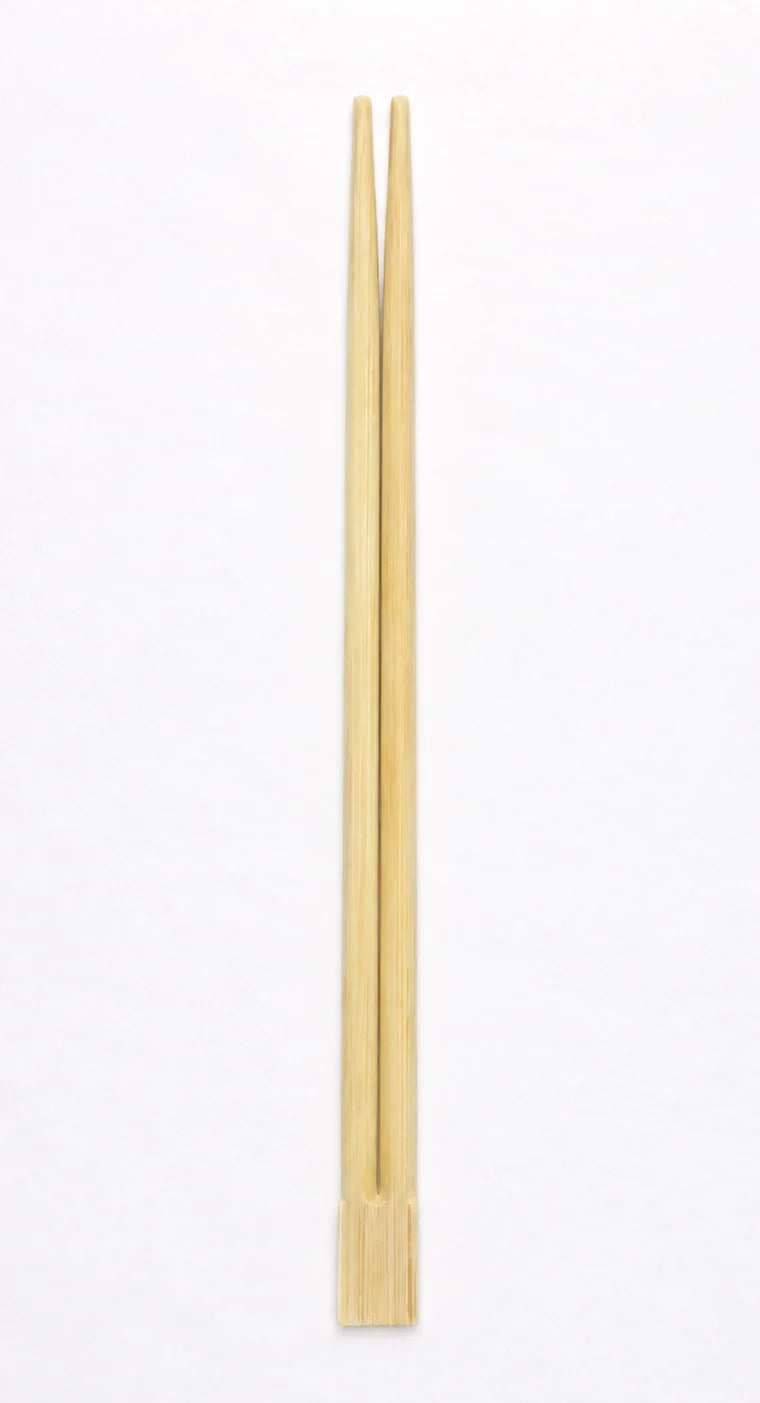 Bamboo Twin
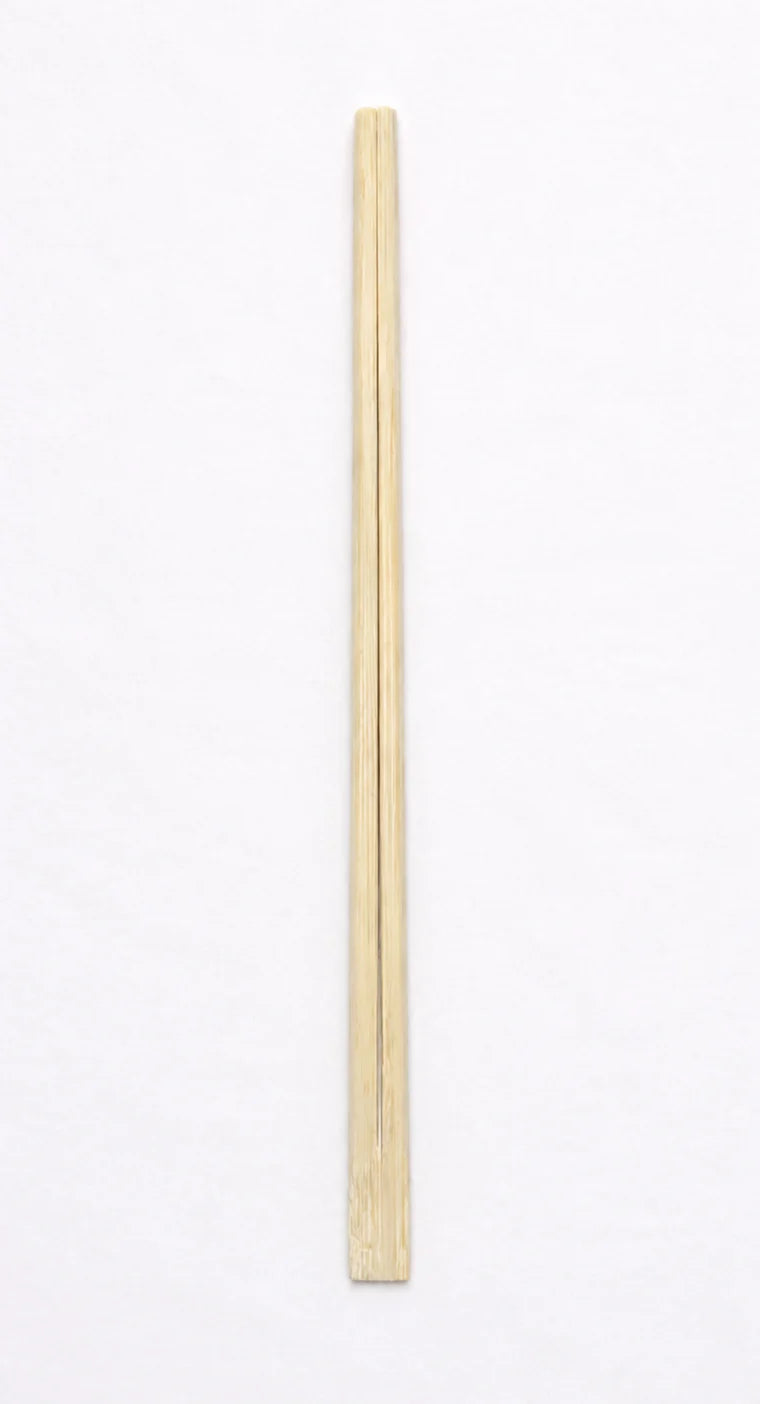 Bamboo Tenso
Direct answer
Twin has rounded tips and a connected square base; Tenso has a straight, tapered square profile.
Both are disposable bamboo chopsticks in the current ERS custom printed paper-sleeve program. Compare how they feel in hand, how they present at the table, current availability and price. Neither format is automatically better for a particular cuisine.
- What changes
- Chopstick profile, feel, appearance, product identity and potentially current variant economics.
- What can stay constant
- Restaurant brand, approved sleeve concept, one/two-color print system, quantity model and reorder controls.
- Current offering
- Bamboo Twin and Bamboo Tenso.
- Chopstick length
- 9 inches for both current formats.
- Finished sleeve dimensions
- 10.5 inches × 1 inch.
Physical comparison
Compare what staff will handle and guests will use.
The images show the visible profile difference. Use current physical samples to compare feel, finish and sleeve fit before making a final selection.
Rounded ends. Compare feel in hand, finished-sleeve fit, current price and availability.
Tapered square ends. Compare feel in hand, finished-sleeve fit, current price and availability.
| Decision | Bamboo Twin | Bamboo Tenso | How to verify |
|---|---|---|---|
| Visible profile | Rounded ends | Tapered square ends | Inspect the current product or physical sample |
| Sleeve branding system | Controlled front/back paper sleeve | Controlled front/back paper sleeve | Use the current ERS technical revision |
| Handling | A preference to test—not a fact to infer from the name | Ask staff and representative users to handle unlabeled samples | |
| Cuisine fit | Neither format is assigned to a cuisine | Choose from service needs, presentation and physical review | |
| Current case price | $50.00 per case | $54 per case | Review the current ERS product before ordering |
| Availability | Current variant records govern | Confirm when selecting the product | |
Try both formats
Run a short service test before standardizing the choice.
- 01Control the comparison
Compare current Twin and Tenso samples under the same lighting, table setting and sleeve context.
- 02Observe staff handling
Note storage, setup, basket or caddy fit, handoff and any difficulty identifying the correct format.
- 03Observe guest interaction
Look at opening, separation, grip and disposal without coaching people toward a preferred answer.
- 04Record specific reactions
Replace vague “premium” or “traditional” labels with observable comments about shape, handling and presentation.
- 05Verify the buying consequence
Check current price, stock, case configuration and which product is named on the proof before approval.
Benchmark context
What did qualifying ERS customers purchase?
This pair-volume mix describes qualifying ERS orders. It is not national market share, restaurant preference research or evidence that the larger share is the better product.
What format choice means for artwork
The brand can stay consistent, but the proof must name the selected chopstick.
Both formats are available in the current printed paper-sleeve program. Every proof should still identify the exact chopstick and current artwork revision.
The current program allows 2 colors. A printed background counts as an ink color.
Use the current technical reference, and have ERS review any existing artwork before applying it to a different chopstick.
An unchanged-artwork reorder uses the same approved design, not simply a file with a similar-looking logo.
Selection record
Record enough detail to order the same product again.
Note what was tested, what mattered and which exact product the restaurant approved.
- Current Twin and Tenso samples were compared
- Staff handling and storage were reviewed
- Guest presentation was evaluated without cuisine stereotypes
- Current price and availability were checked
- Selected product is named on the proof
- Artwork revision and color assignment are recorded
- Receiving staff know which format to inspect
- Reorder owner can locate the prior proof and order
How information is labeled
Research findings, current terms and specifications answer different questions.
An observation from ERS order history, shown with its population, period and limitation.
A current commercial or operating detail, such as case quantity, setup treatment or artwork review timing.
A production requirement tied to a defined product and document revision.
Practical guidance based on ERS production experience or the research shown on the page.
Continue the decision