

ORDER QUANTITY
16,000 pairs Median fulfilled custom chopstick order2026 CUSTOM CHOPSTICK SLEEVE INDUSTRY REPORT
Custom Printed Chopstick Sleeves: Complete B2B Procurement & Production Guide
The comprehensive resource for disposable chopsticks supplied with custom printed paper sleeves—covering industry data, restaurant usage, production methods, materials, printing, design, pricing, order quantities, lead times, and procurement. Based on more than 200 million pairs supplied since 2002, with fulfilled-order data from 35 U.S. states represented in the 2002–2026 historical ERS dataset.

WHAT THIS REPORT COVERS
Custom Printed Chopstick Sleeves:Product, Production, Usage & Procurement
This report covers the full commercial lifecycle of disposable chopsticks supplied with custom printed paper sleeves, including chopstick formats, sleeve specifications, artwork and printing, production, pricing, order quantities, lead times, restaurant usage, inventory planning, and reordering.
Explore the complete guide- OPERATING HISTORY
- Since 2002
- CUSTOM CHOPSTICKS SUPPLIED
- More than 200 million pairs
- HISTORICAL DATASET COVERAGE
- 35 U.S. states represented
START WITH YOUR JOB
Find the Right Resource for Your Role
-
01
Restaurant operator
Understand the program, then estimate what the restaurant will use.
Learn the product lifecycle, compare Twin and Tenso, model monthly pairs and see how the minimum translates into days of inventory.
-
02
Graphic designer
Move from a logo file to a controlled, proof-ready sleeve.
Use the revisioned template, understand faces and safe areas, prepare one- or two-color artwork and approve the production instruction.
-
03
Procurement buyer
Compare responsibility, total cost and repeat-order continuity.
Give suppliers one specification and identify who owns inputs, art, plates, printing, freight, inspection, correction and the reorder record.
-
04
Researcher or journalist
Inspect the evidence, denominator, method and limitation.
The Benchmark exposes aggregate tables, calculation rules and the boundaries of what ERS transaction records can support.
ORIGINAL ERS RESEARCH
Order Quantities and Reordering
This analysis is based on fulfilled ERS custom chopstick orders, using observed transaction history. Findings are reported in aggregate, with definitions and methodology documented for each measure.
REORDER INTERVAL
35 days Median observed interval between repeat custom chopstick ordersARTWORK CONTINUITY
94% of repeat orders reused the same approved artworkERS fulfilled-order evidence
What Order Quantities Actually Look Like
Fixed-width quantity bands reveal where historical ERS orders concentrate while preserving the smaller but consequential high-quantity tail.
Across 8,650 eligible fulfilled orders from 2002–2026, 61% contained 10,000–29,999 pairs and 4% contained 60,000 pairs or more; the middle 50% ran from 11,200 to 28,800 pairs, with a 16,000-pair median. These historical orders provide context, not a recommended order quantity.
- 25th percentile
- 11,200 pairs
- Median
- 16,000 pairs
- 75th percentile
- 28,800 pairs
View the complete distribution table
| Order quantity | Orders | Share |
|---|---|---|
| Under 10,000 pairs | 1,476 | 17% |
| 10,000–19,999 pairs | 3,261 | 38% |
| 20,000–29,999 pairs | 2,044 | 24% |
| 30,000–39,999 pairs | 606 | 7% |
| 40,000–49,999 pairs | 611 | 7% |
| 50,000–59,999 pairs | 277 | 3% |
| 60,000 pairs or more | 375 | 4% |
Source: ERS Custom Chopstick Sleeve Order Data, edition 2026.1; 8,650 qualifying fulfilled orders, 2002–2026. Fixed bands are order-weighted. Quartiles come directly from the frozen metric registry, not from histogram estimates. Historical context is not a current purchasing requirement.
Explore quantities and compare an order in the full Benchmark
RECURRING-PROGRAM MODEL
How Ordering Changes with Restaurant Usage
Estimated monthly usage is a stable program-level model state. Inventory coverage expresses how long a fulfilled lot would support that usage; reorder cadence remains a separate purchasing-timing measure.
Across 1,234 equally weighted recurring programs, higher estimated usage was associated with larger typical fulfilled lots and shorter modeled cadence, while lower-usage programs carried more weeks of inventory coverage.
View exact relationship values
| Usage band | Estimated usage | Fulfilled lot | Coverage | Modeled cadence | Programs |
|---|---|---|---|---|---|
| Lower estimated usage | 5,300 pairs/month | 16,000 pairs | 14.5 weeks | 40 days | 411 programs |
| Moderate estimated usage | 11,200 pairs/month | 22,800 pairs | 8.7 weeks | 34 days | 411 programs |
| Higher estimated usage | 21,500 pairs/month | 28,800 pairs | 5.6 weeks | 30 days | 412 programs |
Source: ERS historical ordering model / research dataset, 2002–2026.
ORDERING PROCESS
From Product Selection to Repeat Orders
A complete reference to the six stages of ordering disposable chopsticks with custom printed paper sleeves, from product selection and artwork preparation through production, inventory planning, and reordering.
UNDERSTAND THE PRODUCT
Chopstick types, paper sleeve specifications, terminology, printing options, and how the finished product is supplied.
Explore the product guideCHOOSE A CHOPSTICK FORMAT
Compare Bamboo Twin and Bamboo Tenso by construction, dimensions, presentation, and restaurant use.
Compare Twin vs. TensoPLAN ORDER QUANTITIES
Estimate usage, case quantities, minimum order requirements, lead times, safety stock, and reorder points.
Plan order quantitiesPREPARE ARTWORK
Sleeve dimensions, printable areas, file requirements, colors, typography, QR codes, proofs, and revisions.
View artwork specificationsPRODUCTION
Artwork setup, plate making, paper printing, sleeve forming, chopstick insertion, packing, and quality control.
See how sleeves are madePROCUREMENT & REORDERING
Pricing, supplier responsibilities, freight, receiving, inventory records, artwork continuity, and repeat ordering.
View the procurement guidePRODUCT SELECTION
Choosing Between Bamboo Twin and Bamboo Tenso
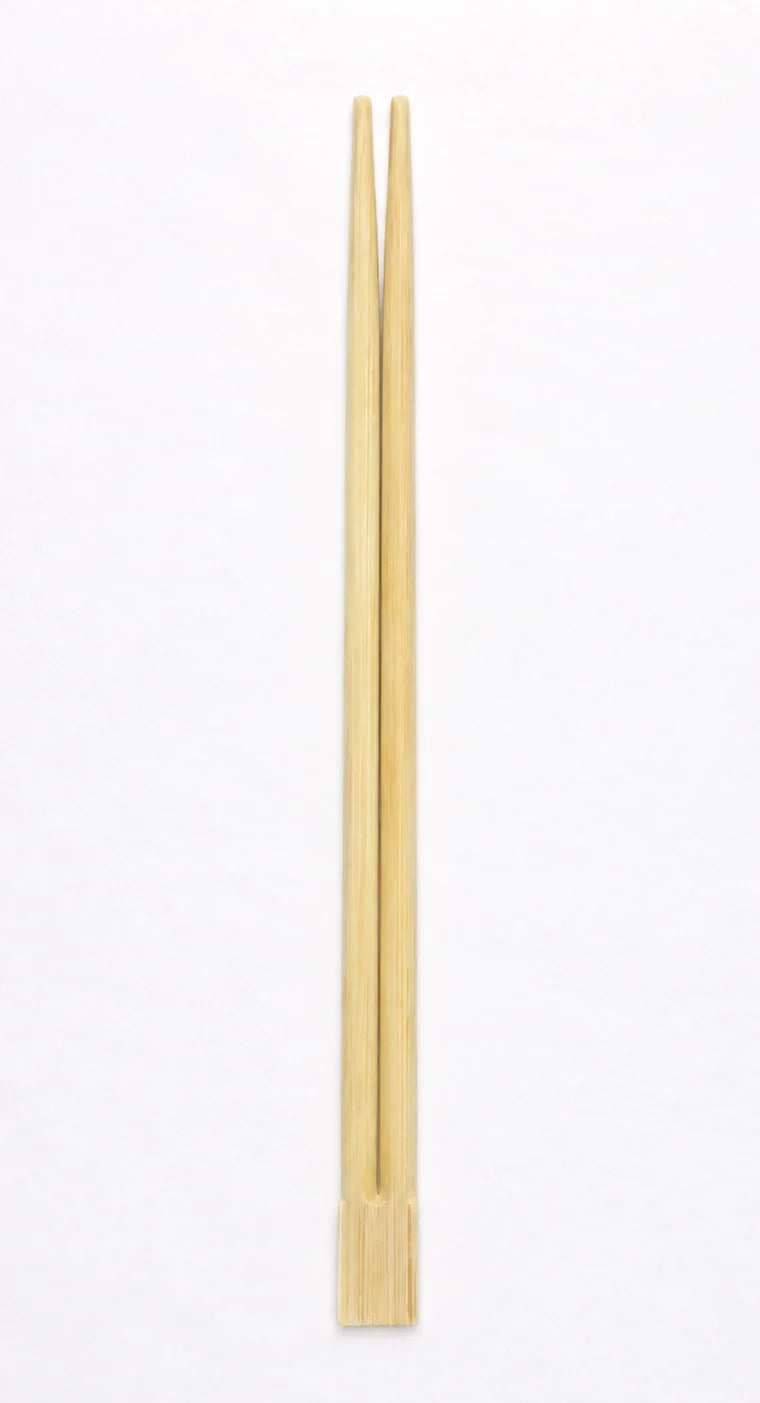
Bamboo Twin
Disposable bamboo chopsticks with rounded ends. Compare handling, table presentation, availability and current price.
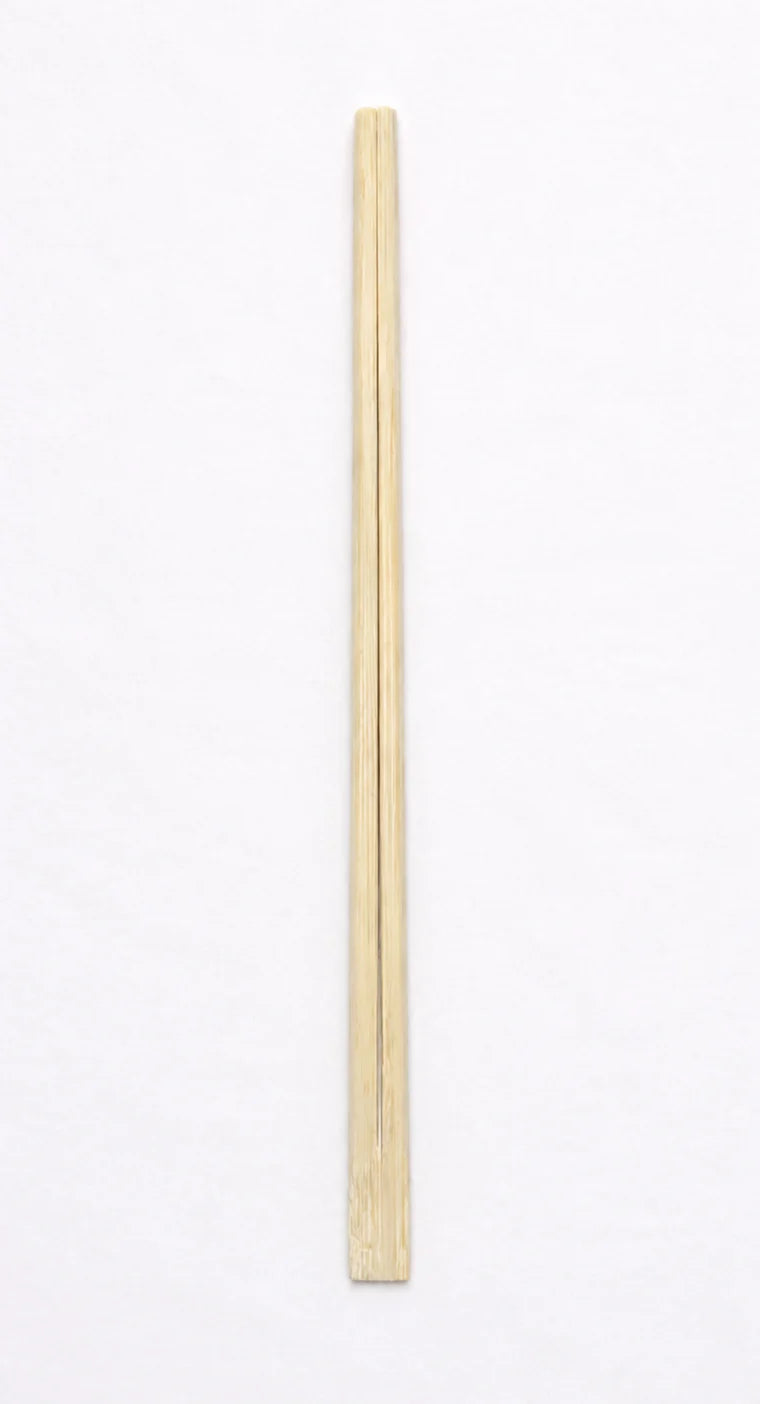
Bamboo Tenso
Disposable bamboo chopsticks with tapered square ends, available in the same custom printed paper-sleeve program.
SHARE OF FULFILLED PAIRS: 62% Bamboo Twin · 38% Bamboo Tenso
Based on qualifying fulfilled orders in ERS custom chopstick sleeve order data.
Compare Bamboo Twin vs. TensoPRODUCTION TIMELINE
From Artwork to Delivery
ERS handles the full custom chopstick sleeve production process in-house, from initial preparation through finished delivery.
- 01ARTWORKProduction-ready artwork
- 02PROOFFinal artwork approval
- 03PLATEPrinting plate preparation
- 04PRINTPaper and ink
- 05FORM & ASSEMBLEPrinted paper formed around the chopsticks
- 06PACK & QCFinished chopsticks packed and inspected
ORDER PLANNING
Calculate Order Quantity and Reorder Timing
INTERACTIVE UTILITY
Custom Chopstick Quantity & Reorder Planner
Estimate monthly usage, cases required, minimum-order coverage, safety stock, and when inventory should be reordered.
Use the Quantity PlannerMINIMUM ORDER QUANTITY
How Much Inventory Does the Minimum Order Represent?
The current minimum order is 7 cases, or 11,200 pairs. Convert the minimum into weeks or months of inventory based on the restaurant’s actual usage.
Calculate MOQ CoveragePROCUREMENT
What Should Be Defined Before You Order?
- Product and chopstick specifications
- Artwork, plate, and proof approval
- Print quality and production responsibility
- Freight and delivery responsibility
- Reorder records and artwork continuity
FAQ: COMMON QUESTIONS
Questions & Answers
Find specifications, ordering information, production details, and original research throughout this guide.
Product & quantity
What exactly is custom printed?What is Twin vs. Tenso?What is the current MOQ?How many cases do I need?Artwork & production
What size is the artwork?Which files should I send?How many colors can print?How are sleeves made?Buying & reordering
What makes up program cost?Which supplier model fits?What should receiving inspect?When should I reorder?Evidence
How large were historical orders?How often did locations reorder?Which format was purchased?How was the Benchmark built?NEXT STEPS
Ready to Design, Order, or Reorder?
01 — DESIGN / ORDERDesign & Order Custom Chopstick Sleeves
Choose Bamboo Twin or Tenso, prepare your sleeve design, and submit artwork for review.
02 — PRODUCT DETAILSReview Current Pricing & Program DetailsView current products, minimum quantities, setup requirements, pricing, and ordering information.
03 — REORDER OR GET HELPReorder an Existing DesignReuse approved artwork, make changes to an existing sleeve, coordinate multi-location orders, or contact us for assistance.