

Equipment & Specialty Supplies
Sake Warmers, Dispensers, Cups, Sets & Masu
A sake warmer, a serving flask and a cup can each be well made and still form a poor service. The warmer may be wrong for the smallest pour. The flask may change where an automatic nozzle stops. The cup may be unavailable when the next flight is called because its return route takes longer than the beverage program allows.
Specify those relationships together.
For a house sake poured repeatedly into one receiving bottle, a source-fed dispenser can make excellent commercial sense. For a counter moving among several sakes and deliberately different warming treatments, separate warming vessels often provide the more useful control. Chilled by-the-glass service raises another set of questions: bottle storage, dispensing temperature, gas, portion settings and the suitability of the actual sake for the machine.
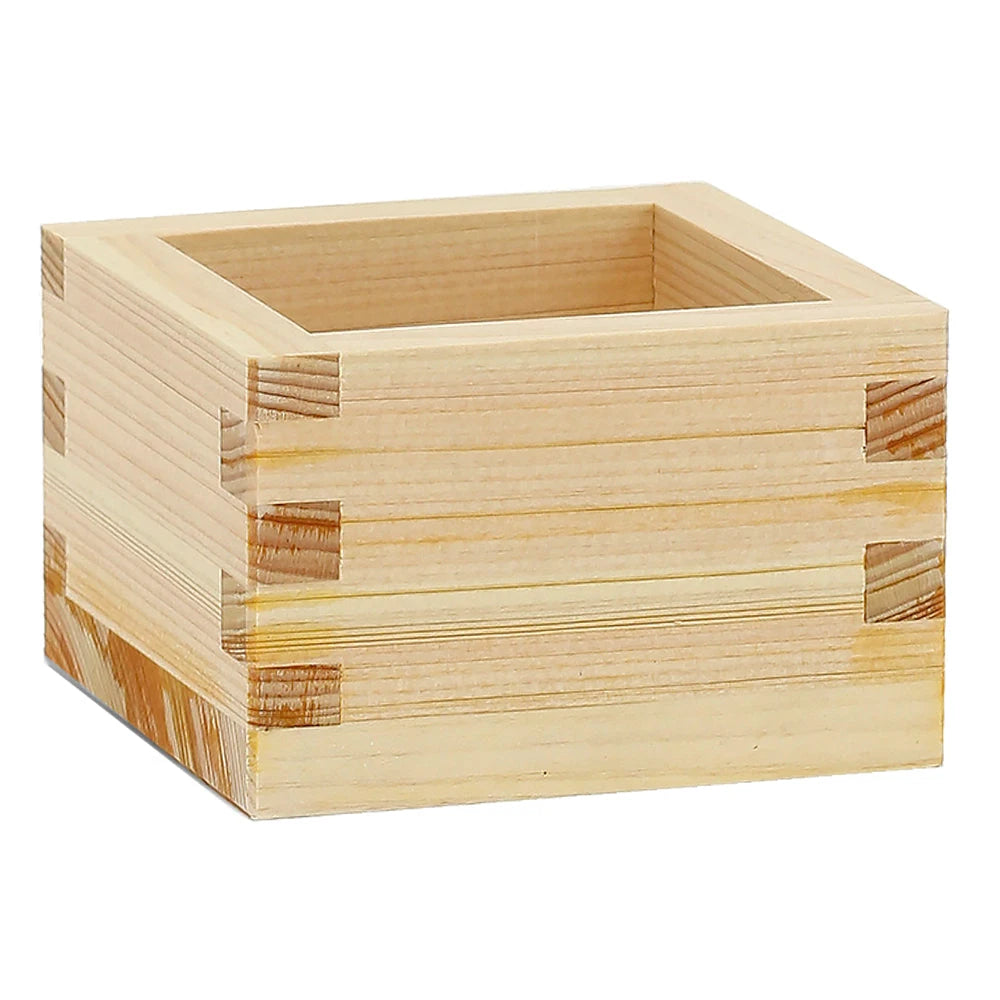
The objects deserve the same seriousness. A chirori can be cast tin, hammered tin, tin-covered copper or a modern glass cooling assembly. A lacquered cup's finish does not tell you its substrate. A one-gō masu does not determine the amount served when a glass occupies its interior. A one-bottle/two-cup set describes a presentation, not necessarily a restaurant's purchasing ratio.
ERS has supplied the Asian dining community from Los Angeles since 2002. Our approach to sake ware begins with the service the restaurant intends to deliver, then works through the equipment, objects, quantities and replacements that make it repeatable.
In this guide 12 sections
01 / Equipment & Specialty Supplies
Sake temperature and the serving intention
Choose the expression before the equipment
A useful temperature specification begins with an actual sake. “Junmai warm, ginjo cold” is too blunt for a serious program. Brewery guidance, tasting and the restaurant's intended presentation should determine the treatment.
Daishichi recommends its Junmai Kimoto around 15°C or slightly warmer and also allows gentle heating. One product can therefore support more than one service condition. Tamagawa makes the point more forcefully: Kinoshita Brewery recommends exploring its sakes across a broad temperature range, including heating above 70°C and enjoying their development as they cool. That is a particular brewery's guidance, with controlled handling and cooling, not a temperature at which to hand any sake to a guest. Its discussion of kanzamashi, sake cooled after heating, is a useful corrective to the idea that every cooled warmed sake has simply been ruined. Daishichi Junmai Kimoto, Tamagawa serving guidance
Specify both the heating treatment and the intended drinking condition. They may be different temperatures. A program built around one gentle warm pour and a program exploring a sake through heating and cooling need different operating instructions even if they use the same vessel.
Use temperature names as a vocabulary
These reference points are useful in discussing warmed sake:
Scroll to read all columns
| Term | Reference temperature | Fahrenheit |
|---|---|---|
| Hinata-kan | 30°C | 86°F |
| Hitohada-kan | 35°C | 95°F |
| Nuru-kan | 40°C | 104°F |
| Jō-kan | 45°C | 113°F |
| Atsu-kan | 50°C and above in Gekkeikan's usage | 122°F and above |
The names are service vocabulary, not sharp boundaries at which a sake changes category. Gekkeikan's guide provides these reference points and describes warming in water while checking the liquid. Use the actual numerical temperature when writing the restaurant's instruction; a name alone leaves room for differing conventions. Gekkeikan warmed-sake guide
A nominal 45°C service also needs a location. Is that the liquid in a warming chirori, the liquid leaving a nozzle, the sake in the table flask, or the first cup in the guest's hand? A bath setting cannot stand in for all four.
- 01Incoming sake
- 02Heating operation
- 03Receiving or pouring vessel
- 04Guest’s cup
Follow the liquid through the complete service. The bath setting does not establish every downstream temperature.
Follow the heat through the service
The useful sequence is:
Incoming sake → heating operation → receiving or pouring vessel → guest's cup.
Each transfer introduces another vessel, another period of contact and another interval before drinking. The original sake temperature, portion, vessel construction and service delay belong in the specification. A polished metal handle, a ceramic neck and a removable sleeve also change how the full vessel is handled, even where the selected beverage temperature is the same.
The effect of the starting condition can be shown without pretending to know a machine's recovery curve. For equal beverage mass and approximately constant heat capacity, sensible heat is proportional to the temperature rise:
- From 5°C to 50°C: a 45-degree rise.
- From 20°C to 50°C: a 30-degree rise.
- 45 ÷ 30 = 1.5.
The colder starting condition requires 50% more sensible heat in that simplified comparison. It does not prove a 50% longer dispensing time: bath storage, heater control, vessel heat capacity and losses also affect the operation. It does explain why a performance claim without an incoming-sake temperature is incomplete. Heat-transfer basis
Measure the liquid with an appropriate instrument and identify the point of measurement. A one-degree display is not evidence of sub-degree control. For example, Taiji's TST-100A specifies 1°C increments and ±1°C accuracy in the 0–50°C range; its higher warming range has a wider stated tolerance. The instrument is drip-resistant, not a device to immerse bodily in the bath. TST-100A instructions
Warming changes perception; “softer” is not a chemical explanation
In a 2009 study, ten expert assessors evaluated organic-acid solutions and simplified sake-like mixtures at several temperatures. Warming could increase sourness intensity while changing its perceived character favorably. Responses differed among acids, and some hotter mixtures attracted unfavorable balance or alcohol-odor comments. These were model mixtures, not a ranking of finished commercial sakes. Shimazu et al., Effect of Drinking Temperature on the Acidity of Organic Acids in Sake
The distinction matters in service language. Greater roundness does not establish that acid has disappeared. A more prominent aroma is not automatically a better balance. Taste the particular sake at the conditions the restaurant can actually repeat, and describe that result rather than supplying an invented chemical mechanism.
Holding history matters too. A 1980 engineering investigation of sake warmers examined prolonged heated exposure, exposed surface, residual rinse water and equipment condition. Its historical experiments are useful evidence that time, temperature and the path through equipment deserve separate attention; they do not establish a universal hold time for present machines. On the Use of Sake Warmers
A brief warming treatment, prolonged warm holding, reheating and deliberate kanzamashi are different practices. Do not collapse them into one “hot sake” instruction. Ordinary warming also does not make sake alcohol-free. Tachiyashiki et al., warming and alcohol-content study
Storage is a separate specification
Protect the bottle according to its sake and the brewery's instructions. JSS advises protection from light and temperature changes, upright storage, and resealing and refrigerating opened bottles, with additional cold-storage attention for namazake and aromatic styles. Those recommendations concern preserving the bottle's character; they are not universal legal expiration dates. JSS storage guidance
A sake may be stored cold and served warmer. The equipment must support both decisions rather than forcing one temperature to perform both jobs.
02 / Equipment & Specialty Supplies
How sake warmers heat and dispense
Individual vessels in a water bath
Individual-vessel warming keeps the selected sake in its own flask or chirori while surrounding water supplies heat. The bath can be filled from an external source or maintained by a controlled appliance. The distinction is whether the bath itself is actively regulated, not whether the serving object looks traditional.
Fukumitsuya's Mini Kansuke Takumi, for example, combines a tin chirori, ceramic hot-water vessel and wooden surround. It demonstrates an externally supplied tabletop bath. Its household presentation does not establish restaurant output or unattended temperature control. Fukumitsuya warming tools
This approach has a strong commercial purpose when the program changes sake frequently or gives individual sakes different treatments. The beverage identities remain separate. The operator still needs to control fill, immersion, heating interval and removal. Placing several vessels in one bath does not give each a separate thermostat or drinking-temperature target.
A warming vessel may also pour directly. Where it does not suit the table presentation, the receiving flask becomes another part of the service. Include that transfer when evaluating temperature and workload.
Controlled vessel baths
Taiji's TS-8 is a documented electric vessel-bath example. Its Japanese specification describes approximately twelve one-gō or eight two-gō bottles, a 30–90°C bath range and a separate sake thermometer. Its export specification is 220–240 V; the Japanese unit is 100 V. Neither should be casually substituted for an unspecified American 120 V purchase. TS-8 Japanese specification, TS-8 export specification
The bottle count describes an arrangement of vessels. It does not say how many orders the bath can deliver at the required temperature in ten minutes. Actual bottle width, immersion, fill and incoming sake condition still govern the service. Replacing the specified small bottles with broad-bodied craft pitchers can change both fit and the amount of beverage being heated.
Conceptual architecture described in the TS-2 operating instructions. No scale, throughput, recovery curve or interchangeable model configuration is implied.
A beverage passage heated by surrounding water
A source-fed indirect warmer separates the sake from its heating bath. In the TS-2, sake moves from a self-filled source through a titanium heat-exchanger passage heated by surrounding water, then reaches the dispensing nozzle. The thermostat regulates the bath. The source tank and the roughly 2.4 L of bath water are different volumes with different jobs. TS-2 operating instructions
That architecture explains several operating effects. Successive orders draw on available heat. Incoming sake brings its own thermal load. Some beverage remains in the passage between orders. A full source container therefore says little by itself about the next sequence of warm carafes.
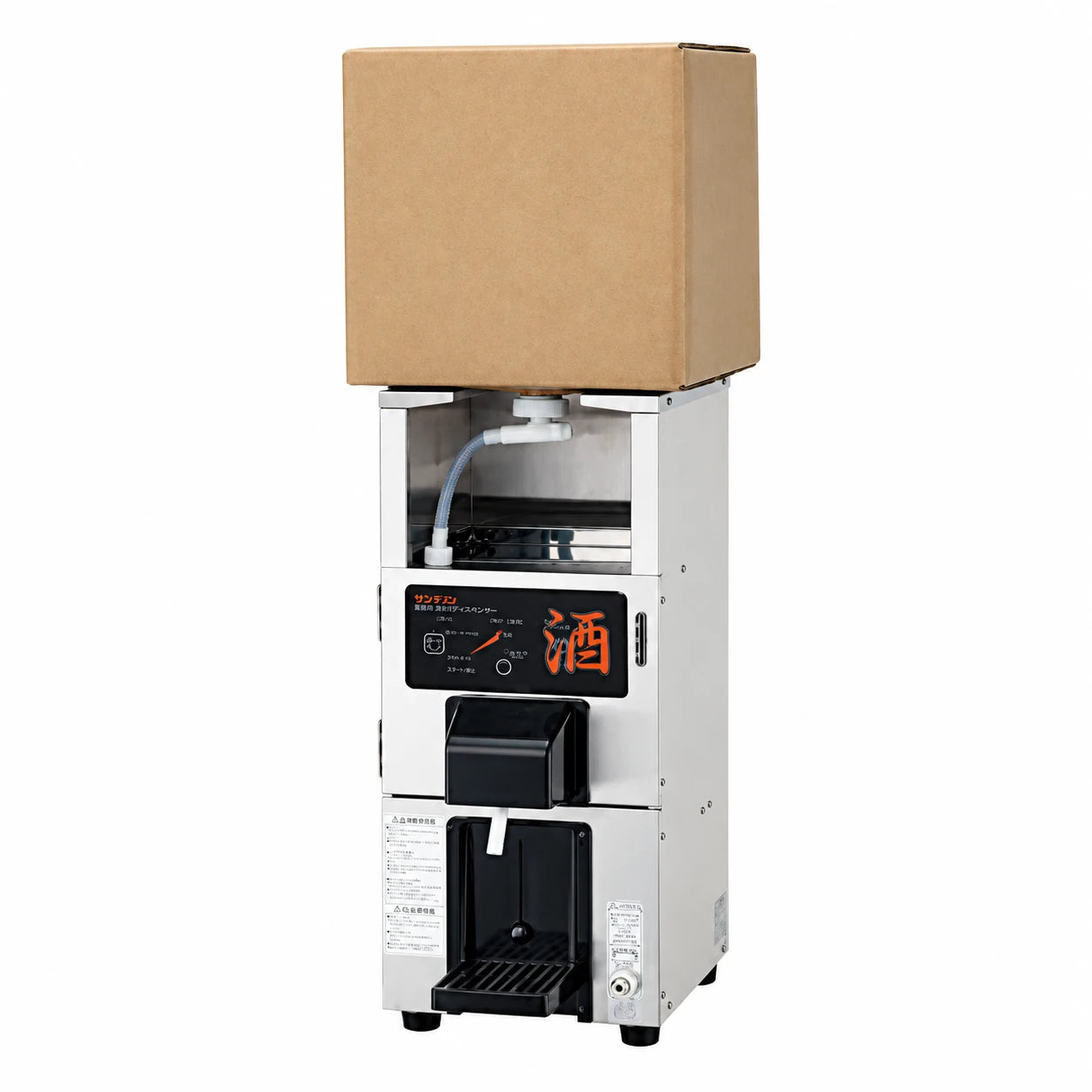
Cube-fed machines change how sake is supplied to the heating path. They do not necessarily hold the entire cube hot. Taiji's TSK-130B is specified for a 5–18 L source cube and indirect water-bath heating. Treat the source package, water bath and internal sake path separately. TSK-130B specification
Instantaneous heating
An instantaneous design heats sake as it travels through a dedicated heating path. Taiji's Japanese-market TSK-11 uses a special glass-tube heater, with 45–65°C control and 100 V/1,310 W power. That range is already a selection boundary for a program wanting a 35°C pour. TSK-11 specification
More importantly, Taiji warns that an ochoko-sized draw can emerge lukewarm from this model and recommends drawing at least one gō where possible. Higher temperature settings also slow dispensing. A machine suitable for full carafes can therefore be a poor choice for directly producing tiny pairing portions. Taiji sake-warmer FAQ
The useful question is the smallest satisfactory draw, not merely the smallest amount the operator can stop. If the machine needs a larger batch than one guest requires, specify how that batch will be served. Repeatedly producing surplus sake is an expensive way to accommodate the wrong equipment.
Some machines hold heated beverage
Do not assume every internal tank contains bath water. An archived Gekkeikan GK unit manual documents separate 1 L heating and 2.5 L cooling tanks for sake. This is a different architecture from a source feeding a passage through a hot-water bath. It is a historical explanatory example, not a current purchase recommendation. Gekkeikan GK owner manual
For any dispenser, identify the beverage volume that is actually temperature-conditioned, the retained volume and the route used to empty it. Those facts determine exposure and changeover more reliably than the product category name.
Automatic stop and measured pour are different controls
A hand-operated switch controls flow for as long as it is held. A liquid-level system stops when sake reaches a sensing point at the nozzle. A programmed-quantity system follows its own portion-setting method. These should not share an unexplained “automatic” label in the purchase specification.
The TSK-130B stops when liquid reaches the nozzle in the receiving bottle. Its instructions call for approximately 2 cm of nozzle insertion and warn that some bottle shapes may not work. The amount below that level belongs to the bottle's internal geometry. TSK-130B instructions, revision 2405H
Change the flask, its position or the insertion depth and the portion may change. A replacement bottle is consequently part of the dispensing specification, not simply a matching tabletop accessory.
Microwave warming requires an exact vessel and process
Microwave-safe ware permits a use; it does not guarantee uniform beverage temperature. Gekkeikan's vessel-development research reported roughly 20–35°C top-to-bottom differences in conventional examples and approximately 10°C after a particular redesign. Those are results of that development work, not a temperature map for every tokkuri. Gekkeikan microwave-tokkuri research
The vessel's neck and body, actual fill, starting condition, microwave setting and result all belong in the working instruction. A household timing shortcut cannot be transferred to an arbitrary flask and commercial appliance. NITE also includes alcoholic beverages in its warnings about sudden boiling after excessive microwave heating. Avoid overlong heating and handle an overheated drink only after allowing it to cool appropriately. NITE product-safety guidance, PDF p. 17
For a repeatable restaurant service, the convenience of a microwave is valuable only when the chosen vessel and actual procedure deliver the intended result.
03 / Equipment & Specialty Supplies
Commercial sake warmers: selection, capacity and installation
Start with the orders the machine must serve
Write down the normal portion, receiving bottle, sake selection and concentrated order sequence before comparing machines. A program serving one house sake in repeated 180 ml carafes is different from a counter serving three sakes in 30 ml tastes. Six carafes called together are different from six spread across an hour.
The most revealing demonstration uses the actual sake at its normal starting condition, the intended receiving bottle and the order sequence the restaurant expects to sell. Check the first saleable draw, the later draws in the burst and the normal handoff to the table. The aim is to establish the result under the restaurant's conditions, not to reproduce the fastest possible pour in isolation.
A published draw time is useful within its stated context. It is not permission to divide an hour by that number and advertise sustained hourly output. Preparation, recovery, replenishment and the temperature of successive portions remain separate.
Choose the source format deliberately
A self-filled source tank accepts sake poured from the chosen supply packages. It offers flexibility when the restaurant is not buying one compatible connected cube, but filling, minimum quantity and closing disposition still need attention.
An inverted-bottle arrangement makes the actual supply bottle and capper connection part of the equipment choice. Bottle height also affects overhead access. Do not assume every 1.8 L bottle has interchangeable dimensions or a compatible connection.
A cube-fed arrangement suits repeated service from compatible bulk packaging. Specify the connector, source placement and replacement procedure. Larger packaging can reduce replenishment events without proving greater heating output. It also creates a source-management decision when demand is modest or the sake changes frequently.
The choice is commercial as much as mechanical: which sake the restaurant buys, in which format, how quickly it uses it, and what remains at closing.
Read the different capacities separately
Scroll to read all columns
| Published figure | What it can establish | What it cannot establish alone |
|---|---|---|
| Source-container volume | How much sake the supply holds | Sustained warm output or acceptable holding time |
| Minimum/maximum source-fill range | The manufacturer's specified filling range | A count of saleable portions after priming and checks |
| Bath-water volume | Water associated with an indirect heating arrangement | Liters of sake held hot |
| Number of bottles in a bath | A documented vessel arrangement | Output across a real order sequence |
| One-draw time | Time for the stated draw under its conditions | Recovery, all-shift production or the last cup's temperature |
| Serving-vessel capacity | A listed full, practical or unspecified volume | The menu portion produced by a level-stop nozzle |
The TS-2 instructions give a source-fill range of 0.5–3.6 L and call the markings approximate. That passage specifies filling rather than a separate refill trigger during dispensing. TS-2 source-filling instructions
Consider a conservative source-balance example that assumes replenishment at 0.5 L, with the beverage path already charged, no losses and exact 180 ml draws:
- 3.6 − 0.5 = 3.1 L between the stated levels.
- Seventeen draws remove 3.06 L, leaving 0.54 L.
- An eighteenth leaves 0.36 L, below the assumed replenishment boundary.
Under that replenishment assumption, dividing 3.6 L by 180 ml to promise twenty servings overstates the available quantity. This calculation is a source-balance illustration, not a rated seventeen-carafe run or an assertion of an automatic low-level cutoff. Priming, checks, actual portions and thermal recovery still affect the operation.
Compare documented configurations
Scroll to read all columns
| Model/configuration | Supply and power | Best reason to evaluate it | Decisive check |
|---|---|---|---|
| Taiji TS-2 | 3.6 L self-filled source; 110–120 V option; 600 W manufacturer specification | Repeated house service without dependence on one bulk-package connector | Receiver, refill pattern and exact installation envelope |
| Taiji TSK-130B | Compatible 5–18 L cube; 110–120 V; 1 kW | Repeated carafes from a connected source | Cube connection, receiver and serial-applicable instructions |
| Taiko NEC-1 | 18 L cube; 120 V; 1 kW | A documented alternative U.S. cube-fed line | Current manual, exact listing/configuration and supplying dealer's support |
| Taiko NE-1 | Bottle-fed; 120 V; 1 kW | Inverted-bottle supply | Actual bottle/capper fit and refill clearance |
| Taiko NST-1 | 2 L self-filled tub; 120 V; 500 W | Smaller self-filled source format | Minimum useful draw and repeat-order result; neither follows from tank size |
Manufacturer references: Taiji TS-2, Taiji TSK-130B, Taiko NEC-1, Taiko NE-1, Taiko NST-1.
The TS-8 and TSK-11 remain useful mechanism comparisons, with their documented foreign-market electrical configurations. They are not substitutes for an exact U.S. equipment specification. Likewise, an old Ti or TSK name in a dealer title should not be used to combine specifications from different models or revisions.
Select the receiver with the machine
Check the mouth's clear opening, the height on the holder, the nozzle's travel, the stable base and the intended fill. Maximum outside diameter does not describe the neck, and exterior height does not reveal internal volume below a sensing point.
A 180 ml menu portion may fit comfortably in a larger flask but still fail to coincide with the machine's automatic stopping level. Demonstrate the combination. If the preferred tabletop pitcher needs an intermediate receiving bottle, include that extra piece and transfer in the service specification.
The TSK-130B product record expressly excludes the source cube and serving bottle from the supplied equipment. Its listed accessories include a funnel, drain tubing and stopcock. A complete order must therefore name the source arrangement and receiving ware rather than assume the machine arrives as a finished sake service. TSK-130B specification
Body dimensions are not installation dimensions
The TSK-130B's listed body is 250 × 375 × 515 mm, width × depth × height; its minimum installation space is 310 × 580 × 825 mm in the same order. That difference is commercially substantial under a shelf or behind a compact bar. Taiji TSK-130B dimensional record
The TS-2 requires closer document control. Its export page gives a 730 mm minimum installation height, while Taiji's international catalog gives 850 mm. Do not choose the smaller number because it makes a drawing work. Obtain the installation requirements for the exact quoted configuration and allow for filling, cap removal and service access. TS-2 export record, Taiji international catalog
Electrical compatibility also needs the complete configuration. The TSK-130B's 2405H instructions for serials 23100301 onward call for an independent AC110–120 V outlet rated at least 15 A. A matching-looking plug or a broad “commercial” description does not replace the installation instructions. Applicable TSK-130B instructions
Release the order against exact support and documentation
Obtain the applicable listing documentation for the model and configuration being supplied. A manufacturer's blank certification field does not establish a lack of certification; a distributor's badge or presence in a certification directory does not establish every claimed use either. The evidence must match the unit.
The same precision applies to parts and warranty. Confirm who supplies the cap, gasket, nozzle component or heater for the relevant revision, who performs service and what the supplying dealer covers. A warranty advertised by one dealer cannot be transferred to another sale by assumption.
For repeated house carafes, source-fed equipment is worth serious evaluation. For several independently selected sakes or warming treatments, individual vessels should remain on the shortlist. Buy the method that matches the actual beverage work.
Explore the ERS collection
Sake Warmers
Compare the assortment for this part of your service.
-
 Image unavailable
5-Gallon Electric Sake Warmer & Dispenser - NEC-1
View details & options : 5-Gallon Electric Sake Warmer & Dispenser - NEC-1
Image unavailable
5-Gallon Electric Sake Warmer & Dispenser - NEC-1
View details & options : 5-Gallon Electric Sake Warmer & Dispenser - NEC-1
-
 Image unavailable
Taiji TSK-150CS Sake Warmer Dispenser 5-Gallon
View details & options : Taiji TSK-150CS Sake Warmer Dispenser 5-Gallon
Image unavailable
Taiji TSK-150CS Sake Warmer Dispenser 5-Gallon
View details & options : Taiji TSK-150CS Sake Warmer Dispenser 5-Gallon
-
 Image unavailable
Taiji TSK-150C Sake Warmer Dispenser 5-Gallon – Ivory
View details & options : Taiji TSK-150C Sake Warmer Dispenser 5-Gallon – Ivory
Image unavailable
Taiji TSK-150C Sake Warmer Dispenser 5-Gallon – Ivory
View details & options : Taiji TSK-150C Sake Warmer Dispenser 5-Gallon – Ivory
-
 Image unavailable
Sake Warmer (TS-2)
View details & options : Sake Warmer (TS-2)
Image unavailable
Sake Warmer (TS-2)
View details & options : Sake Warmer (TS-2)
-
 Image unavailable
Sake Warmer (TSK-130B)
Image unavailable
Sake Warmer (TSK-130B)
Currently unavailable online
View details & options : Sake Warmer (TSK-130B)


04 / Equipment & Specialty Supplies
Chilled sake dispensers and coolers
Storage, dispensing and table presentation are separate jobs
Scroll to read all columns
| Job | What the equipment must do |
|---|---|
| Bottle storage | Maintain the conditions required for the particular sake between uses |
| Refrigerated dispensing | Accommodate the bottle/beverage, maintain the selected range and deliver the programmed or intended portion |
| Tabletop cooling | Support the chosen presentation during service, with suitable capacity and handling |
One product may perform more than one job, but the specifications must prove it. Gas-assisted preservation does not compensate for an unsuitable temperature range. A tabletop ice vessel does not become overnight bottle storage because it keeps a serving attractive at the table.
For namazake, JSS recommends storage below 5°C. WineEmotion's Quattro Pro lists a lower setting of 42°F, approximately 5.6°C. The stated range alone therefore does not establish storage below that JSS threshold. A restaurant selecting this dispenser for service needs a separate appropriate storage arrangement or another configuration that meets the bottle's requirements. This is a quality/storage comparison, not a claim that a 42°F guest pour is unlawful. JSS namazake guidance, Quattro Pro specification
Refrigerated multi-bottle dispensing
WineEmotion USA expressly includes sake among its applications. Quattro Pro provides four bottle positions, three programmable pours, 110 V/60 Hz power and a stated 42–70°F range. The company's U.S. support material describes installation/service provision and identifies equipment-care requirements. Its ordinary wine-dispenser application excludes sparkling beverages. WineEmotion applications, WineEmotion FAQ
By The Glass USA also expressly identifies sake as a supported application and offers a separate U.S. supply route. Its FAQ likewise excludes sparkling wine from the ordinary application. By The Glass USA FAQ
For either line, an actual sake selection still needs an application check. Specify bottle height and diameter, mouth/closure, desired temperatures and any sediment or carbonation. Do not infer that a machine accepting clear still sake will necessarily handle every nigori, every sparkling product or every 1.8 L bottle.
For a gas-assisted installation, include the gas supply, any required regulator and connections, and the space, access and ventilation required by the selected model's installation instructions. Identify which items come with the machine and which must be obtained separately.
The commercial value lies in usable separate positions, a workable by-the-glass assortment and reliable portions. A wine-preservation claim is not evidence that all sake remains unchanged for the same period. Select the machine around the list and turnover the restaurant actually intends to operate.
Programmed quantity still needs verification
Global's Brilliant WS2/WS4 provides a particularly revealing documented example. Its setup learns a dispensing duration using water, with adjustment needed for the beverage's behavior. Its manual also connects poor flow or inaccurate portions to pressure, bottle sealing and obstruction in the nozzle, hose or filter. These are Japanese-domestic 100 V machines, explicitly restricted to Japan; the example explains a measuring method rather than recommending an American import. Brilliant WS2/WS4 manual
A portion button is a repeatable command, but its result still depends on the system that executes it. Commission and check the actual beverage using that maker's procedure. Do not transfer Brilliant's timing method to another brand merely because both have portion buttons.
Ice-separated pouring vessels
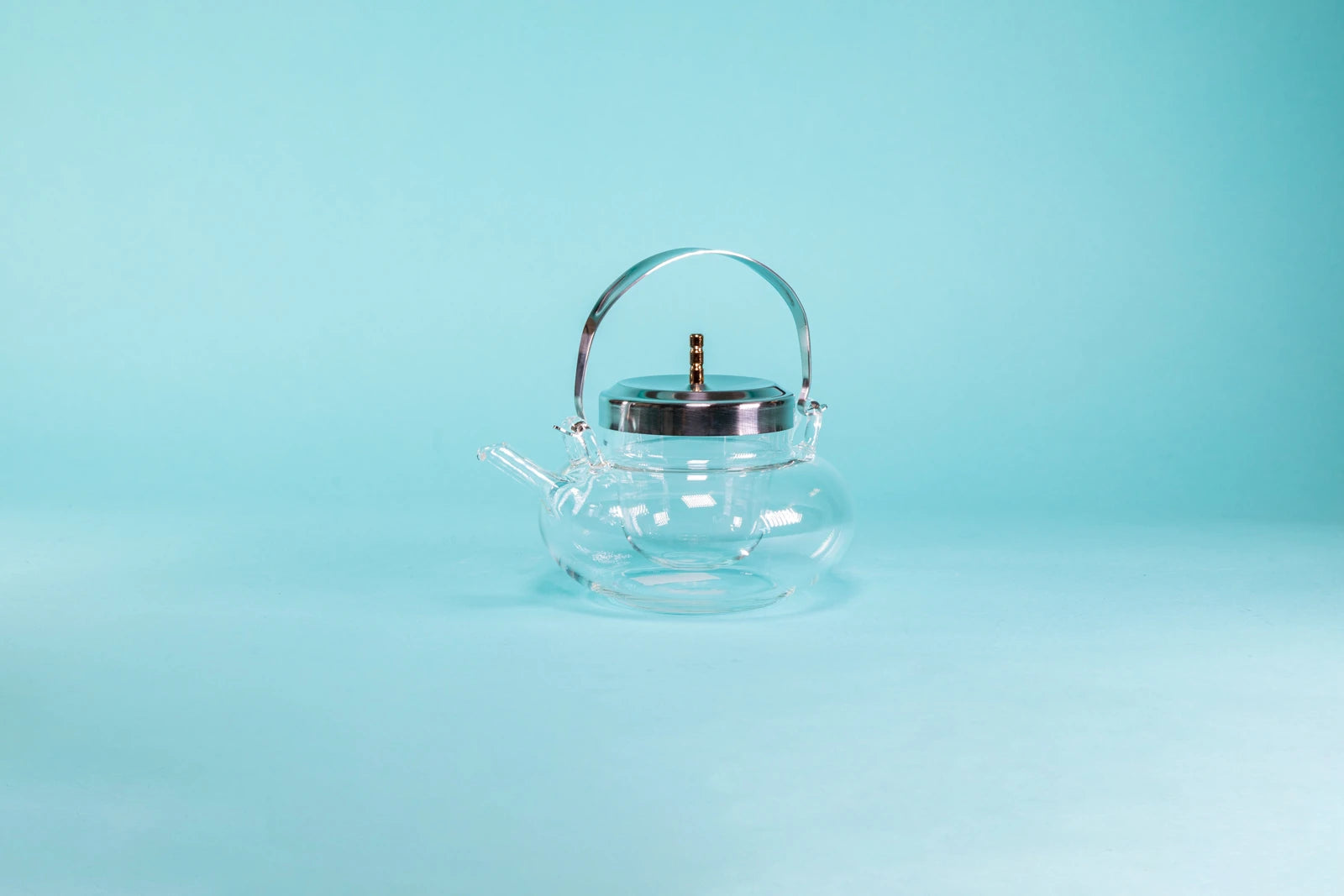
HARIO's Maru Chirori shows why a cold sake vessel is more than a small decanter. The IDM-2ESV and IDX-2MSV use a glass ice insert that separates ice from sake, avoiding intentional dilution from ice placed directly in the beverage. Both have 360 ml practical capacity. Their construction combines borosilicate body and insert, silver-plated brass lid/handle, a stainless band and a polyethylene insert cover. HARIO identifies the product as hot-water safe but gives dishwasher permission only to the glass body. HARIO Sake Cooler
That assembly requires a different return route from a one-piece glass pitcher. The body, insert, cover and lid must remain identifiable and complete. An extra clean body is not an extra usable cooler if its matching components are missing or still being processed.
HARIO's Cool Carafe N uses an integral ice-pocket form and is listed as soda glass with handwashing. Do not carry the Maru Chirori's material or thermal permissions across the brand name. HARIO Cool Carafe N
Capacity also matters at the level of the actual service. Twelve 30 ml guest pours require 360 ml delivered. A vessel with 360 ml practical capacity leaves no arithmetic allowance beyond those pours for a check sample or retained liquid. Split the service or choose an appropriate larger vessel when the service needs additional working quantity.
Use cold dispensers where their separate selections and pouring functions serve the program. Use tabletop coolers where their presentation earns its handling. Keep the original bottle under the conditions the sake requires. Broader beverage ice, water and utility planning belongs with Japanese Tea, Water, Ice & Complementary Beverage Service.
05 / Equipment & Specialty Supplies
Tokkuri, katakuchi, ochoshi and chirori
The form matters more than a rigid translation
A tokkuri is typically a flask with a restricted neck. A katakuchi is a single-spouted pouring form, often more open at the top. A chirori commonly provides a handled vessel for warming in water, although contemporary makers also use the name for cooling vessels. Ochōshi/chōshi overlaps with the small sake flask in modern usage and has a more complicated historical meaning. JSS cups and vessels
Describe the actual object before applying a hard category. A name does not establish whether it can enter a warming bath, a microwave or a dishmachine. Nor does it determine whether the object is intended to warm the sake, receive sake from equipment, or pour at the table.
Gekkeikan's museum account distinguishes the older long-handled chōshi, made in metal or wood for ceremonial pouring, from the handled hisage used to replenish it. Smaller hisage came to pour directly into cups and acquired the chōshi name themselves. The account places the later application of that name to small warming tokkuri in the Meiji period. Modern overlap has a history; it is not simply careless cataloging. Gekkeikan: chōshi and tokkuri
Toshio Tanaka's study of sake warming and vessels brings together warming pots, handled pourers, metal chirori and warming flasks through literary and illustrated records. Chirori could also pour directly into cups. The history is a changing relationship among heating, replenishment and serving, rather than a clean succession of one vessel replacing another. The familiar pouring-sound explanation of “tokkuri” is only one proposed etymology. Tanaka, Changes in Sake Warming and Vessels
Read the vessel from mouth to base
The neck that makes a flask easy to grip may restrict inspection and cleaning access. An open pitcher gives a clearer view of the liquid but presents a different mouth, pouring lip and handling problem. A handle removes the need to grip the vessel body, but its material, attachment and temperature still matter.
Scroll to read all columns
| Feature | Examine it in the actual service |
|---|---|
| Mouth and neck | Nozzle and thermometer clearance; filling and interior inspection; access for the permitted cleaning method |
| Lip or spout | Direction and cutoff at the intended fill; drips; the final cup pour |
| Grip, handle or sleeve | Full-vessel handling when warm or wet; secure attachment; removal before processing where required |
| Body and base | Bath and tray fit; stability; rack/storage footprint; the tilt required to empty it |
| Capacity | Full, practical or unstated basis; actual menu fill; allowance for handling and retained liquid |
| Components and finish | Contact surface, lining, decoration and removable parts; the permitted process for each |
Evaluate a pouring vessel while it contains the amount you intend to serve. The final pour can expose a poor lip, awkward grip or unstable handling that an empty object and a brimful capacity figure will not reveal.
A vessel used to warm sake has to suit the heating method. A vessel receiving already warmed sake has to suit the incoming liquid and the subsequent service. An open katakuchi may be excellent at the table while failing the nozzle geometry of an automatic dispenser. That does not make it a poor pitcher; it makes it the wrong receiver for that operation.
Ceramic sake vessels carry both craft and commercial history
LACMA's early eighteenth-century Bizen bottle in tea-whisk form is stoneware with naturally occurring ash glaze. The named form and fired surface make a more useful reference than the broad label “rustic ceramic.” The object belongs to a particular place, period and making tradition. LACMA Bizen bottle
Bizen's surface vocabulary also describes processes. Goma refers to an ash effect resembling sesame; hidasuki identifies red markings associated with rice straw placed against or around the ware during firing. These are consequences of kiln practice, not interchangeable decorative colors. Bizen City craft account
A brown commercial flask, a Bizen-style pattern and authenticated Bizen ware are different purchasing descriptions. Specify the actual product and finish rather than treating an aesthetic resemblance as a craft attribution. An antique's museum description is also no evidence of suitability for today's restaurant washing or warming process.
The Mino Ceramic Art Museum's nineteenth-century ash-glazed kayoi tokkuri tells another story. At 26.7 cm high, it was part of shop-to-customer sake distribution. Shops loaned such bottles; reliable capacity, leakage prevention and identification mattered. This example's shop/place names were applied before firing, which the museum interprets as a special order rather than the more usual later scratched identification. Production in Tajimi's Takada area supplied distant markets, with transport along the Kiso River and onward from Kuwana. Mino Ceramic Art Museum: kayoi tokkuri
These vessels were instruments of repeated measurement, transport and return as well as visual identity. A present table flask shares a name with those supply bottles without sharing their scale or exact function.
Cast tin, hammered tin and tin-covered copper
“Tin chirori” is not a complete construction description.
Nousaku documents cast 100% tin vessels. Seigado supplies a different route: pure-tin chirori formed by hammering without a shaping mold, with copper and rattan in the handle assembly. Seigado also makes tin-covered hammered-copper chirori. A silvery surface can therefore sit over a different body and accompany different handle and finish materials. Nousaku tin-chirori account, Seigado pure-tin chirori, Seigado tin-covered copper chirori
The useful specification identifies the body, actual interior contact surface, lining or finish, handle and permitted treatment. Seigado expressly permits its pure-tin chirori to warm in a water-filled pan. Permission for a water bath should not be expanded into permission for direct flame or an arbitrary hotplate.
For Nousaku, the current catalog labels capacity as full capacity: Chirori S 501241 is 245 ml and L 501242 is 440 ml. The lidded 600191 S is 335 ml full, with a stainless lid and handle. Those figures must retain their basis; a larger full-capacity number is not a revised instruction to fill a vessel to the rim during service. Nousaku 2025–2026 catalog, p. 19
The care restrictions are equally material. Nousaku prohibits microwave, dishwasher and drying-machine treatment for its tin products, warns against leaving acidic contents and against freezer or extended refrigerator storage, and notes that hot contents heat the vessel. Excessive bending can damage the piece. These restrictions belong in the buying decision, with a compatible complete commercial cleaning process established before purchase. Nousaku care
Do not select among metal vessels by a blanket promise that one material “purifies” sake or always heats it faster. Wall construction, mass, fill, bath contact and the service sequence all matter. The attractive surface is only part of the object.
Workhorse ware has a proper place
A repeated carafe service can be well served by straightforward individually orderable ceramics. ERS's A1830 white ceramic bottle is listed at seven inches high and nine ounces, with dishwasher and microwave permission. Its capacity basis is unstated, and the listing does not prove an automatic 180 ml fill on a particular machine. Those are sample checks, not reasons to reject a commercially simple form.
At the other end, a carefully selected craft pitcher may justify separate handling because guests use and see it throughout a deliberate service. The useful distinction is whether the restaurant supports the object's actual requirements. Coordinate those choices with the broader Sushi & Omakase Tableware Guide, while keeping the sake-specific fill and handling decisions explicit.
06 / Equipment & Specialty Supplies
Ochoko, guinomi, sakazuki and sake glasses
Names orient the choice; geometry completes it
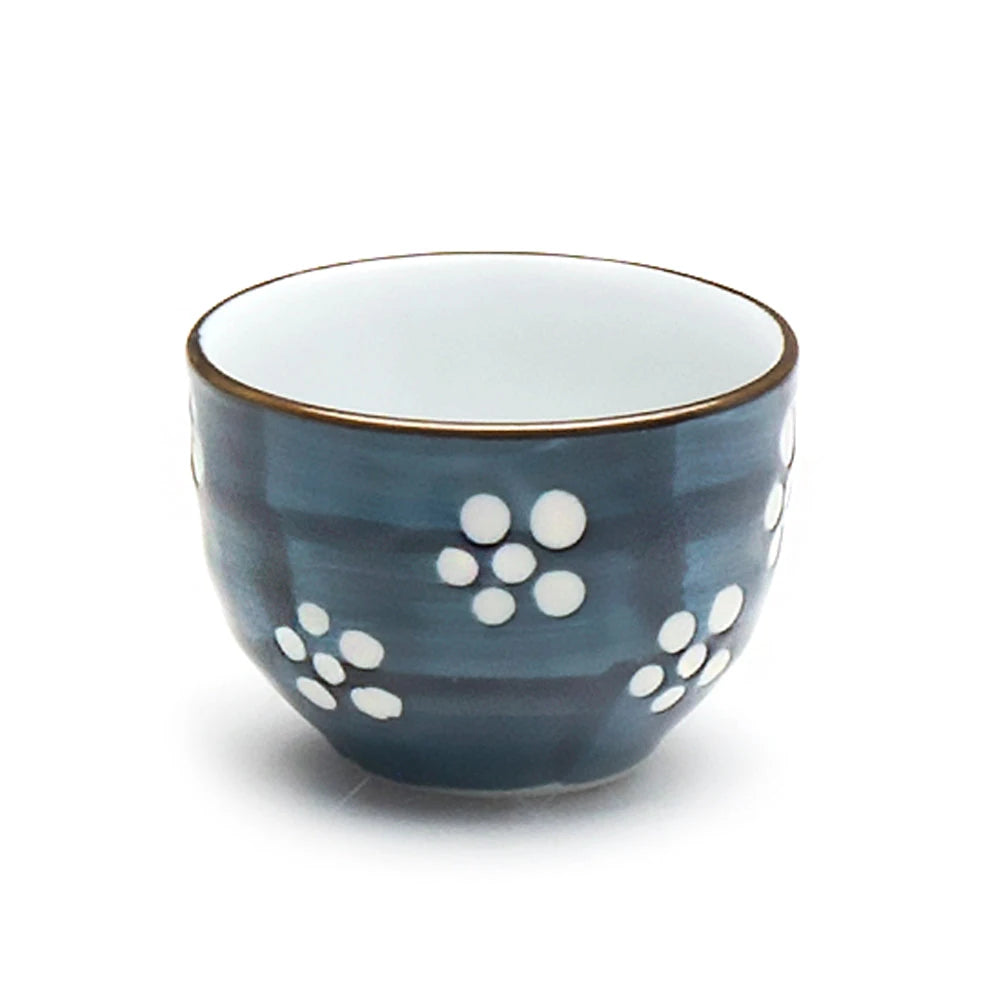
JSS describes ochoko as the familiar small sake cup and guinomi as somewhat larger with a broader drinking opening. Sakazuki retains a ceremonial association but can be used in everyday drinking. These are useful relative descriptions, not mandatory milliliter classes. Contemporary wine glasses are also legitimate sake vessels. JSS sake-cup guide
The name alone leaves the main service questions unanswered. What is the intended pour? How much of the bowl does it occupy? How does the rim meet the lip? Where does the guest grip the piece? Can staff handle it without touching the drinking edge, and will the required number fit the storage and return route?
A 30 ml taste in a small cup and the same amount in a generous stemmed bowl are different presentations. Their listed capacities do not reveal the same liquid surface, headspace or relationship to the guest's nose. Evaluate the actual fill, not only the empty silhouette.
Compare the features the guest actually encounters
Scroll to read all columns
| Feature | Selection consequence |
|---|---|
| Rim profile | Thickness, rounding, flare and condition affect the physical drinking contact |
| Opening versus bowl | The drinking aperture may be narrower than the maximum body diameter |
| Actual fill | Determines the working relationship among liquid, headspace and rim |
| Foot, stem and base | Changes grip, stability, tray/rack fit and storage requirements |
| Material and surface | Establishes the actual body/finish and care permission; appearance alone is insufficient |
| Consistency across a flight | Either holds the vessel constant for comparison or deliberately varies the presentation |
Use identical vessels when reducing an avoidable difference among samples is the aim. Use different craft cups when the variety itself is part of the intended experience. Both can be thoughtful service; they answer different questions.
Avoid rigid tasting claims attached to those features. A wider opening is not a universal guarantee of better aroma, and a thicker rim does not establish a fixed increase in sweetness. Choose a form for a defined purpose and taste the sake in it at the proposed fill and condition.
Shallow cups, lacquer and material identity
Gekkeikan's museum account connects shallow lacquer cups with earlier earthenware forms and describes the later spread of porcelain drinking cups. It also records haisen, the rinsing bowls associated with passing a cup between participants. That is a historical practice to understand, not a contemporary commercial sanitation method. Gekkeikan cups and haisen
A current lacquer example should be equally specific. Gato Mikio identifies its Rin bajōhai 12080/12081 as keyaki, or zelkova, with lacquer. Nearby TOHKA and FORM product records identify other woods and urethane finishes. The product's region or general lacquerware category cannot replace the actual material schedule. Gato Mikio material schedule
The maker's lacquerware care excludes dishwashing/drying-machine treatment, abrasive cleaning and prolonged soaking. If the restaurant wants those cups, it needs an appropriate complete process and adequate return stock. Another cup in a similar color can have a different substrate, finish and care requirement. Gato Mikio handling instructions
Contemporary sake glass is a design choice
RIEDEL's Junmai development account contrasts its broad, open form with the more enclosed Daiginjo glass. The Extreme Junmai 4441/27-1 is listed at 200 mm high with a 495 ml capacity. The dimensions make the design proposition concrete: the bowl is much larger than a typical small tasting portion. RIEDEL Junmai development account
Treat that as a documented maker intention, developed with sake specialists, rather than an independent law that all junmai needs one glass and all daiginjo another. The capacity is a bowl specification, not a recommended serving quantity. Check the actual product's care label too; RIEDEL explicitly says not all products are dishwasher-safe. RIEDEL product-care FAQ
Toyo-Sasaki offers a different scale. Its Ten-kai P-01143 is listed at 60 ml, 51 mm maximum diameter and 83 mm high; P-01145 is 100 ml, 60 mm maximum diameter and 98 mm high. These are specific commercial glass forms, not generic “small” and “large” portions. Their capacity listings do not independently establish hot-service permission. Toyo-Sasaki P-01143, Toyo-Sasaki catalog, p. 60
Kikichoko is an analytical vessel
The white interior and cobalt rings of a snake-eye tasting cup provide visual reference for examining sake. The Society for Nada Sake Research associates the white ground with color assessment and the rings with clarity, and emphasizes consistent vessels when comparing samples. Its glossary describes approximately 200 ml when full; NRIB's guide describes a 180 ml kikichoko. Neither makes that volume a compulsory restaurant pour. Nada kikichoko reference, NRIB comprehensive guide, tasting section
That study supports a precise point about the information available to an assessor. It does not rank guinomi against wine glasses, establish guest preference or show that the vessel changed the sake's chemistry.
A restaurant can use analytical consistency when it wants comparison and a more expressive vessel when it wants a particular guest experience. Do not confuse a professional tasting convention with a universal prescription for enjoyment.
For independently assembled and replaceable drinking stock, start with ERS Sake Cups. Choose the functional form and actual fill first, then the pattern and quantity.
Explore the ERS collection
Sake Cups
Compare the assortment for this part of your service.
-
 Image unavailable
Porcelain Sake Cup 2"Dx1.5"H - 2 Oz, Chun Tenmoku - Blue/Dark Brown
View details & options : Porcelain Sake Cup 2"Dx1.5"H - 2 Oz, Chun Tenmoku - Blue/Dark Brown
Image unavailable
Porcelain Sake Cup 2"Dx1.5"H - 2 Oz, Chun Tenmoku - Blue/Dark Brown
View details & options : Porcelain Sake Cup 2"Dx1.5"H - 2 Oz, Chun Tenmoku - Blue/Dark Brown
-
 Image unavailable
Porcelain Sake Cup 2"Dx1.5"H - 2 Oz, Ocean Blue/Brown
View details & options : Porcelain Sake Cup 2"Dx1.5"H - 2 Oz, Ocean Blue/Brown
Image unavailable
Porcelain Sake Cup 2"Dx1.5"H - 2 Oz, Ocean Blue/Brown
View details & options : Porcelain Sake Cup 2"Dx1.5"H - 2 Oz, Ocean Blue/Brown
-
 Image unavailable
Plastic Sake Bottle Green Bamboo 13oz
View details & options : Plastic Sake Bottle Green Bamboo 13oz
Image unavailable
Plastic Sake Bottle Green Bamboo 13oz
View details & options : Plastic Sake Bottle Green Bamboo 13oz
-
 Image unavailable
Blue Pattern Sake Cup 2"D, Assorted Pattern
View details & options : Blue Pattern Sake Cup 2"D, Assorted Pattern
Image unavailable
Blue Pattern Sake Cup 2"D, Assorted Pattern
View details & options : Blue Pattern Sake Cup 2"D, Assorted Pattern
-
 Image unavailable
Wooden Sake Cup-Large 3 3/8" x 3 3/8" Ladies
View details & options : Wooden Sake Cup-Large 3 3/8" x 3 3/8" Ladies
Image unavailable
Wooden Sake Cup-Large 3 3/8" x 3 3/8" Ladies
View details & options : Wooden Sake Cup-Large 3 3/8" x 3 3/8" Ladies
-
 Image unavailable
Plastic Sake Cup Green Bamboo 2"x2"
Image unavailable
Plastic Sake Cup Green Bamboo 2"x2"
Currently unavailable online
View details & options : Plastic Sake Cup Green Bamboo 2"x2" -
 Image unavailable
Sake Cup 2"H, White Ceramic
View details & options : Sake Cup 2"H, White Ceramic
Image unavailable
Sake Cup 2"H, White Ceramic
View details & options : Sake Cup 2"H, White Ceramic
-
 Image unavailable
Porcelain Sake Cup 2"Dx1.5"H - 2 Oz, Half-Glazed - Black/Gray
View details & options : Porcelain Sake Cup 2"Dx1.5"H - 2 Oz, Half-Glazed - Black/Gray
Image unavailable
Porcelain Sake Cup 2"Dx1.5"H - 2 Oz, Half-Glazed - Black/Gray
View details & options : Porcelain Sake Cup 2"Dx1.5"H - 2 Oz, Half-Glazed - Black/Gray


07 / Equipment & Specialty Supplies
Masu: the vessel, the measure and the pour
Begin with the measuring object
The masu's measuring history is more useful than a vague claim of ancient authenticity. Himeji preserves a hinoki one-shō reference masu dated 1590, associated with standardizing the measure in Harima. Its marks and inscription connect the physical box to measurement authority. That specific artifact does not establish that every modern drinking masu has retained one geometry. Himeji City historical masu
The history of a production center is a separate question. Ōgaki City Library's reference account places the city's wooden-masu industry in the Meiji period, associated with a craftsman returning from work in Atsuta. The older measuring tradition and that later local industry should not be compressed into an invented uninterrupted lineage. Ōgaki City Library reference
Modern masu retain the force of a measured, tangible serving object. To use that well, the restaurant must specify the actual box and the service built around it.
Construction governs use
A wooden masu is an assembly. Maruni documents hinoki boards being dimensioned, cut and machined for interlocking joints, glued and assembled under pressure, planed, fitted with a bottom, dried/compressed and chamfered. The joints and base are part of its performance, not hidden details beneath a decorative exterior. Maruni masu production
Ohashi's own FAQ identifies adhesive in its bottom/side construction and warns that immersing the whole box can loosen joints or create gaps. It also distinguishes products intended for liquids from other items in its range. Specify the actual liquid-use product rather than assuming every small wooden box is a sake vessel. Ohashi product and care questions
Uncoated wood, coated wood and a glass-bodied square vessel are different constructions. A glass coating is not a glass body, and a wood-look surface does not identify a species. The food-contact surface and permitted care must travel with the exact product description.
Size names do not replace dimensions
Ohashi's plain masu schedule provides a useful comparison:
Scroll to read all columns
| Maker's size | Outside, mm | Inside, mm | Listed capacity |
|---|---|---|---|
| Three-shaku | 56 × 56 × 39 | 41 × 41 × 31 | 54 ml |
| Five-shaku | 67 × 67 × 47 | 51 × 51 × 39 | 100 ml |
| Eight-shaku | 82 × 82 × 51 | 60 × 60 × 40 | 144 ml |
| One-gō | 85 × 85 × 56 | 63.5 × 63.5 × 45 | 180 ml |
The five-shaku product is listed at 100 ml. Do not silently replace that with 90 ml to satisfy nominal half-gō arithmetic. Buy the documented product, not a presumed equivalence in its size name. Outside dimensions establish handling and footprint; inside dimensions govern glass fit and liquid space. Ohashi size schedule
Specify the service being offered
Three arrangements deserve separate instructions:
- Direct drinking from the masu: the box is the drinking vessel and sake-contact surface.
- A glass presented inside a masu: the glass holds the intended serving; incidental wetting is not automatically an extra drinkable portion.
- Deliberate consumable overflow: both glass and outer vessel hold part of what the guest is expected to drink.
Sawanotsuru describes mokkiri as a glass-in-masu generous pour and also uses morikoboshi for overflowing service; some establishments use a small dish instead of a box. The useful point is the assembly and intention, not a supposedly mandatory ritual. Sawanotsuru on mokkiri and masuzake
Make the house presentation intelligible. The guest should know what is included in the pour and be able to lift, drink or transfer it without an awkward spill. If the overflow is sold as part of the serving, count it in the portion and treat its container as food-contact ware.
Conceptual section: the immersed exterior of the glass displaces outer liquid. Separate empty-container capacities cannot simply be added.
The glass displaces the overflow
At a chosen outer fill height, the available overflow space equals the box's interior volume below that height minus the volume occupied by the immersed exterior of the glass. The total beverage is:
Sake inside the glass + sake retained in the remaining outer space.
The whole submerged exterior displaces liquid. Subtracting only the glass material would be wrong because the surrounding sake also cannot occupy the space enclosed by the glass. A tapered body, foot or thick base changes the relationship.
This is why a 180 ml empty box and a 100 ml glass do not automatically create a 280 ml serving. Their two separate capacity figures describe different empty containers. The assembled service has a different available volume.
Consider the documented dimensional combination of Ohashi's one-gō box and Toyo-Sasaki P-01145. The box is 63.5 mm wide inside; the glass's maximum outside diameter is 60 mm. The nominal difference is 3.5 mm in total, or 1.75 mm each side if centered and if that maximum diameter occurs at the relevant level. The glass's maximum diameter may be above the box, so this is an envelope comparison, not a measured clearance at the base. Corners, manufacturing variation, stability and lifting still need the actual pieces. Ohashi dimensions, Toyo-Sasaki P-01145 catalog
The ideal rectangular box calculation, 63.5 × 63.5 × 45 ÷ 1,000, is approximately 181.45 ml. Its closeness to the listed 180 ml is a useful check, not a claim of more accurate real capacity. The dimensions do not supply the glass's complete exterior profile or actual service fill, so they cannot establish an exact assembled portion.
Measure the intended fill with the actual glass and box before pricing that service. Preserve the pairing when replacing either component. Two glasses both labeled 100 ml can displace different amounts outside themselves.
Material suitability is part of the presentation
Ohashi's instructions for its uncoated hinoki masu expressly exclude hot sake. They also warn against heat, high humidity and forced rapid drying. The cultural association of wood and sake does not override those product-specific limits. Ohashi uncoated-masu instructions
For California commercial use, establish the conformity of the proposed wooden contact surface before ordering the service. A nested glass does not remove the issue where its overflow is consumed. Coated or alternative-material vessels require their own construction and care documentation; neither tradition nor the word “coated” supplies approval.
Masu can give a service a clear material and cultural character. That is worth preserving accurately, with the actual amount, assembly and care resolved rather than hidden behind a size name.
08 / Equipment & Specialty Supplies
Sake sets, flights and working quantities
A set describes what is included
A matched set can be an excellent presentation. It can also be the wrong purchasing unit for a restaurant whose cups and pouring vessels circulate differently.
Ceramic Japan's HARMONY is a useful exact example. KH-6 contains one KH-3 bottle and two KH-4 cups. The bottle and cup have separate product entries, with 266 ml and 73 ml full capacities. The set's washi sleeves are stencil-dyed handmade paper from Keijusha in Etchū-Yatsuo, Toyama. The paper is a real craft component, not a printed ceramic pattern. HARMONY set, HARMONY component sheet
That component changes the return process. The maker's KH-3 hishigata bottle listing permits microwave and dishwasher use with the sleeve removed, while prohibiting oven and direct-flame use. Keep the cup's own permission separate; the bottle instruction does not establish the whole set's process. Individual catalog identities also do not guarantee every dealer keeps loose replacements in stock. KH-3 bottle care
Specify included pieces, full or practical capacities, intended fills, removable components and the actual replacement route. Piece count alone tells you very little about service capacity.
Four pours can use two cups
A 180 ml carafe portion divided into 45 ml cup pours gives four pours before any allowance for losses. For two guests retaining their cups, that is two cups filled twice. It is not necessarily four simultaneous cups.
The proposed fills are below HARMONY's published full-capacity values, but that arithmetic is not a test of comfortable handling. The actual bottle, cup and pouring motion still need evaluation. Do not divide brimful bottle capacity by brimful cup capacity and call the result a service plan.
The same distinction works in the other direction. A comparison flight keeps several cups in front of one guest at once, even though each contains little sake.
Twelve guests × three simultaneous cups, plus the stated example inputs. These allowances are planning choices, not universal percentages.
A twelve-guest flight can commit eighty-four cups
Consider twelve guests comparing three 30 ml sakes simultaneously:
Scroll to read all columns
| Requirement | Cups |
|---|---|
| Current twelve-guest flight, three cups each | 36 |
| Earlier flight still unavailable in the return process | 36 |
| Clean-ready contingency for this example | 6 |
| Separate replacement reserve for this example | 6 |
| Opening quantity before any selling-pack adjustment | 84 |
The six-piece allowances are chosen planning inputs, not universal percentages. If the earlier cups return before the next flight needs them, the overlap changes. If the glasses must be processed separately or remain deployed longer, that also changes the result.
Pouring-vessel demand must be counted independently. The three sake identities, warming batches and station sequence do not justify forty-two bottles just because eighty-four cups could be bought in repeated 1:2 sets.
The table ratio and the inventory ratio can diverge
On one ERS sake opening-order review, the proposed 60-cup quantity had pulled 30 bottles into the order through a one-bottle/two-cup ratio. The service itself needed one flask for two guests. Its return pattern, however, supported a different purchase:
Scroll to read all columns
| Component need | Bottles | Cups |
|---|---|---|
| At tables during the specified peak | 12 | 24 |
| Unavailable in the return process | 4 | 24 |
| Clean-ready contingency | 2 | 6 |
| Replacement reserve | 2 | 6 |
| Required quantity | 20 | 60 |
The order became twenty bottles and sixty cups. The presentation remained one bottle and two cups; ten unnecessary pouring vessels left the purchase.
The broader comparison is straightforward:
Scroll to read all columns
| Buying route for the same requirement | Bottles | Cups | Excess |
|---|---|---|---|
| Individual components | 20 | 60 | None against the defined counts |
| Only 1:2 sets | 30 | 60 | 10 bottles |
| Only 1:4 sets | 20 | 80 | 20 cups |
A set can still earn its place through design, packaging or its actual price. Its ratio should be a deliberate choice rather than an accidental inventory policy.
For a concrete component-cost comparison, ERS's A1830 white ceramic bottle and A1888 white ceramic cup were listed individually at $3.00 and $0.99 when reviewed on 12 October 2026. Twenty bottles and sixty cups total $119.40 before freight and tax. Buying thirty of those bottles with the same sixty cups totals $149.40. The additional $30 buys ten bottles beyond the defined need.
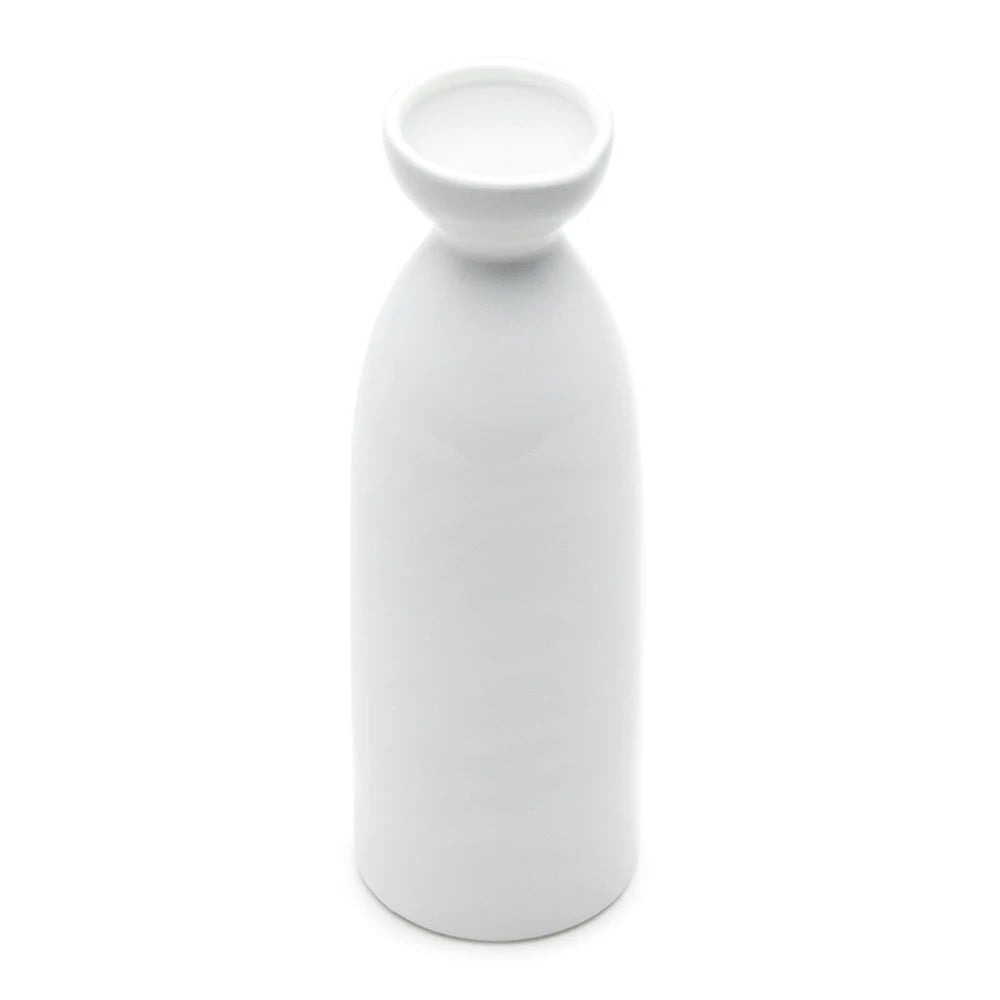
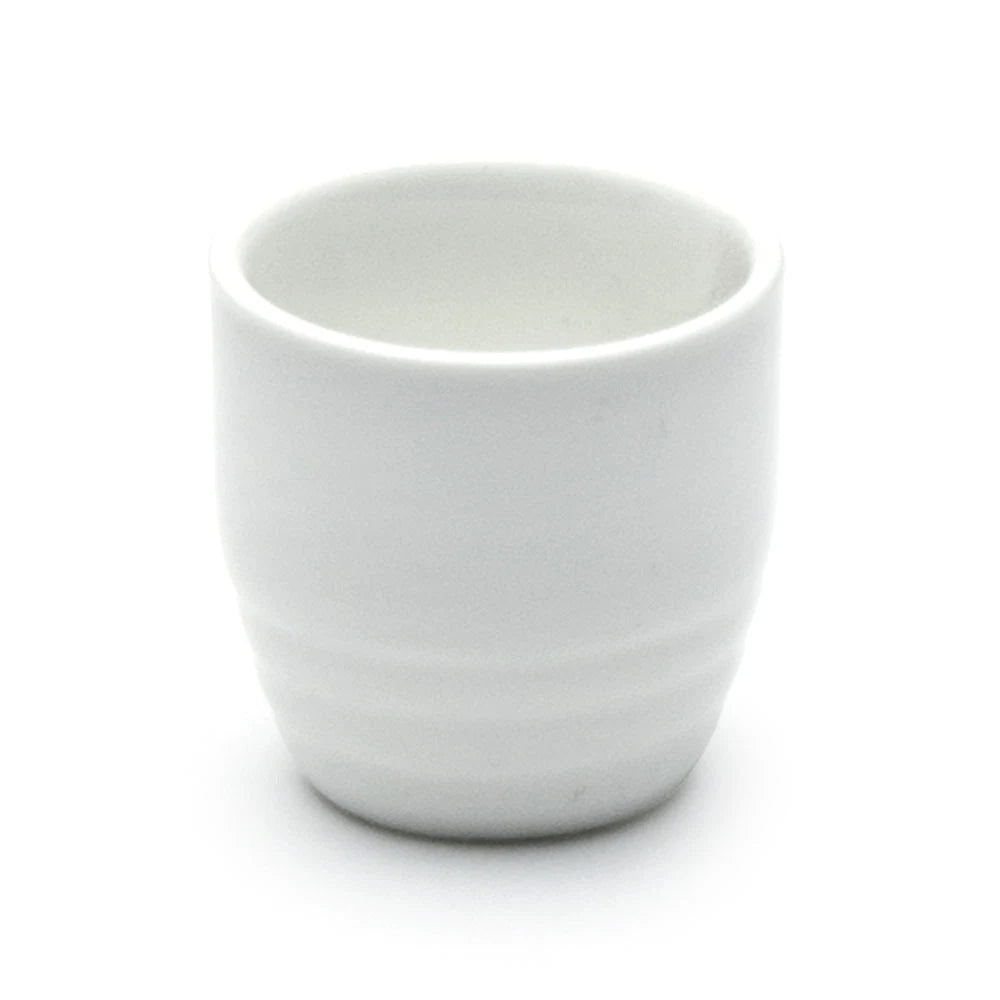
That compares allocation of the same individually priced pieces, not the price of HARMONY or any packaged set. Both ERS entries state dishwasher and microwave permission. A1830's nine-ounce capacity basis is unstated, and A1888's inspected specification does not state capacity; establish the intended fill and any machine-receiver fit before selecting them for that exact service.
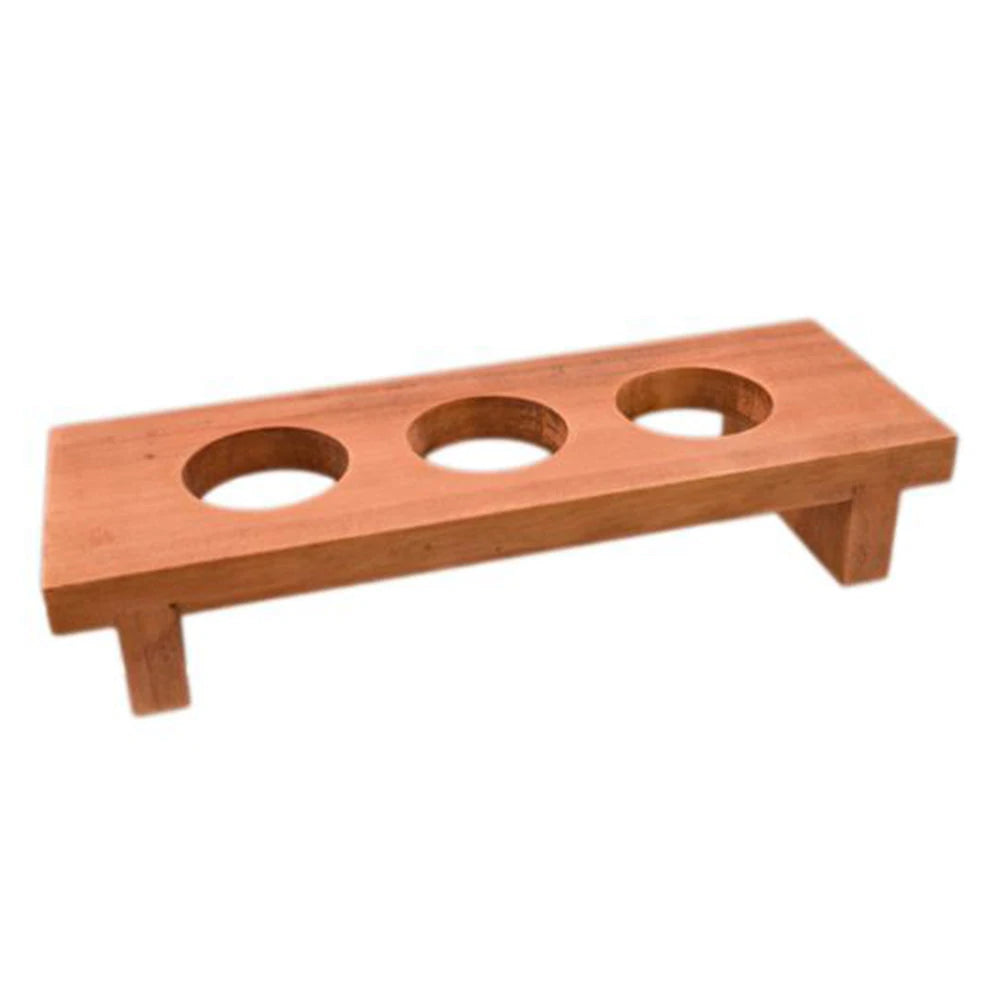
Count complete pieces that can return to work
A washed cooler body without its insert or lid is an incomplete assembly. A HARMONY bottle waiting for its sleeve to be reassembled is not ready for the intended presentation. A handwashed tin chirori in the drying area is unavailable even though it is physically on the premises.
Measure the entire return route: clearing, sorting, processing, drying, reassembly and delivery back to service. Carrying extra pieces can accommodate a legitimate longer route. It cannot correct an incompatible cleaning method.
Order by the dealer's actual selling unit. A manufacturer's master carton, a gift set and an individual piece are different quantities. Calculate the need first, then round to the real purchasing pack. Keep a replacement specification for the features that do work: receiver geometry, actual fill, nested fit, contact finish and permitted care.
Use the ERS Tableware Quantity & Par Guide for the broader inventory method. For sake, the decisive additional work is keeping the pouring vessels, drinking vessels and complete assemblies legible as separate demands.
Explore the ERS collection
Sake Bottles
Compare the assortment for this part of your service.
-
 Image unavailable
Sake Bottle 4.5"H, Pearl Elegant
View details & options : Sake Bottle 4.5"H, Pearl Elegant
Image unavailable
Sake Bottle 4.5"H, Pearl Elegant
View details & options : Sake Bottle 4.5"H, Pearl Elegant
-
 Image unavailable
Blue Bulb Glass Sake Bottle 6-3/4"H
View details & options : Blue Bulb Glass Sake Bottle 6-3/4"H
Image unavailable
Blue Bulb Glass Sake Bottle 6-3/4"H
View details & options : Blue Bulb Glass Sake Bottle 6-3/4"H
-
 Image unavailable
Green Bulb Glass Sake Bottle 6-3/4"H
View details & options : Green Bulb Glass Sake Bottle 6-3/4"H
Image unavailable
Green Bulb Glass Sake Bottle 6-3/4"H
View details & options : Green Bulb Glass Sake Bottle 6-3/4"H
-
 Image unavailable
Porcelain Sake Bottle 6.25"Hx2.75"D - 10 Oz, Chun Tenmoku - Blue/Dark Brown
View details & options : Porcelain Sake Bottle 6.25"Hx2.75"D - 10 Oz, Chun Tenmoku - Blue/Dark Brown
Image unavailable
Porcelain Sake Bottle 6.25"Hx2.75"D - 10 Oz, Chun Tenmoku - Blue/Dark Brown
View details & options : Porcelain Sake Bottle 6.25"Hx2.75"D - 10 Oz, Chun Tenmoku - Blue/Dark Brown
-
 Image unavailable
Sake Bottle Lg
View details & options : Sake Bottle Lg
Image unavailable
Sake Bottle Lg
View details & options : Sake Bottle Lg
-
 Image unavailable
Sake Bottle 5"H, Blue Flower
View details & options : Sake Bottle 5"H, Blue Flower
Image unavailable
Sake Bottle 5"H, Blue Flower
View details & options : Sake Bottle 5"H, Blue Flower
-
 Image unavailable
Sake Bottle Pg. 20 (2000 Cat)
View details & options : Sake Bottle Pg. 20 (2000 Cat)
Image unavailable
Sake Bottle Pg. 20 (2000 Cat)
View details & options : Sake Bottle Pg. 20 (2000 Cat)
-
 Image unavailable
Sake Pot
View details & options : Sake Pot
Image unavailable
Sake Pot
View details & options : Sake Pot


09 / Equipment & Specialty Supplies
Opening, pouring and closing the sake station
Establish the first saleable result
At opening, identify the sake, source arrangement, intended portion, receiver and selected temperature. The equipment's water and beverage paths must be prepared according to its applicable instructions. Complete clean-ready ware should already be available, including the inserts, covers or sleeves that belong to the presentation.
The first liquid out deserves attention. Where a machine has been cleaned with water, residual rinse water can affect the first draw. TS-2's instructions specifically warn of this and call for a small initial dispensing check. TS-2 operating instructions
Determine when the actual serving is ready rather than assuming the first full-looking flask is saleable. Check amount and liquid temperature using the same receiver and handoff interval that will be used in service.
A useful working record is compact:
Scroll to read all columns
| Record | Why it belongs |
|---|---|
| Sake and source condition | Identifies the beverage and its incoming temperature |
| Actual portion and receiver | Makes the quantity and geometry reproducible |
| Machine setting or warming treatment | Records what the operator controlled |
| First or successive draw | Identifies where the portion sits in the order sequence |
| Liquid reading and location | Distinguishes outlet, flask and cup results |
| Ordinary handoff interval | Connects preparation to what reaches the guest |
The instrument must suit the range and permitted handling; a bath dial or an infrared surface reading should not be treated as a direct bulk-liquid measurement.
Check the service you actually sell
Run the intended burst. Use the normal incoming sake condition, portion and receiving ware. If the operating instructions require waiting for recovery, include that wait in the demonstrated service. The TS-2 manual's heater-lamp guidance is specific to that machine; it is not a universal timing rule for all warmers.
A changed receiver or holder position calls for a new quantity check. Replenishment with colder sake calls for renewed attention to the served condition. For gas-assisted dispensing, altered flow, seals or pressure warrant checking the actual portion under the applicable maker's procedure.
At the counter, a three-sake comparison also needs reliable identification. The cup order, beverage identity and intended service condition should be clear before the flight reaches the guest. Cups may remain in use while the guest revisits earlier samples; inventory planning must respect that interval.
For a shared flask, evaluate the first and last cup pours. A service that looks controlled at the first pour but becomes awkward to handle near the bottom has not been fully specified. Change the portion or vessel deliberately rather than compensating with an undocumented extra fill.
Source change is a transition through a passage
Connecting a new source does not replace the sake already inside a heat exchanger, tube or outlet. Account for the retained product and follow the machine's changeover and cleaning instructions. That matters for beverage identity as well as temperature.
A source change to another sake should not be represented to the guest as complete while an unaccounted mixture remains in the path. Conversely, there is no defensible universal purge volume for every architecture. The exact retained path and manufacturer's procedure govern the transition.
Individual warming vessels can simplify separation among sakes, but they still require identification, appropriate preparation and a complete return process. Separate containers remove one shared-passage issue; they do not eliminate the rest of the service.
Close the source, machine and tableware separately
At closing, account for four locations:
- Sake remaining in the original supply package.
- Sake retained inside the equipment.
- Sake already prepared in serving vessels.
- Guest-returned ware and any contents associated with it.
The machine's apparent source level does not describe all four. TS-2 uses separate source-drain and nozzle paths. TSK-130B's instructions require closing the source stopcock before draining the machine, otherwise the source container is discharged too. TS-2 manual, TSK-130B 2405H manual
Keep original-source storage separate from disposition of warmed or recovered sake. A manufacturer's mention of possible cooking use does not approve every condition of leftover product. Guest-returned sake does not go back into original stock.
For cold service, follow the bottle's requirements when service ends. A gas-assisted dispenser does not establish one opened-bottle lifetime for all sake, and a tabletop cooler does not establish overnight refrigeration. Record the actual bottle and service history where it matters to the program's quality decisions.
10 / Equipment & Specialty Supplies
Cleaning, food-contact suitability and replacement
Separate the surfaces being cleaned
A sake station contains very different cleaning tasks: bath water and its vessel, the beverage path, source connections, the nozzle or sensing electrode, drip surfaces, pouring vessels, drinking rims and any removable cooling or decorative components.
One generic “flush the warmer” instruction cannot cover them all. Nor does a machine's hot-water cleaning step automatically establish the complete required sanitation process for the restaurant.
The TSK-130B 2405H instructions for serials 23100301 onward describe daily passage cleaning using about 2 L of hot water below 70°C and prohibit detergent in that passage. An older separate sheet presents different volume/frequency guidance. Use the documents applicable to the supplied machine and reconcile the complete procedure with the supplier; do not replace the later daily instruction with a casual weekly interval or introduce chemicals the maker prohibits. TSK-130B 2405H, supplemental TSK cleaning sheet
The important commercial question is whether the complete process is both compatible and workable. The cleaning method, access, drying and reassembly all affect the number of pieces ready for the next service.
Material-specific care belongs in the order
Scroll to read all columns
| Example | Documented distinction | Purchase and operating consequence |
|---|---|---|
| ERS A1830/A1888 ceramics | Seller states dishwasher and microwave permission | Useful open-stock candidates; establish the actual fill and any receiver fit separately |
| Nousaku tin | No microwave, dishwasher or drying machine | Provide a compatible complete manual process and adequate return stock |
| HARMONY KH-3 bottle | Remove the washi sleeve for permitted dishwasher/microwave use | Include component handling and reassembly; keep cup instructions separate |
| HARIO Maru Chirori cooler | Only the glass body has stated dishwasher permission | Identify and maintain the whole mixed-material assembly |
| Gato Mikio lacquerware covered by its care guide | No dishwashing/drying-machine treatment or prolonged soaking | Match the manual process to the exact body and finish |
| Ohashi uncoated hinoki masu | No hot sake; restrictions on immersion and drying | Resolve exact contact suitability and care before specifying the service |
Sources: Nousaku care, HARMONY bottle, HARIO cooler, Gato Mikio care, Ohashi instructions.
A maker's care instruction protects the object. The restaurant must also meet its commercial cleaning and sanitizing obligations. “Handwash only” is therefore a requirement to resolve, not an automatic rejection or a complete sanitation instruction. A compatible manual process can work; extra stock cannot rescue a finish that prohibits the available treatment.
Wood, acidic sake and the actual contact surface
For California operations, the current Retail Food Code generally restricts wooden food-contact surfaces, with specified exceptions including hard maple or equivalently hard, close-grained wooden utensils. It contains no named masu exemption. Do not assume that hinoki qualifies simply because the product is traditional or used in Japanese restaurants.
The code's food-contact definition includes relevant draining, dripping and splashing surfaces. When overflow is intended for consumption, the surrounding box is part of the contact service. California also restricts copper/brass contact with food below pH 6; the beer-brewing exception does not authorize sake service. California Retail Food Code, §§113786, 114132–114133
NRIB gives a typical sake pH range of 4.2–4.7, which explains the practical relevance of the copper-contact question without claiming an assay of every bottle. NRIB comprehensive guide, Table 1.1
A suitable intact lining can separate sake from a copper substrate. That makes the actual food-contact finish, its permitted conditions and its condition in use decisive. “Tin-covered,” “lacquered” or “glass-coated” should lead to a precise material record, not end the inquiry. FDA's food-contact guidance likewise ties regulatory status to component identity and intended conditions and identifies manufacturer assurances as useful documentation. FDA food-contact material guidance
Pure tin and pewter also need different descriptions. The 2026 FDA Food Code's model provision limits lead in pewter food-contact surfaces to 0.05%. Attribute that limit correctly to the model code; it is not a substitute for determining the applicable adopted requirements for the restaurant. FDA model-code status, 2026 FDA Food Code, §4-101.13
Resolve conformity before ordering a direct-contact wooden or specialty-coated service. The purpose of discussion with the enforcing authority is to establish the exact proposed use's conformity, not to presume a cultural waiver. If the use cannot be supported, choose a suitable alternative contact vessel.
Complete the process, including drying
California recognizes manual washing, rinsing and sanitizing, followed by the required air-drying or adequate draining. The actual method must suit both the ware and the applicable requirements. A household recommendation to wipe an object dry does not replace that commercial process. California Retail Food Code, §§114099.2–114105
Use the sanitizer's label for its permitted surfaces and conditions. There is no universal recipe here that can be safely applied to tin, lacquer, wood, plated components and every machine passage. EPA sanitizer-label guidance
Keep clean pieces protected and identifiable through drying, reassembly and storage. Alcohol in the sake, a maker's antimicrobial language or a historical shared rinsing bowl does not remove the cleaning obligation.
Replacement must preserve function
Remove chipped drinking rims, cracked bodies, leaking joints, damaged contact finishes, loose handles and incomplete assemblies from normal service for assessment. Use the maker's instructions to determine the appropriate replacement or qualified remedy. A decorative repair is not automatically a return to commercial food use.
The replacement description should preserve what makes the original piece work:
- A dispenser receiver needs the relevant mouth, height, internal profile and verified fill.
- A nested-masu glass needs the relevant immersed exterior as well as its own serving capacity.
- A cooler needs compatible components, not merely a glass body of similar appearance.
- A coated vessel needs the actual body/finish and permitted care, not just the same color.
- A flight cup may need the same geometry and fill relationship to preserve the intended comparison.
The cost of overlooking geometry can be substantial. Consider a 180 ml intended portion that becomes 200 ml after an unchecked receiver or holder change. That is 20 ml extra, 11.1% above the target. At forty affected carafes per service, over three hundred services, the additional beverage is 240 L, approximately the volume of 133.3 bottles of 1.8 L.
That is an arithmetic example, not a measured defect rate for a particular machine. Multiply those excess liters by the restaurant's acquisition cost per liter to establish the monetary consequence. The lesson is specific: recheck the delivered fill when the receiving geometry changes.
For equipment parts, use the full model, regional configuration and relevant serial revision. Match the actual part and support route; a similar-looking gasket or a broad brand listing is insufficient. Wider scheduling, parts planning and service coordination belong in Sushi Equipment Maintenance, Cleaning & Replacement Parts.
11 / Equipment & Specialty Supplies
Buying a complete sake service
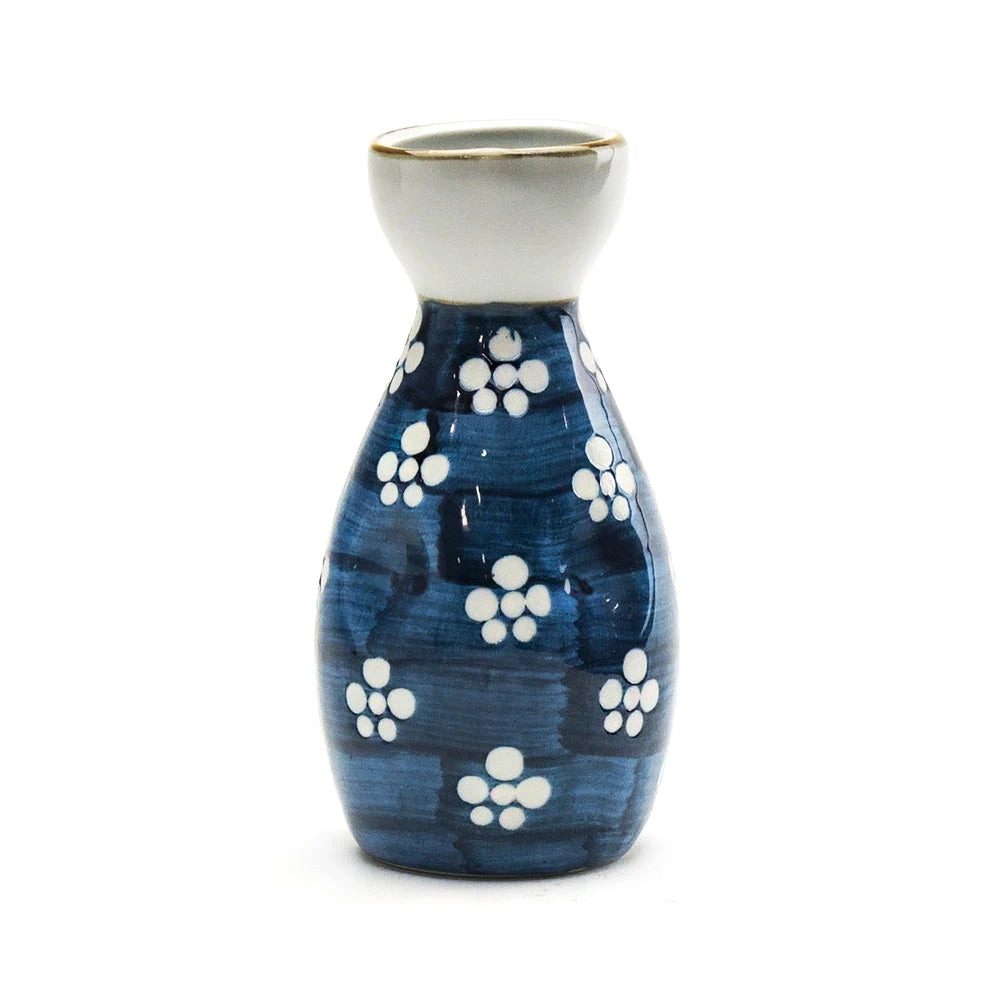
A varied counter program
For a twelve-guest comparison of three sakes, the priorities are separate beverage identities, controlled small portions, enough simultaneous cups and warming that can follow the particular sake. Individual warming vessels are a strong starting point. A connected bulk source contributes little if the program constantly changes what is being poured.
Each 30 ml selection needs 360 ml delivered across twelve guests. For the warm selection, two six-guest batches require 180 ml delivered apiece, with any check sample or retained amount allowed separately. That is a coherent service arrangement to evaluate, rather than warming all the sake long before it is needed or forcing twelve tiny direct draws through unsuitable equipment.
Keep the cup choice deliberate. Identical cups support comparison; varied craft cups can support a different presentation. Either way, the earlier eighty-four-cup example shows how simultaneous use and return overlap can dominate the purchase more than the counter's twelve-seat count.
Choose the warming and pouring pieces with the counter's actual reach, handling and return process in view. The broader setting belongs with Omakase, Edomae & Chef's Counter Restaurants.
Repeated house-sake carafes
For one house sake repeatedly served in 180 ml carafes, evaluate a documented source-fed dispenser with a verified receiver. Choose the source format around the sake packaging and replenishment pattern, then prove the actual order sequence and serving condition.
Specify the receiver with the machine. Count cups and flasks independently. Include the source connection, any separately supplied container, cleaning arrangement and actual parts route in the quote. A larger feeder is worth buying when it solves the supply problem; it is not a substitute for acceptable output at the required cadence.
A simple open-stock ceramic assortment can be a stronger operating purchase than a more elaborate set when it provides the chosen fill, compatible care and straightforward replacement. That decision should follow the service, not the assumption that one presentation is inherently more authentic or premium. The surrounding operation belongs with Traditional Sushi Bars & Full-Service Sushi Restaurants.
Several outlets and event service
A hospitality property can standardize cups and purchasing identities without putting identical warming equipment in every outlet. The dining room may need a source-fed house-sake machine, the counter separate warming vessels, and an event team complete cold-service pouring assemblies and appropriate bottle storage.
Shared stock must be genuinely interchangeable. The same appearance is insufficient if the outlets use different thermal treatments, portions or washing routes. Keep exact receivers at their machines even where guest cups are pooled.
Timing matters. Sixty cups committed to dining, thirty-six to a counter flight and eighty to an event amount to 176 active commitments before return stock and reserves. A packed event cart is unavailable to another outlet even before guests arrive. Conversely, nonoverlapping events and a feasible clean transfer can permit real sharing. Central ownership does not establish local readiness.
Central preparation also has limits. Moving warmed sake from one machine to remote service points requires the actual transfer and guest condition to be demonstrated. Locate preparation closer to the point of service where that produces a more workable result; do not assume an unmeasured hold time or travel distance.
Coordinate those sake-specific decisions with Sushi Programs in Hotels, Casinos, Food Halls & Other Hospitality Venues.
The information that belongs on the order
Scroll to read all columns
| Specification | Include |
|---|---|
| Beverage and service | Actual sake assortment, source format, selected serving conditions, carafe/cup/flight quantities and peak order sequence |
| Equipment | Full model and regional electrical configuration, beverage compatibility, applicable listing documentation and installed/refill/removal space |
| Supplied components | Source containers, connectors, stopcocks, receivers and accessories; gas supply and required fittings where applicable, with supplied and separately ordered items distinguished |
| Ware | Warming, receiving, pouring or drinking role; exact item; fit dimensions; capacity basis; intended fill; body, contact finish and components |
| Care | Complete compatible processing route, component separation, drying and ready storage |
| Quantities | Active deployment, unavailable return stock, clean-ready contingency, replacement reserve and dealer selling unit for each piece |
| Support | Supplying dealer's warranty/service route, exact replacement parts, replenishment expectations and permitted substitutes |
Before multiplying a sample into the opening order, run the complete service with the intended pieces: source, preparation or dispensing, receiving vessel, guest pour, return and ready storage. Confirm the actual amount, handling and result. That modest demonstration can resolve a mismatch that no collection of separate catalog specifications will reveal.
Buy useful capacity, not excess objects
Compare the complete ownership requirement: machine and necessary accessories, quantities that can actually work, replacement pieces, gas where relevant, cleaning effort and product disposition. Do not claim automation savings while excluding its changeover and closing work. Do not count an intentional quality-check sample as an equipment defect. No universal warmer payback period can replace those actual inputs.
The strongest sake service may use an automatic warmer, individually warmed chirori, a refrigerated dispenser, a simple ceramic flask or a carefully maintained craft set. The right choice is the one that brings the selected sake to the guest as intended and can repeat that service with the staff, stock and facilities the restaurant has provided.
Shop sake equipment, pouring ware and sets · Build independent sake-cup stock
For the rest of the opening specification, return to the Sushi Restaurant Equipment & Supplies Guide.
12 / Equipment & Specialty Supplies
Technical and purchasing references
The most useful working documents to retain with an actual specification are:
- The operating and cleaning instructions for the exact machine and serial range supplied, including the TS-2 manual or applicable TSK-130B instructions.
- The selected brewery's instructions and JSS sake-storage guidance.
- The actual maker's capacity, construction and care records for the vessels, including every removable component.
- The applicable commercial food-contact and cleaning requirements, including the California Retail Food Code for California operations.
- The ERS Tableware Quantity & Par Guide for wider circulation and replenishment planning.
Product documentation and the dated component-price comparison were reviewed on 12 October 2026. Confirm the quoted configuration, current price, available quantity and supplying dealer's terms when ordering.