

Sushi Restaurant Concepts
Sushi Programs in Hotels, Casinos, Food Halls & Other Hospitality Venues

A property's sushi purchase starts with the service it intends to deliver. A chef's counter, a food-hall outlet and a banquet station can share an address while needing different preparation, presentation and support. Fontainebleau Las Vegas illustrates the range: ITO offers omakase, while Bar ITO's food-hall menu extends to hand rolls, bowls and ramen. Their respective offers call for different purchasing briefs; a common property does not settle the equipment allocation. ITO, Bar ITO.
Use the property's kitchens, reserve storage, stewarding and beverage production wherever they can reliably perform the required work. Retain local capability where the sushi service depends on immediate access or a duty the shared operation cannot supply. Then include everything that leaves the outlet: the room-service meal, event kit, serving pieces and drinks, together with the means to return them ready for use.
That produces a defensible order: equipment justified by retained work, shared provision that genuinely removes duplication, and complete service at each destination.
In this guide 9 sections
01 / Sushi Restaurant Concepts
Choose the sushi service the property will support
Several of these commitments can operate together. Specify each one the property intends to sell before allocating preparation and equipment.
Scroll to read all columns
| Service commitment | Guest handoff | Equipment and support decision |
|---|---|---|
| Dedicated restaurant or chef's counter | A meal served through the restaurant or directly by the chef | Keep working ingredients, finishing tools and the required course pieces ready; assign upstream preparation and reserve separately. |
| Sushi within a lounge or another outlet | Sushi joins a wider food and beverage service | Establish the sushi working position and its replenishment, alongside the kitchen duties supporting the rest of the menu. |
| Food-hall or concession counter | Direct counter service, completed-order collection, or both | Select the actual handoff and the accompanying ware, condiments and carrying support; establish which returns the common venue handles. |
| Room service | A complete meal carried to the guest | Select the presentation, hot/cold carrying provision, receiving surface and collection arrangement together. |
| Recurring banquet service | An attended or replenished offer away from the permanent outlet | Reserve the preparation, people, equipment and presentation stock for the whole commitment, including setup and return. |
The operating company and the production location are separate decisions. Hissho, for example, distinguishes local chef preparation at most of its locations from delivery of completed sushi to other retail partners. A hosted brand can therefore retain production at the site, just as a property-operated outlet can receive prepared food. Hissho locations.
State what arrives: seafood requiring preparation, prepared toppings, components awaiting a final cook, prepared shari, formed portions or finished sushi. Purchased preparation removes only the work already completed. Ahjikan's assortment includes a shaped shrimp-cutlet roll component whose directions still require frying. Its form saves preparation without eliminating the remaining hot duty. Ahjikan commercial sushi ingredients.
For each service, the brief should identify the menu, incoming food state, remaining work, operating party, service windows and guest destinations. A hotel's general opening hours do not define the sushi offer's hours. Where several outlets depend on production elsewhere, the sushi commissary and central-kitchen guide develops that production relationship in detail.
02 / Sushi Restaurant Concepts
Define the host's and operator's responsibilities
Specify the usable provision
Shared support can remove substantial duplication. Norte advertises walk-in space, dishwashing, bussing and utilities; Politan's stewarding description includes returning clean, dry china to designated storage. These are tangible services to establish in the property agreement, with the allocation and receiving arrangements the sushi operation needs. Norte taproom dining, Politan stewarding.
Write the scope in terms of work delivered. A receiving point needs someone to accept the delivery. Allocated refrigeration needs accessible storage and replenishment. A common dishroom needs to return the correct pieces, dry and complete, to the service using them.
Scroll to read all columns
| Host provision | Usable support to establish | Duty retained in the sushi purchase |
|---|---|---|
| Receiving and refrigerated reserve | Acceptance responsibility, relevant supplier records, allocated space, access during sushi service and replenishment to the outlet | Working refrigeration, identified food containers and covered transfer; additional reserve only where the shared arrangement cannot supply it |
| Preparation, rice and hot-kitchen work | Exact food and preparation state delivered, available equipment and preparation window, responsible staff, receiving vessels and subsequent cooling or holding | Final cutting, assembly, seasoning or hot finishing that remains at the outlet, with the necessary working tools and surfaces |
| Beverages and ice | The required drink or ice form, allocated supply, filling or preparation point, transfer and destination receiver | Local preparation where required, together with carafes, cups, servers, ice receivers and handling pieces |
| Warewashing and clean returns | Accepted shapes and materials, item-specific care, drying, component sorting and dependable delivery of complete clean presentations | Compatible handling and storage, any supported specialist-care route, and locally ready stock |
| Utilities, storage, waste and equipment service | Actual connections and installation scope, usable handwashing, storage for working and returned equipment, waste handling and service access | Required local fixtures, connections, storage and support that the host's scope leaves unresolved |
Dependable shared preparation should count in the purchase. If the main kitchen can make the selected cooked topping in its allocated window, transfer it through the required process and supply usable reserve, the sushi outlet can be equipped for the work that remains. The same applies to rice production and beverage preparation. There is no benefit in duplicating a department whose promised output already reaches the outlet in the required condition.
Resolve the precise gap when support falls short. A late service may need continued reserve access after the preparation department closes. A hot finish may conflict with equipment already committed to another menu. Food may be ready centrally but have no assigned transfer to the counter. Those situations call for different responses: access, a revised allocation, a suitable local appliance or a responsible runner. Another machine solves only some of them.
Approve the work, not only the premises
Establish the responsible operation and applicable requirements for the work performed at each location: receiving, rice preparation, raw-fish preparation, finishing, transport and event service. Permission to use a kitchen does not settle all of those questions. King County's commissary guidance, for example, distinguishes a host facility's permit from the permits of businesses using it and includes exceptions for some already permitted or occasional-use facilities. The actual jurisdiction and operating arrangement determine the requirement. King County commercial-commissary guidance.
The FDA's 2026 Food Code is model guidance for adoption, rather than proof of the rule in force at every property. Its relevant distinctions matter here: acidification of rice does not control the raw fish or other time/temperature-control-for-safety fillings; a transfer between departments does not restart a procedure's time record; and the operation needs access to the supplier or process records its controls require. Provide convenient, usable handwashing for the retained work. FDA 2026 Food Code, §§3-402.12, 3-501.19, 5-204.11 and 5-205.11; Annex 6.
Settle the proposed processes and site requirements before removing local provision from the order. Detailed commercial equipment and site specifications and seafood refrigeration and cold-chain requirements belong with the selected operation, rather than a generic hotel equipment package.
03 / Sushi Restaurant Concepts
Equip the sushi outlet around the shared kitchen
Keep rice, neta and finishing access dependable
Begin at the point where food reaches the sushi team. Prepared neta can remove breakdown work while leaving final cutting, assembly and replenishment at the outlet. Keep the corresponding tools, board space, controlled working supply and access to reserve available through the service being sold.
A display case's operating instructions can determine the reserve requirement. Hoshizaki's HNC-150BA-L-SLH excludes overnight food storage. Its linked HNC-BA-L/R-SLH manual requires ingredients to be refrigerated before loading, states that the showcase is not intended for continuous use, and requires food to be moved to a refrigerator during defrost. Extended hotel or casino service must accommodate those interruptions. A larger display does not remove them. Hoshizaki model record, HNC instruction manual, printed p. 10.
The purchase therefore needs reserve accessible for replenishment, closing and the selected case's operating cycle. Allocated host refrigeration can perform that job if the sushi operation can reach it when required. Where it cannot, provide the missing reserve locally or change the service arrangement. Select refrigerated sushi cases against the required duty, and confirm the exact model's operating and regulatory status for the site before ordering.
Rice needs an equally precise handover:
- Plain cooked rice for local preparation: retain the chosen seasoning or mixing provision, its tools and working area, and the receiving and holding arrangement.
- Prepared shari: provide identified receipt, a suitable working vessel and dependable replenishment. Another cooker is unnecessary if cooking is already supplied reliably.
- Formed portions or prepared pieces: specify protected trays, retrieval and the remaining assembly or service. The usable tray arrangement may matter more than a bulk-vessel capacity.
Include the complete container: body, lid, compatible trays where used, and somewhere for a removed lid or withdrawn tray that does not consume the cutting position. Insulation does not determine the permitted treatment of the food inside. Use the commercial rice-equipment research guide for the wider cooking and holding selection.
Working access and transfer can require different closures. A notched lid suits an arrangement with a utensil in place; a compatible inner-seal cover serves a different storage or transfer duty. Cambro offers both types. Specify the closed load arriving from shared preparation and the cover used during service, rather than assuming one lid performs both jobs equally. Cambro food-pan covers, seal covers.
Keep dry working nori and the required knives, boards, mats and utensils where assembly occurs. A compact working container such as the hinged NC-1, described with a stainless-steel inner base, gives the local nori supply a defined place without requiring the whole reserve package to be opened repeatedly. Choose it for the cut and retrieval arrangement, with protected reserve kept separately. NC-1 nori container.
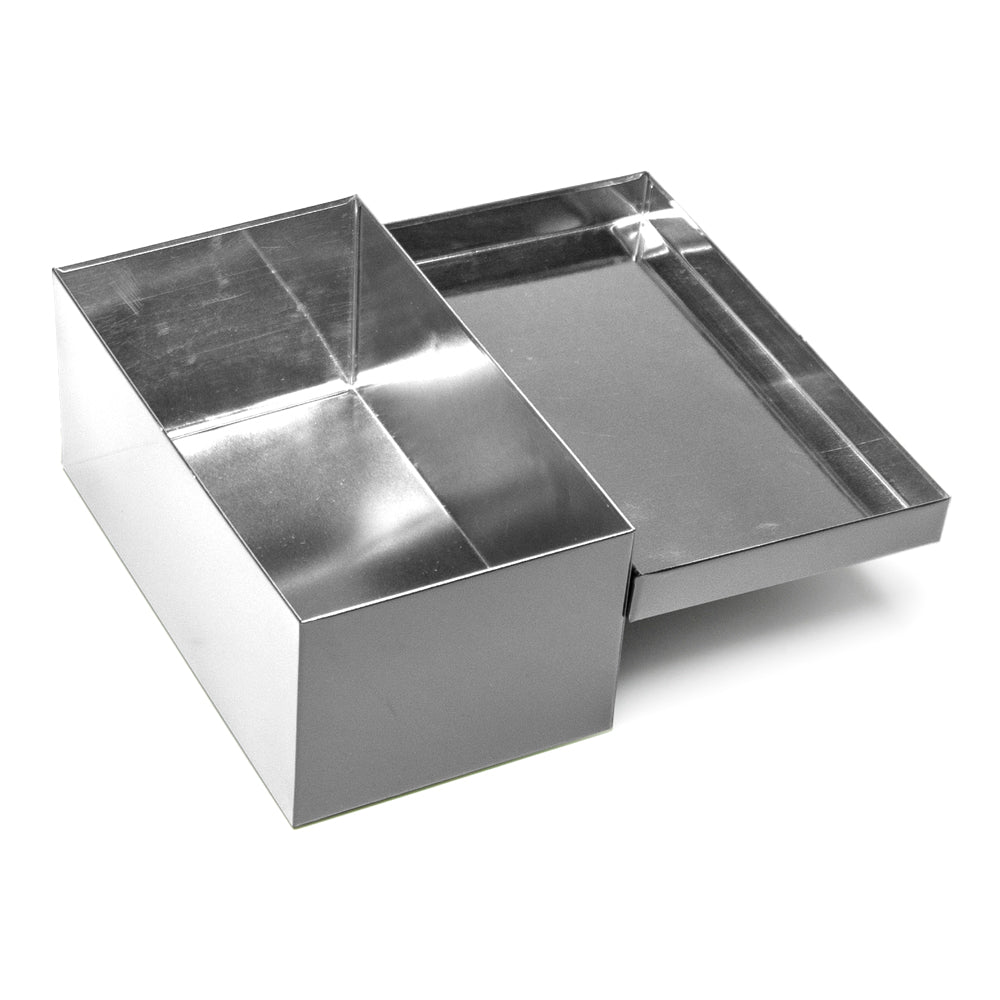
The next usable batch must have a receiving position, and used tools and emptied containers must have a return. Carry those provisions through closing, particularly when shared preparation stops before sushi service. The nori, neta and sushi mise-en-place guide develops the individual working objects; here, their job is to make the host's preparation usable at the counter.
Use the hot kitchen for defined duties
Separate planned cooked-component preparation, order-time finishing, reheating and holding. Each has a different incoming food condition and release requirement. An available oven or hot cabinet is useful only when it can perform the assigned operation.
Planned preparation is often the strongest candidate for sharing. Reserve the actual food, equipment window and receiving pans, then assign the cooling or holding that follows. The sushi outlet can receive the prepared component and retain only the required final work. The purchase should reflect that division.
Order-time finishing needs access during the relevant service. If the shared equipment is committed to an incompatible process then, arrange a dependable alternative: reallocate the duty, provide appropriate local finishing, or change the menu's promise. A nominally spare appliance elsewhere does not help unless the required staff, access and receiving arrangement are also available.
Preserve the distinction between heating food and holding it hot. A cabinet intended for already-hot food cannot automatically be assigned to cook an uncooked load or reheat a refrigerated one. The hot-kitchen equipment guide develops those equipment choices. Specify the retained operation and where its completed food goes; avoid ordering a second general-purpose line simply because sushi has been added to the property.
Explore the ERS collection
Refrigerated Sushi Cases
Compare the assortment for this part of your service.
-
 Image unavailable
Turbo Air SAK-50R-N 48" Stainless Steel Curved Glass Refrigerated Sushi Case - Right Side Condenser
View details & options : Turbo Air SAK-50R-N 48" Stainless Steel Curved Glass Refrigerated Sushi Case - Right Side Condenser
Image unavailable
Turbo Air SAK-50R-N 48" Stainless Steel Curved Glass Refrigerated Sushi Case - Right Side Condenser
View details & options : Turbo Air SAK-50R-N 48" Stainless Steel Curved Glass Refrigerated Sushi Case - Right Side Condenser
-
 Image unavailable
Hoshizaki HNC-180BA-L-SLH 70.9" Stainless Steel Curved Glass Refrigerated Sushi Case - Left Side Condenser
View details & options : Hoshizaki HNC-180BA-L-SLH 70.9" Stainless Steel Curved Glass Refrigerated Sushi Case - Left Side Condenser
Image unavailable
Hoshizaki HNC-180BA-L-SLH 70.9" Stainless Steel Curved Glass Refrigerated Sushi Case - Left Side Condenser
View details & options : Hoshizaki HNC-180BA-L-SLH 70.9" Stainless Steel Curved Glass Refrigerated Sushi Case - Left Side Condenser
-
 Image unavailable
Hoshizaki HNC-150BA-R-SLH 59.1" Stainless Steel Curved Glass Refrigerated Sushi Case - Right Side Condenser
View details & options : Hoshizaki HNC-150BA-R-SLH 59.1" Stainless Steel Curved Glass Refrigerated Sushi Case - Right Side Condenser
Image unavailable
Hoshizaki HNC-150BA-R-SLH 59.1" Stainless Steel Curved Glass Refrigerated Sushi Case - Right Side Condenser
View details & options : Hoshizaki HNC-150BA-R-SLH 59.1" Stainless Steel Curved Glass Refrigerated Sushi Case - Right Side Condenser
-
 Image unavailable
Turbo Air SAK-60R-N 60" Stainless Steel Curved Glass Refrigerated Sushi Case - Right Side Condenser
View details & options : Turbo Air SAK-60R-N 60" Stainless Steel Curved Glass Refrigerated Sushi Case - Right Side Condenser
Image unavailable
Turbo Air SAK-60R-N 60" Stainless Steel Curved Glass Refrigerated Sushi Case - Right Side Condenser
View details & options : Turbo Air SAK-60R-N 60" Stainless Steel Curved Glass Refrigerated Sushi Case - Right Side Condenser
-
 Image unavailable
Hoshizaki HNC-180BA-R-SLH 70.9" Stainless Steel Curved Glass Refrigerated Sushi Case - Right Side Condenser
View details & options : Hoshizaki HNC-180BA-R-SLH 70.9" Stainless Steel Curved Glass Refrigerated Sushi Case - Right Side Condenser
Image unavailable
Hoshizaki HNC-180BA-R-SLH 70.9" Stainless Steel Curved Glass Refrigerated Sushi Case - Right Side Condenser
View details & options : Hoshizaki HNC-180BA-R-SLH 70.9" Stainless Steel Curved Glass Refrigerated Sushi Case - Right Side Condenser
-
 Image unavailable
Turbo Air SAK-70L-N 71" Stainless Steel Curved Glass Refrigerated Sushi Case - Left Side Condenser
View details & options : Turbo Air SAK-70L-N 71" Stainless Steel Curved Glass Refrigerated Sushi Case - Left Side Condenser
Image unavailable
Turbo Air SAK-70L-N 71" Stainless Steel Curved Glass Refrigerated Sushi Case - Left Side Condenser
View details & options : Turbo Air SAK-70L-N 71" Stainless Steel Curved Glass Refrigerated Sushi Case - Left Side Condenser
-
 Image unavailable
Turbo Air SAS-50R-N 47¼" Straight Glass Refrigerated Sushi Case - Right Side Condenser
View details & options : Turbo Air SAS-50R-N 47¼" Straight Glass Refrigerated Sushi Case - Right Side Condenser
Image unavailable
Turbo Air SAS-50R-N 47¼" Straight Glass Refrigerated Sushi Case - Right Side Condenser
View details & options : Turbo Air SAS-50R-N 47¼" Straight Glass Refrigerated Sushi Case - Right Side Condenser
-
 Image unavailable
Turbo Air SAS-60R-N 59" Straight Glass Refrigerated Sushi Case - Right Side Condenser
View details & options : Turbo Air SAS-60R-N 59" Straight Glass Refrigerated Sushi Case - Right Side Condenser
Image unavailable
Turbo Air SAS-60R-N 59" Straight Glass Refrigerated Sushi Case - Right Side Condenser
View details & options : Turbo Air SAS-60R-N 59" Straight Glass Refrigerated Sushi Case - Right Side Condenser


04 / Sushi Restaurant Concepts
Build room service around the complete order
Select room-service equipment around the meal the guest orders. Four Seasons Doha's in-room menu, for example, offers sushi and sashimi platters with condiments within a wider menu. That is a complete carried service, with requirements beyond the sushi platter's footprint. Four Seasons Doha in-room dining.
Lay out the intended food-bearing pieces, sauce vessels, utensils, napkins, drinks and any cooked accompaniments. Include covers where used. Establish whether staff carry a tray to an available guest surface or leave a rolling table in the room. The latter commits a table and its destination footprint until collection; the former depends on an appropriate surface already being available.
Forbes makes the carrying choice concrete. Its 4961 room-service table uses fixed hot-box rails. The 4961-WDS option uses drop-down shelves for hot/cold boxes, with the shelves folding up for nesting. Specify the actual carrier with the table option: the support and stored arrangement change with that suffix. Forbes 4961 and 4961-WDS.
Confirm the selected box's support, opening and removal with the table, and the covered load's clearance inside the carrier. Review the loaded journey and the arrangement left with the guest before ordering a fleet. A table's outside dimensions cannot settle those relationships, and a hot-food carrier does not supply the sushi component's cold duty. Keep the required hot and cold provisions distinct through dispatch and delivery.
When sushi, cooked food and beverages come from different departments, assign release of the complete order. Each contribution needs its appropriate waiting position and controls until the meal is ready to leave. The person releasing the order needs to see the complete presentation, including small accompaniments that otherwise create a second trip.
Collection belongs in the equipment brief. Ware remaining in a room is unavailable for the next order; a returned table, carrier and dish assortment can also require different processing. Provide used-item receiving, the carrier's specified reset, component sorting and ready storage. Additional stock should cover the actual time away and processing commitment, while the collection arrangement returns what the property already owns.
If the property deliberately offers packed meals, use the sushi takeout and delivery guide for that packaging choice. A plated in-room offer retains its own presentation, receiving and collection requirements.
05 / Sushi Restaurant Concepts
Match food-hall equipment to the guest handoff
A food-hall address leaves the guest handoff open. Tekka in The Cosmopolitan's Block 16 offers made-to-order hand rolls prepared counter-side, alongside sake. That direct relationship needs a different receiving arrangement from a completed order collected for common seating. Tekka Bar.
For direct service, retain the guest's receiving place, the intended condiments and drinks, clean supporting pieces and removal of used ware. Keep that provision next to the work it supports. The hand-roll and temaki restaurant guide develops the counter-service choices where immediate handoff defines the concept.
For completed-order collection, provide a place where the whole order can be identified and collected with its utensils, condiments and carrying support. Keep that receiving position from displacing open-food preparation. Where both services are offered, allocate the finishing and clean-stock provision to both; collection orders should not silently consume the pieces reserved for direct counter service. The fast-casual and express sushi guide addresses the production side of that offer.
Establish common seating, bussing, washing and clean return separately. A venue can provide seats while leaving trays and ware with each operator. Its collector may remove used pieces without returning the sushi outlet's exact clean replacements. A shared bar may handle beverage sales while the sushi counter still needs its own sake-serving pieces. Write those remaining objects and transfers into the purchase.
The same judgment applies to other concessions. MSP describes Shoyu as a full-service restaurant serving sushi, noodles and dumplings. Obtain that site's actual receiving, access and fit-out requirements for the proposed operation; an airport location alone does not prescribe a takeaway counter or reveal its support arrangements. Shoyu at MSP.
06 / Sushi Restaurant Concepts
Plan recurring banquets alongside the permanent outlet
Reserve the people, equipment and stock the event actually uses
A recurring banquet offer draws on the property before guests reach the station. A previously published seasonal catering menu from Four Seasons Denver illustrates the format: it included a chef-attended sushi station. The property's own menu must then determine what work occurs at its event: displaying completed pieces, replenishing, assembling, cutting and rolling, or finishing selected items. Four Seasons Denver historical seasonal menu.
Allocate preparation and packing first. Ingredients, working vessels, tools and presentation pieces can be committed while the permanent outlet is still serving. Packed event stock has already left its ready supply. A preparation appliance may remain in the main kitchen while its time is committed to banquet production.
Carry that allocation through setup, guest service, replenishment, breakdown and processing. The team assembling the station needs the complete kit and destination support. The team replenishing it needs access to the agreed reserve. Returned ware and dismantled components remain committed until the required processing and reassembly are complete. An event ending does not immediately replenish the outlet's shelves.
Resolve conflicts at the point they occur. A dedicated set of event servingware may protect the outlet's presentation stock. A dependable preparation allocation may avoid another production appliance. A selected rental may cover a function used only for a particular event. An adjusted menu may be the better choice when the property cannot support the promised preparation and service together.
Make those decisions against the permanent outlet's concurrent work. The relevant question is what the event actually consumes, from preparation through return, and what must remain available elsewhere. A guest count alone cannot establish that allocation.
Buy the complete deployment and return provision
Forbes's TRIO 5070A shows why a mobile station needs both working and packed specifications. The maker describes a kit of three folding stations and a transport cart; its selected functional tiles and configuration belong in the quote. The listed forms differ substantially:
Scroll to read all columns
| Form | Manufacturer-listed length × width × height |
|---|---|
| Individual working station | 66 × 30 × 32.5 inches |
| Complete kit cart | 78.8 × 37 × 64.2 inches |
Storage and movement must accommodate the packed cart; the event must accommodate the assembled stations and the work around them. A plan based only on one countertop's length misses the equipment the property receives and stores. Identify where the empty cart waits during service as well as where the packed kit lives between events.
Assign setup and readiness. Forbes's instructions require the frame and components to be assembled and checked before the service load is added. The selected appliances still need their appropriate support, utilities and operating arrangements. A furniture kit does not establish the fit of a particular sushi case, the reserve refrigeration, rice provision or handwashing for the proposed event. Forbes TRIO setup instructions.
Include breakdown and return in the selected configuration. Required parts need an assigned place, suitable processing and a complete repack. The next deployment needs usable stations with their specified components, rather than a cart holding an incomplete assortment.
Ownership, rental and host supply can all work:
- Owned equipment needs storage, upkeep, replacement components and allocation between events.
- Rented equipment needs an exact supplied scope, including accessories, delivery, setup, utilities, collection and return condition where those services are required.
- Host or central stock needs dependable reservation, compatibility, delivery to the event and return readiness.
Combine them where useful. The property can retain menu-specific working pieces while using suitable venue furniture, or own a recurring base kit and rent an additional function. Compare the same complete obligation across the alternatives. A furniture-only rental line is not equivalent to a configured purchase with the receiving and setup work included.
The sushi catering, banquet and mobile-equipment guide develops portable kit selection and transport in greater detail. The hospitality brief should preserve the resource allocation alongside the permanent outlet and name who makes the event ready and restores the kit afterward.
07 / Sushi Restaurant Concepts
Choose servingware for stewarding, storage and return
Fit the assortment to the handling equipment
Select the sushi presentation with the people who will handle and process it. Elongated plates, shared oke and multipart boxes need usable carrying, washing, drying and storage arrangements. Keep the forms that earn their place in the menu, then provide a supported route through stewarding.
Cambro's dish caddies illustrate the importance of shape and configuration:
Scroll to read all columns
| Caddy | Documented selection boundary |
|---|---|
| ADCS adjustable dish caddy | Described for round and square dishes; the actual piece and arrangement still need to suit the selected unit. |
| ADCSC compact adjustable dish caddy | Round dishes only. Its standard four-tower configuration lists 9–12-inch round ware; smaller round pieces require the appropriate tower package. |
Cambro expressly excludes square, rectangular and oval plates from the compact model. The family name and a headline size range are insufficient specifications. Cambro ADCS, ADCSC configurations, manufacturer shape guidance.
ERS's JX288-B makes that boundary practical: it is an 8¾ × 5-inch rectangular porcelain plate, listed as dishwasher-safe. Its shape excludes it from the compact round-only caddy, regardless of its modest overall dimensions. Give the selected plate a suitable handling route rather than ordering a caddy from the longest dimension alone. JX288-B plate.

Care can change the route just as decisively. The WO-17-7, a 15½-inch-diameter plastic/lacquer sushi oke, carries hand-wash directions. If that presentation belongs in the menu, provide an appropriate process for its size and prescribed care that also meets the operation's sanitation requirements. Its care should not be generalized to every lacquer item or silently replaced by the normal machine-wash route for china. WO-17-7 sushi oke.

There are three useful responses to a mismatch: provide suitable handling equipment, retain a limited specialist assortment with an assigned care route, or choose another presentation that performs the menu's job. A compact caddy should not dictate the entire sushi assortment. Equally, a specialist piece needs a sustainable return before it is multiplied across rooms and events.
Use the sushi and omakase tableware guide for assortment development and the traditional sushi servingware guide for the particular forms. Select sushi ware with its actual handling and care in view.
Count complete presentations through return
Review stock by where it is and whether it is usable. Pieces at the counter, held in rooms, reserved for events, being washed or drying cannot all be treated as ready replacements. A central pool contributes when the correct clean pieces can reach the service that needs them.
For multipart ware, count the required presentation. ERS identifies WZ12-B-D as an inner tray for WZ12-B. That exact component relationship belongs in the item record and replacement order. The insert's own care statement does not establish care for the complete box, and a separately listed replacement does not by itself establish the contents of the original package. WZ12-B-D inner tray, WZ12-B box.

Record the body, correct insert and any lid or small dish the selected service actually requires. A shelf of bodies can conceal a shortage of complete presentations. Additional inserts may solve one shortage; more complete sets may be justified by the actual room-service absence or event reservation; a dependable return may restore usable stock already owned.
Keep event pieces reserved from packing through their required return processing. Keep the outlet's ready allocation distinct from stock merely owned centrally. Then determine additional quantities from the actual commitments and replenishment available. A generic multiplier cannot repair an incompatible caddy, unsupported care or missing component identity.
The restaurant tableware quantity guide develops the quantity work. For a selected bento-box presentation, carry the complete assembly and selling unit into that calculation.
Choose a handling route for the intended presentation. A compact caddy does not define the whole sushi assortment.
Explore the ERS collection
Sushi Plates
Compare the assortment for this part of your service.
-
 Image unavailable
Melamine Rectangular Platter 13", Shiny White
View details & options : Melamine Rectangular Platter 13", Shiny White
Image unavailable
Melamine Rectangular Platter 13", Shiny White
View details & options : Melamine Rectangular Platter 13", Shiny White
-
 Image unavailable
8-1/2"x5-3/4" Rectangular Plate, White Ceramic
View details & options : 8-1/2"x5-3/4" Rectangular Plate, White Ceramic
Image unavailable
8-1/2"x5-3/4" Rectangular Plate, White Ceramic
View details & options : 8-1/2"x5-3/4" Rectangular Plate, White Ceramic
-
 Image unavailable
Melamine Rectangular Plate 13"x5", Ecus
View details & options : Melamine Rectangular Plate 13"x5", Ecus
Image unavailable
Melamine Rectangular Plate 13"x5", Ecus
View details & options : Melamine Rectangular Plate 13"x5", Ecus
-
 Image unavailable
Melamine Rectangular Plate 10"x4", Bamboo
View details & options : Melamine Rectangular Plate 10"x4", Bamboo
Image unavailable
Melamine Rectangular Plate 10"x4", Bamboo
View details & options : Melamine Rectangular Plate 10"x4", Bamboo
-
 Image unavailable
Melamine Rectangular Plate 7-7/8"x 5-1/2", Matte Black
View details & options : Melamine Rectangular Plate 7-7/8"x 5-1/2", Matte Black
Image unavailable
Melamine Rectangular Plate 7-7/8"x 5-1/2", Matte Black
View details & options : Melamine Rectangular Plate 7-7/8"x 5-1/2", Matte Black
-
 Image unavailable
8.25"X5.5" Rectangular Plate, White Ceramic
View details & options : 8.25"X5.5" Rectangular Plate, White Ceramic
Image unavailable
8.25"X5.5" Rectangular Plate, White Ceramic
View details & options : 8.25"X5.5" Rectangular Plate, White Ceramic
-
 Image unavailable
Melamine Rectangular Slate Platter 12-3/16, Soil Porcelain
View details & options : Melamine Rectangular Slate Platter 12-3/16, Soil Porcelain
Image unavailable
Melamine Rectangular Slate Platter 12-3/16, Soil Porcelain
View details & options : Melamine Rectangular Slate Platter 12-3/16, Soil Porcelain
-
 Image unavailable
10-1/2"x4" Rectangular Dish, White Ceramic
View details & options : 10-1/2"x4" Rectangular Dish, White Ceramic
Image unavailable
10-1/2"x4" Rectangular Dish, White Ceramic
View details & options : 10-1/2"x4" Rectangular Dish, White Ceramic


08 / Sushi Restaurant Concepts
Supply sake, tea, water and ice to each destination
Put beverage preparation where the service needs it
A dining room repeatedly filling house-sake carafes, a counter changing among selected sakes and an event pouring chilled sake can justify different preparation equipment. Common cups can still be purchased centrally where the portion, presentation and care genuinely suit those services.
Keep machine-dependent receivers exact. Taiji's TSK-130B does not include its source cube or serving bottle. Its applicable instructions describe dispensing that stops when the liquid reaches the nozzle and warn that some bottle shapes may not work. The receiver is part of the functional selection; preserve the verified arrangement and check the delivered quantity when it changes. Taiji TSK-130B, TSK-130B instructions.
Central warming is useful when the sake reaches the guest in the intended condition through the actual journey. If it cannot, change the transfer or place appropriate preparation nearer the service. Include any intermediate receiver, pouring vessel and reset with that decision. The sake equipment and servingware guide develops the preparation choices; select sake ware for its specific receiving, pouring or drinking role.
Tea needs its own preparation and receiving arrangement. A defined central batch can suit one service; locally brewed tea supplied with suitable water can suit another. Include the server or pot, any strainer, cups and return. BUNN's combination-brewer specification, for example, lists tea capability while identifying servers as separate purchases. A brewer-only order leaves that receiving duty open. BUNN brewer specification.
For refillable water, assign filling, carrying, clean closures where used, used-bottle receiving, washing, drying and ready stock. Vivreau's ancillary catalog distinguishes bottle-washing accessories and crates for clean bottles from those awaiting sanitization. Select the bottle or carafe with the compatible accessories and return arrangement; increasing filling capacity cannot release bottles still held in rooms or awaiting processing. Vivreau ancillary catalog. The drinkware collection provides the guest-vessel selection once those duties are defined.
Complete the central-ice arrangement
Specify the required ice form, shared allocation, storage, transfer and local receiver. The property's total daily production does not establish what reaches the sushi outlet when bars and banquets are drawing from the same supply.
Follett's ITS with SmartCART 240 separates production from storage and transport: ice feeds by gravity from the bin into the cart, and the ice machine is sold separately. Its current specification also calls for cart-withdrawal space in front of the bin: 42 inches minimum, 56 inches preferred. Include the loading position, withdrawal, route and return in the selected arrangement. Follett ITS, ITS specification.
Optional Totes address a final transfer where ice needs to be lifted from the cart. They change the configuration and have their own care requirement: the linked ITS manual excludes dishwasher treatment for the Totes. A common dishroom therefore needs the specified route for those transfer pieces as well as the outlet's receiving equipment. Follett ITS operation and care.
Keep beverage ice separate from seafood-contact holding. The tea, water and ice-service guide develops machine selection, water supply, ice forms and demand. The hospitality purchase must complete the shared supply at the service point and return its transfer equipment ready for replenishment.
Include the local receiver and the applicable transfer-piece care. Optional Totes have a separate route; the linked manual excludes dishwasher treatment.
Explore the ERS collection
Sake Cups, Bottles & Warmers
Compare the assortment for this part of your service.
-
 Image unavailable
Taiji TSK-150CS Sake Warmer Dispenser 5-Gallon
View details & options : Taiji TSK-150CS Sake Warmer Dispenser 5-Gallon
Image unavailable
Taiji TSK-150CS Sake Warmer Dispenser 5-Gallon
View details & options : Taiji TSK-150CS Sake Warmer Dispenser 5-Gallon
-
 Image unavailable
Taiji TSK-150C Sake Warmer Dispenser 5-Gallon – Ivory
View details & options : Taiji TSK-150C Sake Warmer Dispenser 5-Gallon – Ivory
Image unavailable
Taiji TSK-150C Sake Warmer Dispenser 5-Gallon – Ivory
View details & options : Taiji TSK-150C Sake Warmer Dispenser 5-Gallon – Ivory
-
 Image unavailable
5-Gallon Electric Sake Warmer & Dispenser - NEC-1
View details & options : 5-Gallon Electric Sake Warmer & Dispenser - NEC-1
Image unavailable
5-Gallon Electric Sake Warmer & Dispenser - NEC-1
View details & options : 5-Gallon Electric Sake Warmer & Dispenser - NEC-1
-
 Image unavailable
Sake Warmer (TS-2)
View details & options : Sake Warmer (TS-2)
Image unavailable
Sake Warmer (TS-2)
View details & options : Sake Warmer (TS-2)
-
 Image unavailable
Sake Warmer (TSK-130B)
Image unavailable
Sake Warmer (TSK-130B)
Currently unavailable online
View details & options : Sake Warmer (TSK-130B) -
 Image unavailable
Plastic Sake Bottle Green Bamboo 13oz
View details & options : Plastic Sake Bottle Green Bamboo 13oz
Image unavailable
Plastic Sake Bottle Green Bamboo 13oz
View details & options : Plastic Sake Bottle Green Bamboo 13oz
-
 Image unavailable
Plastic Sake Cup Green Bamboo 2"x2"
View details & options : Plastic Sake Cup Green Bamboo 2"x2"
Image unavailable
Plastic Sake Cup Green Bamboo 2"x2"
View details & options : Plastic Sake Cup Green Bamboo 2"x2"
-
 Image unavailable
Sake Cup Plastic Green Bamboo 2"Dx1.3"H
View details & options : Sake Cup Plastic Green Bamboo 2"Dx1.3"H
Image unavailable
Sake Cup Plastic Green Bamboo 2"Dx1.3"H
View details & options : Sake Cup Plastic Green Bamboo 2"Dx1.3"H


09 / Sushi Restaurant Concepts
Standardize the right items and purchase the complete program
Share purchasing identities without forcing identical outlets
Central purchasing, physical pooling and local readiness are separate choices. A property can order the same cup for several outlets while reserving a usable quantity at each. It can own an event kit centrally while allocating it to only one commitment at a time. It can share preparation while retaining different finishing equipment for different menus.
Standardize pieces that are genuinely interchangeable. Preserve the exact identities of equipment-dependent receivers, inserts, lids and other required components. Maintain outlet-specific presentation where it serves the menu, and reserve event stock according to its real commitment.
The buying record should retain the full equipment model and suffix, applicable regional configuration and relevant revision or serial range, together with the selected accessories. For ware, retain item identity, required parts, prescribed care and actual selling unit. A piece, pair, set, pack and master carton are different order quantities; the selected guest service determines the ratio required.
Name who approves substitutions and obtains replacements. Review a substitute against the feature that makes the item work: receiver geometry, insert fit, allowable shape, thermal duty or care. Similar appearance does not preserve those relationships. The multi-location supply and standardization guide develops the continuing purchasing record.
Attach interruption plans to the actual duty. Allocated reserve can cover a case's required shutdown; an available compatible carrier can cover a reset; a deliberately limited offer may be appropriate while a unique component is unavailable. Identify the available response and who coordinates service or replacement. Buying a spare of every machine is unnecessary where a dependable alternative completes the work.
Release a complete, supportable order
Bring the decisions together in one hospitality brief:
- Service and food: the sushi menu, incoming preparation state, retained work, service windows and guest destinations.
- Usable host support: allocated preparation, reserve, receiving, stewarding, beverage supply and access, with the responsible parties and receiving points.
- Local equipment: exact configurations, tools and working vessels, utilities, reserve access and required operating interruptions.
- Room service: the complete presentation, selected table option and carriers, loaded receiving arrangement, release and collection/reset.
- Recurring events: actual on-site work, reserved people and stock, selected kit and functional components, packed and working needs, setup and return.
- Ware and beverages: complete presentations, machine receivers, handling and care, locally ready quantities, replenishment and used-item receiving.
- Supply and support: included and separately ordered items, selling units, delivery, assembly, connections, readiness, replacements and responsibility for each outcome.
Equipment delivered to the property's receiving point, assembled at the destination and connected ready for use are different quotation scopes. Identify who supplies each required outcome before comparing equipment suppliers. The broader sushi equipment and supplies checklist can then cover the rest of the opening order without obscuring these hospitality-specific decisions.
Review the actual intended service before multiplying the selection. Confirm the covered meal and carrier arrangement, the dispenser's receiving quantity, the permitted caddy configuration, the packed kit's handling and the complete return of required pieces. Settle the applicable site and process requirements with the responsible parties. Record what was actually confirmed and resolve the outstanding selection before releasing that part of the order.
Bring the hospitality brief to ERS, including the service you intend to support, what the property reliably supplies, the equipment and ware selected, and the remaining purchase questions.