

CONTEMPORARY OMAKASE TABLEWARE RESEARCH · COUNTER & COURSE PRESENTATION
Contemporary Omakase & Sushi Restaurant Tableware: Plates, Bowls & Servingware
Contemporary omakase tableware is a coordinated sequence of plates, bowls and specialty vessels selected around a chef-led meal. Recurring pieces connect the experience; changes in surface, proportion and form give individual courses their character.
This guide helps chefs, owners and designers choose restrained, heritage-forward, artist-led or expressive directions. Compare the course, counter, food contrast, tactile presentation, production consistency, quantity and replacement. ERS applies Japanese tabletop specification and sourcing experience to the commercial requirements behind that sequence. The goal is purposeful presentation variety supported by dependable recurring pieces—not a different decorative object for every course.
An omakase counter is designed across a meal, not as a matching set. Recurring pieces provide continuity; course-specific vessels create contrast when the food calls for it.
Build a contemporary sushi and omakase tabletop around the progression from recurring nigiri service to sashimi, otsumami, steamed or lidded courses, and the final tea or dessert presentation. Compare nigiri landing plates, sashimi serving pieces, small course plates, shallow bowls, lacquerware, glass, sake cups, tea ware, chopsticks and rests—selected in relation to food color, usable plating area, counter material, lighting and the courses before and after.
Explore refined porcelain, sculptural Japanese ceramics, high-fired and reactive glazes, tactile surfaces and restrained heritage accents. Eden Restaurant Supply shows when to repeat one presentation surface, rotate a coordinated selection or invest in distinctive specialty pieces—and how to support the result with appropriate quantities, commercial handling, cleaning, storage and dependable replacement sourcing.
 Recurring nigiri surface7.25" x 4.75" Rectangular Ceramic Plate, Beige, Brown
7.25" x 4.75" · Ceramic
Warm, irregular-looking edges and a restrained field give repetition character without a loud pattern.
$9.99
View Product
Recurring nigiri surface7.25" x 4.75" Rectangular Ceramic Plate, Beige, Brown
7.25" x 4.75" · Ceramic
Warm, irregular-looking edges and a restrained field give repetition character without a loud pattern.
$9.99
View Product
 Shallow sauced course6.65" Ceramic Deep Plate, Blue, Brown
6.65" · Ceramic
A compact walled format gives softer food containment while keeping the composition open.
$11.99
View Product
Shallow sauced course6.65" Ceramic Deep Plate, Blue, Brown
6.65" · Ceramic
A compact walled format gives softer food containment while keeping the composition open.
$11.99
View Product
 Sculptural small courseCeramic Bowl — 5 fl. oz., Blue
4 in (axis unspecified), 2 in height · Ceramic
The compact raised corners create a distinct course silhouette; test sauce placement and handling.
$6.49
View Product
Sculptural small courseCeramic Bowl — 5 fl. oz., Blue
4 in (axis unspecified), 2 in height · Ceramic
The compact raised corners create a distinct course silhouette; test sauce placement and handling.
$6.49
View Product
 Open soup / owanLacquer Miso Soup Bowl 4.5", Black/Red
4-1/2"D x 2-1/4"H
A simple open lacquer format keeps the soup course materially distinct and the utility decision rational.
$2.15
View Product
Open soup / owanLacquer Miso Soup Bowl 4.5", Black/Red
4-1/2"D x 2-1/4"H
A simple open lacquer format keeps the soup course materially distinct and the utility decision rational.
$2.15
View Product
 Sake cupPorcelain Sake Cup 2"Dx1.5"H - 2 Oz, Chun Tenmoku - Blue/Dark Brown
2"D x 1-1/2"H · Porcelain
A small, frequently handled vessel that can introduce contrast without crowding the food.
$2.75
View Product
Sake cupPorcelain Sake Cup 2"Dx1.5"H - 2 Oz, Chun Tenmoku - Blue/Dark Brown
2"D x 1-1/2"H · Porcelain
A small, frequently handled vessel that can introduce contrast without crowding the food.
$2.75
View Product
 Sake bottlePorcelain Sake Bottle 6.25"Hx2.75"D - 10 Oz, Chun Tenmoku - Blue/Dark Brown
6-1/4"H x 2-3/4"D · Porcelain
A table-visible sake anchor; coordinate with the cup without requiring an identical finish.
$7.95
View Product
Sake bottlePorcelain Sake Bottle 6.25"Hx2.75"D - 10 Oz, Chun Tenmoku - Blue/Dark Brown
6-1/4"H x 2-3/4"D · Porcelain
A table-visible sake anchor; coordinate with the cup without requiring an identical finish.
$7.95
View Product
 Persistent detail2.5"X0.75"H Porcelain Chopstick Rest, Matte Black
2-1/2" x 3/4"H · Porcelain
A repeatable landing point for chopsticks; small enough to stay present through the meal.
$1.25
View Product
Persistent detail2.5"X0.75"H Porcelain Chopstick Rest, Matte Black
2-1/2" x 3/4"H · Porcelain
A repeatable landing point for chopsticks; small enough to stay present through the meal.
$1.25
View Product
 ChopsticksChopsticks – Matte Black with Silver Accent
A persistent tactile detail. Choose the tip and balance with the chef, not just the color.
$2.00
View Product
ChopsticksChopsticks – Matte Black with Silver Accent
A persistent tactile detail. Choose the tip and balance with the chef, not just the color.
$2.00
View Product
In This Guide 11 decision milestones
A contemporary omakase tabletop should not look like a dinnerware set. It should look deliberate.
The strongest programs use repetition where continuity matters, change vessels where the food or course earns it, and coordinate shape, material, surface, color, scale, and tactile character across the progression of the meal. A quiet porcelain plate, a heavily fired ceramic dish, lacquer, glass, sake ware, and a sculptural small bowl can all belong at the same counter if they are selected with the same degree of intent as the food.
For a restaurant, that visual freedom still has to survive service. High-use pieces need to be workable, replaceable, and available. More specialized vessels should be used where their added character materially improves the presentation.
This guide shows how to build that tabletop—and how to buy it.
Explore Contemporary Omakase Tableware
See Complete Tabletop Examples
01CONTEMPORARY OMAKASE / identity
What Makes a Tabletop Feel Contemporary Omakase?
Contemporary omakase is not defined by black plates, reactive glaze, handmade pottery, pale hinoki, or any other single visual cue.
It is defined by how the tabletop is composed across the meal.
The vessel is selected in relationship to the food it carries, the course before and after it, the counter beneath it, and the broader identity of the restaurant. Some pieces repeat. Others appear once. A course may need a quiet field that almost disappears beneath the food; another may justify a vessel with enough form, color, or surface character to become part of the presentation itself.
That approach has deep precedent in Japanese dining. Japanese tableware has never depended on the Western idea that every plate and bowl must come from a single matching line. Different foods, seasons, materials, shapes, patterns, and vessels can coexist because the relationship between food and vessel matters more than literal uniformity.
Contemporary omakase gives that logic greater freedom.
A restaurant can use refined white porcelain, earthy ceramics, lacquer, strong blue or green glazes, glass, patterned ware, traditional Japanese forms, locally commissioned pottery, or highly contemporary shapes. The question is not whether each piece belongs to one stylistic category.
The question is whether the meal still reads as one restaurant.
ERS purchasing data confirms the direction visible across contemporary Japanese foodservice: greater use of reactive and visibly variable glazes, matte and earth-tone finishes, organic and nonuniform forms, and intentionally mixed assortments in elevated concepts. That does not mean traditional porcelain, lacquer, clean white ware, or heritage patterns are disappearing. The larger movement is toward greater tabletop differentiation—more willingness to use different vessels for different presentation roles rather than forcing the entire menu through one dinnerware pattern.
That distinction matters.
A contemporary omakase tabletop should have enough variation that individual presentations feel considered, but enough continuity that the guest never feels the restaurant simply accumulated a collection of unrelated dishes.
The best result is coordinated without being predictable.
Different does not have to mean disconnected
 Directional presentation8.75"X5" Rectangular Porcelain Plate, White8-3/4"Lx5"W · Porcelain$6.50 current selling priceA directional field for fish, nigiri or a composed course; approve the usable interior on a sample.View Product
 Composed course7.5" x 4.75" Ceramic Plate, Dark Brown, Gray7.5" x 4.75" · Ceramic$7.19 current selling priceA distinct presentation field. Keep the food, garnish and negative space in proportion.View Product
 Practical nigiri anchor8.75"X5" Rectangular Porcelain Plate, Reactive Glaze - Blue/Black8-3/4"Lx5"W · Porcelain$6.50 current selling priceThe pale field and dark edge introduce contrast at a modest price; verify the actual nigiri footprint.View Product
 Composed course8" Round Ceramic Plate, Blue — Sakura Design8" · Ceramic$9.99 current selling priceA distinct presentation field. Keep the food, garnish and negative space in proportion.View Product
 Soup / lidded courseLacquer Miso Soup Bowl 4.5", Black/Red - Kikko4-1/2"D x 2-1/2"H$2.75 current selling priceAn open or lidded service moment, distinct from flat plateware. Confirm the specified heating and washing method.View Product
 Chilled course / dessert9.5" x 5.25" Rectangular Glass Plate, Clear9.5" x 5.25" · Glass$12.99 current selling priceTransparency or reflection creates a clear material break in a ceramic-heavy progression.View Product
 Color / surface accent5" Ceramic Plate, Green5" · Ceramic$3.59 current selling priceA compact green field adds a sharp color change without requiring a larger presentation piece.View Product
 Sake cupSake Cup white$5.79 current selling priceA small, frequently handled vessel that can introduce contrast without crowding the food.View Product
 Tea cup3.25" H Ceramic Teacup (PT71-PE)3.25" H · Ceramic$5.79 current selling priceAn everyday point of guest contact; relate its visual weight to the recurring counter setting.View Product
 Small composed accent3-1/2" x 2-1/2" Rectangular Porcelain Plate, Ivory3-1/2" x 2-1/2" · Porcelain$4.29 current selling priceA restrained, compact patterned field; let one small course carry the decoration.View Product
02CONTEMPORARY OMAKASE / experience
24 Years of Restaurant Tableware Experience
- Years
- 24
- Restaurant & hospitality locations
- 24,000+
- Organizations
- 14,000+
- U.S. states
- 45+
- Cumulative tabletop purchasing
- $230M+
- Pieces supplied
- 55M+
For 24 years, Eden Restaurant Supply has specified, selected, sourced, evaluated, and supplied commercial tableware for more than 24,000 restaurant and hospitality locations operated by 14,000+ organizations across 45+ U.S. states—representing more than $230 million in cumulative tabletop purchasing and 55 million+ pieces supplied.
ERS's experience spans independent restaurants, chef-driven concepts, Michelin-recognized dining, hotels, institutional foodservice, high-volume operations, and regional and national multi-unit restaurant groups. Its particular depth in Asian-influenced foodservice includes sushi bars, omakase restaurants, ramen and udon shops, izakaya and yakitori concepts, Korean BBQ and Korean restaurants, hot pot and shabu-shabu, Chinese and dim sum restaurants, Vietnamese and pho concepts, Thai restaurants, and Asian-fusion and pan-Asian dining.
Experience Beyond the Sale
ERS's recommendations are informed by 24 years of first-party transaction and reorder history, hands-on product evaluation, direct manufacturer and importer relationships, and real restaurant specification work.
That experience encompasses decisions involving:
menu fit · portion presentation · plate and bowl size · shape · material · color · finish · assortment coordination · presentation level · durability · weight and handling · dishroom workflow · stacking and storage · replacement availability · reorder continuity · opening quantities · budget
ERS therefore sees restaurant tabletop not as a collection of individual products, but as a complete operating system that must work visually, commercially, and operationally.
First-Party Restaurant Tableware Intelligence
ERS's purchasing history provides a direct view into what restaurants actually buy and continue to use.
Across 55 million+ pieces supplied to 24,000+ restaurant and hospitality locations, ERS can analyze patterns such as:
most-purchased product families · common sizes and shapes · colors and finishes · material preferences · concept-specific assortments · products purchased together · opening assortment breadth · repeat purchasing · replenishment behavior · replacement patterns · changes in presentation level · changes in restaurant tabletop preferences over time
This allows ERS recommendations to be informed by observed commercial purchasing behavior, rather than trend reporting or manufacturer claims alone.
Direct Sourcing & Supply-Chain Knowledge
ERS's tableware expertise extends upstream into the supply chain through decades of direct manufacturer, factory, importer, and distributor relationships.
That includes practical knowledge of:
factory capabilities · custom decoration · custom colors and finishes · custom shapes and molds · production minimums · lead times · commercial availability · pricing architecture · discontinued patterns · replacement compatibility · replenishment risk · alternative sourcing
A tabletop specification is only successful if the restaurant can purchase it, operate with it, replace it, and continue sourcing it as the business grows.
Full Restaurant Tabletop Lifecycle
ERS has worked with restaurant tabletop throughout its complete commercial lifecycle:
- Concept & DesignDetermining the desired restaurant identity, guest experience, menu presentation, and appropriate tabletop investment level.
- SpecificationSelecting the pieces, dimensions, shapes, materials, colors, finishes, and combinations appropriate for the menu and service model.
- PurchasingCoordinating manufacturers, sourcing, pricing, availability, minimums, and project requirements.
- Opening QuantitiesDetermining practical opening pars around seat count, menu usage, service volume, dish cycles, storage, and backup requirements.
- Operation & ReplenishmentSupporting ongoing purchases as pieces break, disappear, wear, or simply require additional inventory.
- Replacement & DiscontinuationFinding exact replacements, compatible alternatives, or coordinated substitutes when products or patterns become unavailable.
- ExpansionReproducing or adapting established tabletop systems as restaurant groups add locations.
- Assortment RefreshUpdating individual pieces or complete tabletop programs as menus, concepts, presentation standards, or restaurant positioning evolve.
What This Experience Means for the Buyer
ERS does not simply know which tableware exists.
It knows:
what restaurants buy · what different concepts actually need · what pieces work together · what is repeatedly reordered · where higher tabletop investment is worthwhile · where economical workhorse pieces make more sense · what can survive commercial service · what can be replenished later · and how to build a complete assortment around a restaurant's menu, operation, aesthetic, and budget.
That combination of 24 years of specification experience, 24,000+ locations, 14,000+ operators, $230M+ in commercial tabletop purchasing, 55M+ pieces supplied, first-party reorder evidence, hands-on product knowledge, and direct sourcing expertise is the foundation of ERS's restaurant tableware research and recommendations.
Selection basis
ERS evaluates contemporary omakase as a course sequence, not a collection of isolated plates. The 2026 directions compare food fit, recurring guest-contact pieces, contrast between courses, counter context and commercial continuity. Presentation choices are matched to the restaurant's service and quantity requirements; the production method and origin remain attributes of the exact product.
03CONTEMPORARY OMAKASE / directions
Contemporary Omakase Can Take More Than One Direction
There is no single contemporary omakase palette.
That is one of the reasons the category is so visually rich—and one of the reasons generic advice about "omakase plates" is usually inadequate.
Some restaurants remove almost every unnecessary visual element from the room and let subtle ceramics carry the variation. Others retain unmistakably traditional Japanese forms and finishes. Some treat the vessels almost as a gallery program. Others use stronger color, pattern, local craft, or unexpected materials.
All can work.
The common requirement is discipline.
Restrained Craft
A restrained tabletop uses less visual noise, not less thought.
This direction works particularly well when the counter, chef, and food are intended to dominate the room. Pale or warm wood, controlled lighting, muted ceramic surfaces, charcoal, ivory, stone, iron brown, quiet blue-green, and subtle variation can create a tabletop with enormous depth without obvious decoration.
The mistake is making everything neutral.
A restrained tabletop still needs hierarchy. If every piece is the same beige, same texture, same shape, and same visual weight, the result becomes flat rather than sophisticated.
Use variation in:
- glaze depth;
- texture;
- proportion;
- rim;
- material;
- shape;
- value;
- tactile character.
A single darker plate or stronger fired surface can be more effective in a restrained program because the surrounding pieces give it room to matter.
 Quiet recurring surface6.75" x 3.85" Rectangular Ceramic Plate, White, Green, Brown
6.75" x 3.85" · Ceramic
A low-noise rectangular field that can recur while stronger accents change across the meal.
$5.79
View Product
Quiet recurring surface6.75" x 3.85" Rectangular Ceramic Plate, White, Green, Brown
6.75" x 3.85" · Ceramic
A low-noise rectangular field that can recur while stronger accents change across the meal.
$5.79
View Product
 Composed course7" Square Ceramic Plate, Brown
7" · Ceramic
A distinct presentation field. Keep the food, garnish and negative space in proportion.
$7.19
View Product
Composed course7" Square Ceramic Plate, Brown
7" · Ceramic
A distinct presentation field. Keep the food, garnish and negative space in proportion.
$7.19
View Product
 Shallow warm course6.65" Ceramic Deep Plate, Beige, Brown
6.65" · Ceramic
A quieter partner to darker accents; the low wall keeps sauce within the presentation.
$10.99
View Product
Shallow warm course6.65" Ceramic Deep Plate, Beige, Brown
6.65" · Ceramic
A quieter partner to darker accents; the low wall keeps sauce within the presentation.
$10.99
View Product
 Soup / lidded course6" Ceramic Bowl, Blue, Beige
6" · Ceramic
An open or lidded service moment, distinct from flat plateware. Confirm the specified heating and washing method.
$8.59
View Product
Soup / lidded course6" Ceramic Bowl, Blue, Beige
6" · Ceramic
An open or lidded service moment, distinct from flat plateware. Confirm the specified heating and washing method.
$8.59
View Product
 Tea cupPorcelain Teacup 3"Dx3.5"H, Reactive Glaze - Blue/Black
3"D x 3-1/2"H · Porcelain
An everyday point of guest contact; relate its visual weight to the recurring counter setting.
$3.45
View Product
Tea cupPorcelain Teacup 3"Dx3.5"H, Reactive Glaze - Blue/Black
3"D x 3-1/2"H · Porcelain
An everyday point of guest contact; relate its visual weight to the recurring counter setting.
$3.45
View Product
 Restrained tactile sake cupSake Cup (bk)
CERAMIC
A small dark, speckled-looking cup gives the guest a quieter repeated point of contact.
$4.29
View Product
Open soup / owanLacquer Miso Soup Bowl 4.5", Black/Red
4-1/2"D x 2-1/4"H
A simple open lacquer format keeps the soup course materially distinct and the utility decision rational.
$2.15
View Product
Restrained tactile sake cupSake Cup (bk)
CERAMIC
A small dark, speckled-looking cup gives the guest a quieter repeated point of contact.
$4.29
View Product
Open soup / owanLacquer Miso Soup Bowl 4.5", Black/Red
4-1/2"D x 2-1/4"H
A simple open lacquer format keeps the soup course materially distinct and the utility decision rational.
$2.15
View Product
 Persistent detailRectangular Chopstick Rest, White Ceramic
Ceramic
A repeatable landing point for chopsticks; small enough to stay present through the meal.
$0.55
View Product
Persistent detailRectangular Chopstick Rest, White Ceramic
Ceramic
A repeatable landing point for chopsticks; small enough to stay present through the meal.
$0.55
View Product
Heritage-Forward Contemporary
Contemporary does not require removing traditional Japanese visual language.
A strong omakase tabletop can use regional glaze traditions, painted porcelain, lacquer, celadon, darker fired ceramics, classic sake service, and recognizable Japanese forms without feeling historical or decorative.
The difference is editing.
Traditional cues become stronger when they are used deliberately rather than everywhere at once. A heritage-forward tabletop might use a patterned or strongly glazed vessel for one course, lacquer for soup, clean porcelain elsewhere, and a more restrained recurring nigiri surface.
The result should feel rooted in Japanese dining rather than themed around it.
This direction is especially effective for restaurants where the food, architecture, or service already carries clear Edomae or traditional Japanese references. It also gives operators room to use visually important Made-in-Japan products without forcing every component to perform the same cultural role.
 Heritage-forward accent6.85" Square Ceramic Plate, Light Celadon Mint
6.85" · Ceramic
A restrained painted line and pale celadon color can carry one traditional cue inside a quieter sequence.
$14.29
View Product
Heritage-forward accent6.85" Square Ceramic Plate, Light Celadon Mint
6.85" · Ceramic
A restrained painted line and pale celadon color can carry one traditional cue inside a quieter sequence.
$14.29
View Product
 Composed course4.75" Square Ceramic Plate, Brown, Green — Oribe Design
4.75" · Ceramic
A distinct presentation field. Keep the food, garnish and negative space in proportion.
$7.19
View Product
Composed course4.75" Square Ceramic Plate, Brown, Green — Oribe Design
4.75" · Ceramic
A distinct presentation field. Keep the food, garnish and negative space in proportion.
$7.19
View Product
 Heritage pattern / accent8.75" Ceramic Plate
8.75" · Ceramic
A strong blue-and-white pattern earns its place when the surrounding ware stays quiet.
$6.49
View Product
Heritage pattern / accent8.75" Ceramic Plate
8.75" · Ceramic
A strong blue-and-white pattern earns its place when the surrounding ware stays quiet.
$6.49
View Product
 Composed course6.65" Round Ceramic Plate, White, Green — Floral Design
6.65" · Ceramic
A distinct presentation field. Keep the food, garnish and negative space in proportion.
$4.29
View Product
Composed course6.65" Round Ceramic Plate, White, Green — Floral Design
6.65" · Ceramic
A distinct presentation field. Keep the food, garnish and negative space in proportion.
$4.29
View Product
 Lidded soup / owanLacquer Miso Soup Bowl with Lid 4", Black
4"D
An unmistakable material and silhouette break from ceramic plateware.
$5.75
View Product
Lidded soup / owanLacquer Miso Soup Bowl with Lid 4", Black
4"D
An unmistakable material and silhouette break from ceramic plateware.
$5.75
View Product
 Heritage-forward sake bottleCeramic Sake Bottle - 8 fl. oz. / 6.25"H
CERAMIC
Blue-and-white brushwork can carry the traditional reference while the food vessels remain quieter.
$15.99
View Product
Heritage-forward sake bottleCeramic Sake Bottle - 8 fl. oz. / 6.25"H
CERAMIC
Blue-and-white brushwork can carry the traditional reference while the food vessels remain quieter.
$15.99
View Product
 Heritage-forward sake cup1.75"H Sake Cup 1.5 fl.oz.
Porcelain
A compact blue-and-white companion to the sake bottle, supported by quieter course ware.
$5.79
View Product
Heritage-forward sake cup1.75"H Sake Cup 1.5 fl.oz.
Porcelain
A compact blue-and-white companion to the sake bottle, supported by quieter course ware.
$5.79
View Product
 Matcha5" D x 2.75" H Ceramic Matcha Bowl (K537-SPG)
5" D x 2.75" H · Ceramic
A held vessel with a visibly distinct rim and body; evaluate the actual preparation and hand feel.
$14.29
View Product
Matcha5" D x 2.75" H Ceramic Matcha Bowl (K537-SPG)
5" D x 2.75" H · Ceramic
A held vessel with a visibly distinct rim and body; evaluate the actual preparation and hand feel.
$14.29
View Product
Artist-Led / Bespoke-Looking
Some omakase restaurants make the vessel itself a significant part of the course.
That does not mean the restaurant needs fifty one-off pieces.
The artist-led direction is strongest when individual vessels have enough character that their form, glaze, edge, texture, or proportion changes the presentation. A deep firing effect, visibly variable surface, sculptural profile, exaggerated rim, or unusual geometry can make a small course feel far more specific.
This is also the direction where production tableware can be especially useful.
Commercially available pieces can deliver much of the visual individuality associated with studio ceramics while remaining easier to source and replace. That gives operators considerably more freedom to reserve truly scarce or custom pieces for the presentations where authorship or provenance matters most.
The right test is simple:
Does the piece add something that a quieter vessel cannot?
If not, there is no reason to absorb the added visual or operating complexity.
 Statement sashimi field10.85" x 10.5" Irregular Ceramic Plate, Turquoise, Aqua
10.85" x 10.5" · Ceramic
A broad turquoise field and irregular outline make this a signature-course candidate, not a universal workhorse.
$52.99
View Product
Statement sashimi field10.85" x 10.5" Irregular Ceramic Plate, Turquoise, Aqua
10.85" x 10.5" · Ceramic
A broad turquoise field and irregular outline make this a signature-course candidate, not a universal workhorse.
$52.99
View Product
 Composed course6.75" Square Ceramic Plate, Beige, Blue
6.75" · Ceramic
A distinct presentation field. Keep the food, garnish and negative space in proportion.
$12.99
View Product
Sculptural small courseCeramic Bowl — 5 fl. oz., Blue
4 in (axis unspecified), 2 in height · Ceramic
The compact raised corners create a distinct course silhouette; test sauce placement and handling.
$6.49
View Product
Composed course6.75" Square Ceramic Plate, Beige, Blue
6.75" · Ceramic
A distinct presentation field. Keep the food, garnish and negative space in proportion.
$12.99
View Product
Sculptural small courseCeramic Bowl — 5 fl. oz., Blue
4 in (axis unspecified), 2 in height · Ceramic
The compact raised corners create a distinct course silhouette; test sauce placement and handling.
$6.49
View Product
 Composed course9.5" Ceramic Plate
9.5" · Ceramic
A distinct presentation field. Keep the food, garnish and negative space in proportion.
$11.49
View Product
Composed course9.5" Ceramic Plate
9.5" · Ceramic
A distinct presentation field. Keep the food, garnish and negative space in proportion.
$11.49
View Product
 Contained small course9 x 6.75'' Oval Elveated Stoneware Bowl – 10 Oz.
9 x 6.75'' outside
Use the contained field for a sauced or softer course; test the actual portion and practical fill.
$12.25
View Product
Contained small course9 x 6.75'' Oval Elveated Stoneware Bowl – 10 Oz.
9 x 6.75'' outside
Use the contained field for a sauced or softer course; test the actual portion and practical fill.
$12.25
View Product
 Composed course9" Round Ceramic Plate, Brown
9" · Ceramic
A distinct presentation field. Keep the food, garnish and negative space in proportion.
$8.59
View Product
Composed course9" Round Ceramic Plate, Brown
9" · Ceramic
A distinct presentation field. Keep the food, garnish and negative space in proportion.
$8.59
View Product
 MatchaJapanese Matcha Bowl Navy - 5"D x 3"H, 18oz
A held vessel with a visibly distinct rim and body; evaluate the actual preparation and hand feel.
$21.99
View Product
MatchaJapanese Matcha Bowl Navy - 5"D x 3"H, 18oz
A held vessel with a visibly distinct rim and body; evaluate the actual preparation and hand feel.
$21.99
View Product
 Tea cup3.25" H Ceramic Teacup (PT71-PE)
3.25" H · Ceramic
An everyday point of guest contact; relate its visual weight to the recurring counter setting.
$5.79
View Product
Tea cup3.25" H Ceramic Teacup (PT71-PE)
3.25" H · Ceramic
An everyday point of guest contact; relate its visual weight to the recurring counter setting.
$5.79
View Product
Expressive / Localized Contemporary
Not every omakase counter needs to look as though it was designed from the same Tokyo reference image.
A contemporary restaurant can use stronger color, pattern, graphic contrast, unusual glazing, metallic accents, expressive glass, or locally influenced visual cues while remaining entirely coherent with Japanese service principles.
The key is that expression still needs hierarchy.
A saturated blue plate is powerful because not every plate is saturated blue. Pattern works because there are quieter surfaces around it. An unusual sculptural bowl has more impact when the guest has not already seen six equally aggressive vessels.
This direction is particularly useful for restaurants whose identity is intentionally local, cross-cultural, or chef-specific.
The restaurant should look like itself.
The most convincing tabletops rarely live entirely inside one of these directions.
A restrained counter can use one heritage-patterned vessel. A heritage-forward program can use a highly contemporary glass course. An expressive restaurant can anchor the entire progression with quiet recurring porcelain.
The direction gives the restaurant a center of gravity.
It does not create a cage.
 Directional presentationPorcelain Rectangular Plate 9.25"L x6.5"W, Blue
9.25"L x6.5"W · Porcelain
A directional field for fish, nigiri or a composed course; approve the usable interior on a sample.
$6.95
View Product
Directional presentationPorcelain Rectangular Plate 9.25"L x6.5"W, Blue
9.25"L x6.5"W · Porcelain
A directional field for fish, nigiri or a composed course; approve the usable interior on a sample.
$6.95
View Product
 Graphic small course5.25" Square Ceramic Plate, Navy, Brown — Floral Design
5.25" · Ceramic
A small, strongly outlined square makes a visible change from round quiet anchors.
$4.29
View Product
Graphic small course5.25" Square Ceramic Plate, Navy, Brown — Floral Design
5.25" · Ceramic
A small, strongly outlined square makes a visible change from round quiet anchors.
$4.29
View Product
 Expressive patterned course8.75" Ceramic Plate
8.75" · Ceramic
Multicolor pattern becomes the course accent; pair it with a quiet recurring field.
$6.49
View Product
Expressive patterned course8.75" Ceramic Plate
8.75" · Ceramic
Multicolor pattern becomes the course accent; pair it with a quiet recurring field.
$6.49
View Product
 Chilled course / dessertGlass Bowl — 16 fl. oz., Gold, Red
6.25 in diameter, 1.75 in height · Glass
Transparency or reflection creates a clear material break in a ceramic-heavy progression.
$5.79
View Product
Chilled course / dessertGlass Bowl — 16 fl. oz., Gold, Red
6.25 in diameter, 1.75 in height · Glass
Transparency or reflection creates a clear material break in a ceramic-heavy progression.
$5.79
View Product
 Sake cupSake Cup (gy)
CERAMIC
A small, frequently handled vessel that can introduce contrast without crowding the food.
$4.29
View Product
Sake cupSake Cup (gy)
CERAMIC
A small, frequently handled vessel that can introduce contrast without crowding the food.
$4.29
View Product
 Tea cupTea Cup 2.75"D x 4.25"H (10Fl.Oz)
2-3/4" x 4-1/4"H
An everyday point of guest contact; relate its visual weight to the recurring counter setting.
$3.50
View Product
Tea cupTea Cup 2.75"D x 4.25"H (10Fl.Oz)
2-3/4" x 4-1/4"H
An everyday point of guest contact; relate its visual weight to the recurring counter setting.
$3.50
View Product
 Chilled course / dessertGlass Bowl — 16 fl. oz., Dark Blue, Silver
6.25 in diameter, 1.75 in height · Glass
Transparency or reflection creates a clear material break in a ceramic-heavy progression.
$5.79
View Product
Chilled course / dessertGlass Bowl — 16 fl. oz., Dark Blue, Silver
6.25 in diameter, 1.75 in height · Glass
Transparency or reflection creates a clear material break in a ceramic-heavy progression.
$5.79
View Product
 Matcha5" D x 2.5" H Glass Matcha Bowl (K537G-SK)
5" D x 2.5" H · Glass
A held vessel with a visibly distinct rim and body; evaluate the actual preparation and hand feel.
$8.59
View Product
Matcha5" D x 2.5" H Glass Matcha Bowl (K537G-SK)
5" D x 2.5" H · Glass
A held vessel with a visibly distinct rim and body; evaluate the actual preparation and hand feel.
$8.59
View Product
04CONTEMPORARY OMAKASE / coordination
Coordinated, Not Matched
A matching tabletop is easy to understand.
A coordinated tabletop is harder to build—and much more useful for omakase.
The meal changes course by course. The vessel should have enough freedom to change with it. If every presentation uses the same glaze, same geometry, same visual weight, and same material, the tabletop can become monotonous long before the food does.
The opposite failure is just as obvious: a collection of individually attractive plates with no shared visual language.
Contemporary omakase sits between those extremes.
Keep the Palette Related and Change the Form
One of the safest ways to create variety is to hold the general color range together while changing geometry.
Charcoal, iron, earth, warm ivory, stone, or muted green can move across:
- elongated plates;
- small rounds;
- shallow bowls;
- irregular dishes;
- narrow rectangular forms.
The pieces are visibly different, but the eye still understands the relationship.
Quiet recurring surface6.75" x 3.85" Rectangular Ceramic Plate, White, Green, Brown
6.75" x 3.85" · Ceramic
A low-noise rectangular field that can recur while stronger accents change across the meal.
$5.79
View Product
Composed course7" Square Ceramic Plate, Brown
7" · Ceramic
A distinct presentation field. Keep the food, garnish and negative space in proportion.
$7.19
View Product
Recurring nigiri surface7.25" x 4.75" Rectangular Ceramic Plate, Beige, Brown
7.25" x 4.75" · Ceramic
Warm, irregular-looking edges and a restrained field give repetition character without a loud pattern.
$9.99
View Product
 Contained small courseCeramic Bowl — 3 fl. oz.
3.5 in diameter, 1.75 in height · Ceramic
Use the contained field for a sauced or softer course; test the actual portion and practical fill.
$2.89
View Product
Contained small courseCeramic Bowl — 3 fl. oz.
3.5 in diameter, 1.75 in height · Ceramic
Use the contained field for a sauced or softer course; test the actual portion and practical fill.
$2.89
View Product
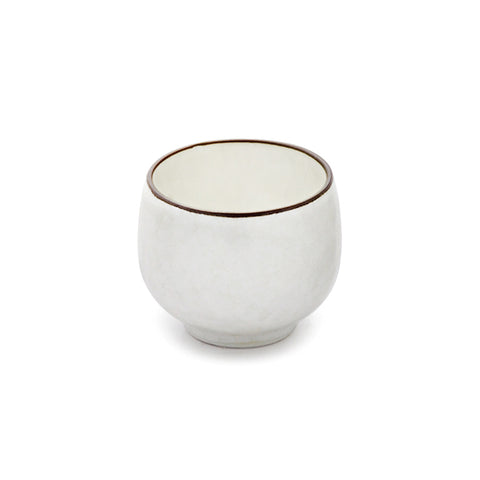 Sake cupSake Cup white
A small, frequently handled vessel that can introduce contrast without crowding the food.
$5.79
View Product
Restrained tactile sake cupSake Cup (bk)
CERAMIC
A small dark, speckled-looking cup gives the guest a quieter repeated point of contact.
$4.29
View Product
Sake cupSake Cup white
A small, frequently handled vessel that can introduce contrast without crowding the food.
$5.79
View Product
Restrained tactile sake cupSake Cup (bk)
CERAMIC
A small dark, speckled-looking cup gives the guest a quieter repeated point of contact.
$4.29
View Product
Keep the Surface Language Related and Change the Color
A restaurant may instead repeat a tactile quality:
- visibly fired glaze;
- soft matte;
- speckled surface;
- brushwork;
- subtle textural irregularity.
The palette can move more freely because the surfaces still feel related.
This approach works particularly well when the restaurant wants more color without becoming visually graphic.
 Otsumami / small course4.75" Ceramic Plate, Dark Brown, Blue
4.75" · Ceramic
A small round dark field supports a compact presentation and a quieter companion to sculptural pieces.
$5.79
View Product
Otsumami / small course4.75" Ceramic Plate, Dark Brown, Blue
4.75" · Ceramic
A small round dark field supports a compact presentation and a quieter companion to sculptural pieces.
$5.79
View Product
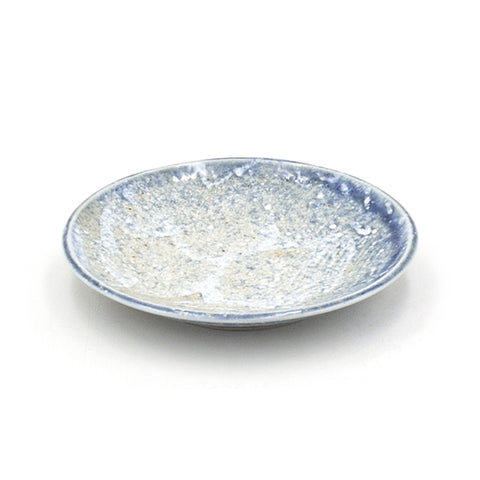 Otsumami / small course4.75" Ceramic Plate, Beige, Blue
4.75" · Ceramic
A pale blue small plate provides contrast while keeping the course footprint controlled.
$5.79
View Product
Otsumami / small course4.75" Ceramic Plate, Beige, Blue
4.75" · Ceramic
A pale blue small plate provides contrast while keeping the course footprint controlled.
$5.79
View Product
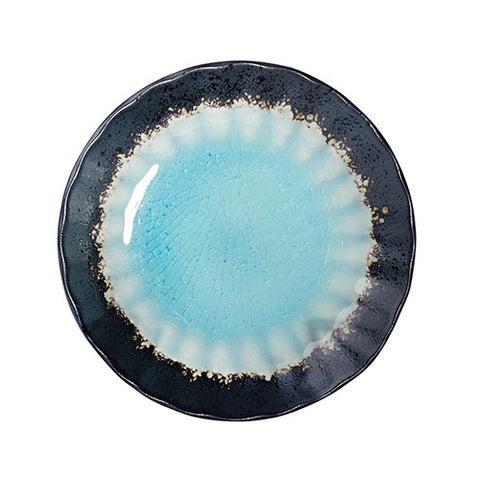 Color / surface accent5" Ceramic Plate, Blue
5" · Ceramic
A compact blue field gives pale ingredients separation inside a restrained core.
$3.59
View Product
Color / surface accent5" Ceramic Plate, Blue
5" · Ceramic
A compact blue field gives pale ingredients separation inside a restrained core.
$3.59
View Product
 Color / surface accent5" Ceramic Plate, Green
5" · Ceramic
A compact green field adds a sharp color change without requiring a larger presentation piece.
$3.59
View Product
Color / surface accent5" Ceramic Plate, Green
5" · Ceramic
A compact green field adds a sharp color change without requiring a larger presentation piece.
$3.59
View Product
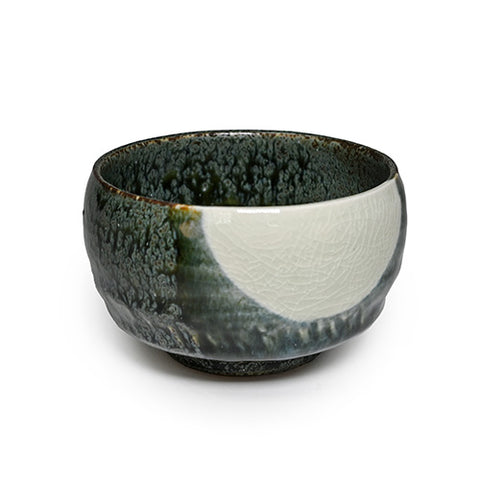 Matcha3" H Ceramic Matcha Bowl (K537-GW)
3" H · Ceramic
A held vessel with a visibly distinct rim and body; evaluate the actual preparation and hand feel.
$12.19
View Product
Matcha3" H Ceramic Matcha Bowl (K537-GW)
3" H · Ceramic
A held vessel with a visibly distinct rim and body; evaluate the actual preparation and hand feel.
$12.19
View Product
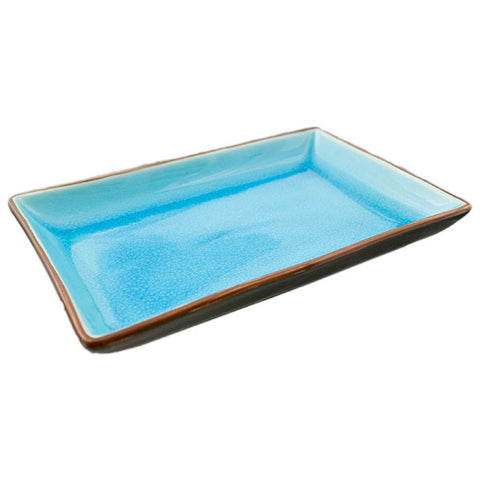 Directional presentationPorcelain Rectangular Plate 9.75"x6"x1.25"H, Blue
9.75"x6"x1.25"H · Porcelain
A directional field for fish, nigiri or a composed course; approve the usable interior on a sample.
$9.50
View Product
Directional presentationPorcelain Rectangular Plate 9.75"x6"x1.25"H, Blue
9.75"x6"x1.25"H · Porcelain
A directional field for fish, nigiri or a composed course; approve the usable interior on a sample.
$9.50
View Product
Use Quiet Foundation Pieces and Let Selected Courses Break the Pattern
Not every vessel needs to be interesting in the same way.
A quiet recurring plate, simple cup, or restrained small bowl can provide the repetition that makes more expressive pieces feel deliberate.
That is particularly valuable in omakase because guests experience the tabletop sequentially. The same quiet anchor appearing several times gives the meal memory.
Then a strongly textured or unusually shaped vessel can arrive and actually register as different.
 Directional presentation8.75"X5" Rectangular Porcelain Plate, White
8-3/4"Lx5"W · Porcelain
A directional field for fish, nigiri or a composed course; approve the usable interior on a sample.
$6.50
View Product
Directional presentation8.75"X5" Rectangular Porcelain Plate, White
8-3/4"Lx5"W · Porcelain
A directional field for fish, nigiri or a composed course; approve the usable interior on a sample.
$6.50
View Product
 Contained small course7.75" Round Ceramic Deep Plate, White
7.75" · Ceramic
Use the contained field for a sauced or softer course; test the actual portion and practical fill.
$5.79
View Product
Shallow sauced course6.65" Ceramic Deep Plate, Blue, Brown
6.65" · Ceramic
A compact walled format gives softer food containment while keeping the composition open.
$11.99
View Product
Statement sashimi field10.85" x 10.5" Irregular Ceramic Plate, Turquoise, Aqua
10.85" x 10.5" · Ceramic
A broad turquoise field and irregular outline make this a signature-course candidate, not a universal workhorse.
$52.99
View Product
Sculptural small courseCeramic Bowl — 5 fl. oz., Blue
4 in (axis unspecified), 2 in height · Ceramic
The compact raised corners create a distinct course silhouette; test sauce placement and handling.
$6.49
View Product
Contained small course7.75" Round Ceramic Deep Plate, White
7.75" · Ceramic
Use the contained field for a sauced or softer course; test the actual portion and practical fill.
$5.79
View Product
Shallow sauced course6.65" Ceramic Deep Plate, Blue, Brown
6.65" · Ceramic
A compact walled format gives softer food containment while keeping the composition open.
$11.99
View Product
Statement sashimi field10.85" x 10.5" Irregular Ceramic Plate, Turquoise, Aqua
10.85" x 10.5" · Ceramic
A broad turquoise field and irregular outline make this a signature-course candidate, not a universal workhorse.
$52.99
View Product
Sculptural small courseCeramic Bowl — 5 fl. oz., Blue
4 in (axis unspecified), 2 in height · Ceramic
The compact raised corners create a distinct course silhouette; test sauce placement and handling.
$6.49
View Product
 Chilled course / dessert11.75" x 7.5" Glass Plate, Clear
11.75" x 7.5" · Glass
Transparency or reflection creates a clear material break in a ceramic-heavy progression.
$18.99
View Product
Chilled course / dessert11.75" x 7.5" Glass Plate, Clear
11.75" x 7.5" · Glass
Transparency or reflection creates a clear material break in a ceramic-heavy progression.
$18.99
View Product
Repeat One Anchor While Other Pieces Change
Continuity does not have to come from color.
It can come from a repeated:
- nigiri presentation surface;
- sake cup;
- chopstick/rest combination;
- tray;
- rim language;
- material;
- tea service.
This is one of the cleanest ways to create a restaurant identity across a heavily varied course sequence.
A guest may not consciously identify the repeated element.
They will still feel the continuity.
Recurring nigiri surface7.25" x 4.75" Rectangular Ceramic Plate, Beige, Brown
7.25" x 4.75" · Ceramic
Warm, irregular-looking edges and a restrained field give repetition character without a loud pattern.
$9.99
View Product
 Contained small course3.5"Dx1"H Porcelain Bowl Shallow, Black Oribe
3-1/2"D x 1"H · Porcelain
Use the contained field for a sauced or softer course; test the actual portion and practical fill.
$2.00
View Product
Contained small course3.5"Dx1"H Porcelain Bowl Shallow, Black Oribe
3-1/2"D x 1"H · Porcelain
Use the contained field for a sauced or softer course; test the actual portion and practical fill.
$2.00
View Product
 Directional presentation10.5"X6.5"X1.5"H Rectangular Porcelain Plate Deep, Matte Black
10-1/2" X 6-1/2" X 1-1/2"H · Porcelain
A directional field for fish, nigiri or a composed course; approve the usable interior on a sample.
$9.95
View Product
Directional presentation10.5"X6.5"X1.5"H Rectangular Porcelain Plate Deep, Matte Black
10-1/2" X 6-1/2" X 1-1/2"H · Porcelain
A directional field for fish, nigiri or a composed course; approve the usable interior on a sample.
$9.95
View Product
 Sake bottleGreen Bulb Glass Sake Bottle 6-3/4"H
6-3/4"H · Glass
A table-visible sake anchor; coordinate with the cup without requiring an identical finish.
$16.75
View Product
Persistent detailRectangular Chopstick Rest, White Ceramic
Ceramic
A repeatable landing point for chopsticks; small enough to stay present through the meal.
$0.55
View Product
ChopsticksChopsticks – Matte Black with Silver Accent
A persistent tactile detail. Choose the tip and balance with the chef, not just the color.
$2.00
View Product
Sake bottleGreen Bulb Glass Sake Bottle 6-3/4"H
6-3/4"H · Glass
A table-visible sake anchor; coordinate with the cup without requiring an identical finish.
$16.75
View Product
Persistent detailRectangular Chopstick Rest, White Ceramic
Ceramic
A repeatable landing point for chopsticks; small enough to stay present through the meal.
$0.55
View Product
ChopsticksChopsticks – Matte Black with Silver Accent
A persistent tactile detail. Choose the tip and balance with the chef, not just the color.
$2.00
View Product
05CONTEMPORARY OMAKASE / courses
Design the Vessel System Around the Omakase Progression
There is no universal omakase course order.
There is, however, a recurring reality: different parts of the meal ask different things from the tabletop.
The right assortment starts with those presentation roles.
Persistent Setting & Recurring Anchors
The pieces that remain in front of the guest—or return throughout the meal—deserve more attention than their size suggests.
Chopsticks, chopstick rests, drinking vessels, tea ware, sake ware, trays, and recurring landing pieces create repeated visual and tactile contact. These are often the elements that quietly define the restaurant between courses.
They should be deliberate.
For high-contact pieces, the goal is not merely visual distinction. The restaurant also needs pieces that can be handled, replenished, and kept consistent enough that the identity survives routine replacement.
A well-chosen cup or chopstick/rest combination may contribute more to the overall tabletop than another specialty plate used once.
Persistent Setting & Recurring Anchors
 ChopsticksChopsticks – Matte Black with Silver Accent$2.00 current selling priceA persistent tactile detail. Choose the tip and balance with the chef, not just the color.View Product
 ChopsticksChopstick (Brown) (=C84-017)8-7/8"L · Wood$0.95 current selling priceA persistent tactile detail. Choose the tip and balance with the chef, not just the color.View Product
 Persistent detail2.5"X0.75"H Porcelain Chopstick Rest, Matte Black2-1/2" x 3/4"H · Porcelain$1.25 current selling priceA repeatable landing point for chopsticks; small enough to stay present through the meal.View Product
Tea cup3.25" H Ceramic Teacup (PT71-PE)3.25" H · Ceramic$5.79 current selling priceAn everyday point of guest contact; relate its visual weight to the recurring counter setting.View Product
Persistent detail2.5"X0.75"H Porcelain Chopstick Rest, Matte Black2-1/2" x 3/4"H · Porcelain$1.25 current selling priceA repeatable landing point for chopsticks; small enough to stay present through the meal.View Product
Tea cup3.25" H Ceramic Teacup (PT71-PE)3.25" H · Ceramic$5.79 current selling priceAn everyday point of guest contact; relate its visual weight to the recurring counter setting.View Product
 Sake cupClear Glass Sake Cup 2.25"Dx2.5"H2-1/4"D x 2-1/2"H · Glass$4.50 current selling priceA small, frequently handled vessel that can introduce contrast without crowding the food.View Product
 Sake bottleGlass Sake Bottle 6.75"H, Clear6-3/4"H · Glass$16.75 current selling priceA table-visible sake anchor; coordinate with the cup without requiring an identical finish.View Product
 Sake presentation traySake Sampler Tray Wooden$16.95 current selling priceA dedicated sake-flight tray; use it only when tasting service earns the additional footprint.View Product
 Matcha5" D x 2.5" H Glass Matcha Bowl (K537G-SK)5" D x 2.5" H · Glass$8.59 current selling priceA held vessel with a visibly distinct rim and body; evaluate the actual preparation and hand feel.View Product
Otsumami & Small Composed Courses
This is where contemporary omakase earns the greatest vessel freedom.
An otsumami sequence can move from raw to cooked, warm to chilled, dry to sauced, flat to dimensional. The tabletop needs enough range to support those changes.
This is the natural home for:
- compact ceramic plates;
- shallow bowls;
- irregular dishes;
- small lidded vessels;
- lacquer;
- glass;
- deeper small bowls;
- sculptural one-course pieces.
A small course can often tolerate more vessel character than a large entrée because the food and vessel are read together almost as one object.
The best assortment should not contain six versions of the same appetizer plate. It should give the chef different presentation behaviors.
Otsumami & Small Composed Courses
Small composed accent3-1/2" x 2-1/2" Rectangular Porcelain Plate, Ivory3-1/2" x 2-1/2" · Porcelain$4.29 current selling priceA restrained, compact patterned field; let one small course carry the decoration.View Product
 Small sauce / garnish accent3.5" x 2.5" Ceramic Plate, Brown, Blue3.5" x 2.5" · Ceramic$4.99 current selling priceA compact rectangular accent where only a small edible composition is required.View Product
 Otsumami / small course4.75" Ceramic Plate, Dark Brown, Blue4.75" · Ceramic$5.79 current selling priceA small round dark field supports a compact presentation and a quieter companion to sculptural pieces.View Product
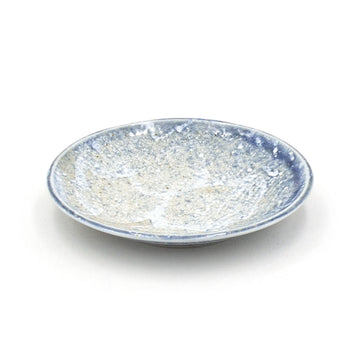 Otsumami / small course4.75" Ceramic Plate, Beige, Blue4.75" · Ceramic$5.79 current selling priceA pale blue small plate provides contrast while keeping the course footprint controlled.View Product
 Graphic small course5.25" Square Ceramic Plate, Navy, Brown — Floral Design5.25" · Ceramic$4.29 current selling priceA small, strongly outlined square makes a visible change from round quiet anchors.View Product
 Color / surface accent5" Ceramic Plate, Blue5" · Ceramic$3.59 current selling priceA compact blue field gives pale ingredients separation inside a restrained core.View Product
Color / surface accent5" Ceramic Plate, Green5" · Ceramic$3.59 current selling priceA compact green field adds a sharp color change without requiring a larger presentation piece.View Product
Color / surface accent5" Ceramic Plate, Blue5" · Ceramic$3.59 current selling priceA compact blue field gives pale ingredients separation inside a restrained core.View Product
Color / surface accent5" Ceramic Plate, Green5" · Ceramic$3.59 current selling priceA compact green field adds a sharp color change without requiring a larger presentation piece.View Product
 Contained small course3.5"Dx1"H Porcelain Bowl Shallow, Black Oribe3-1/2"D x 1"H · Porcelain$2.00 current selling priceUse the contained field for a sauced or softer course; test the actual portion and practical fill.View Product
 Contained small coursePorcelain Round Bowl, 4-3/4" Gold Brown4-3/4" · Porcelain$3.25 current selling priceUse the contained field for a sauced or softer course; test the actual portion and practical fill.View Product
 Sculptural small courseCeramic Bowl — 5 fl. oz., Blue4 in (axis unspecified), 2 in height · Ceramic$6.49 current selling priceThe compact raised corners create a distinct course silhouette; test sauce placement and handling.View Product
 Sculptural small courseCeramic Bowl — 5 fl. oz., Green4 in (axis unspecified), 2 in height · Ceramic$6.49 current selling priceA small green field changes both color and vessel profile without introducing a large footprint.View Product
 Contained small courseCeramic Bowl — 3 fl. oz.3.5 in diameter, 1.75 in height · Ceramic$2.89 current selling priceUse the contained field for a sauced or softer course; test the actual portion and practical fill.View Product
 Contained small courseCeramic Bowl — 5 fl. oz.3.75 in diameter, 1.5 in height · Ceramic$3.29 current selling priceUse the contained field for a sauced or softer course; test the actual portion and practical fill.View Product
 Chilled course / dessertGlass Bowl — 16 fl. oz., Dark Blue, Silver6.25 in diameter, 1.75 in height · Glass$5.79 current selling priceTransparency or reflection creates a clear material break in a ceramic-heavy progression.View Product
Raw & Sashimi Presentations
Sashimi gives the vessel a different job.
The plate has to carry:
- the color of the fish;
- garnish;
- negative space;
- moisture;
- occasionally sauce or ice;
- height;
- directional plating.
A broad shallow field can emphasize restraint. An elongated plate can give the chef a clear line. A darker or stronger-color field can make pale fish visually decisive. A quieter plate may make heavily garnished or strongly colored fish feel more precise.
The right choice depends on the food.
A plate should never be selected because someone labeled it a "sashimi plate."
It should be selected because its actual usable field works for the intended presentation.
Raw & Sashimi Presentations
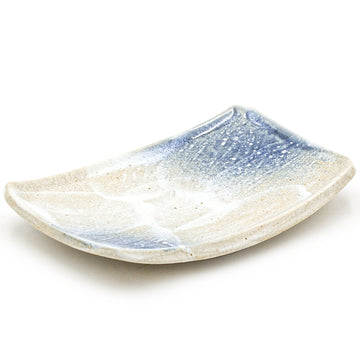 Sashimi / chilled composition7.25" x 4.75" Rectangular Ceramic Plate, Beige, Blue7.25" x 4.75" · Ceramic$11.49 current selling priceThe pale blue-to-ivory field separates pale fish from a warm counter while leaving a directional plating area.View Product
 Controlled nigiri rotation7.25" x 4.75" Rectangular Ceramic Plate, Dark Brown, Black, Blue7.25" x 4.75" · Ceramic$11.49 current selling priceA darker partner to pale or blue fields; rotate for food contrast rather than novelty.View Product
 Composed course8.25" x 5.25" Ceramic Plate — Oribe Design8.25" x 5.25" · Ceramic$8.29 current selling priceA distinct presentation field. Keep the food, garnish and negative space in proportion.View Product
 Composed course8.25" x 5.25" Ceramic Plate — Oribe Design8.25" x 5.25" · Ceramic$8.59 current selling priceA distinct presentation field. Keep the food, garnish and negative space in proportion.View Product
 Directional presentation8.65" x 5" Rectangular Ceramic Sushi Plate, Black, White — Black & White Brush Stroke Design8.65" x 5" · Ceramic$12.99 current selling priceA directional field for fish, nigiri or a composed course; approve the usable interior on a sample.View Product
 Contained small course9 x 6.75'' Oval Elveated Stoneware Bowl – 10 Oz.9 x 6.75'' outside$12.25 current selling priceUse the contained field for a sauced or softer course; test the actual portion and practical fill.View Product
 Composed course8.75" Round Ceramic Plate, Gray8.75" · Ceramic$18.99 current selling priceA distinct presentation field. Keep the food, garnish and negative space in proportion.View Product
Chilled course / dessert9.5" x 5.25" Rectangular Glass Plate, Clear9.5" x 5.25" · Glass$12.99 current selling priceTransparency or reflection creates a clear material break in a ceramic-heavy progression.View Product
Composed course8.75" Round Ceramic Plate, Gray8.75" · Ceramic$18.99 current selling priceA distinct presentation field. Keep the food, garnish and negative space in proportion.View Product
Chilled course / dessert9.5" x 5.25" Rectangular Glass Plate, Clear9.5" x 5.25" · Glass$12.99 current selling priceTransparency or reflection creates a clear material break in a ceramic-heavy progression.View Product
 Statement sashimi field10.85" x 10.5" Irregular Ceramic Plate, Turquoise, Aqua10.85" x 10.5" · Ceramic$52.99 current selling priceA broad turquoise field and irregular outline make this a signature-course candidate, not a universal workhorse.View Product
 Heritage-forward accent6.85" Square Ceramic Plate, Light Celadon Mint6.85" · Ceramic$14.29 current selling priceA restrained painted line and pale celadon color can carry one traditional cue inside a quieter sequence.View Product
Steamed, Wet & Lidded Courses
This is where function sets the boundary.
A vessel may need:
- depth;
- liquid containment;
- a lid;
- heat tolerance;
- stable carrying;
- easy handling at the counter.
The restaurant should still care about the visual result, but the piece has to work first.
This is exactly where good commercial specification separates itself from mood-board selection.
A visually exceptional vessel that creates awkward handling, poor containment, or replacement problems is not automatically a premium choice.
It may simply be the wrong tool.
Steamed, Wet & Lidded Courses
 Lidded ceramic service6.25"Dx4"H BOWL w/lid (bk)14 fl. oz. listed capacity · ceramic$15.99 current selling priceA darker lidded vessel changes the reveal and material weight; heating approval requires a separate check.View Product
 Lidded ceramic serviceCeramic Bowl with Lid — 14 fl. oz.6.25 in diameter, 4.25 in height · Ceramic$11.49 current selling priceA pale lidded vessel creates a reveal and containment; verify the exact heating method before specifying it.View Product
 Lidded soup / owanLacquer Miso Soup Bowl with Lid 4", Black4"D$5.75 current selling priceAn unmistakable material and silhouette break from ceramic plateware.View Product
 Soup / lidded courseMiso Soup Bowl W/Lid Lacquer (Bk)$5.95 current selling priceAn open or lidded service moment, distinct from flat plateware. Confirm the specified heating and washing method.View Product
Nigiri Progression
Nigiri does not require one universal tableware strategy.
There are three legitimate directions.
One Recurring Landing Surface
A consistent plate or surface creates rhythm and lets differences in fish, cut, temperature, seasoning, and progression carry the visual change.
This is operationally clean and can be extremely elegant.
One Recurring Landing Surface
Practical nigiri anchor8.75"X5" Rectangular Porcelain Plate, Reactive Glaze - Blue/Black8-3/4"Lx5"W · Porcelain$6.50 current selling priceThe pale field and dark edge introduce contrast at a modest price; verify the actual nigiri footprint.View Product
 Directional presentation8.75"X5" Rectangular Porcelain Plate, Black/Green8-3/4"Lx5"W · Porcelain$6.50 current selling priceA directional field for fish, nigiri or a composed course; approve the usable interior on a sample.View Product
 Directional presentation8.35" x 4.75" Rectangular Ceramic Plate, Dark Brown, White8.35" x 4.75" · Ceramic$7.19 current selling priceA directional field for fish, nigiri or a composed course; approve the usable interior on a sample.View Product
 Recurring nigiri surface7.25" x 4.75" Rectangular Ceramic Plate, Beige, Brown7.25" x 4.75" · Ceramic$9.99 current selling priceWarm, irregular-looking edges and a restrained field give repetition character without a loud pattern.View Product
A Controlled Rotation
Two or several related plates can rotate through the nigiri sequence.
The advantage is variation without making every piece of fish compete with a new visual environment.
A Controlled Rotation
 Directional presentation8.35" x 4.75" Rectangular Ceramic Plate, Dark Brown, Green8.35" x 4.75" · Ceramic$7.19 current selling priceA directional field for fish, nigiri or a composed course; approve the usable interior on a sample.View Product
Controlled nigiri rotation7.25" x 4.75" Rectangular Ceramic Plate, Dark Brown, Black, Blue7.25" x 4.75" · Ceramic$11.49 current selling priceA darker partner to pale or blue fields; rotate for food contrast rather than novelty.View Product
Sashimi / chilled composition7.25" x 4.75" Rectangular Ceramic Plate, Beige, Blue7.25" x 4.75" · Ceramic$11.49 current selling priceThe pale blue-to-ivory field separates pale fish from a warm counter while leaving a directional plating area.View Product
Directional presentation8.35" x 4.75" Rectangular Ceramic Plate, Dark Brown, Green8.35" x 4.75" · Ceramic$7.19 current selling priceA directional field for fish, nigiri or a composed course; approve the usable interior on a sample.View Product
Controlled nigiri rotation7.25" x 4.75" Rectangular Ceramic Plate, Dark Brown, Black, Blue7.25" x 4.75" · Ceramic$11.49 current selling priceA darker partner to pale or blue fields; rotate for food contrast rather than novelty.View Product
Sashimi / chilled composition7.25" x 4.75" Rectangular Ceramic Plate, Beige, Blue7.25" x 4.75" · Ceramic$11.49 current selling priceThe pale blue-to-ivory field separates pale fish from a warm counter while leaving a directional plating area.View Product
 Composed course7.25" x 5" Ceramic Plate7.25" x 5" · Ceramic$7.19 current selling priceA distinct presentation field. Keep the food, garnish and negative space in proportion.View Product
Individualized Presentation
A restaurant may deliberately change the vessel more aggressively through the progression.
If the restaurant has the service discipline, storage, par, and replacement plan to support it, this can produce highly authored presentations.
There is no universal winner.
The mistake is allowing the level of variation to happen accidentally.
Individualized Presentation
 Composed course7-1/2" Square Porcelain Plate, Black7-1/2" · Porcelain$11.49 current selling priceA distinct presentation field. Keep the food, garnish and negative space in proportion.View Product
 Composed course7.25" x 4.75" Ceramic Plate, Ivory — Sakura Design7.25" x 4.75" · Ceramic$12.99 current selling priceA distinct presentation field. Keep the food, garnish and negative space in proportion.View Product
 Directional presentation9-3/4" x 4" Rectangular Ceramic Plate, Blue — Chinese Characters for the Four Seasons Design9-3/4" x 4" · Ceramic$14.29 current selling priceA directional field for fish, nigiri or a composed course; approve the usable interior on a sample.View Product
Directional presentation8.65" x 5" Rectangular Ceramic Sushi Plate, Black, White — Black & White Brush Stroke Design8.65" x 5" · Ceramic$12.99 current selling priceA directional field for fish, nigiri or a composed course; approve the usable interior on a sample.View Product
Directional presentation9-3/4" x 4" Rectangular Ceramic Plate, Blue — Chinese Characters for the Four Seasons Design9-3/4" x 4" · Ceramic$14.29 current selling priceA directional field for fish, nigiri or a composed course; approve the usable interior on a sample.View Product
Directional presentation8.65" x 5" Rectangular Ceramic Sushi Plate, Black, White — Black & White Brush Stroke Design8.65" x 5" · Ceramic$12.99 current selling priceA directional field for fish, nigiri or a composed course; approve the usable interior on a sample.View Product
Warm & Grilled Courses
Warm presentations introduce additional constraints:
- temperature;
- plate pickup;
- sauce;
- moisture;
- stability;
- time from chef to guest.
The vessel should support those conditions without visually dropping out of the rest of the progression.
Low, stable plates with enough containment can often outperform aggressively sculptural ware here. The strongest choice is usually the one that gives the food enough visual field while making service uneventful.
Warm & Grilled Courses
 High-use small plate6" Ceramic Plate, Black6" · Ceramic$5.79 current selling priceA quiet dark field for recurring compact presentations, rather than a specialty piece for every course.View Product
 Directional presentation8.75"X5" Rectangular Porcelain Plate, Black8-3/4"L x 5"W · Porcelain$6.50 current selling priceA directional field for fish, nigiri or a composed course; approve the usable interior on a sample.View Product
 Composed course10" Round Ceramic Plate, Beige, Brown10" · Ceramic$18.99 current selling priceA distinct presentation field. Keep the food, garnish and negative space in proportion.View Product
 Composed course7.75" Ceramic Plate7.75" · Ceramic$7.19 current selling priceA distinct presentation field. Keep the food, garnish and negative space in proportion.View Product
 Shallow warm course6.65" Ceramic Deep Plate, Beige, Brown6.65" · Ceramic$10.99 current selling priceA quieter partner to darker accents; the low wall keeps sauce within the presentation.View Product
 Composed course9.65" Square Ceramic Plate, Beige, Green — Oribe Design9.65" · Ceramic$37.99 current selling priceA distinct presentation field. Keep the food, garnish and negative space in proportion.View Product
Hand Rolls & Immediate Service
Not every course needs more tableware.
A hand roll intended to be eaten immediately may need little beyond the counter itself or a modest landing piece.
Do not add a specialty plate because the catalog happens to contain one.
When the food is designed for direct or immediate service, the cleanest tabletop decision may be to do less.
That restraint is part of good specification.
Soup / Owan
Soup deserves its own vessel decision.
It is one of the easiest places to introduce meaningful material contrast into a ceramic-heavy program.
Lacquer can bring:
- warmth;
- different tactile character;
- visual lightness;
- a clear break from plateware.
Ceramic can create more visual continuity with the rest of the tabletop.
Open and lidded formats also produce very different service experiences.
Choose intentionally.
Soup / Owan
Soup / lidded courseLacquer Miso Soup Bowl 4.5", Black/Red - Kikko4-1/2"D x 2-1/2"H$2.75 current selling priceAn open or lidded service moment, distinct from flat plateware. Confirm the specified heating and washing method.View Product
Lidded soup / owanLacquer Miso Soup Bowl with Lid 4", Black4"D$5.75 current selling priceAn unmistakable material and silhouette break from ceramic plateware.View Product
 Open soup / owanLacquer Miso Soup Bowl 4.5", Black/Red4-1/2"D x 2-1/4"H$2.15 current selling priceA simple open lacquer format keeps the soup course materially distinct and the utility decision rational.View Product
 Soup / lidded courseLacquer Miso Soup Bowl, Red4-1/2"D x 2-1/2"H$2.95 current selling priceAn open or lidded service moment, distinct from flat plateware. Confirm the specified heating and washing method.View Product
 Contained small courseCeramic Bowl — 10 fl. oz.5 in diameter, 2 in height · Ceramic$6.09 current selling priceUse the contained field for a sauced or softer course; test the actual portion and practical fill.View Product
 Contained small courseCeramic Bowl — 10 fl. oz.4.75 in diameter, 2.5 in height · Ceramic$4.29 current selling priceUse the contained field for a sauced or softer course; test the actual portion and practical fill.View Product
Closing Savory / Tamago
The closing savory course does not need an entire category of specialty ware.
It can return to a recurring presentation surface and reinforce continuity, or shift to a separate piece if the restaurant wants the progression to visibly begin closing.
This is a good example of why tabletop decisions should follow the menu rather than the catalog.
Dessert & Fruit
Dessert is one of the easiest places to justify a low-par accent or statement piece.
The operating exposure is often lower than a recurring small plate, while the visual break from fish and savory courses gives the restaurant room to change:
- material;
- color;
- transparency;
- form;
- scale.
Glass can be especially useful here. So can stronger color or more sculptural geometry.
Dessert & Fruit
 Chilled course / dessertLibbey 5103 Sherbet Glass Cup 4.5oz (133ml)4-1/8"D x 2-3/8"H$2.95 current selling priceTransparency or reflection creates a clear material break in a ceramic-heavy progression.View Product
 Chilled course / dessert4-3/4" Square Glass Plate, Blue4-3/4" · Glass$5.79 current selling priceTransparency or reflection creates a clear material break in a ceramic-heavy progression.View Product
 Chilled course / dessertGlass Bowl — 16 fl. oz., Gold, Green6.25 in diameter, 1.75 in height · Glass$5.79 current selling priceTransparency or reflection creates a clear material break in a ceramic-heavy progression.View Product
 Chilled course / dessertGlass Bowl — 16 fl. oz., Gold, Red6.25 in diameter, 1.75 in height · Glass$5.79 current selling priceTransparency or reflection creates a clear material break in a ceramic-heavy progression.View Product
Sculptural small courseCeramic Bowl — 5 fl. oz., Blue4 in (axis unspecified), 2 in height · Ceramic$6.49 current selling priceThe compact raised corners create a distinct course silhouette; test sauce placement and handling.View Product
Chilled course / dessertGlass Bowl — 16 fl. oz., Gold, Red6.25 in diameter, 1.75 in height · Glass$5.79 current selling priceTransparency or reflection creates a clear material break in a ceramic-heavy progression.View Product
Sculptural small courseCeramic Bowl — 5 fl. oz., Blue4 in (axis unspecified), 2 in height · Ceramic$6.49 current selling priceThe compact raised corners create a distinct course silhouette; test sauce placement and handling.View Product
 Contained small course6.5" Ceramic Deep Plate, Yellow6.5" · Ceramic$6.49 current selling priceUse the contained field for a sauced or softer course; test the actual portion and practical fill.View Product
Tea, Matcha & Sake
Beverage ware is not a supporting detail.
It is one of the most tactile parts of the entire tabletop.
A guest may hold a sake cup or tea cup repeatedly. The vessel's:
- wall thickness;
- weight;
- temperature;
- texture;
- rim;
- material;
- color
become part of the experience in a way that a plate never can.
Sake and tea also give the restaurant another opportunity to introduce contrast without cluttering the food presentation.
A ceramic-heavy tabletop can use glass sake ware. A restrained porcelain program can introduce a more visibly fired cup. A heritage-forward restaurant can use sake ware to carry stronger Japanese visual cues while keeping the food plates comparatively quiet.
ERS has enough tabletop depth that beverage vessels should be specified with the same care as plates and bowls.
Tea, Matcha & Sake
 Sake bottleSake Bottle 6.25"Hx2.75"D - 10 fl.ozPorcelain$9.99 current selling priceA table-visible sake anchor; coordinate with the cup without requiring an identical finish.View Product
 Sake cupPorcelain Sake Cup 2"Dx1.5"H - 2 Oz, Chun Tenmoku - Blue/Dark Brown2"D x 1-1/2"H · Porcelain$2.75 current selling priceA small, frequently handled vessel that can introduce contrast without crowding the food.View Product
 MatchaJapanese Matcha Bowl - 5"D x 3"H, 18oz$22.99 current selling priceA held vessel with a visibly distinct rim and body; evaluate the actual preparation and hand feel.View Product
Sake cupClear Glass Sake Cup 2.25"Dx2.5"H2-1/4"D x 2-1/2"H · Glass$4.50 current selling priceA small, frequently handled vessel that can introduce contrast without crowding the food.View Product
MatchaJapanese Matcha Bowl - 5"D x 3"H, 18oz$22.99 current selling priceA held vessel with a visibly distinct rim and body; evaluate the actual preparation and hand feel.View Product
Sake cupClear Glass Sake Cup 2.25"Dx2.5"H2-1/4"D x 2-1/2"H · Glass$4.50 current selling priceA small, frequently handled vessel that can introduce contrast without crowding the food.View Product
 Sake bottleCold Sake Glass Bottle Blue - 6.5"H /17cm$12.99 current selling priceA table-visible sake anchor; coordinate with the cup without requiring an identical finish.View Product
 Sake cupGlass Sake Cup with Blue Streak 2-1/2"H2-1/2"H · Glass$4.50 current selling priceA small, frequently handled vessel that can introduce contrast without crowding the food.View Product
 MatchaJapanese Matcha Bowl, White - 16 fl. oz. / 4.85"D x 2.75"H$24.99 current selling priceA held vessel with a visibly distinct rim and body; evaluate the actual preparation and hand feel.View Product
 Matcha3.75" D x 2.5" H Ceramic Matcha Bowl (FT537-2)3.75" D x 2.5" H · Ceramic$11.49 current selling priceA held vessel with a visibly distinct rim and body; evaluate the actual preparation and hand feel.View Product
 Matcha3" H Ceramic Matcha Bowl (K537-GB)3" H · Ceramic$12.19 current selling priceA held vessel with a visibly distinct rim and body; evaluate the actual preparation and hand feel.View Product
 Matcha5.25" D x 3" H Ceramic Matcha Bowl (K537-KK)5.25" D x 3" H · Ceramic$12.19 current selling priceA held vessel with a visibly distinct rim and body; evaluate the actual preparation and hand feel.View Product
 Heritage-forward sake bottleCeramic Sake Bottle - 8 fl. oz. / 6.25"HCERAMIC$15.99 current selling priceBlue-and-white brushwork can carry the traditional reference while the food vessels remain quieter.View Product
 Heritage-forward sake cup1.75"H Sake Cup 1.5 fl.oz.Porcelain$5.79 current selling priceA compact blue-and-white companion to the sake bottle, supported by quieter course ware.View Product
 Sake bottleCeramic Sake Bottle - 5.25"H$7.19 current selling priceA table-visible sake anchor; coordinate with the cup without requiring an identical finish.View Product
 Sake cupSake Cup (gy)CERAMIC$4.29 current selling priceA small, frequently handled vessel that can introduce contrast without crowding the food.View Product
 Tea service4.75" H Ceramic Teapot (RTTP3-1)4.75" H · Ceramic$12.99 current selling priceGive closing tea a deliberate vessel identity instead of borrowing the food-service palette.View Product
 Tea cupTea Cup 3"D x 4.25"H - 11 Fl.Oz.3"D x 4-1/4"H Made in Japan$6.75 current selling priceAn everyday point of guest contact; relate its visual weight to the recurring counter setting.View Product
 Tea serviceTeapot (JYP1-5)$10.49 current selling priceGive closing tea a deliberate vessel identity instead of borrowing the food-service palette.View Product
 Tea cupPorcelain Teacup 3"Dx3.5"H, Reactive Glaze - Blue/Black3"D x 3-1/2"H · Porcelain$3.45 current selling priceAn everyday point of guest contact; relate its visual weight to the recurring counter setting.View Product
06CONTEMPORARY OMAKASE / composition
Design the Food, Vessel & Counter as One Composition
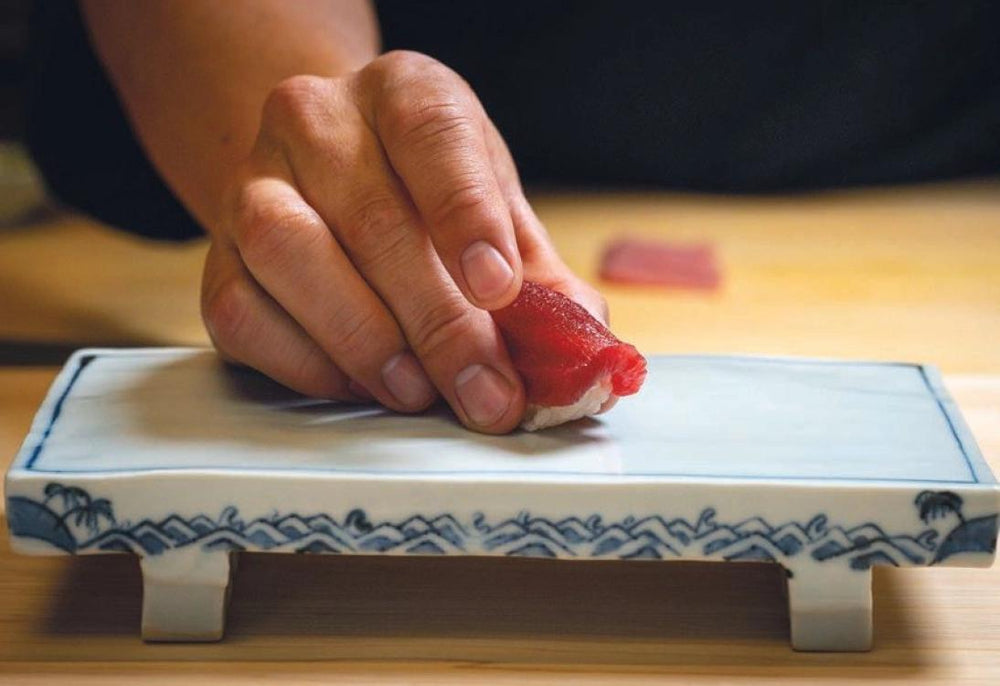
A plate does not have an aesthetic in isolation.
Put the same vessel under pale fish on a hinoki counter, bright uni under focused light, or dark glazed food against a black stone surface, and it becomes a different object.
That is why serious tabletop selection should happen with the food and environment in view.
Food Color
The plate should either create useful contrast or intentionally stay close to the food.
Pale and translucent fish often gain definition against darker, colored, or more tactile fields. Strongly colored fish can carry more visual weight on restrained ware. Highly garnished courses generally need less competition from the plate. More monochromatic food can benefit from additional material or textural character beneath it.
There is no universal "best color for sushi."
There is only the color relationship that improves the presentation in front of you.
Usable Presentation Field
Outside dimensions are not enough.
Two plates can both measure seven inches and offer completely different usable fields because of:
- rim width;
- irregular edges;
- slope;
- well depth;
- raised centers;
- curvature.
For omakase, where many presentations occupy relatively little physical space, this matters enormously.
A broad rim can create dramatic negative space.
It can also leave the chef with a surprisingly small practical plating area.
Specify the field, not the catalog dimension.
Compare the outside dimensions, then measure the usable field
 Composed course6.65" Round Ceramic Plate, White, Green, Brown6.65" · Ceramic$5.79 current selling priceA distinct presentation field. Keep the food, garnish and negative space in proportion.View Product
Directional presentation9-3/4" x 4" Rectangular Ceramic Plate, Blue — Chinese Characters for the Four Seasons Design9-3/4" x 4" · Ceramic$14.29 current selling priceA directional field for fish, nigiri or a composed course; approve the usable interior on a sample.View Product
Recurring nigiri surface7.25" x 4.75" Rectangular Ceramic Plate, Beige, Brown7.25" x 4.75" · Ceramic$9.99 current selling priceWarm, irregular-looking edges and a restrained field give repetition character without a loud pattern.View Product
Composed course6.65" Round Ceramic Plate, White, Green, Brown6.65" · Ceramic$5.79 current selling priceA distinct presentation field. Keep the food, garnish and negative space in proportion.View Product
Directional presentation9-3/4" x 4" Rectangular Ceramic Plate, Blue — Chinese Characters for the Four Seasons Design9-3/4" x 4" · Ceramic$14.29 current selling priceA directional field for fish, nigiri or a composed course; approve the usable interior on a sample.View Product
Recurring nigiri surface7.25" x 4.75" Rectangular Ceramic Plate, Beige, Brown7.25" x 4.75" · Ceramic$9.99 current selling priceWarm, irregular-looking edges and a restrained field give repetition character without a loud pattern.View Product
Compare the food-bearing interior, rim width and slope on actual samples. Product photographs show shape; they are not calibrated measurements of usable plating area.
Negative Space
Negative space is not empty space that needs to be filled.
With a small presentation, the vessel itself becomes part of the composition. Leaving enough open field can make a single element feel far more deliberate.
That does not mean every omakase course should sit alone in the center of an oversized plate.
Scale needs to feel intentional.
The vessel should give the chef enough room for the presentation to resolve without making the food look lost.
Pale Hinoki or Light Wood
Light wood gives the tabletop an unusually forgiving visual field.
Dark ceramics gain definition immediately. Subtle neutral glazes remain visible. Blue-green and earth tones can sit comfortably without fighting the counter. Refined white porcelain can become extremely clean if the food has enough color and the lighting maintains separation.
The risk is excessive tonal sameness.
A tabletop built entirely from warm beige ware against pale wood can lose visual hierarchy quickly.
Pale Hinoki or Light Wood
Composed course7.5" x 4.75" Ceramic Plate, Dark Brown, Gray7.5" x 4.75" · Ceramic$7.19 current selling priceA distinct presentation field. Keep the food, garnish and negative space in proportion.View Product
Shallow warm course6.65" Ceramic Deep Plate, Beige, Brown6.65" · Ceramic$10.99 current selling priceA quieter partner to darker accents; the low wall keeps sauce within the presentation.View Product
Composed course6.65" Round Ceramic Plate, White, Green, Brown6.65" · Ceramic$5.79 current selling priceA distinct presentation field. Keep the food, garnish and negative space in proportion.View Product
 Sake bottlePorcelain Sake Bottle 6.25"Hx2.75"D - 10 Oz, Chun Tenmoku - Blue/Dark Brown6-1/4"H x 2-3/4"D · Porcelain$7.95 current selling priceA table-visible sake anchor; coordinate with the cup without requiring an identical finish.View Product
Color / surface accent5" Ceramic Plate, Blue5" · Ceramic$3.59 current selling priceA compact blue field gives pale ingredients separation inside a restrained core.View Product
Sake cupPorcelain Sake Cup 2"Dx1.5"H - 2 Oz, Chun Tenmoku - Blue/Dark Brown2"D x 1-1/2"H · Porcelain$2.75 current selling priceA small, frequently handled vessel that can introduce contrast without crowding the food.View Product
Sake bottlePorcelain Sake Bottle 6.25"Hx2.75"D - 10 Oz, Chun Tenmoku - Blue/Dark Brown6-1/4"H x 2-3/4"D · Porcelain$7.95 current selling priceA table-visible sake anchor; coordinate with the cup without requiring an identical finish.View Product
Color / surface accent5" Ceramic Plate, Blue5" · Ceramic$3.59 current selling priceA compact blue field gives pale ingredients separation inside a restrained core.View Product
Sake cupPorcelain Sake Cup 2"Dx1.5"H - 2 Oz, Chun Tenmoku - Blue/Dark Brown2"D x 1-1/2"H · Porcelain$2.75 current selling priceA small, frequently handled vessel that can introduce contrast without crowding the food.View Product
Warm or Darker Wood
Darker wood can support:
- pale porcelain;
- blue-green ceramics;
- stronger fired surfaces;
- lighter textured ware.
Dark ceramics can also work, but the relationship needs enough value, texture, or shape difference that the vessel does not visually disappear.
Warm or Darker Wood
Directional presentation8.75"X5" Rectangular Porcelain Plate, White8-3/4"Lx5"W · Porcelain$6.50 current selling priceA directional field for fish, nigiri or a composed course; approve the usable interior on a sample.View Product
 Composed course8.25" Round Ceramic Plate, Green8.25" · Ceramic$9.99 current selling priceA distinct presentation field. Keep the food, garnish and negative space in proportion.View Product
Composed course8" Round Ceramic Plate, Blue — Sakura Design8" · Ceramic$9.99 current selling priceA distinct presentation field. Keep the food, garnish and negative space in proportion.View Product
Composed course8.25" Round Ceramic Plate, Green8.25" · Ceramic$9.99 current selling priceA distinct presentation field. Keep the food, garnish and negative space in proportion.View Product
Composed course8" Round Ceramic Plate, Blue — Sakura Design8" · Ceramic$9.99 current selling priceA distinct presentation field. Keep the food, garnish and negative space in proportion.View Product
 Matcha3" H Ceramic Matcha Bowl (K537-GW)3" H · Ceramic$12.19 current selling priceA held vessel with a visibly distinct rim and body; evaluate the actual preparation and hand feel.View Product
 Chilled course / dessertSquare Glass Bowl 5.75"5-3/4"SQ x 3"H · Glass$4.95 current selling priceTransparency or reflection creates a clear material break in a ceramic-heavy progression.View Product
Tea cup3.25" H Ceramic Teacup (PT71-PE)3.25" H · Ceramic$5.79 current selling priceAn everyday point of guest contact; relate its visual weight to the recurring counter setting.View Product
Chilled course / dessertSquare Glass Bowl 5.75"5-3/4"SQ x 3"H · Glass$4.95 current selling priceTransparency or reflection creates a clear material break in a ceramic-heavy progression.View Product
Tea cup3.25" H Ceramic Teacup (PT71-PE)3.25" H · Ceramic$5.79 current selling priceAn everyday point of guest contact; relate its visual weight to the recurring counter setting.View Product
Dark Stone or Dark Counter
A dark counter changes the buying decision substantially.
Pale porcelain becomes more graphic. Glass can become visually lighter. Strong color can feel more saturated. Metallic or reflective details become more visible.
Dark-on-dark can be excellent when the surfaces and food provide enough separation.
It can also turn into a featureless field.
Judge it with the actual lighting.
Dark Stone or Dark Counter
Heritage-forward accent6.85" Square Ceramic Plate, Light Celadon Mint6.85" · Ceramic$14.29 current selling priceA restrained painted line and pale celadon color can carry one traditional cue inside a quieter sequence.View Product
 Directional presentation10.5"X6.5"X1.5"H Rectangular Porcelain Plate Deep, White10-1/2" X 6-1/2" X 1-1/2"H · Porcelain$9.95 current selling priceA directional field for fish, nigiri or a composed course; approve the usable interior on a sample.View Product
 Directional presentationPorcelain Rectangular Plate 9.25"L x6.5"W, Blue9.25"L x6.5"W · Porcelain$6.95 current selling priceA directional field for fish, nigiri or a composed course; approve the usable interior on a sample.View Product
Chilled course / dessertGlass Bowl — 16 fl. oz., Gold, Red6.25 in diameter, 1.75 in height · Glass$5.79 current selling priceTransparency or reflection creates a clear material break in a ceramic-heavy progression.View Product
Small composed accent3-1/2" x 2-1/2" Rectangular Porcelain Plate, Ivory3-1/2" x 2-1/2" · Porcelain$4.29 current selling priceA restrained, compact patterned field; let one small course carry the decoration.View Product
Sake cupSake Cup white$5.79 current selling priceA small, frequently handled vessel that can introduce contrast without crowding the food.View Product
Directional presentationPorcelain Rectangular Plate 9.25"L x6.5"W, Blue9.25"L x6.5"W · Porcelain$6.95 current selling priceA directional field for fish, nigiri or a composed course; approve the usable interior on a sample.View Product
Chilled course / dessertGlass Bowl — 16 fl. oz., Gold, Red6.25 in diameter, 1.75 in height · Glass$5.79 current selling priceTransparency or reflection creates a clear material break in a ceramic-heavy progression.View Product
Small composed accent3-1/2" x 2-1/2" Rectangular Porcelain Plate, Ivory3-1/2" x 2-1/2" · Porcelain$4.29 current selling priceA restrained, compact patterned field; let one small course carry the decoration.View Product
Sake cupSake Cup white$5.79 current selling priceA small, frequently handled vessel that can introduce contrast without crowding the food.View Product
Lighting
Glossy glaze, matte black, metallic surfaces, dark ceramics, and glass all respond differently to focused restaurant lighting.
Catalog photography will not tell you enough.
For any high-impact or high-volume vessel, put the real food on the real sample under lighting that approximates service.
That one test will answer more than another hour of browsing.
07CONTEMPORARY OMAKASE / specification
Shape, Surface, Material & Tactile Character
These are the tools.
None of them, on its own, makes a plate "omakase."
Shape
Round
Round ware remains valuable because it is visually quiet and highly flexible.
A well-proportioned round plate can disappear behind the food better than an overtly "Japanese" shape and may be exactly what a heavily composed course needs.
Round
High-use small plate6" Ceramic Plate, Black6" · Ceramic$5.79 current selling priceA quiet dark field for recurring compact presentations, rather than a specialty piece for every course.View Product
 Composed course6.5" Ceramic Plate, Dark Brown, Beige6.5" · Ceramic$8.59 current selling priceA distinct presentation field. Keep the food, garnish and negative space in proportion.View Product
Composed course6.65" Round Ceramic Plate, White, Green, Brown6.65" · Ceramic$5.79 current selling priceA distinct presentation field. Keep the food, garnish and negative space in proportion.View Product
Color / surface accent5" Ceramic Plate, Blue5" · Ceramic$3.59 current selling priceA compact blue field gives pale ingredients separation inside a restrained core.View Product
Composed course6.5" Ceramic Plate, Dark Brown, Beige6.5" · Ceramic$8.59 current selling priceA distinct presentation field. Keep the food, garnish and negative space in proportion.View Product
Composed course6.65" Round Ceramic Plate, White, Green, Brown6.65" · Ceramic$5.79 current selling priceA distinct presentation field. Keep the food, garnish and negative space in proportion.View Product
Color / surface accent5" Ceramic Plate, Blue5" · Ceramic$3.59 current selling priceA compact blue field gives pale ingredients separation inside a restrained core.View Product
 Contained small course6.5" Ceramic Deep Plate, Pink6.5" · Ceramic$6.49 current selling priceUse the contained field for a sauced or softer course; test the actual portion and practical fill.View Product
Rectangular & Elongated
Longer fields work particularly well where the food benefits from:
- directional arrangement;
- multiple elements;
- visual progression;
- strong horizontal presentation.
They are also natural candidates for nigiri, sashimi, grilled items, and composed small courses.
Do not confuse "rectangular" with "sushi plate." Evaluate usable field, proportion, depth, rim, and service behavior.
Rectangular & Elongated
 Quiet recurring surface6.75" x 3.85" Rectangular Ceramic Plate, White, Green, Brown6.75" x 3.85" · Ceramic$5.79 current selling priceA low-noise rectangular field that can recur while stronger accents change across the meal.View Product
Recurring nigiri surface7.25" x 4.75" Rectangular Ceramic Plate, Beige, Brown7.25" x 4.75" · Ceramic$9.99 current selling priceWarm, irregular-looking edges and a restrained field give repetition character without a loud pattern.View Product
Quiet recurring surface6.75" x 3.85" Rectangular Ceramic Plate, White, Green, Brown6.75" x 3.85" · Ceramic$5.79 current selling priceA low-noise rectangular field that can recur while stronger accents change across the meal.View Product
Recurring nigiri surface7.25" x 4.75" Rectangular Ceramic Plate, Beige, Brown7.25" x 4.75" · Ceramic$9.99 current selling priceWarm, irregular-looking edges and a restrained field give repetition character without a loud pattern.View Product
 Directional presentation8.85" x 5" Rectangular Ceramic Sushi Plate, Black, Blue8.85" x 5" · Ceramic$11.49 current selling priceA directional field for fish, nigiri or a composed course; approve the usable interior on a sample.View Product
Directional presentation8.65" x 5" Rectangular Ceramic Sushi Plate, Black, White — Black & White Brush Stroke Design8.65" x 5" · Ceramic$12.99 current selling priceA directional field for fish, nigiri or a composed course; approve the usable interior on a sample.View Product
Directional presentation9-3/4" x 4" Rectangular Ceramic Plate, Blue — Chinese Characters for the Four Seasons Design9-3/4" x 4" · Ceramic$14.29 current selling priceA directional field for fish, nigiri or a composed course; approve the usable interior on a sample.View Product
Chilled course / dessert9.5" x 5.25" Rectangular Glass Plate, Clear9.5" x 5.25" · Glass$12.99 current selling priceTransparency or reflection creates a clear material break in a ceramic-heavy progression.View Product
Directional presentation8.85" x 5" Rectangular Ceramic Sushi Plate, Black, Blue8.85" x 5" · Ceramic$11.49 current selling priceA directional field for fish, nigiri or a composed course; approve the usable interior on a sample.View Product
Directional presentation8.65" x 5" Rectangular Ceramic Sushi Plate, Black, White — Black & White Brush Stroke Design8.65" x 5" · Ceramic$12.99 current selling priceA directional field for fish, nigiri or a composed course; approve the usable interior on a sample.View Product
Directional presentation9-3/4" x 4" Rectangular Ceramic Plate, Blue — Chinese Characters for the Four Seasons Design9-3/4" x 4" · Ceramic$14.29 current selling priceA directional field for fish, nigiri or a composed course; approve the usable interior on a sample.View Product
Chilled course / dessert9.5" x 5.25" Rectangular Glass Plate, Clear9.5" x 5.25" · Glass$12.99 current selling priceTransparency or reflection creates a clear material break in a ceramic-heavy progression.View Product
Oval
Oval ware can bridge the flexibility of round plates with the directional character of rectangular forms.
It is often underused.
Oval
Contained small course9 x 6.75'' Oval Elveated Stoneware Bowl – 10 Oz.9 x 6.75'' outside$12.25 current selling priceUse the contained field for a sauced or softer course; test the actual portion and practical fill.View Product
 Contained small course7.5 x 5.5" Oval Elveated Stoneware Bowl - 8 Oz.7.5 x 5.5" outside$9.75 current selling priceUse the contained field for a sauced or softer course; test the actual portion and practical fill.View Product
Composed course8.25" x 5.25" Ceramic Plate — Oribe Design8.25" x 5.25" · Ceramic$8.59 current selling priceA distinct presentation field. Keep the food, garnish and negative space in proportion.View Product
Contained small course7.5 x 5.5" Oval Elveated Stoneware Bowl - 8 Oz.7.5 x 5.5" outside$9.75 current selling priceUse the contained field for a sauced or softer course; test the actual portion and practical fill.View Product
Composed course8.25" x 5.25" Ceramic Plate — Oribe Design8.25" x 5.25" · Ceramic$8.59 current selling priceA distinct presentation field. Keep the food, garnish and negative space in proportion.View Product
Shallow Bowls
A shallow bowl provides enough containment for sauce, broth, oil, or softer presentations without losing the visual field of a plate.
For contemporary omakase, this is one of the most useful categories in the entire assortment.
Shallow Bowls
 Shallow sauced course6.65" Ceramic Deep Plate, Blue, Brown6.65" · Ceramic$11.99 current selling priceA compact walled format gives softer food containment while keeping the composition open.View Product
Shallow warm course6.65" Ceramic Deep Plate, Beige, Brown6.65" · Ceramic$10.99 current selling priceA quieter partner to darker accents; the low wall keeps sauce within the presentation.View Product
Shallow sauced course6.65" Ceramic Deep Plate, Blue, Brown6.65" · Ceramic$11.99 current selling priceA compact walled format gives softer food containment while keeping the composition open.View Product
Shallow warm course6.65" Ceramic Deep Plate, Beige, Brown6.65" · Ceramic$10.99 current selling priceA quieter partner to darker accents; the low wall keeps sauce within the presentation.View Product
 Contained small course7.75" Round Ceramic Deep Plate, White7.75" · Ceramic$5.79 current selling priceUse the contained field for a sauced or softer course; test the actual portion and practical fill.View Product
Composed course8.25" Round Ceramic Plate, Green8.25" · Ceramic$9.99 current selling priceA distinct presentation field. Keep the food, garnish and negative space in proportion.View Product
Contained small course7.75" Round Ceramic Deep Plate, White7.75" · Ceramic$5.79 current selling priceUse the contained field for a sauced or softer course; test the actual portion and practical fill.View Product
Composed course8.25" Round Ceramic Plate, Green8.25" · Ceramic$9.99 current selling priceA distinct presentation field. Keep the food, garnish and negative space in proportion.View Product
 Contained small courseCeramic Shallow Bowl11.75 in diameter, 2 in height 11.75"D x 2"H SHALLOW BOWL · Ceramic$19.29 current selling priceUse the contained field for a sauced or softer course; test the actual portion and practical fill.View Product
Organic & Irregular Forms
Irregularity can introduce movement and craft character.
It is not automatically premium.
The form needs to improve the presentation enough to justify any tradeoff in stacking, handling, or replacement.
Organic & Irregular Forms
Composed course7-1/2" Square Porcelain Plate, Black7-1/2" · Porcelain$11.49 current selling priceA distinct presentation field. Keep the food, garnish and negative space in proportion.View Product
Composed course7.25" x 4.75" Ceramic Plate, Ivory — Sakura Design7.25" x 4.75" · Ceramic$12.99 current selling priceA distinct presentation field. Keep the food, garnish and negative space in proportion.View Product
Composed course9.65" Square Ceramic Plate, Beige, Green — Oribe Design9.65" · Ceramic$37.99 current selling priceA distinct presentation field. Keep the food, garnish and negative space in proportion.View Product
 Composed course9" Ceramic Plate9" · Ceramic$15.99 current selling priceA distinct presentation field. Keep the food, garnish and negative space in proportion.View Product
Statement sashimi field10.85" x 10.5" Irregular Ceramic Plate, Turquoise, Aqua10.85" x 10.5" · Ceramic$52.99 current selling priceA broad turquoise field and irregular outline make this a signature-course candidate, not a universal workhorse.View Product
Composed course9" Ceramic Plate9" · Ceramic$15.99 current selling priceA distinct presentation field. Keep the food, garnish and negative space in proportion.View Product
Statement sashimi field10.85" x 10.5" Irregular Ceramic Plate, Turquoise, Aqua10.85" x 10.5" · Ceramic$52.99 current selling priceA broad turquoise field and irregular outline make this a signature-course candidate, not a universal workhorse.View Product
Sculptural & Lidded Forms
Use these deliberately.
They are strongest where opening, uncovering, height, containment, or the reveal itself is part of the course.
Sculptural & Lidded Forms
Sculptural small courseCeramic Bowl — 5 fl. oz., Blue4 in (axis unspecified), 2 in height · Ceramic$6.49 current selling priceThe compact raised corners create a distinct course silhouette; test sauce placement and handling.View Product
Sculptural small courseCeramic Bowl — 5 fl. oz., Green4 in (axis unspecified), 2 in height · Ceramic$6.49 current selling priceA small green field changes both color and vessel profile without introducing a large footprint.View Product
Lidded ceramic serviceCeramic Bowl with Lid — 14 fl. oz.6.25 in diameter, 4.25 in height · Ceramic$11.49 current selling priceA pale lidded vessel creates a reveal and containment; verify the exact heating method before specifying it.View Product
Lidded soup / owanLacquer Miso Soup Bowl with Lid 4", Black4"D$5.75 current selling priceAn unmistakable material and silhouette break from ceramic plateware.View Product
Surface
Surface can change a course without changing the vessel shape.
Matte & Semi-Matte
Useful for visual restraint and lower reflection under focused lighting.
Gloss
Can sharpen color and create cleaner contrast, particularly with refined porcelain or saturated glaze.
Reactive & Variable Glaze
ERS purchasing data confirms the growth of reactive and visibly variable surfaces in elevated contemporary Japanese tabletop.
They provide depth and individual variation without requiring every piece to be custom made.
Use them because the surface improves the presentation—not because "reactive glaze" has become a style category.
Speckled & Textured
These can create craft character while staying relatively quiet.
Painted & Patterned
Pattern is entirely compatible with contemporary omakase when it is used with discipline.
One patterned course inside a quieter sequence often has more impact than an entire tabletop of competing decoration.
Metallic / Reflective
Selective use can produce strong contrast, particularly in expressive contemporary programs.
Six distinct surface languages
 Composed course10"Dx1.5"H Round Porcelain Plate, Matte Black10"D x 1-1/2"H · Porcelain$13.95 current selling priceA distinct presentation field. Keep the food, garnish and negative space in proportion.View Product
Composed course8" Round Ceramic Plate, Blue — Sakura Design8" · Ceramic$9.99 current selling priceA distinct presentation field. Keep the food, garnish and negative space in proportion.View Product
Composed course10"Dx1.5"H Round Porcelain Plate, Matte Black10"D x 1-1/2"H · Porcelain$13.95 current selling priceA distinct presentation field. Keep the food, garnish and negative space in proportion.View Product
Composed course8" Round Ceramic Plate, Blue — Sakura Design8" · Ceramic$9.99 current selling priceA distinct presentation field. Keep the food, garnish and negative space in proportion.View Product
 Composed course10"Dx1.5"H Round Porcelain Plate, Reactive Glaze - Blue/Black10"D x 1-1/2"H · Porcelain$13.95 current selling priceA distinct presentation field. Keep the food, garnish and negative space in proportion.View Product
Otsumami / small course4.75" Ceramic Plate, Beige, Blue4.75" · Ceramic$5.79 current selling priceA pale blue small plate provides contrast while keeping the course footprint controlled.View Product
Composed course10"Dx1.5"H Round Porcelain Plate, Reactive Glaze - Blue/Black10"D x 1-1/2"H · Porcelain$13.95 current selling priceA distinct presentation field. Keep the food, garnish and negative space in proportion.View Product
Otsumami / small course4.75" Ceramic Plate, Beige, Blue4.75" · Ceramic$5.79 current selling priceA pale blue small plate provides contrast while keeping the course footprint controlled.View Product
 Heritage pattern / accent8.75" Ceramic Plate8.75" · Ceramic$6.49 current selling priceA strong blue-and-white pattern earns its place when the surrounding ware stays quiet.View Product
 Selective metal accentTitanium Gold Stainless Steel Round Plate, 6-5/8"6-5/8" (17.2 cm) · Stainless steel$4.75 current selling priceA reflective gold-colored field creates a material break for a selected small course. Plate only; chopsticks in the PDP photograph are styling.View Product
Material
Porcelain
Porcelain can be precise, quiet, refined, heavily decorated, or surprisingly tactile.
It is not synonymous with plain white ware.
It is particularly valuable where the restaurant wants cleaner geometry or more visual restraint.
Commercial performance varies by product and manufacturer. Do not assume every porcelain piece behaves the same.
Ceramic & Stoneware
Use the actual documented material terminology.
These bodies can provide substantial surface depth, visual weight, firing character, and warmth.
Again, performance varies.
Do not substitute the word "stoneware" because a plate looks rustic.
Lacquer
Lacquer is one of the most useful material contrasts available to a Japanese tabletop.
It can make soup, rice, service pieces, or small courses feel materially different without requiring more ceramic color.
Its tactile lightness is part of the experience.
Glass
Glass can create:
- visual lightness;
- transparency;
- cold-season or warm-season contrast depending on use;
- an obvious break from ceramic-heavy sequences.
It is particularly useful for chilled courses and dessert when the product is functionally appropriate.
Wood
Wood can work in selective service roles where the product is specifically designed and documented for foodservice.
Do not introduce it simply because the counter is wood.
Metal
Metal is most effective as a selective accent rather than a default material.
Use it where the food, restaurant direction, and actual product warrant it.
Tactile Character
Some tabletop decisions are felt more than seen.
A teacup, sake cup, soup bowl, chopstick, or small vessel held directly by the guest communicates:
- wall thickness;
- surface;
- weight;
- temperature;
- balance;
- rim.
That matters in a chef-counter environment where the physical distance between guest, tableware, food, and chef is already compressed.
Do not specify these pieces from photographs alone.
Pick them up.
08CONTEMPORARY OMAKASE / operation
Build a Contemporary Omakase Assortment That Can Actually Operate
A beautiful omakase tabletop is easy to photograph.
A successful restaurant tabletop has to survive thousands of services.
That changes how the assortment should be built.
The right question for every vessel is:
What job does this piece perform, and how much operational exposure comes with that job?
A plate appearing once in a signature course can tolerate different tradeoffs from a small dish cycling through every cover.
High-Use Pieces Need a Dependable Backbone
When usage is high, the restaurant should care more about:
- ongoing availability;
- replacement;
- consistent dimensions;
- storage;
- handling;
- dishroom workflow;
- stacking;
- documented care requirements.
That does not mean using generic tableware.
Commercially produced ware now offers enormous visual range. ERS regularly sources stocked products with variable glazes, unusual shapes, textured surfaces, strong Japanese character, and meaningful presentation value.
Use that advantage.
A recurring plate should not be visually weak simply because it is practical.
High-Use Pieces Need a Dependable Backbone
Recurring nigiri surface7.25" x 4.75" Rectangular Ceramic Plate, Beige, Brown7.25" x 4.75" · Ceramic$9.99 current selling priceWarm, irregular-looking edges and a restrained field give repetition character without a loud pattern.View Product
High-use small plate6" Ceramic Plate, Black6" · Ceramic$5.79 current selling priceA quiet dark field for recurring compact presentations, rather than a specialty piece for every course.View Product
Shallow sauced course6.65" Ceramic Deep Plate, Blue, Brown6.65" · Ceramic$11.99 current selling priceA compact walled format gives softer food containment while keeping the composition open.View Product
Directional presentation8.75"X5" Rectangular Porcelain Plate, White8-3/4"Lx5"W · Porcelain$6.50 current selling priceA directional field for fish, nigiri or a composed course; approve the usable interior on a sample.View Product
Contained small course3.5"Dx1"H Porcelain Bowl Shallow, Black Oribe3-1/2"D x 1"H · Porcelain$2.00 current selling priceUse the contained field for a sauced or softer course; test the actual portion and practical fill.View Product
Persistent detail2.5"X0.75"H Porcelain Chopstick Rest, Matte Black2-1/2" x 3/4"H · Porcelain$1.25 current selling priceA repeatable landing point for chopsticks; small enough to stay present through the meal.View Product
Tea cupPorcelain Teacup 3"Dx3.5"H, Reactive Glaze - Blue/Black3"D x 3-1/2"H · Porcelain$3.45 current selling priceAn everyday point of guest contact; relate its visual weight to the recurring counter setting.View Product
Sake cupPorcelain Sake Cup 2"Dx1.5"H - 2 Oz, Chun Tenmoku - Blue/Dark Brown2"D x 1-1/2"H · Porcelain$2.75 current selling priceA small, frequently handled vessel that can introduce contrast without crowding the food.View Product
ChopsticksChopsticks – Matte Black with Silver Accent$2.00 current selling priceA persistent tactile detail. Choose the tip and balance with the chef, not just the color.View Product
Open soup / owanLacquer Miso Soup Bowl 4.5", Black/Red4-1/2"D x 2-1/4"H$2.15 current selling priceA simple open lacquer format keeps the soup course materially distinct and the utility decision rational.View Product
Let Accent Pieces Carry More Variation
Accent ware can introduce:
- stronger color;
- pattern;
- different glaze;
- more irregular form;
- additional material contrast.
Because these pieces are not carrying the entire service, the restaurant can accept somewhat greater specialization.
The important point is that they still need to relate to the surrounding assortment.
An accent is not an excuse to buy a plate that belongs to a different restaurant.
Let Accent Pieces Carry More Variation
Composed course8" Round Ceramic Plate, Blue — Sakura Design8" · Ceramic$9.99 current selling priceA distinct presentation field. Keep the food, garnish and negative space in proportion.View Product
Composed course7.25" x 4.75" Ceramic Plate, Ivory — Sakura Design7.25" x 4.75" · Ceramic$12.99 current selling priceA distinct presentation field. Keep the food, garnish and negative space in proportion.View Product
Heritage-forward accent6.85" Square Ceramic Plate, Light Celadon Mint6.85" · Ceramic$14.29 current selling priceA restrained painted line and pale celadon color can carry one traditional cue inside a quieter sequence.View Product
Color / surface accent5" Ceramic Plate, Blue5" · Ceramic$3.59 current selling priceA compact blue field gives pale ingredients separation inside a restrained core.View Product
Contained small courseCeramic Bowl — 3 fl. oz.3.5 in diameter, 1.75 in height · Ceramic$2.89 current selling priceUse the contained field for a sauced or softer course; test the actual portion and practical fill.View Product
Chilled course / dessertSquare Glass Bowl 5.75"5-3/4"SQ x 3"H · Glass$4.95 current selling priceTransparency or reflection creates a clear material break in a ceramic-heavy progression.View Product
Chilled course / dessertGlass Bowl — 16 fl. oz., Dark Blue, Silver6.25 in diameter, 1.75 in height · Glass$5.79 current selling priceTransparency or reflection creates a clear material break in a ceramic-heavy progression.View Product
 Sake cupSake Cup (bl)$4.29 current selling priceA small, frequently handled vessel that can introduce contrast without crowding the food.View Product
Directional presentation8.35" x 4.75" Rectangular Ceramic Plate, Dark Brown, Green8.35" x 4.75" · Ceramic$7.19 current selling priceA directional field for fish, nigiri or a composed course; approve the usable interior on a sample.View Product
Matcha3.75" D x 2.5" H Ceramic Matcha Bowl (FT537-2)3.75" D x 2.5" H · Ceramic$11.49 current selling priceA held vessel with a visibly distinct rim and body; evaluate the actual preparation and hand feel.View Product
Sake cupSake Cup (bl)$4.29 current selling priceA small, frequently handled vessel that can introduce contrast without crowding the food.View Product
Directional presentation8.35" x 4.75" Rectangular Ceramic Plate, Dark Brown, Green8.35" x 4.75" · Ceramic$7.19 current selling priceA directional field for fish, nigiri or a composed course; approve the usable interior on a sample.View Product
Matcha3.75" D x 2.5" H Ceramic Matcha Bowl (FT537-2)3.75" D x 2.5" H · Ceramic$11.49 current selling priceA held vessel with a visibly distinct rim and body; evaluate the actual preparation and hand feel.View Product
Reserve the Most Specialized Pieces for Presentations That Earn Them
A signature course may justify:
- more fragile geometry;
- lower stock depth;
- slower replacement;
- more individualized glazing;
- custom or small-batch production;
- more expensive material or decoration.
But the course has to earn that complexity.
The same piece becomes a poor decision if it is used constantly, stacked aggressively, difficult to replace, and visually no more effective than a stocked alternative.
Premium specification is selective.
Not indiscriminate.
Reserve the Most Specialized Pieces for Presentations That Earn Them
Statement sashimi field10.85" x 10.5" Irregular Ceramic Plate, Turquoise, Aqua10.85" x 10.5" · Ceramic$52.99 current selling priceA broad turquoise field and irregular outline make this a signature-course candidate, not a universal workhorse.View Product
Composed course9.65" Square Ceramic Plate, Beige, Green — Oribe Design9.65" · Ceramic$37.99 current selling priceA distinct presentation field. Keep the food, garnish and negative space in proportion.View Product
 Composed course6.75" Square Ceramic Plate, Beige, Blue6.75" · Ceramic$12.99 current selling priceA distinct presentation field. Keep the food, garnish and negative space in proportion.View Product
Composed course9" Ceramic Plate9" · Ceramic$15.99 current selling priceA distinct presentation field. Keep the food, garnish and negative space in proportion.View Product
Contained small course9 x 6.75'' Oval Elveated Stoneware Bowl – 10 Oz.9 x 6.75'' outside$12.25 current selling priceUse the contained field for a sauced or softer course; test the actual portion and practical fill.View Product
Contained small courseCeramic Shallow Bowl11.75 in diameter, 2 in height 11.75"D x 2"H SHALLOW BOWL · Ceramic$19.29 current selling priceUse the contained field for a sauced or softer course; test the actual portion and practical fill.View Product
Matcha3" H Ceramic Matcha Bowl (K537-GW)3" H · Ceramic$12.19 current selling priceA held vessel with a visibly distinct rim and body; evaluate the actual preparation and hand feel.View Product
Composed course6.75" Square Ceramic Plate, Beige, Blue6.75" · Ceramic$12.99 current selling priceA distinct presentation field. Keep the food, garnish and negative space in proportion.View Product
Composed course9" Ceramic Plate9" · Ceramic$15.99 current selling priceA distinct presentation field. Keep the food, garnish and negative space in proportion.View Product
Contained small course9 x 6.75'' Oval Elveated Stoneware Bowl – 10 Oz.9 x 6.75'' outside$12.25 current selling priceUse the contained field for a sauced or softer course; test the actual portion and practical fill.View Product
Contained small courseCeramic Shallow Bowl11.75 in diameter, 2 in height 11.75"D x 2"H SHALLOW BOWL · Ceramic$19.29 current selling priceUse the contained field for a sauced or softer course; test the actual portion and practical fill.View Product
Matcha3" H Ceramic Matcha Bowl (K537-GW)3" H · Ceramic$12.19 current selling priceA held vessel with a visibly distinct rim and body; evaluate the actual preparation and hand feel.View Product
 MatchaJapanese Matcha Bowl Navy - 5"D x 3"H, 18oz$21.99 current selling priceA held vessel with a visibly distinct rim and body; evaluate the actual preparation and hand feel.View Product
09CONTEMPORARY OMAKASE / sourcing
Handmade, Custom or Commercial Restaurant Ware?
A serious omakase restaurant does not need every vessel to be handmade.
It also should not automatically avoid handmade or custom work because replacement is harder.
Both positions are simplistic.
The right decision depends on what the vessel contributes.
| Consideration | Custom / Small-Batch | Stocked Commercial Ware |
|---|---|---|
| Individuality | Potentially very high | Ranges from minimal to highly distinctive |
| Course specificity | Can be designed around one presentation | Strong where the commercial assortment is deep |
| Provenance | Can materially add to the story | Depends on maker/manufacturer |
| Batch consistency | Variation may be inherent | Generally more consistent |
| Replacement | May require a production cycle | Usually easier when active and stocked |
| Lead time | Can be weeks or months | Usually shorter |
| Stackability | Must be evaluated | Often considered in commercial design |
| Dishwasher information | Must be verified | Often better documented |
| Large opening quantities | Can be difficult | Generally easier |
| Statement value | Potentially exceptional | Can still be very high |
When Custom or Handmade Ware Earns Its Place
Use it when the added authorship matters.
That may mean:
- a signature course;
- a shape unavailable commercially;
- a chef/ceramicist collaboration;
- a glaze tied directly to the food;
- meaningful provenance;
- a vessel that becomes part of the restaurant's identity.
If the guest experience would materially change without the piece, the added procurement complexity may be justified.
When Stocked Commercial Ware Is the Better Decision
Use commercial ware when:
- the piece cycles heavily;
- opening pars are larger;
- replenishment matters;
- the visual result is already available in a stocked product;
- an exact custom vessel would add little beyond cost or scarcity.
This is especially important because commercial ware no longer means anonymous white hotel porcelain.
The current market includes stocked Japanese and hospitality products with:
- firing variation;
- irregular form;
- reactive glaze;
- textured bodies;
- strong color;
- heritage references;
- unusual proportions.
ERS's advantage is knowing where those products exist.
Commercial Ware with Artisan Character
Composed course10" Round Ceramic Plate, Beige, Brown10" · Ceramic$18.99 current selling priceA distinct presentation field. Keep the food, garnish and negative space in proportion.View Product
Controlled nigiri rotation7.25" x 4.75" Rectangular Ceramic Plate, Dark Brown, Black, Blue7.25" x 4.75" · Ceramic$11.49 current selling priceA darker partner to pale or blue fields; rotate for food contrast rather than novelty.View Product
Otsumami / small course4.75" Ceramic Plate, Beige, Blue4.75" · Ceramic$5.79 current selling priceA pale blue small plate provides contrast while keeping the course footprint controlled.View Product
Shallow sauced course6.65" Ceramic Deep Plate, Blue, Brown6.65" · Ceramic$11.99 current selling priceA compact walled format gives softer food containment while keeping the composition open.View Product
Contained small coursePorcelain Round Bowl, 4-3/4" Gold Brown4-3/4" · Porcelain$3.25 current selling priceUse the contained field for a sauced or softer course; test the actual portion and practical fill.View Product
Color / surface accent5" Ceramic Plate, Blue5" · Ceramic$3.59 current selling priceA compact blue field gives pale ingredients separation inside a restrained core.View Product
Color / surface accent5" Ceramic Plate, Green5" · Ceramic$3.59 current selling priceA compact green field adds a sharp color change without requiring a larger presentation piece.View Product
Sculptural small courseCeramic Bowl — 5 fl. oz., Blue4 in (axis unspecified), 2 in height · Ceramic$6.49 current selling priceThe compact raised corners create a distinct course silhouette; test sauce placement and handling.View Product
 Soup / lidded course6" Ceramic Bowl, Blue, Beige6" · Ceramic$8.59 current selling priceAn open or lidded service moment, distinct from flat plateware. Confirm the specified heating and washing method.View Product
Directional presentation8.35" x 4.75" Rectangular Ceramic Plate, Dark Brown, Green8.35" x 4.75" · Ceramic$7.19 current selling priceA directional field for fish, nigiri or a composed course; approve the usable interior on a sample.View Product
Sake cupPorcelain Sake Cup 2"Dx1.5"H - 2 Oz, Chun Tenmoku - Blue/Dark Brown2"D x 1-1/2"H · Porcelain$2.75 current selling priceA small, frequently handled vessel that can introduce contrast without crowding the food.View Product
MatchaJapanese Matcha Bowl - 5"D x 3"H, 18oz$22.99 current selling priceA held vessel with a visibly distinct rim and body; evaluate the actual preparation and hand feel.View Product
Soup / lidded course6" Ceramic Bowl, Blue, Beige6" · Ceramic$8.59 current selling priceAn open or lidded service moment, distinct from flat plateware. Confirm the specified heating and washing method.View Product
Directional presentation8.35" x 4.75" Rectangular Ceramic Plate, Dark Brown, Green8.35" x 4.75" · Ceramic$7.19 current selling priceA directional field for fish, nigiri or a composed course; approve the usable interior on a sample.View Product
Sake cupPorcelain Sake Cup 2"Dx1.5"H - 2 Oz, Chun Tenmoku - Blue/Dark Brown2"D x 1-1/2"H · Porcelain$2.75 current selling priceA small, frequently handled vessel that can introduce contrast without crowding the food.View Product
MatchaJapanese Matcha Bowl - 5"D x 3"H, 18oz$22.99 current selling priceA held vessel with a visibly distinct rim and body; evaluate the actual preparation and hand feel.View Product
Selected statement candidates; use them where the course earns the complexity
Statement sashimi field10.85" x 10.5" Irregular Ceramic Plate, Turquoise, Aqua10.85" x 10.5" · Ceramic$52.99 current selling priceA broad turquoise field and irregular outline make this a signature-course candidate, not a universal workhorse.View Product
Composed course9.65" Square Ceramic Plate, Beige, Green — Oribe Design9.65" · Ceramic$37.99 current selling priceA distinct presentation field. Keep the food, garnish and negative space in proportion.View Product
Composed course6.75" Square Ceramic Plate, Beige, Blue6.75" · Ceramic$12.99 current selling priceA distinct presentation field. Keep the food, garnish and negative space in proportion.View Product
Composed course9" Ceramic Plate9" · Ceramic$15.99 current selling priceA distinct presentation field. Keep the food, garnish and negative space in proportion.View Product
Contained small course9 x 6.75'' Oval Elveated Stoneware Bowl – 10 Oz.9 x 6.75'' outside$12.25 current selling priceUse the contained field for a sauced or softer course; test the actual portion and practical fill.View Product
Contained small courseCeramic Shallow Bowl11.75 in diameter, 2 in height 11.75"D x 2"H SHALLOW BOWL · Ceramic$19.29 current selling priceUse the contained field for a sauced or softer course; test the actual portion and practical fill.View Product
Matcha3" H Ceramic Matcha Bowl (K537-GW)3" H · Ceramic$12.19 current selling priceA held vessel with a visibly distinct rim and body; evaluate the actual preparation and hand feel.View Product
MatchaJapanese Matcha Bowl Navy - 5"D x 3"H, 18oz$21.99 current selling priceA held vessel with a visibly distinct rim and body; evaluate the actual preparation and hand feel.View Product
10CONTEMPORARY OMAKASE / investment
Where Should an Omakase Restaurant Spend More on Tableware?
Do not spread the budget evenly.
Higher tabletop investment creates the most value where the guest notices the vessel and where the restaurant can tolerate the added specialization.
High handling exposure changes the calculation.
| Vessel role | Presentation value | Operating exposure | ERS buying bias |
|---|---|---|---|
| Signature composed course | Very high | Low–moderate | Distinctive / statement-worthy |
| Otsumami rotation | High | Moderate | Elevated variety |
| Sashimi presentation | High | Moderate | Presentation-led |
| Recurring nigiri surface | Very high | High | Beautiful + readily replenishable |
| Sauce / condiment dish | Lower | Very high | Durable + easy to replace |
| Soup / owan | High tactile value | Moderate | Purpose-built |
| Sake / tea | High tactile value | Moderate | Worth deliberate investment |
| Specialty dessert | High | Lower | Strong accent opportunity |
A $25 vessel used for one signature course can be a more rational investment than a $12 vessel that cycles constantly and becomes difficult to replace.
Conversely, paying heavily for a high-volume sauce dish because it happens to look artisanal rarely improves the guest experience enough to justify the operating exposure.
Premium tabletop is not about buying the most expensive version of every piece.
It is about spending where the vessel has leverage.
Compare investment within the service role
Practical nigiri anchor8.75"X5" Rectangular Porcelain Plate, Reactive Glaze - Blue/Black8-3/4"Lx5"W · Porcelain$6.50 current selling priceThe pale field and dark edge introduce contrast at a modest price; verify the actual nigiri footprint.View Product
Recurring nigiri surface7.25" x 4.75" Rectangular Ceramic Plate, Beige, Brown7.25" x 4.75" · Ceramic$9.99 current selling priceWarm, irregular-looking edges and a restrained field give repetition character without a loud pattern.View Product
Directional presentation9-3/4" x 4" Rectangular Ceramic Plate, Blue — Chinese Characters for the Four Seasons Design9-3/4" x 4" · Ceramic$14.29 current selling priceA directional field for fish, nigiri or a composed course; approve the usable interior on a sample.View Product
Contained small course3.5"Dx1"H Porcelain Bowl Shallow, Black Oribe3-1/2"D x 1"H · Porcelain$2.00 current selling priceUse the contained field for a sauced or softer course; test the actual portion and practical fill.View Product
Otsumami / small course4.75" Ceramic Plate, Dark Brown, Blue4.75" · Ceramic$5.79 current selling priceA small round dark field supports a compact presentation and a quieter companion to sculptural pieces.View Product
Sculptural small courseCeramic Bowl — 5 fl. oz., Blue4 in (axis unspecified), 2 in height · Ceramic$6.49 current selling priceThe compact raised corners create a distinct course silhouette; test sauce placement and handling.View Product
Sake cupClear Glass Sake Cup 2.25"Dx2.5"H2-1/4"D x 2-1/2"H · Glass$4.50 current selling priceA small, frequently handled vessel that can introduce contrast without crowding the food.View Product
Sake cupPorcelain Sake Cup 2"Dx1.5"H - 2 Oz, Chun Tenmoku - Blue/Dark Brown2"D x 1-1/2"H · Porcelain$2.75 current selling priceA small, frequently handled vessel that can introduce contrast without crowding the food.View Product
MatchaJapanese Matcha Bowl - 5"D x 3"H, 18oz$22.99 current selling priceA held vessel with a visibly distinct rim and body; evaluate the actual preparation and hand feel.View Product
Soup / lidded courseLacquer Miso Soup Bowl 4.5", Black/Red - Kikko4-1/2"D x 2-1/2"H$2.75 current selling priceAn open or lidded service moment, distinct from flat plateware. Confirm the specified heating and washing method.View Product
Lidded soup / owanLacquer Miso Soup Bowl with Lid 4", Black4"D$5.75 current selling priceAn unmistakable material and silhouette break from ceramic plateware.View Product
Soup / lidded courseLacquer Miso Soup Bowl, Red4-1/2"D x 2-1/2"H$2.95 current selling priceAn open or lidded service moment, distinct from flat plateware. Confirm the specified heating and washing method.View Product
11CONTEMPORARY OMAKASE / assortments
Build a Contemporary Omakase Tabletop at Different Investment Levels
The look does not require premium spending everywhere.
What changes with investment is how much course differentiation, material range, surface character, and specialization the restaurant can support.
Practical Contemporary
A practical contemporary assortment should still look intentional.
Use:
- strong repeatable foundation ware;
- one disciplined color/material direction;
- a small number of higher-character accents;
- deliberate sake or tea pieces;
- good chopsticks/rests;
- enough vessel variety to support the menu without overbuilding it.
Spend where the guest will notice the difference.
Keep high-cycle pieces easy to replace.
 Practical nigiri anchor8.75"X5" Rectangular Porcelain Plate, Reactive Glaze - Blue/Black
8-3/4"Lx5"W · Porcelain
The pale field and dark edge introduce contrast at a modest price; verify the actual nigiri footprint.
$6.50
View Product
Practical nigiri anchor8.75"X5" Rectangular Porcelain Plate, Reactive Glaze - Blue/Black
8-3/4"Lx5"W · Porcelain
The pale field and dark edge introduce contrast at a modest price; verify the actual nigiri footprint.
$6.50
View Product
 High-use small plate6" Ceramic Plate, Black
6" · Ceramic
A quiet dark field for recurring compact presentations, rather than a specialty piece for every course.
$5.79
View Product
Shallow sauced course6.65" Ceramic Deep Plate, Blue, Brown
6.65" · Ceramic
A compact walled format gives softer food containment while keeping the composition open.
$11.99
View Product
Contained small course3.5"Dx1"H Porcelain Bowl Shallow, Black Oribe
3-1/2"D x 1"H · Porcelain
Use the contained field for a sauced or softer course; test the actual portion and practical fill.
$2.00
View Product
Open soup / owanLacquer Miso Soup Bowl 4.5", Black/Red
4-1/2"D x 2-1/4"H
A simple open lacquer format keeps the soup course materially distinct and the utility decision rational.
$2.15
View Product
Sake cupPorcelain Sake Cup 2"Dx1.5"H - 2 Oz, Chun Tenmoku - Blue/Dark Brown
2"D x 1-1/2"H · Porcelain
A small, frequently handled vessel that can introduce contrast without crowding the food.
$2.75
View Product
Sake bottlePorcelain Sake Bottle 6.25"Hx2.75"D - 10 Oz, Chun Tenmoku - Blue/Dark Brown
6-1/4"H x 2-3/4"D · Porcelain
A table-visible sake anchor; coordinate with the cup without requiring an identical finish.
$7.95
View Product
Tea cupPorcelain Teacup 3"Dx3.5"H, Reactive Glaze - Blue/Black
3"D x 3-1/2"H · Porcelain
An everyday point of guest contact; relate its visual weight to the recurring counter setting.
$3.45
View Product
Persistent detail2.5"X0.75"H Porcelain Chopstick Rest, Matte Black
2-1/2" x 3/4"H · Porcelain
A repeatable landing point for chopsticks; small enough to stay present through the meal.
$1.25
View Product
ChopsticksChopsticks – Matte Black with Silver Accent
A persistent tactile detail. Choose the tip and balance with the chef, not just the color.
$2.00
View Product
High-use small plate6" Ceramic Plate, Black
6" · Ceramic
A quiet dark field for recurring compact presentations, rather than a specialty piece for every course.
$5.79
View Product
Shallow sauced course6.65" Ceramic Deep Plate, Blue, Brown
6.65" · Ceramic
A compact walled format gives softer food containment while keeping the composition open.
$11.99
View Product
Contained small course3.5"Dx1"H Porcelain Bowl Shallow, Black Oribe
3-1/2"D x 1"H · Porcelain
Use the contained field for a sauced or softer course; test the actual portion and practical fill.
$2.00
View Product
Open soup / owanLacquer Miso Soup Bowl 4.5", Black/Red
4-1/2"D x 2-1/4"H
A simple open lacquer format keeps the soup course materially distinct and the utility decision rational.
$2.15
View Product
Sake cupPorcelain Sake Cup 2"Dx1.5"H - 2 Oz, Chun Tenmoku - Blue/Dark Brown
2"D x 1-1/2"H · Porcelain
A small, frequently handled vessel that can introduce contrast without crowding the food.
$2.75
View Product
Sake bottlePorcelain Sake Bottle 6.25"Hx2.75"D - 10 Oz, Chun Tenmoku - Blue/Dark Brown
6-1/4"H x 2-3/4"D · Porcelain
A table-visible sake anchor; coordinate with the cup without requiring an identical finish.
$7.95
View Product
Tea cupPorcelain Teacup 3"Dx3.5"H, Reactive Glaze - Blue/Black
3"D x 3-1/2"H · Porcelain
An everyday point of guest contact; relate its visual weight to the recurring counter setting.
$3.45
View Product
Persistent detail2.5"X0.75"H Porcelain Chopstick Rest, Matte Black
2-1/2" x 3/4"H · Porcelain
A repeatable landing point for chopsticks; small enough to stay present through the meal.
$1.25
View Product
ChopsticksChopsticks – Matte Black with Silver Accent
A persistent tactile detail. Choose the tip and balance with the chef, not just the color.
$2.00
View Product
Elevated Contemporary
An elevated tabletop can carry greater variation.
Add:
- more distinct course-specific vessels;
- deeper glaze and material contrast;
- stronger shallow bowls;
- better beverage ware;
- more sophisticated recurring anchors;
- additional accent pieces;
- selective stronger geometry.
The restaurant should still maintain clear visual continuity.
More variation is useful only when the restaurant knows what to do with it.
Recurring nigiri surface7.25" x 4.75" Rectangular Ceramic Plate, Beige, Brown
7.25" x 4.75" · Ceramic
Warm, irregular-looking edges and a restrained field give repetition character without a loud pattern.
$9.99
View Product
Quiet recurring surface6.75" x 3.85" Rectangular Ceramic Plate, White, Green, Brown
6.75" x 3.85" · Ceramic
A low-noise rectangular field that can recur while stronger accents change across the meal.
$5.79
View Product
Shallow warm course6.65" Ceramic Deep Plate, Beige, Brown
6.65" · Ceramic
A quieter partner to darker accents; the low wall keeps sauce within the presentation.
$10.99
View Product
Otsumami / small course4.75" Ceramic Plate, Dark Brown, Blue
4.75" · Ceramic
A small round dark field supports a compact presentation and a quieter companion to sculptural pieces.
$5.79
View Product
Composed course6.75" Square Ceramic Plate, Beige, Blue
6.75" · Ceramic
A distinct presentation field. Keep the food, garnish and negative space in proportion.
$12.99
View Product
 Lidded ceramic serviceCeramic Bowl with Lid — 14 fl. oz.
6.25 in diameter, 4.25 in height · Ceramic
A pale lidded vessel creates a reveal and containment; verify the exact heating method before specifying it.
$11.49
View Product
Lidded ceramic serviceCeramic Bowl with Lid — 14 fl. oz.
6.25 in diameter, 4.25 in height · Ceramic
A pale lidded vessel creates a reveal and containment; verify the exact heating method before specifying it.
$11.49
View Product
 Sake bottleCeramic Sake Bottle - 5.25"H
A table-visible sake anchor; coordinate with the cup without requiring an identical finish.
$7.19
View Product
Restrained tactile sake cupSake Cup (bk)
CERAMIC
A small dark, speckled-looking cup gives the guest a quieter repeated point of contact.
$4.29
View Product
Tea cup3.25" H Ceramic Teacup (PT71-PE)
3.25" H · Ceramic
An everyday point of guest contact; relate its visual weight to the recurring counter setting.
$5.79
View Product
Persistent detailRectangular Chopstick Rest, White Ceramic
Ceramic
A repeatable landing point for chopsticks; small enough to stay present through the meal.
$0.55
View Product
ChopsticksChopsticks – Matte Black with Silver Accent
A persistent tactile detail. Choose the tip and balance with the chef, not just the color.
$2.00
View Product
Sake bottleCeramic Sake Bottle - 5.25"H
A table-visible sake anchor; coordinate with the cup without requiring an identical finish.
$7.19
View Product
Restrained tactile sake cupSake Cup (bk)
CERAMIC
A small dark, speckled-looking cup gives the guest a quieter repeated point of contact.
$4.29
View Product
Tea cup3.25" H Ceramic Teacup (PT71-PE)
3.25" H · Ceramic
An everyday point of guest contact; relate its visual weight to the recurring counter setting.
$5.79
View Product
Persistent detailRectangular Chopstick Rest, White Ceramic
Ceramic
A repeatable landing point for chopsticks; small enough to stay present through the meal.
$0.55
View Product
ChopsticksChopsticks – Matte Black with Silver Accent
A persistent tactile detail. Choose the tip and balance with the chef, not just the color.
$2.00
View Product
Premium / Statement Contemporary
At this level, tabletop becomes a meaningful part of the restaurant identity.
Use:
- stronger course-specific differentiation;
- the best material contrasts;
- visually exceptional low-par pieces;
- more refined persistent details;
- premium sake/tea;
- unusual vessels where the food earns them;
- custom or highly specialized ware where commercially justified.
But keep the workhorses rational.
A premium omakase does not benefit from making every sauce dish difficult to replace.
The strongest premium programs often look disciplined precisely because the expensive or highly distinctive pieces are concentrated where they matter.
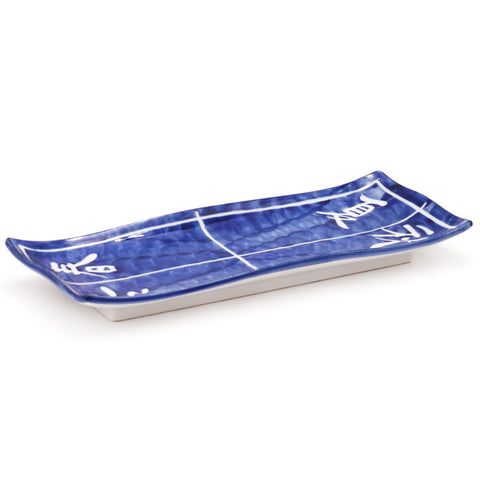 Directional presentation9-3/4" x 4" Rectangular Ceramic Plate, Blue — Chinese Characters for the Four Seasons Design
9-3/4" x 4" · Ceramic
A directional field for fish, nigiri or a composed course; approve the usable interior on a sample.
$14.29
View Product
Statement sashimi field10.85" x 10.5" Irregular Ceramic Plate, Turquoise, Aqua
10.85" x 10.5" · Ceramic
A broad turquoise field and irregular outline make this a signature-course candidate, not a universal workhorse.
$52.99
View Product
Heritage-forward accent6.85" Square Ceramic Plate, Light Celadon Mint
6.85" · Ceramic
A restrained painted line and pale celadon color can carry one traditional cue inside a quieter sequence.
$14.29
View Product
Directional presentation9-3/4" x 4" Rectangular Ceramic Plate, Blue — Chinese Characters for the Four Seasons Design
9-3/4" x 4" · Ceramic
A directional field for fish, nigiri or a composed course; approve the usable interior on a sample.
$14.29
View Product
Statement sashimi field10.85" x 10.5" Irregular Ceramic Plate, Turquoise, Aqua
10.85" x 10.5" · Ceramic
A broad turquoise field and irregular outline make this a signature-course candidate, not a universal workhorse.
$52.99
View Product
Heritage-forward accent6.85" Square Ceramic Plate, Light Celadon Mint
6.85" · Ceramic
A restrained painted line and pale celadon color can carry one traditional cue inside a quieter sequence.
$14.29
View Product
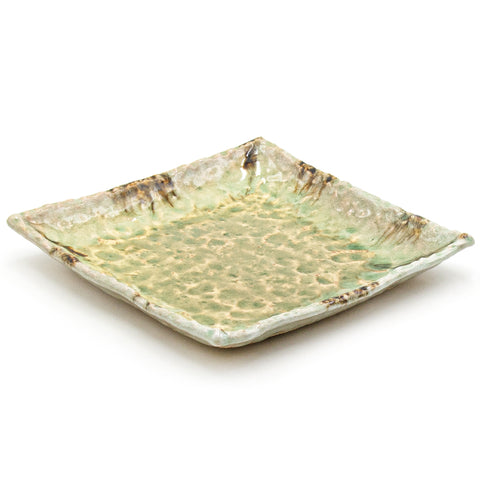 Composed course9.65" Square Ceramic Plate, Beige, Green — Oribe Design
9.65" · Ceramic
A distinct presentation field. Keep the food, garnish and negative space in proportion.
$37.99
View Product
Sculptural small courseCeramic Bowl — 5 fl. oz., Blue
4 in (axis unspecified), 2 in height · Ceramic
The compact raised corners create a distinct course silhouette; test sauce placement and handling.
$6.49
View Product
Lidded soup / owanLacquer Miso Soup Bowl with Lid 4", Black
4"D
An unmistakable material and silhouette break from ceramic plateware.
$5.75
View Product
Composed course9.65" Square Ceramic Plate, Beige, Green — Oribe Design
9.65" · Ceramic
A distinct presentation field. Keep the food, garnish and negative space in proportion.
$37.99
View Product
Sculptural small courseCeramic Bowl — 5 fl. oz., Blue
4 in (axis unspecified), 2 in height · Ceramic
The compact raised corners create a distinct course silhouette; test sauce placement and handling.
$6.49
View Product
Lidded soup / owanLacquer Miso Soup Bowl with Lid 4", Black
4"D
An unmistakable material and silhouette break from ceramic plateware.
$5.75
View Product
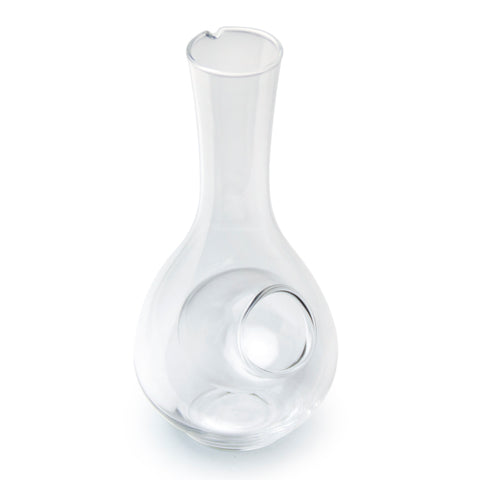 Sake bottleGlass Sake Bottle 6.75"H, Clear
6-3/4"H · Glass
A table-visible sake anchor; coordinate with the cup without requiring an identical finish.
$16.75
View Product
Sake bottleGlass Sake Bottle 6.75"H, Clear
6-3/4"H · Glass
A table-visible sake anchor; coordinate with the cup without requiring an identical finish.
$16.75
View Product
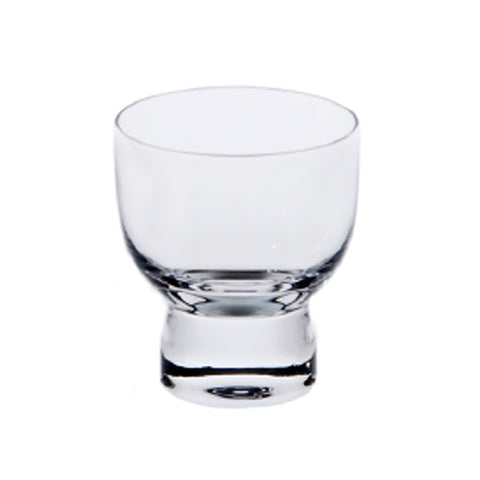 Sake cupClear Glass Sake Cup 2.25"Dx2.5"H
2-1/4"D x 2-1/2"H · Glass
A small, frequently handled vessel that can introduce contrast without crowding the food.
$4.50
View Product
Sake cupClear Glass Sake Cup 2.25"Dx2.5"H
2-1/4"D x 2-1/2"H · Glass
A small, frequently handled vessel that can introduce contrast without crowding the food.
$4.50
View Product
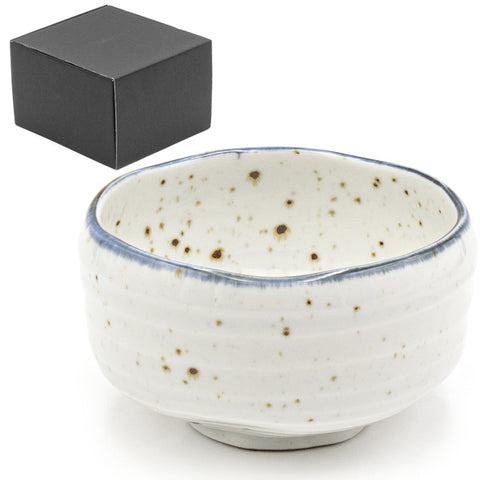 MatchaJapanese Matcha Bowl - 5"D x 3"H, 18oz
A held vessel with a visibly distinct rim and body; evaluate the actual preparation and hand feel.
$22.99
View Product
Persistent detail2.5"X0.75"H Porcelain Chopstick Rest, Matte Black
2-1/2" x 3/4"H · Porcelain
A repeatable landing point for chopsticks; small enough to stay present through the meal.
$1.25
View Product
ChopsticksChopsticks – Matte Black with Silver Accent
A persistent tactile detail. Choose the tip and balance with the chef, not just the color.
$2.00
View Product
MatchaJapanese Matcha Bowl - 5"D x 3"H, 18oz
A held vessel with a visibly distinct rim and body; evaluate the actual preparation and hand feel.
$22.99
View Product
Persistent detail2.5"X0.75"H Porcelain Chopstick Rest, Matte Black
2-1/2" x 3/4"H · Porcelain
A repeatable landing point for chopsticks; small enough to stay present through the meal.
$1.25
View Product
ChopsticksChopsticks – Matte Black with Silver Accent
A persistent tactile detail. Choose the tip and balance with the chef, not just the color.
$2.00
View Product
12CONTEMPORARY OMAKASE / tabletops
Complete Contemporary Omakase Tabletop Examples
Budget answers one question.
Visual identity answers another.
The following tabletop directions should be assembled as complete ERS specifications rather than loose product recommendations.
Restrained Craft Tabletop
The objective is quiet depth.
Build around:
- restrained recurring nigiri surface;
- tactile but subdued small plate;
- shallow bowl;
- one darker or more heavily fired accent;
- soup / lacquer contrast;
- understated sake ware;
- refined tea;
- chopsticks/rest.
The group should look stronger together than any individual piece does alone.
Recurring nigiri surface7.25" x 4.75" Rectangular Ceramic Plate, Beige, Brown
7.25" x 4.75" · Ceramic
Warm, irregular-looking edges and a restrained field give repetition character without a loud pattern.
$9.99
View Product
Shallow warm course6.65" Ceramic Deep Plate, Beige, Brown
6.65" · Ceramic
A quieter partner to darker accents; the low wall keeps sauce within the presentation.
$10.99
View Product
Contained small courseCeramic Bowl — 3 fl. oz.
3.5 in diameter, 1.75 in height · Ceramic
Use the contained field for a sauced or softer course; test the actual portion and practical fill.
$2.89
View Product
 Composed course7.5" x 4.75" Ceramic Plate, Dark Brown, Gray
7.5" x 4.75" · Ceramic
A distinct presentation field. Keep the food, garnish and negative space in proportion.
$7.19
View Product
Open soup / owanLacquer Miso Soup Bowl 4.5", Black/Red
4-1/2"D x 2-1/4"H
A simple open lacquer format keeps the soup course materially distinct and the utility decision rational.
$2.15
View Product
Sake bottleCeramic Sake Bottle - 5.25"H
A table-visible sake anchor; coordinate with the cup without requiring an identical finish.
$7.19
View Product
Restrained tactile sake cupSake Cup (bk)
CERAMIC
A small dark, speckled-looking cup gives the guest a quieter repeated point of contact.
$4.29
View Product
Tea cup3.25" H Ceramic Teacup (PT71-PE)
3.25" H · Ceramic
An everyday point of guest contact; relate its visual weight to the recurring counter setting.
$5.79
View Product
Persistent detailRectangular Chopstick Rest, White Ceramic
Ceramic
A repeatable landing point for chopsticks; small enough to stay present through the meal.
$0.55
View Product
ChopsticksChopsticks – Matte Black with Silver Accent
A persistent tactile detail. Choose the tip and balance with the chef, not just the color.
$2.00
View Product
Composed course7.5" x 4.75" Ceramic Plate, Dark Brown, Gray
7.5" x 4.75" · Ceramic
A distinct presentation field. Keep the food, garnish and negative space in proportion.
$7.19
View Product
Open soup / owanLacquer Miso Soup Bowl 4.5", Black/Red
4-1/2"D x 2-1/4"H
A simple open lacquer format keeps the soup course materially distinct and the utility decision rational.
$2.15
View Product
Sake bottleCeramic Sake Bottle - 5.25"H
A table-visible sake anchor; coordinate with the cup without requiring an identical finish.
$7.19
View Product
Restrained tactile sake cupSake Cup (bk)
CERAMIC
A small dark, speckled-looking cup gives the guest a quieter repeated point of contact.
$4.29
View Product
Tea cup3.25" H Ceramic Teacup (PT71-PE)
3.25" H · Ceramic
An everyday point of guest contact; relate its visual weight to the recurring counter setting.
$5.79
View Product
Persistent detailRectangular Chopstick Rest, White Ceramic
Ceramic
A repeatable landing point for chopsticks; small enough to stay present through the meal.
$0.55
View Product
ChopsticksChopsticks – Matte Black with Silver Accent
A persistent tactile detail. Choose the tip and balance with the chef, not just the color.
$2.00
View Product
 Small composed accent3-1/2" x 2-1/2" Rectangular Porcelain Plate, Ivory
3-1/2" x 2-1/2" · Porcelain
A restrained, compact patterned field; let one small course carry the decoration.
$4.29
View Product
Small composed accent3-1/2" x 2-1/2" Rectangular Porcelain Plate, Ivory
3-1/2" x 2-1/2" · Porcelain
A restrained, compact patterned field; let one small course carry the decoration.
$4.29
View Product
Heritage-Forward Contemporary Tabletop
Use Japanese visual vocabulary decisively but with restraint.
Potential components:
- refined patterned or heritage-glaze plate;
- quieter companion ceramic;
- lacquer soup;
- Japanese sake ware;
- clean recurring surface;
- traditional small-dish reference;
- refined chopsticks/rest;
- tea ware.
Do not make every product decorative.
The traditional cues need room.
Heritage-forward accent6.85" Square Ceramic Plate, Light Celadon Mint
6.85" · Ceramic
A restrained painted line and pale celadon color can carry one traditional cue inside a quieter sequence.
$14.29
View Product
 Composed course8.25" x 5.25" Ceramic Plate — Oribe Design
8.25" x 5.25" · Ceramic
A distinct presentation field. Keep the food, garnish and negative space in proportion.
$8.29
View Product
Composed course8.25" x 5.25" Ceramic Plate — Oribe Design
8.25" x 5.25" · Ceramic
A distinct presentation field. Keep the food, garnish and negative space in proportion.
$8.29
View Product
 Composed course8" Round Ceramic Plate, Blue — Sakura Design
8" · Ceramic
A distinct presentation field. Keep the food, garnish and negative space in proportion.
$9.99
View Product
Quiet recurring surface6.75" x 3.85" Rectangular Ceramic Plate, White, Green, Brown
6.75" x 3.85" · Ceramic
A low-noise rectangular field that can recur while stronger accents change across the meal.
$5.79
View Product
Lidded soup / owanLacquer Miso Soup Bowl with Lid 4", Black
4"D
An unmistakable material and silhouette break from ceramic plateware.
$5.75
View Product
Heritage-forward sake bottleCeramic Sake Bottle - 8 fl. oz. / 6.25"H
CERAMIC
Blue-and-white brushwork can carry the traditional reference while the food vessels remain quieter.
$15.99
View Product
Heritage-forward sake cup1.75"H Sake Cup 1.5 fl.oz.
Porcelain
A compact blue-and-white companion to the sake bottle, supported by quieter course ware.
$5.79
View Product
Composed course8" Round Ceramic Plate, Blue — Sakura Design
8" · Ceramic
A distinct presentation field. Keep the food, garnish and negative space in proportion.
$9.99
View Product
Quiet recurring surface6.75" x 3.85" Rectangular Ceramic Plate, White, Green, Brown
6.75" x 3.85" · Ceramic
A low-noise rectangular field that can recur while stronger accents change across the meal.
$5.79
View Product
Lidded soup / owanLacquer Miso Soup Bowl with Lid 4", Black
4"D
An unmistakable material and silhouette break from ceramic plateware.
$5.75
View Product
Heritage-forward sake bottleCeramic Sake Bottle - 8 fl. oz. / 6.25"H
CERAMIC
Blue-and-white brushwork can carry the traditional reference while the food vessels remain quieter.
$15.99
View Product
Heritage-forward sake cup1.75"H Sake Cup 1.5 fl.oz.
Porcelain
A compact blue-and-white companion to the sake bottle, supported by quieter course ware.
$5.79
View Product
 Tea cup3" H Teacup (TC43)
3" H
An everyday point of guest contact; relate its visual weight to the recurring counter setting.
$2.59
View Product
Matcha5" D x 2.75" H Ceramic Matcha Bowl (K537-SPG)
5" D x 2.75" H · Ceramic
A held vessel with a visibly distinct rim and body; evaluate the actual preparation and hand feel.
$14.29
View Product
Persistent detailRectangular Chopstick Rest, White Ceramic
Ceramic
A repeatable landing point for chopsticks; small enough to stay present through the meal.
$0.55
View Product
Tea cup3" H Teacup (TC43)
3" H
An everyday point of guest contact; relate its visual weight to the recurring counter setting.
$2.59
View Product
Matcha5" D x 2.75" H Ceramic Matcha Bowl (K537-SPG)
5" D x 2.75" H · Ceramic
A held vessel with a visibly distinct rim and body; evaluate the actual preparation and hand feel.
$14.29
View Product
Persistent detailRectangular Chopstick Rest, White Ceramic
Ceramic
A repeatable landing point for chopsticks; small enough to stay present through the meal.
$0.55
View Product
 ChopsticksChopstick (Brown) (=C84-017)
8-7/8"L · Wood
A persistent tactile detail. Choose the tip and balance with the chef, not just the color.
$0.95
View Product
ChopsticksChopstick (Brown) (=C84-017)
8-7/8"L · Wood
A persistent tactile detail. Choose the tip and balance with the chef, not just the color.
$0.95
View Product
 Contained small courseCeramic Bowl — 5 fl. oz.
3.75 in diameter, 1.5 in height · Ceramic
Use the contained field for a sauced or softer course; test the actual portion and practical fill.
$3.29
View Product
Contained small courseCeramic Bowl — 5 fl. oz.
3.75 in diameter, 1.5 in height · Ceramic
Use the contained field for a sauced or softer course; test the actual portion and practical fill.
$3.29
View Product
Expressive Contemporary Tabletop
This assortment can support more:
- saturated color;
- pattern;
- stronger shape;
- material contrast;
- graphic pieces;
- unusual accents.
It still needs a quiet anchor.
Without one, the tabletop becomes a sequence of competing objects rather than a coherent restaurant identity.
Directional presentationPorcelain Rectangular Plate 9.25"L x6.5"W, Blue
9.25"L x6.5"W · Porcelain
A directional field for fish, nigiri or a composed course; approve the usable interior on a sample.
$6.95
View Product
 Directional presentation8.65" x 5" Rectangular Ceramic Sushi Plate, Black, White — Black & White Brush Stroke Design
8.65" x 5" · Ceramic
A directional field for fish, nigiri or a composed course; approve the usable interior on a sample.
$12.99
View Product
Color / surface accent5" Ceramic Plate, Green
5" · Ceramic
A compact green field adds a sharp color change without requiring a larger presentation piece.
$3.59
View Product
Expressive patterned course8.75" Ceramic Plate
8.75" · Ceramic
Multicolor pattern becomes the course accent; pair it with a quiet recurring field.
$6.49
View Product
Chilled course / dessertGlass Bowl — 16 fl. oz., Gold, Red
6.25 in diameter, 1.75 in height · Glass
Transparency or reflection creates a clear material break in a ceramic-heavy progression.
$5.79
View Product
Open soup / owanLacquer Miso Soup Bowl 4.5", Black/Red
4-1/2"D x 2-1/4"H
A simple open lacquer format keeps the soup course materially distinct and the utility decision rational.
$2.15
View Product
Directional presentation8.65" x 5" Rectangular Ceramic Sushi Plate, Black, White — Black & White Brush Stroke Design
8.65" x 5" · Ceramic
A directional field for fish, nigiri or a composed course; approve the usable interior on a sample.
$12.99
View Product
Color / surface accent5" Ceramic Plate, Green
5" · Ceramic
A compact green field adds a sharp color change without requiring a larger presentation piece.
$3.59
View Product
Expressive patterned course8.75" Ceramic Plate
8.75" · Ceramic
Multicolor pattern becomes the course accent; pair it with a quiet recurring field.
$6.49
View Product
Chilled course / dessertGlass Bowl — 16 fl. oz., Gold, Red
6.25 in diameter, 1.75 in height · Glass
Transparency or reflection creates a clear material break in a ceramic-heavy progression.
$5.79
View Product
Open soup / owanLacquer Miso Soup Bowl 4.5", Black/Red
4-1/2"D x 2-1/4"H
A simple open lacquer format keeps the soup course materially distinct and the utility decision rational.
$2.15
View Product
 Sake bottleCeramic Sake Bottle - 8 fl. oz. / 6.25"H
CERAMIC
A table-visible sake anchor; coordinate with the cup without requiring an identical finish.
$14.29
View Product
Sake cupSake Cup (gy)
CERAMIC
A small, frequently handled vessel that can introduce contrast without crowding the food.
$4.29
View Product
Matcha5" D x 2.5" H Glass Matcha Bowl (K537G-SK)
5" D x 2.5" H · Glass
A held vessel with a visibly distinct rim and body; evaluate the actual preparation and hand feel.
$8.59
View Product
Persistent detail2.5"X0.75"H Porcelain Chopstick Rest, Matte Black
2-1/2" x 3/4"H · Porcelain
A repeatable landing point for chopsticks; small enough to stay present through the meal.
$1.25
View Product
ChopsticksChopsticks – Matte Black with Silver Accent
A persistent tactile detail. Choose the tip and balance with the chef, not just the color.
$2.00
View Product
Contained small course7.75" Round Ceramic Deep Plate, White
7.75" · Ceramic
Use the contained field for a sauced or softer course; test the actual portion and practical fill.
$5.79
View Product
Sake bottleCeramic Sake Bottle - 8 fl. oz. / 6.25"H
CERAMIC
A table-visible sake anchor; coordinate with the cup without requiring an identical finish.
$14.29
View Product
Sake cupSake Cup (gy)
CERAMIC
A small, frequently handled vessel that can introduce contrast without crowding the food.
$4.29
View Product
Matcha5" D x 2.5" H Glass Matcha Bowl (K537G-SK)
5" D x 2.5" H · Glass
A held vessel with a visibly distinct rim and body; evaluate the actual preparation and hand feel.
$8.59
View Product
Persistent detail2.5"X0.75"H Porcelain Chopstick Rest, Matte Black
2-1/2" x 3/4"H · Porcelain
A repeatable landing point for chopsticks; small enough to stay present through the meal.
$1.25
View Product
ChopsticksChopsticks – Matte Black with Silver Accent
A persistent tactile detail. Choose the tip and balance with the chef, not just the color.
$2.00
View Product
Contained small course7.75" Round Ceramic Deep Plate, White
7.75" · Ceramic
Use the contained field for a sauced or softer course; test the actual portion and practical fill.
$5.79
View Product
13CONTEMPORARY OMAKASE / sampling
Sample and Test the Tableware Before You Commit
The final specification should not be approved from browser tabs.
Put the food on the plate.
Use the Actual Portion
A vessel that looks generous when empty may make the real portion look lost.
A smaller plate can look elegant until garnish and sauce leave no room to resolve.
Plate the exact food.
Use the Actual Counter
A warm neutral glaze that looks sophisticated on white can disappear on pale wood.
A dark plate that looks dramatic in a product photo may lose its edge against a dark stone counter.
Test the real relationship.
Use Comparable Lighting
Dark glaze, gloss, metallic surfaces, and glass can change substantially under focused lighting.
Do not approve them solely under warehouse or office light.
Handle the Piece
Pick it up as the chef will.
Clear it as the busser will.
Carry several.
Feel:
- weight;
- rim;
- balance;
- grip;
- temperature;
- awkward projections.
Stack It
Check:
- stability;
- stack height;
- shelf fit;
- edge contact;
- foot-ring contact;
- how easily staff can separate pieces.
Run It Through the Actual Wash Process
Follow documented manufacturer requirements.
Check rack fit and handling.
A product being described as dishwasher-safe is not a substitute for understanding how it behaves in your operation.
Inspect Several Units
For visibly variable glaze or small-batch production, one sample is not enough.
The variation is part of the product.
Make sure the restaurant likes the range—not just the photograph of the best piece.
Confirm Replenishment
Before committing, know:
- whether the product is active;
- current supply position;
- whether the line is continuing;
- how replacements are ordered;
- whether another piece can coordinate if exact replacement becomes unavailable.
A tabletop specification is not finished when opening inventory arrives.
It is finished when the restaurant knows how it will continue operating with it.
Six pieces worth evaluating with the actual food
Statement sashimi field10.85" x 10.5" Irregular Ceramic Plate, Turquoise, Aqua10.85" x 10.5" · Ceramic$52.99 current selling priceA broad turquoise field and irregular outline make this a signature-course candidate, not a universal workhorse.View Product
Composed course6.75" Square Ceramic Plate, Beige, Blue6.75" · Ceramic$12.99 current selling priceA distinct presentation field. Keep the food, garnish and negative space in proportion.View Product
Sculptural small courseCeramic Bowl — 5 fl. oz., Blue4 in (axis unspecified), 2 in height · Ceramic$6.49 current selling priceThe compact raised corners create a distinct course silhouette; test sauce placement and handling.View Product
Contained small course9 x 6.75'' Oval Elveated Stoneware Bowl – 10 Oz.9 x 6.75'' outside$12.25 current selling priceUse the contained field for a sauced or softer course; test the actual portion and practical fill.View Product
Directional presentation9-3/4" x 4" Rectangular Ceramic Plate, Blue — Chinese Characters for the Four Seasons Design9-3/4" x 4" · Ceramic$14.29 current selling priceA directional field for fish, nigiri or a composed course; approve the usable interior on a sample.View Product
MatchaJapanese Matcha Bowl - 5"D x 3"H, 18oz$22.99 current selling priceA held vessel with a visibly distinct rim and body; evaluate the actual preparation and hand feel.View Product
Quick Buying Answers
14CONTEMPORARY OMAKASE / faq
Contemporary Omakase Tableware FAQ
What makes tableware contemporary omakase?
Contemporary omakase tableware is defined less by a particular glaze, color, or material than by how the vessels are coordinated across the meal. The tabletop should respond to the food, course progression, counter, and restaurant identity while maintaining enough continuity that different pieces still feel intentional together.
Does omakase tableware need to match?
No.
In fact, a fully matched dinnerware line can work against the course-by-course nature of omakase. The pieces should coordinate through color, surface, form, material, proportion, or recurring anchors, but they do not need to be identical.
The goal is continuity without uniformity.
What plates are best for nigiri?
There is no single correct nigiri plate.
A restaurant can use one recurring landing surface, rotate several related pieces, or individualize the presentation more aggressively.
What matters is the restaurant's service strategy, the usable plating field, the food-to-vessel relationship, and whether the chosen level of variation is practical to store, wash, replenish, and use consistently.
What plates work best for sashimi?
Sashimi usually benefits from a vessel with enough field for the fish, garnish, and negative space to resolve clearly.
Broad shallow plates, elongated forms, restrained bowls, and stronger-color presentation surfaces can all work.
Choose based on the actual food rather than the product category name. Color contrast, moisture, garnish, and usable plating area matter more than whether the manufacturer calls it a sashimi plate.
Is reactive glaze good for omakase?
Yes—when it improves the presentation.
Reactive and visibly variable glazes are increasingly common in elevated contemporary Japanese tabletop because they add depth, surface variation, and individual character without requiring every piece to be custom made.
They are not mandatory.
Refined porcelain, lacquer, glass, heritage patterns, and cleaner commercial ceramics can be just as appropriate.
Should omakase plates be handmade?
Not necessarily.
Handmade or custom ware makes the most sense when its form, surface, provenance, or relationship to a specific course adds something that stocked commercial ware cannot reproduce.
For heavily used recurring pieces, a commercially available product with strong visual character and reliable replenishment may be the better restaurant decision.
Can restaurant-grade tableware still look handmade?
Absolutely.
Commercially produced restaurant ware now includes highly variable glazes, organic shapes, textured surfaces, visibly fired finishes, and Japanese-made pieces with substantial craft character.
The important distinction is not whether a piece looks handmade. It is what the manufacturer actually documents about how it is produced and how it should be used.
Porcelain or ceramic for omakase?
Neither wins universally.
Porcelain may be ideal for a cleaner, more precise presentation. Other ceramic bodies may provide more visual weight, texture, glaze variation, or warmth.
The choice should follow:
- the food;
- desired presentation;
- vessel role;
- documented product characteristics;
- service requirements.
For deeper material comparison, see the Restaurant Dinnerware Materials Guide.
What colors work best with sushi and sashimi?
There is no universal best color.
Pale fish can gain definition against darker or colored ware. Strongly colored fish may need a quieter field. Highly garnished dishes often need less competition from the plate.
The counter matters too.
Always evaluate the food, vessel, surface beneath it, and lighting together.
Should the tableware match the sushi counter?
It should relate to the counter.
It does not need to match it.
Pale wood can support dark ware, subtle ceramics, blue-green, porcelain, and lacquer. Darker surfaces often create stronger contrast for pale ware, glass, or saturated color.
The same plate can behave completely differently on two counters.
How many different plate styles should an omakase restaurant use?
There is no universal number.
The right level of variety depends on:
- menu breadth;
- course progression;
- seat count;
- service volume;
- storage;
- dishwashing;
- replacement;
- how strongly the restaurant wants individual courses differentiated.
Use enough variation to improve the presentation.
Stop when additional variation creates more operating complexity than guest value.
How do I replace handmade or unique ceramics?
Plan for replacement before opening.
For difficult-to-replace pieces, consider:
- backup stock;
- lower-par use;
- reserving the vessel for one or several signature courses;
- known maker lead times;
- coordinated alternatives that can substitute later.
Do not build a high-frequency service role around a scarce vessel unless the restaurant is prepared to support that procurement model.
Where should an omakase restaurant spend more on tableware?
Spend more where presentation value is high and repeated handling exposure is manageable.
Signature composed courses, select otsumami, sashimi, beverage ware, and specialty dessert pieces can justify stronger investment.
High-use recurring pieces still deserve excellent design, but replenishment and operating practicality become more important.
How should I test tableware before opening?
Put the actual food on the sample, under representative lighting, on the actual counter or a close equivalent.
Then test:
- handling;
- stacking;
- storage;
- dish rack fit;
- documented washing requirements;
- variation across several units;
- replacement availability.
A plate is not approved until it works during service—not merely in a product photograph.
15CONTEMPORARY OMAKASE / procurement
Build Your Contemporary Omakase Tabletop
START WITH THE PIECES THAT CARRY THE SERVICE
Dependable Foundation
Recurring nigiri surface7.25" x 4.75" Rectangular Ceramic Plate, Beige, Brown7.25" x 4.75" · Ceramic$9.99 current selling priceWarm, irregular-looking edges and a restrained field give repetition character without a loud pattern.View Product
High-use small plate6" Ceramic Plate, Black6" · Ceramic$5.79 current selling priceA quiet dark field for recurring compact presentations, rather than a specialty piece for every course.View Product
Shallow sauced course6.65" Ceramic Deep Plate, Blue, Brown6.65" · Ceramic$11.99 current selling priceA compact walled format gives softer food containment while keeping the composition open.View Product
Contained small course3.5"Dx1"H Porcelain Bowl Shallow, Black Oribe3-1/2"D x 1"H · Porcelain$2.00 current selling priceUse the contained field for a sauced or softer course; test the actual portion and practical fill.View Product
Open soup / owanLacquer Miso Soup Bowl 4.5", Black/Red4-1/2"D x 2-1/4"H$2.15 current selling priceA simple open lacquer format keeps the soup course materially distinct and the utility decision rational.View Product
Accent / Course Variety
Heritage-forward accent6.85" Square Ceramic Plate, Light Celadon Mint6.85" · Ceramic$14.29 current selling priceA restrained painted line and pale celadon color can carry one traditional cue inside a quieter sequence.View Product
Color / surface accent5" Ceramic Plate, Blue5" · Ceramic$3.59 current selling priceA compact blue field gives pale ingredients separation inside a restrained core.View Product
Sculptural small courseCeramic Bowl — 5 fl. oz., Blue4 in (axis unspecified), 2 in height · Ceramic$6.49 current selling priceThe compact raised corners create a distinct course silhouette; test sauce placement and handling.View Product
Chilled course / dessertSquare Glass Bowl 5.75"5-3/4"SQ x 3"H · Glass$4.95 current selling priceTransparency or reflection creates a clear material break in a ceramic-heavy progression.View Product
Composed course7.25" x 4.75" Ceramic Plate, Ivory — Sakura Design7.25" x 4.75" · Ceramic$12.99 current selling priceA distinct presentation field. Keep the food, garnish and negative space in proportion.View Product
Sake / Tea / Persistent Details
Sake cupPorcelain Sake Cup 2"Dx1.5"H - 2 Oz, Chun Tenmoku - Blue/Dark Brown2"D x 1-1/2"H · Porcelain$2.75 current selling priceA small, frequently handled vessel that can introduce contrast without crowding the food.View Product
Sake bottlePorcelain Sake Bottle 6.25"Hx2.75"D - 10 Oz, Chun Tenmoku - Blue/Dark Brown6-1/4"H x 2-3/4"D · Porcelain$7.95 current selling priceA table-visible sake anchor; coordinate with the cup without requiring an identical finish.View Product
Tea cup3.25" H Ceramic Teacup (PT71-PE)3.25" H · Ceramic$5.79 current selling priceAn everyday point of guest contact; relate its visual weight to the recurring counter setting.View Product
 Persistent detailRectangular Chopstick Rest, White CeramicCeramic$0.55 current selling priceA repeatable landing point for chopsticks; small enough to stay present through the meal.View Product
ChopsticksChopsticks – Matte Black with Silver Accent$2.00 current selling priceA persistent tactile detail. Choose the tip and balance with the chef, not just the color.View Product
Persistent detailRectangular Chopstick Rest, White CeramicCeramic$0.55 current selling priceA repeatable landing point for chopsticks; small enough to stay present through the meal.View Product
ChopsticksChopsticks – Matte Black with Silver Accent$2.00 current selling priceA persistent tactile detail. Choose the tip and balance with the chef, not just the color.View Product
The strongest contemporary omakase tabletops are not built by shopping for one attractive plate at a time.
They are specified around the complete restaurant:
menu · course progression · food presentation · counter · materials · service · replacement · operating exposure · budget
ERS can help build the assortment from the recurring foundation pieces through the specialty vessels, sake and tea service, chopsticks, lacquer, glass, and presentation pieces that give the restaurant its identity.
The goal is not more tableware.
It is the right tableware in the right places.
Shop Contemporary Omakase Tableware
Shop Sushi Plates & Servingware
Shop Sake & Tea Ware
Shop Sake Cups · Shop Sake Bottles · Shop Tea Cups · Shop Teapots
Request Tableware Recommendations / Project Pricing
SHOP BY THE VESSEL ROLE
THE CONNECTED TABLEWARE LIBRARY
Explore the complete Tabletop catalog