

History, Craft & ERS Heritage
Los Angeles and the Development of American Sushi Restaurants
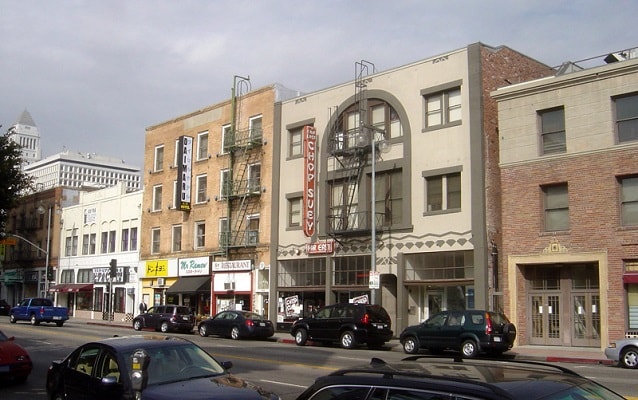
Los Angeles helped make sushi an enduring American restaurant business in several forms: the family shop preparing boxes for community gatherings, the specialist counter inside a larger Japanese restaurant, the independent chef's dining room, and the supermarket concession. Its importers and distributors supplied those businesses; its kitchens trained people who opened others. Later restaurant groups brought purchasing, preparation and staff development into organizations serving multiple dining rooms.
That history extends across the region, from Little Tokyo and Boyle Heights to Gardena, the Westside and the San Fernando Valley, and into neighboring cities. The important connections are often quite specific: a restaurant's procurement problem behind a seafood-importing company, a chef's employment contract preceding independent ownership, a retailer providing premises for a separately operated sushi counter. They explain how Los Angeles contributed to the broader history of sushi restaurants in America.
Commercial relationships
How the Los Angeles trade connected
Relationships documented in the company, archival and participant accounts linked in the article.
In this guide 7 sections
01 / History, Craft & ERS Heritage
Community commerce before the familiar sushi-bar story
Little Tokyo developed around food businesses, boarding houses, shops and community institutions in the late nineteenth and early twentieth centuries. Its commercial life included organizations that helped newcomers establish themselves and rotating credit associations that financed businesses. Restaurants served a population whose work, housing and social life were closely connected to the district. National Park Service
The menus were varied. Los Angeles's Japanese American historic-context study identifies early Japanese-owned restaurants advertising American meals, alongside businesses serving Japanese food. Ownership alone tells little about what a kitchen offered. Sushi also had a prewar commercial presence: historian Kristopher Lee Kozlowski identifies a Rafu Shimpo notice of 6 October 1933 reporting Matsuno-sushi's relocation. That is a record of an existing sushi business changing premises, rather than its founding date. SurveyLA; Kozlowski, p. 26
Forced removal and incarceration in 1942 broke apart this community economy. Residents lost access to homes, shops and established livelihoods. During the war, the district became Bronzeville, a center of Black businesses and social life as workers arrived for wartime employment. Returning Japanese Americans rebuilt a smaller Little Tokyo after the war; many settled elsewhere in the region. Subsequent clearance and redevelopment further changed the available premises and the district's boundaries. National Park Service
Gardena's Sakae Sushi grew from an intimate connection between work and food. In Gwen Muranaka's 2018 family profile, Aya Tani's sushi-making began with food for fellow workers at ABC Nursery, continued through sales at Motoyama Market, and became the shop she opened with Sumizo Tani in 1962. Aya's recipes remained central as responsibility passed through the family. By the time of the profile, Etsuko Tani made sushi while her daughter Emi handled orders and her son Jeff prepared the rice. Muranaka
The six-item assortment described in that 2018 account included inari, norimaki, shrimp, mackerel, egg and California rolls, packed in a white box tied with green string. Holiday queues and customers' associations with picnics and family celebrations place Sakae within a continuing Japanese American food culture. Its business depended on repeat occasions and recognizable preparations, with family members carrying distinct parts of the work across generations. Muranaka
In Boyle Heights, the municipal landmark research for Otomisan traces the restaurant to 1956, when it was called Otemo Sushi Cafe. The shop belonged to a neighborhood with a substantial Japanese American history beyond Little Tokyo. Los Angeles Cultural Heritage Commission nomination
Writing in 2012, Mike Sonksen described Yayoi Watanabe's purchase of Otomisan after another neighborhood Japanese café had disappeared. Watanabe and her daughter sustained a small restaurant serving local residents, including older Japanese customers. The decision to preserve the business carried a neighborhood gathering place into another period of ownership. Maintaining an ordinary restaurant could itself be an important act of community continuity. Sonksen
02 / History, Craft & ERS Heritage
Sushi counters inside an established restaurant market
The postwar sushi counter developed within an existing Japanese restaurant trade. Jonas House's archival study describes small counters at Kawafuku, Eigiku and Tokyo Kaikan inside larger Little Tokyo establishments. A restaurant could add specialized sushi service while retaining other dishes and the customers already buying them. House interprets that arrangement as a way to develop demand without depending immediately on a stand-alone sushi business. House
Kozlowski cites a Rafu Shimpo advertisement dated 14 March 1961 announcing a new sushi section for the following day. Kozlowski, p. 58, note 186
Sushi counters also appeared beyond Little Tokyo during the same decade. House identifies a counter at Imperial Garden on Sunset Boulevard in 1966, again within a larger restaurant. Tokyo Kaikan's restaurant history, meanwhile, reaches back to 1963; that restaurant date should not be confused with the installation of a particular counter. Its place in the regional story would extend into the seafood trade. House; International Marine Products
03 / History, Craft & ERS Heritage
The trade behind the restaurants
Tokyo Kaikan generated a seafood supply relationship. International Marine Products attributes its formation in 1968 to the restaurant's difficulty obtaining suitable seafood consistently after opening in Little Tokyo. The restaurant organization entered importing and developed a business serving the trade. International Marine Products
The Japanese side had its own sequence. Eiwa's corporate history dates Marinepack's establishment at Tsukiji to 1969 and describes an export business initially centered on frozen products. It places the development of fresh-seafood air freight in the 1980s. The American importer and the Japanese export operation were related businesses with different dates and functions. Eiwa Marine Products, Japanese company history
The region's weight also appears in a contemporary distribution decision. JFC moved its headquarters from San Francisco to Los Angeles in April 2008. In its announcement, the company described Los Angeles as its largest distribution base and emphasized proximity to customers and access to Southern California market information. It also announced a warehouse move for that summer. Kikkoman's July 2008 announcement
The associated changes in professional tools and production equipment are explored in the evolution of sushi equipment and supplies.
04 / History, Craft & ERS Heritage
Chefs, workers, and a widening restaurant geography
The expanding trade accompanied a regional restaurant market taking shape during the 1970s. Immigration, employment contracts and family succession supplied several routes into it.
In a 2016 Japanese American National Museum oral history, Sushi Gen founder Toshiaki Toyoshima recalled recruitment through the Sanchoukai chefs' association and arrival at Tokyo Kaikan in 1973. His account includes contracted employment, a return to Japan and a subsequent contract before independent ownership. In 1980, he opened Sushi Gen in Honda Plaza in Little Tokyo. He remembered choosing a location whose prospects others doubted. Toyoshima on recruitment; Toyoshima on Sushi Gen
Honda Plaza belonged to a Little Tokyo being remade through redevelopment. The Little Tokyo Historical Society's chronology records both new commercial projects and opposition to displacement. New restaurant premises emerged within a district whose residents and small businesses were contesting how development would proceed. Toyoshima's move from employment to ownership took place within that changing local property market. Little Tokyo Historical Society
Elsewhere, restaurants were advertising sushi to established neighborhood audiences. The December 20–27, 1974, Pacific Citizen carries a Chiba advertisement for sushi and takeout in North Hollywood, and an O-Sho advertisement identifying Sawtelle and West Pico Boulevard locations. These period advertisements place sushi service in the Valley and on the Westside by the mid-1970s. They also put takeout beside restaurant dining in the historical record. Pacific Citizen, PDF pp. 15 and 17
Chiba's later family history fills out the business behind that advertisement. In a 2021 interview, Shig Chiba described his parents opening the restaurant in 1973, his own training in Japan and his assumption of responsibility in 1986. The North Hollywood restaurant carried skills and ownership between generations while continuing to serve its local market. Inside the Valley
The Westside developed through several distinct establishments. Linda Burum's 1999 history of Sawtelle dates O-Sho there to 1966, initially emphasizing tempura and teriyaki, and Kubo's Pico restaurant with a sushi bar to 1969. Those are separate restaurant histories; the Sawtelle opening date does not by itself establish when it began serving sushi. Burum also dates Takuo Kitano's Hide to 1979 and describes the appeal of a modestly priced sushi counter. Together with the 1974 advertising, the account shows a Westside market developing through changing menus and several levels of service. Burum
Gardena sustained its own counter businesses alongside shops such as Sakae. Kanpachi dates its establishment to 1978. Its anniversary history describes Brian Tatsuguchi's decade of training with founder Takashi Kido before taking over the restaurant. Here succession passed through sustained work within one business, preserving a local establishment while changing its ownership. Kanpachi
Later restaurant work created other routes into ownership. Edgar Baca worked as a busboy at Nobu Malibu and sold food prepared at home to coworkers before establishing Mariscos y Sushi Los Tomateros in Lynwood, as reported in 2019. Restaurant employment provided both an income and a customer network as he developed his own food business. L.A. TACO
Frank Mendoza's route to El Sushi Loco involved learning sushi-making from his nephew Jose and beginning with a converted cart in 2010. ABC7's 2019 profile traces that venture into restaurant ownership. These businesses carried Mexican seafood and sushi preparations into a different set of neighborhood enterprises, extending the regional market through family knowledge and small-business formation. ABC7
Formal instruction added another point of entry. Andy Matsuda founded the Sushi Chef Institute in downtown Los Angeles in 2002. Alongside workplace training and recruitment from Japan, schools made structured instruction part of the region's professional landscape. Sushi Chef Institute
05 / History, Craft & ERS Heritage
Different ways to run a sushi restaurant
Menu adaptation accompanied this geographical growth. Moreno's account credits Tokyo Kaikan's chef Mashita with the California roll, describing avocado and crab as an alternative when fatty tuna was unavailable. Exclusive invention remains disputed, including a competing Vancouver account. The restaurant's association with the dish is part of a broader local history of chefs adjusting ingredients and developing distinctive menus. Moreno; Tojo's account
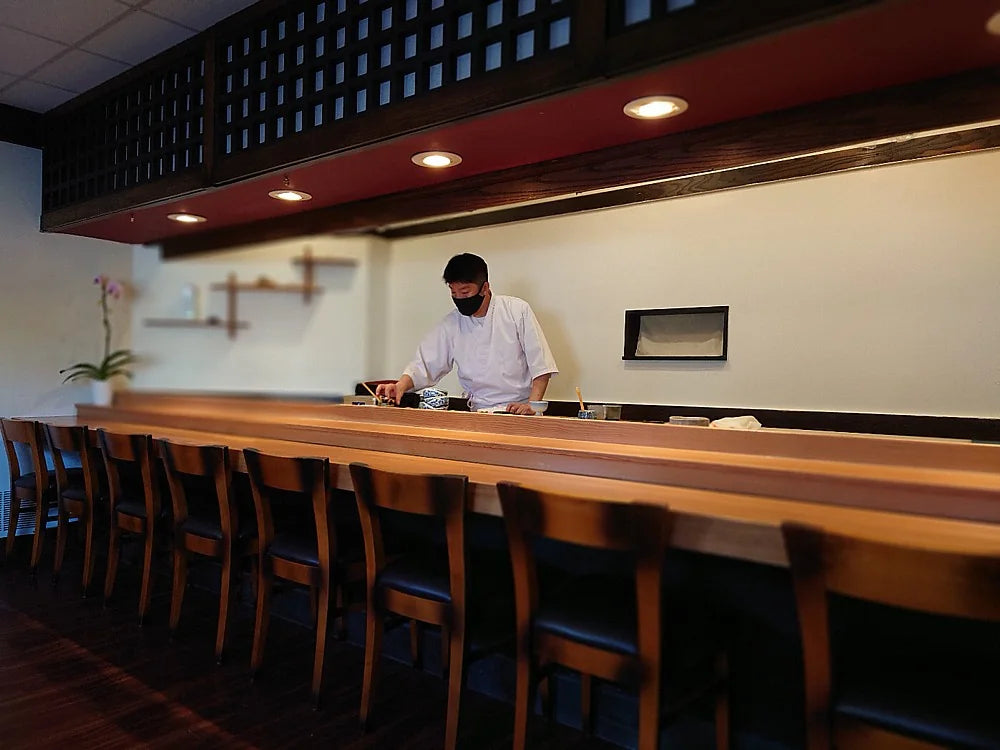
Sushi Nozawa opened in Studio City in 1987, according to its detailed company history. Its spare setting and tightly focused meal placed unusual weight on the chef's choices. Sushi Nozawa history Jonathan Gold's January 1988 review described a new restaurant where the chef directed the order of the meal. Los Angeles Times The proposition was immediate and personal: the customer came for the meal Nozawa chose to serve.
Matsuhisa opened in Beverly Hills in the same year. Nobu Matsuhisa brought his Japanese training and experience in Peru into the restaurant's cooking, giving the menu a different range of ingredients and preparations. Matsuhisa
In a 2023 interview, he recalled taking over existing restaurant premises with a sushi bar and opening with a small team. His wife handled bookkeeping and banking. Purchasing, wages and other expenses absorbed the early receipts; establishing an orderly business took work beyond developing dishes. He also recalled delaying a proposed expansion until the original restaurant was better organized. The account places a celebrated menu inside the practical history of a family enterprise. Beverly Hills Courier
The kitchen also connected to later independent restaurants. Brothers Tetsuya and Shunji Nakao, identified in Cathy Chaplin's account as members of Matsuhisa's opening team, established Asanebo in Studio City in 1991. Their move carried experience from one restaurant into another part of the region. Chaplin
Masayoshi Takayama's Ginza Sushiko developed an especially intimate, expensive counter proposition. Masa's biography In August 1993, Ginza Sushiko remained on Wilshire Boulevard, with a Beverly Hills move planned. Los Angeles Times, 1993 By April 1995, it was listed on North Rodeo Drive. Los Angeles Times, 1995 Former assistant Hiro Urasawa succeeded Takayama in the Beverly Hills space. Los Angeles Times, 2004 Takayama opened Masa in New York in 2004. Masa
Gold's 2005 review of Urasawa illuminates the service surrounding such a counter. Alongside a recollection of an earlier Ginza Sushiko meal, he described Urasawa's close attention to returning guests, coordinated clearing and replenishment, and a sequence extending beyond nigiri. The expensive meal involved a carefully maintained dining environment and substantial work around the guest. That hospitality belongs within the commercial history of the omakase and chef's-counter restaurant. Gold
Katsuya Uechi developed another restaurant business in Studio City. In his 2012 interview, he dated the original Katsu-ya to late 1997 and recalled reusing Japanese restaurant premises, working with his wife and enduring a slow start. Later, he adjusted the approach at Kiwami when its initial offering struggled. His own Katsu-ya Group and the Katsuya restaurants developed through his SBE partnership were distinct ventures. Inside the Valley
At a different scale of dining, Makino's 2016 Puente Hills opening in City of Industry combined sushi with seafood and hot dishes in a buffet. The restaurant offered selection across a broad prepared-food assortment and a different pattern of guest service. Rafu Shimpo
06 / History, Craft & ERS Heritage
From individual restaurants to repeatable businesses
Different organizations / selected milestones
Retail concessions and restaurant groups grew along separate paths
AFC / retail counters
- 1986A Vons counter
Marina del Rey
- 2002A franchise system
A later stage of organization
- 2019 filingDifferentiated businesses
Direct and franchised operations, management and logistics
Sushi Nozawa Group / distinct meals
- 2008SUGARFISH
Kitchen preparation and table service
- 2013Nozawa Bar
A reserved, sequenced counter meal
- 2014KazuNori
Made-to-order hand rolls across the counter
The company accounts and dated reports below document these separate developments. A filing date identifies a recorded organization, not the start date of every business within it.
While independent restaurants developed distinctive menus and service, a retail business was taking sushi into supermarket prepared-food departments. Advanced Fresh Concepts began with a Vons counter in Marina del Rey in 1986. Los Angeles Business Journal; AFC history
Founder Ryuji Ishii later explained that he had watched supermarkets improve their prepared foods to compete for customers. In a 2009 seminar account, he recalled pursuing a sushi concession and insisting on operating through his own company so that he could develop additional locations. The retailer offered access to an existing shopping audience, while the concession gave Ishii a business he could extend. Lighthouse, October 2009
AFC's corporate account describes the division of responsibilities: the supermarket supplied the facility, while AFC supplied ingredients and chefs. It dates its franchise subsidiary and franchise system to 2002. The first retail counter and the later franchise organization therefore belong to different stages of the company's development. Advanced Fresh Concepts
Expansion joined the local operation to retailers elsewhere, including H.E. Butt Grocery in Texas. Supermarket News By the period covered in Zensho's 2019 annual securities report, AFC's organization included holding and management functions, direct and franchised takeout operations, and a separate logistics business. The disclosure records differentiated businesses behind the counters customers encountered in stores. Zensho, p. 86
The work inside those counters was equally specific. Sarah Ahern's 2016 report from the Westwood Ralphs described preparation, display, packaging and labeling. Sous chef Min Mynt had trained in Yangon and worked at Geisha House before joining the supermarket operation. He hoped to become an AFC franchisee and identified management knowledge as something he still needed to acquire. His ambition places a possible route from employment to business ownership within the retail history. Daily Bruin
The supermarket format combined a retail site, an operating business and the people preparing the food. Its later franchise arrangements introduced further distinctions between working at a counter and owning the operation. The contemporary requirements of supermarket and grab-and-go sushi follow from that organization of space, production and responsibility.
A different approach emerged from Sushi Nozawa. The Sushi Nozawa Group dates its formation to 2007 and the first SUGARFISH, in Marina del Rey, to 2008. Related restaurants would divide preparation and guest contact in different ways. Sushi Nozawa Group
The 2008 SUGARFISH announcement proposed kitchen preparation and set menus in place of a meal made across the counter from the guest. Eater LA, 2008 At the operating Brentwood restaurant in 2009, Joshua Lurie described sushi prepared out of sight and brought to the table by staff, with set menus and specials. The chef's selections could become a table-service meal while preparation took place elsewhere in the restaurant. Food GPS
The group also developed a distinct close-counter experience. In April 2013, Nozawa Bar opened inside the Beverly Hills SUGARFISH, with Osamu Fujita serving a reserved, sequenced meal to diners together. Eater LA, 2013
KazuNori specialized in hand rolls. During its downtown Los Angeles soft opening in August 2014, Matthew Kang described made-to-order sets of three, four or five rolls served at the counter. An item familiar from SUGARFISH became the focus of a dedicated hand-roll restaurant and its service sequence. Eater LA, 2014
Work away from the dining rooms supported this expansion. In a 2018 interview, Jerry Greenberg described the group's downtown Los Angeles central kitchen, where staff inspected fish, made sauces and dispatched ingredients to restaurants daily. The account also described personnel supporting the Manhattan operations following the group's expansion to New York. These were organizational connections between cities as well as between a preparation facility and its restaurants. Forbes
The group's later history describes a quality center combining purchasing, storage, fish preparation and training, and dates its entry into wholesale fish supply to 2019. SUGARFISH Purchasing, preparation and supply had become shared activities behind geographically separated dining rooms, an important development in the history of sushi commissaries and central kitchens.
07 / History, Craft & ERS Heritage
Los Angeles's lasting commercial contribution
Los Angeles sustained a wide range of sushi businesses because the region supported many different relationships around the food. Community patronage gave family shops repeat occasions to serve. Employment and apprenticeship connected established kitchens to new proprietors. Restaurant demand helped build importing businesses, while distributors developed professional services around their products. Retail concessions and restaurant groups carried selected responsibilities into larger organizations.
The resulting market accommodated a box of familiar sushi for a family gathering, an everyday neighborhood meal, a highly personal chef's counter and a supermarket purchase. Its national influence traveled through the people who worked in those businesses and through the companies that supplied or expanded them.
ERS's own Los Angeles history begins in 2002, within this already developed restaurant and supply economy. That later company perspective belongs in ERS and sushi restaurant supply since 2002. The wider sushi restaurant equipment and supplies guide addresses the commercial requirements of the varied businesses this history helped shape.
Sources and further reading
This history draws on contemporary advertisements and reporting, historical scholarship, oral histories and business accounts. The 1933 Matsuno-sushi notice and 1961 Kawafuku advertisement are cited through Kozlowski's research; those original Rafu Shimpo pages have not been independently inspected here. Retrospective accounts are identified where they supply a participant's explanation or an organization's chronology.
For further reading: Jonas House's study of sushi in the United States, 1945–1970; Kristopher Lee Kozlowski's 2024 thesis; Toshiaki Toyoshima's oral history; and the December 1974 Pacific Citizen.