

History, Craft & ERS Heritage
Supplying Sushi Restaurants Since 2002: The ERS Perspective
Eden Restaurant Supply has supplied Japanese and sushi restaurants from Los Angeles since 2002. Our perspective begins with a commercial obligation: the order must preserve what the restaurant intends to do.
A decision made for a particular preparation, counter or presentation has to survive product selection, delivery and replacement. The supplier needs to understand which details can change and which ones carry the requirement. That is where specialist knowledge becomes useful: in the exact object ordered, the unnecessary purchase avoided and the later order that still makes sense.
In this perspective 5 sections
Japanese restaurant supply from Los Angeles
ERS's roots are in specialty tableware and equipment for Japanese restaurants. Today, we support restaurant and hospitality projects nationwide, from selection and specification through procurement and delivery. Our showroom and distribution base are in Los Angeles; the Downtown showroom is open to the public. About ERS.
That range connects two sides of the same restaurant. Equipment supports the preparation and service; the serving object carries the finished food to the guest. A supplier needs to understand both, because an assortment is only convincing when its individual choices agree with the restaurant being built.
The useful question is what deserves a place in that assortment. A catalog can provide alternatives. The recommendation has to explain why this restaurant should choose one of them.
ContentsWhat the restaurant actually needs
Consider two products sold under the broad heading of rice holding. Zojirushi's RDS-400 is a four-liter, non-electric thermal holder. The THA-803S is an eight-liter electric warmer. Both hold already-cooked rice.
The RDS relies on insulation; the THA supplies heat. Zojirushi specifically identifies the RDS for vinegar-containing preparations and sushi rice.
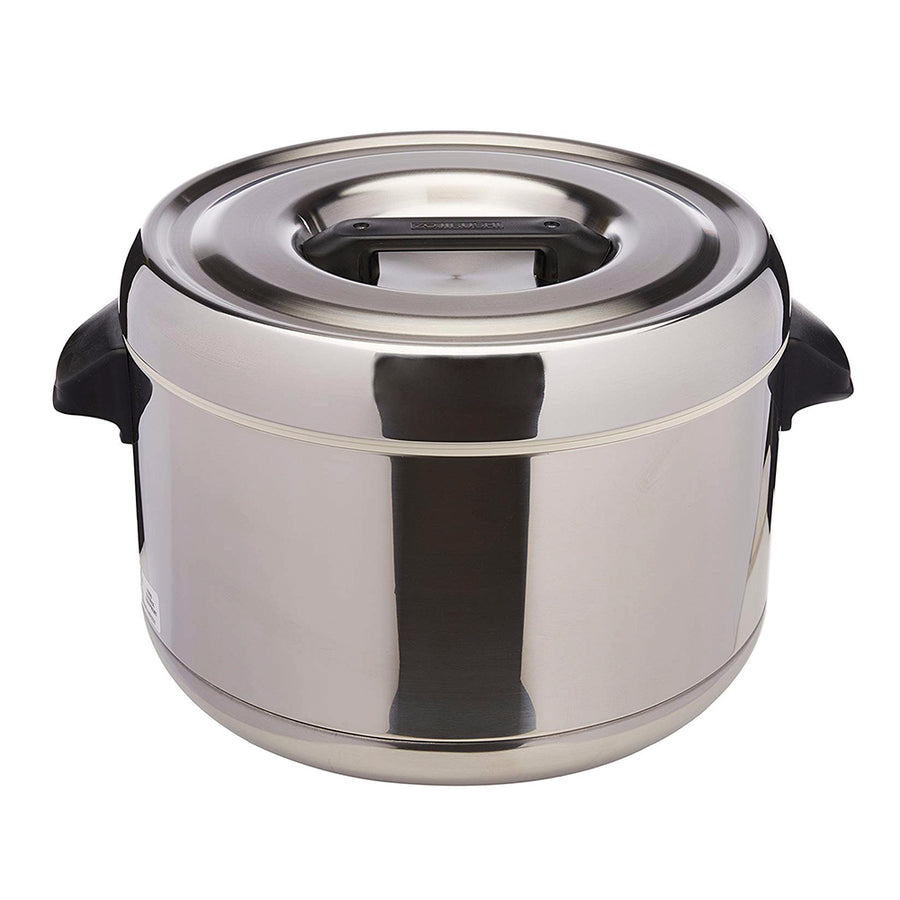
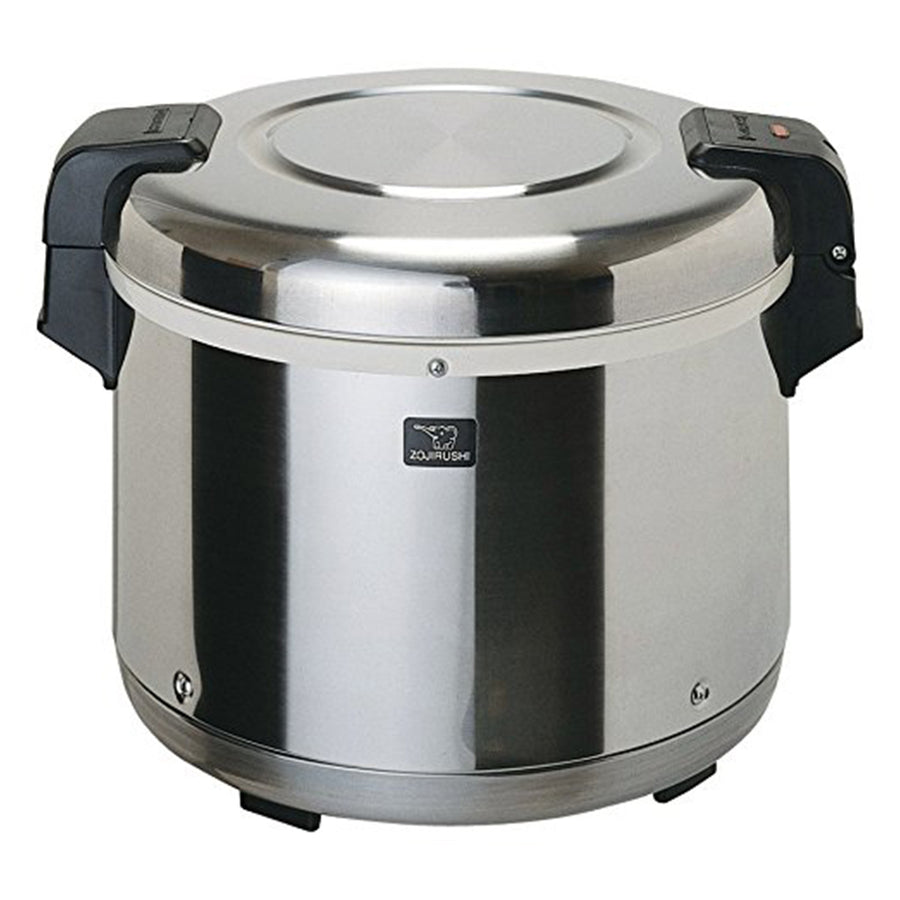
Choose the holding method before comparing capacities. The commercial rice-holding guide develops the equipment and operating distinctions.
The same judgment applies to the tabletop. A recurring nigiri surface and a vessel used for one course have different quantity requirements. Omakase can justify variety across a progression without equal inventory depth in every piece. A broader à la carte menu may place greater demand on a smaller group of versatile forms. The sushi and omakase tableware guide treats those selection and quantity decisions in detail.
Choose the role before expanding the range. Distinctive ware earns its place when the food benefits from it; buying another specialty form simply creates another obligation if the service has no use for it. A supplier should be as willing to decline an unnecessary addition as to find an unusual object.
ContentsExplore the ERS collection
Commercial Rice Cookers & Warmers
Compare the assortment for this part of your service.
-
 Image unavailable
Hattori Natural Gas Deck Rice Cooker, 3-Deck, 21 kg - LG-000-150
View details & options : Hattori Natural Gas Deck Rice Cooker, 3-Deck, 21 kg - LG-000-150
Image unavailable
Hattori Natural Gas Deck Rice Cooker, 3-Deck, 21 kg - LG-000-150
View details & options : Hattori Natural Gas Deck Rice Cooker, 3-Deck, 21 kg - LG-000-150
-
 Image unavailable
Hattori Natural Gas Deck Rice Cooker, 2-Deck, 14 kg - LG-000-100
View details & options : Hattori Natural Gas Deck Rice Cooker, 2-Deck, 14 kg - LG-000-100
Image unavailable
Hattori Natural Gas Deck Rice Cooker, 2-Deck, 14 kg - LG-000-100
View details & options : Hattori Natural Gas Deck Rice Cooker, 2-Deck, 14 kg - LG-000-100
-
 Image unavailable
Rinnai Commercial Natural Gas Rice Cooker, 55-Cup - RER-55AS
View details & options : Rinnai Commercial Natural Gas Rice Cooker, 55-Cup - RER-55AS
Image unavailable
Rinnai Commercial Natural Gas Rice Cooker, 55-Cup - RER-55AS
View details & options : Rinnai Commercial Natural Gas Rice Cooker, 55-Cup - RER-55AS
-
 Image unavailable
CUCKOO Commercial Rice Cooker & Warmer, 30-Cup - CR-3032
View details & options : CUCKOO Commercial Rice Cooker & Warmer, 30-Cup - CR-3032
Image unavailable
CUCKOO Commercial Rice Cooker & Warmer, 30-Cup - CR-3032
View details & options : CUCKOO Commercial Rice Cooker & Warmer, 30-Cup - CR-3032
-
 Image unavailable
Zojirushi Commercial Electric Rice Warmer, 8L (44-Cup) - THA-803S
View details & options : Zojirushi Commercial Electric Rice Warmer, 8L (44-Cup) - THA-803S
Image unavailable
Zojirushi Commercial Electric Rice Warmer, 8L (44-Cup) - THA-803S
View details & options : Zojirushi Commercial Electric Rice Warmer, 8L (44-Cup) - THA-803S
-
 Image unavailable
Tiger 3-Cup Rice Cooker & Warmer, Floral White - JNP-0550-FL
View details & options : Tiger 3-Cup Rice Cooker & Warmer, Floral White - JNP-0550-FL
Image unavailable
Tiger 3-Cup Rice Cooker & Warmer, Floral White - JNP-0550-FL
View details & options : Tiger 3-Cup Rice Cooker & Warmer, Floral White - JNP-0550-FL
-
 Image unavailable
Zojirushi Commercial Thermal Rice Warmer, 4L (22-Cup) - RDS-400
View details & options : Zojirushi Commercial Thermal Rice Warmer, 4L (22-Cup) - RDS-400
Image unavailable
Zojirushi Commercial Thermal Rice Warmer, 4L (22-Cup) - RDS-400
View details & options : Zojirushi Commercial Thermal Rice Warmer, 4L (22-Cup) - RDS-400
-
 Image unavailable
Zojirushi Commercial Thermal Rice Warmer, 6L (33-Cup) - RDS-600
View details & options : Zojirushi Commercial Thermal Rice Warmer, 6L (33-Cup) - RDS-600
Image unavailable
Zojirushi Commercial Thermal Rice Warmer, 6L (33-Cup) - RDS-600
View details & options : Zojirushi Commercial Thermal Rice Warmer, 6L (33-Cup) - RDS-600


What makes an order correct
Once the function is right, the order still has to identify the right configuration.


Hoshizaki's HNC-120BA-R-SLH and HNC-120BA-L-SLH share listed exterior dimensions of 47.24 × 13.58 × 11 inches. R and L describe condenser position from the front. The L model's condenser is on your left from the front and your right from the rear. The manufacturer drawing makes the convention explicit.
The case also needs space beyond its cabinet. Hoshizaki specifies rear condenser intake, side discharge and at least six inches at the inlet and outlet, with rear access and open space above. These are requirements at particular openings and access points, not a blanket allowance around every side. See the SLH installation instructions.
Front view
Condenser on your left.
Rear view
Condenser and intake on your right.
Air spaces belong to the openings.
Rear intake. Side discharge. At least six inches at each opening.
Retain rear access and open space above.
Use the linked manufacturer drawing and installation instructions for the actual counter.
Resolve the equipment against the actual counter before ordering. An obstructed air path defeats an otherwise correct cabinet-size choice. The sushi display-case reference covers the complete selection.

Actual product photographs; views are not shown at a common scale.
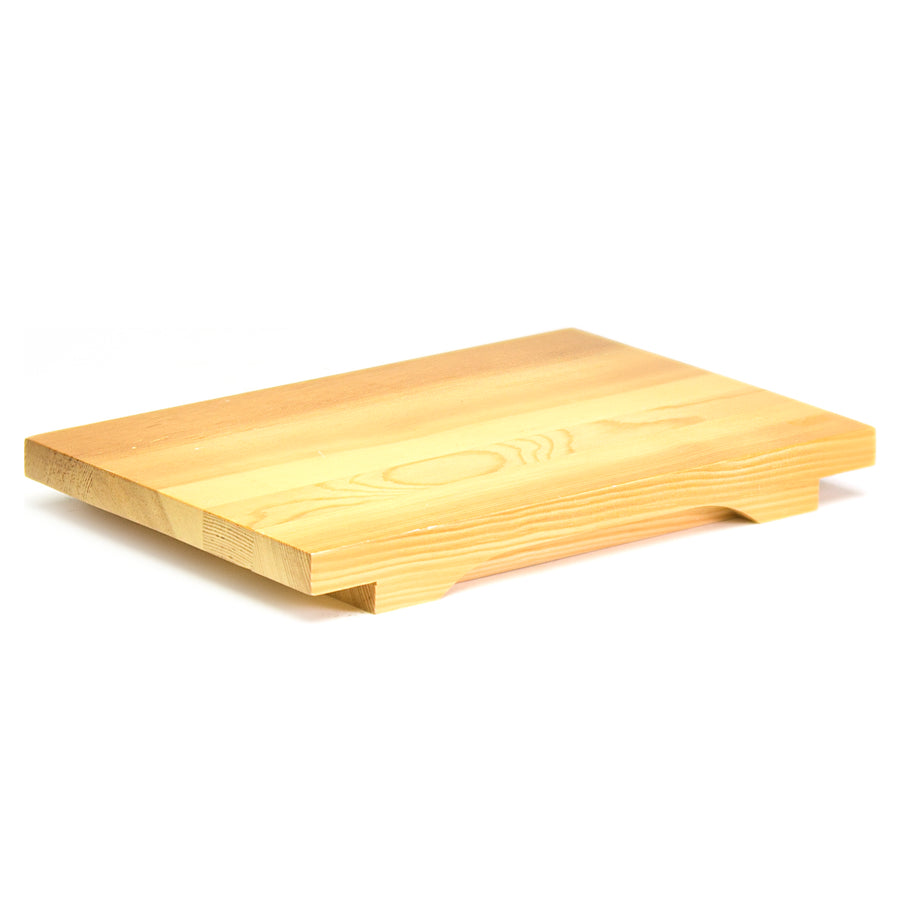
Precision matters just as much in a serving object. The wooden 94027-C geta measures 10¾ × 7 × 1 inch; 90024-C measures 9½ × 6 × 2¼ inches. Both require handwashing and thorough drying. The taller piece has the smaller exterior footprint.
If elevation carries part of the course presentation, another wooden geta is an inadequate replacement description. Decide which proportion must remain before comparing alternatives. The traditional servingware reference develops the objects and their specifications.
The order should retain the detail that made the choice suitable. A familiar product name is useful shorthand only after the actual object has been established.
ContentsExplore the ERS collection
Refrigerated Sushi Cases
Compare the assortment for this part of your service.
-
 Image unavailable
Turbo Air SAK-50R-N 48" Stainless Steel Curved Glass Refrigerated Sushi Case - Right Side Condenser
View details & options : Turbo Air SAK-50R-N 48" Stainless Steel Curved Glass Refrigerated Sushi Case - Right Side Condenser
Image unavailable
Turbo Air SAK-50R-N 48" Stainless Steel Curved Glass Refrigerated Sushi Case - Right Side Condenser
View details & options : Turbo Air SAK-50R-N 48" Stainless Steel Curved Glass Refrigerated Sushi Case - Right Side Condenser
-
 Image unavailable
Hoshizaki HNC-180BA-L-SLH 70.9" Stainless Steel Curved Glass Refrigerated Sushi Case - Left Side Condenser
View details & options : Hoshizaki HNC-180BA-L-SLH 70.9" Stainless Steel Curved Glass Refrigerated Sushi Case - Left Side Condenser
Image unavailable
Hoshizaki HNC-180BA-L-SLH 70.9" Stainless Steel Curved Glass Refrigerated Sushi Case - Left Side Condenser
View details & options : Hoshizaki HNC-180BA-L-SLH 70.9" Stainless Steel Curved Glass Refrigerated Sushi Case - Left Side Condenser
-
 Image unavailable
Hoshizaki HNC-150BA-R-SLH 59.1" Stainless Steel Curved Glass Refrigerated Sushi Case - Right Side Condenser
View details & options : Hoshizaki HNC-150BA-R-SLH 59.1" Stainless Steel Curved Glass Refrigerated Sushi Case - Right Side Condenser
Image unavailable
Hoshizaki HNC-150BA-R-SLH 59.1" Stainless Steel Curved Glass Refrigerated Sushi Case - Right Side Condenser
View details & options : Hoshizaki HNC-150BA-R-SLH 59.1" Stainless Steel Curved Glass Refrigerated Sushi Case - Right Side Condenser
-
 Image unavailable
Turbo Air SAK-60R-N 60" Stainless Steel Curved Glass Refrigerated Sushi Case - Right Side Condenser
View details & options : Turbo Air SAK-60R-N 60" Stainless Steel Curved Glass Refrigerated Sushi Case - Right Side Condenser
Image unavailable
Turbo Air SAK-60R-N 60" Stainless Steel Curved Glass Refrigerated Sushi Case - Right Side Condenser
View details & options : Turbo Air SAK-60R-N 60" Stainless Steel Curved Glass Refrigerated Sushi Case - Right Side Condenser
-
 Image unavailable
Hoshizaki HNC-180BA-R-SLH 70.9" Stainless Steel Curved Glass Refrigerated Sushi Case - Right Side Condenser
View details & options : Hoshizaki HNC-180BA-R-SLH 70.9" Stainless Steel Curved Glass Refrigerated Sushi Case - Right Side Condenser
Image unavailable
Hoshizaki HNC-180BA-R-SLH 70.9" Stainless Steel Curved Glass Refrigerated Sushi Case - Right Side Condenser
View details & options : Hoshizaki HNC-180BA-R-SLH 70.9" Stainless Steel Curved Glass Refrigerated Sushi Case - Right Side Condenser
-
 Image unavailable
Turbo Air SAK-70L-N 71" Stainless Steel Curved Glass Refrigerated Sushi Case - Left Side Condenser
View details & options : Turbo Air SAK-70L-N 71" Stainless Steel Curved Glass Refrigerated Sushi Case - Left Side Condenser
Image unavailable
Turbo Air SAK-70L-N 71" Stainless Steel Curved Glass Refrigerated Sushi Case - Left Side Condenser
View details & options : Turbo Air SAK-70L-N 71" Stainless Steel Curved Glass Refrigerated Sushi Case - Left Side Condenser
-
 Image unavailable
Turbo Air SAS-50R-N 47¼" Straight Glass Refrigerated Sushi Case - Right Side Condenser
View details & options : Turbo Air SAS-50R-N 47¼" Straight Glass Refrigerated Sushi Case - Right Side Condenser
Image unavailable
Turbo Air SAS-50R-N 47¼" Straight Glass Refrigerated Sushi Case - Right Side Condenser
View details & options : Turbo Air SAS-50R-N 47¼" Straight Glass Refrigerated Sushi Case - Right Side Condenser
-
 Image unavailable
Turbo Air SAS-60R-N 59" Straight Glass Refrigerated Sushi Case - Right Side Condenser
View details & options : Turbo Air SAS-60R-N 59" Straight Glass Refrigerated Sushi Case - Right Side Condenser
Image unavailable
Turbo Air SAS-60R-N 59" Straight Glass Refrigerated Sushi Case - Right Side Condenser
View details & options : Turbo Air SAS-60R-N 59" Straight Glass Refrigerated Sushi Case - Right Side Condenser


Keeping the assortment in service
An opening order fixes an assortment at one moment. Continuing supply has to preserve its purpose through consumption, replacement and changes in the restaurant. An approximate description can carry forward the old product name while concealing a different object or quantity.
Two current packaging offerings illustrate the distinction:
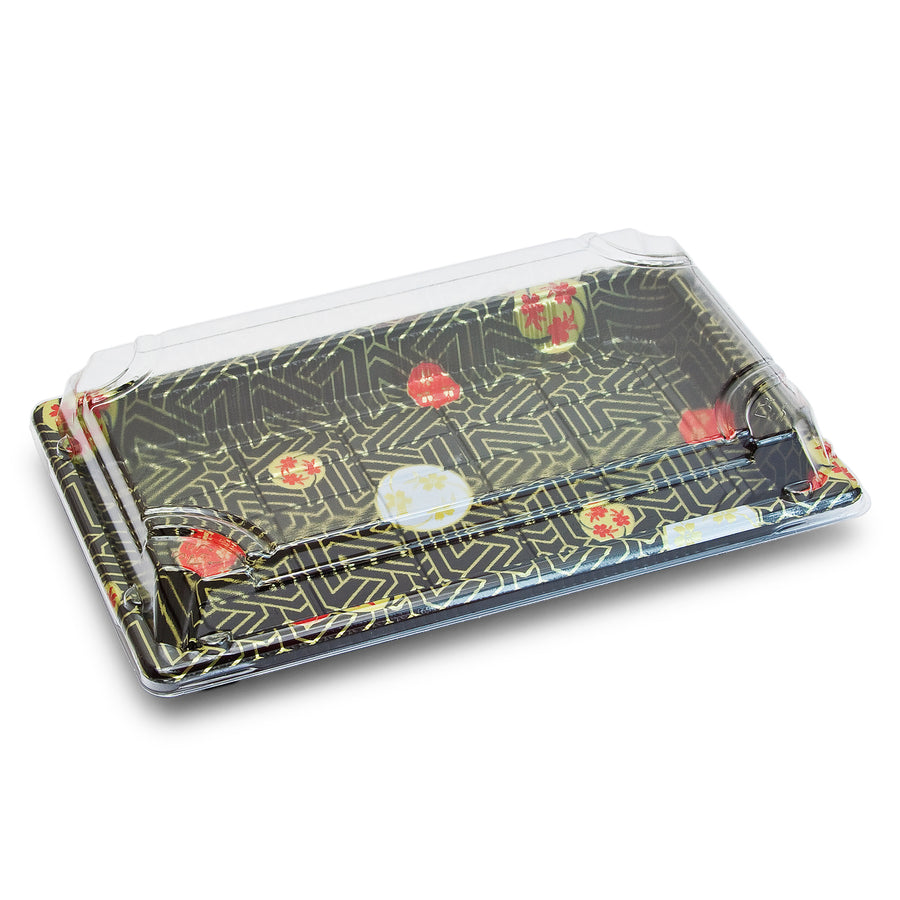

| Product | Exterior dimensions | Selling pack, lid included | Published master-case contents |
|---|---|---|---|
| ED-07 / YP-1.5, Kamon | 8½ × 5⅜ × 1¾ in. | 50 complete sets | 8 packs / 400 sets |
| ED-8525, black | 8½ × 5½ × 2 in. | 50 complete sets | 6 packs / 300 sets |
Master-case contents describe a quantity conversion; they do not establish a separate case option in the storefront.
One master case differs by 100 complete packages; one selling pack does not. Retaining the previous number of cases while changing the product would change the expected package count. Keep the ordering unit attached to the product. The container assortment and reorder planner carries that distinction into quantity planning.
Physical suitability is a separate decision. The size and shape guide groups comparable formats, but matching nominal length does not establish lid interchangeability. Approve the complete proposed package for the restaurant's presentation; verify component compatibility separately if components will be interchanged.
A reusable object's next requirement can be much smaller. Zojirushi identifies 6-RDA-P020 as the replacement sponge for RDS-400/600. Establishing the required part gives the sourcing conversation an exact starting point. Confirm its availability before committing to a replacement plan.
Preserve the reason for the original choice, and make substitutions deliberate. Another location can require a different equipment configuration to perform the same job. Equally, a seldom-used course vessel can deserve close replacement attention when the restaurant has no acceptable alternative for that presentation.
ERS's tabletop assistance includes coordinating products, addressing availability and identifying replacement paths or missing pieces. Bring the existing item and the requirement it needs to preserve. The broader ongoing supply and multi-location guide addresses how to carry those decisions across repeated orders and locations.
ContentsExplore the ERS collection
Sushi To-Go Containers
Compare the assortment for this part of your service.
-
 Image unavailable
Kamon Sushi To-Go Tray with Lid (50 pc) - YP-2.0, 9"
View details & options : Kamon Sushi To-Go Tray with Lid (50 pc) - YP-2.0, 9"
Image unavailable
Kamon Sushi To-Go Tray with Lid (50 pc) - YP-2.0, 9"
View details & options : Kamon Sushi To-Go Tray with Lid (50 pc) - YP-2.0, 9"
-
 Image unavailable
Long Kamon Sushi To-Go Tray with Lid (50 pc) - YP-0.6, 8-5/8"
View details & options : Long Kamon Sushi To-Go Tray with Lid (50 pc) - YP-0.6, 8-5/8"
Image unavailable
Long Kamon Sushi To-Go Tray with Lid (50 pc) - YP-0.6, 8-5/8"
View details & options : Long Kamon Sushi To-Go Tray with Lid (50 pc) - YP-0.6, 8-5/8"
-
 Image unavailable
Kraft Paper Sushi To-Go Tray with Clear Anti-Fog Lid (600 pc) - PH-09
View details & options : Kraft Paper Sushi To-Go Tray with Clear Anti-Fog Lid (600 pc) - PH-09
Image unavailable
Kraft Paper Sushi To-Go Tray with Clear Anti-Fog Lid (600 pc) - PH-09
View details & options : Kraft Paper Sushi To-Go Tray with Clear Anti-Fog Lid (600 pc) - PH-09
-
 Image unavailable
Kamon Sushi To-Go Container with Clear Lid (50 pc) - Large 10-1/2" x 7-3/4"
View details & options : Kamon Sushi To-Go Container with Clear Lid (50 pc) - Large 10-1/2" x 7-3/4"
Image unavailable
Kamon Sushi To-Go Container with Clear Lid (50 pc) - Large 10-1/2" x 7-3/4"
View details & options : Kamon Sushi To-Go Container with Clear Lid (50 pc) - Large 10-1/2" x 7-3/4"
-
 Image unavailable
Long Black Sushi To-Go Tray with Clear Lid (50 pc) - ED-30B, 9-1/4"
View details & options : Long Black Sushi To-Go Tray with Clear Lid (50 pc) - ED-30B, 9-1/4"
Image unavailable
Long Black Sushi To-Go Tray with Clear Lid (50 pc) - ED-30B, 9-1/4"
View details & options : Long Black Sushi To-Go Tray with Clear Lid (50 pc) - ED-30B, 9-1/4"
-
 Image unavailable
Sushi To-Go Tray with Clear Lid (100 pc) - Large Red & Silver
View details & options : Sushi To-Go Tray with Clear Lid (100 pc) - Large Red & Silver
Image unavailable
Sushi To-Go Tray with Clear Lid (100 pc) - Large Red & Silver
View details & options : Sushi To-Go Tray with Clear Lid (100 pc) - Large Red & Silver
-
 Image unavailable
Sushi & Bento To-Go Tray with Clear Lid (100pc) - Small Red & Silver
View details & options : Sushi & Bento To-Go Tray with Clear Lid (100pc) - Small Red & Silver
Image unavailable
Sushi & Bento To-Go Tray with Clear Lid (100pc) - Small Red & Silver
View details & options : Sushi & Bento To-Go Tray with Clear Lid (100pc) - Small Red & Silver
-
 Image unavailable
Kamon Sushi To-Go Tray with Clear Lid (50 pc) - ED-03 / YP-0.8
View details & options : Kamon Sushi To-Go Tray with Clear Lid (50 pc) - ED-03 / YP-0.8
Image unavailable
Kamon Sushi To-Go Tray with Clear Lid (50 pc) - ED-03 / YP-0.8
View details & options : Kamon Sushi To-Go Tray with Clear Lid (50 pc) - ED-03 / YP-0.8


Carrying the restaurant's identity into repeat orders
Custom supply adds an approved design to the physical specification. Our current custom chopstick offering pairs printed paper sleeves with Bamboo Twin or Bamboo Tenso chopsticks. The selected product belongs with the artwork.
The online sleeve designer provides a working preview. ERS reviews the submitted design and sends a digital proof for approval before printing. The artwork reference identifies what that proof must preserve: front and back content, orientation, placement, color assignment and the selected product.
We handle custom-sleeve production in-house from Los Angeles, including artwork preparation, proofing, printing, forming, packing and shipping. The production reference follows the design into the finished sleeved pair.
A repeat order should point to the approved product and artwork together. A changed mark, different copy or another chopstick selection needs an explicit decision; a familiar overall appearance does not make it an unchanged order.
This is a practical part of restaurant identity. The chef's and operator's choices live in objects that must be specified and supplied accurately, whether the important detail is presentation height, the package handed to a guest or the design on a sleeve.
For a new opening, an assortment revision or an exact replacement, contact Eden Restaurant Supply with the service you are planning and the items involved. Visit our showroom at 1000 E Olympic Boulevard, Los Angeles, CA 90021.
Related reading
Return to the Sushi Restaurant Equipment & Supplies Guide
Contents