

Equipment & Specialty Supplies
Nori Storage, Neta Preparation & Sushi Mise en Place
The condition required at assembly determines the sushi station's smallwares. Nori needs the right eating character and a protected working supply. Neta may arrive as a block awaiting final cutting, a carefully treated fish, a tender cooked portion or an ingredient still held in its packing liquid. Whole shiso leaves, grated wasabi, long roll fillings and finishing sauces introduce another set of shapes, contact surfaces and retrieval requirements.
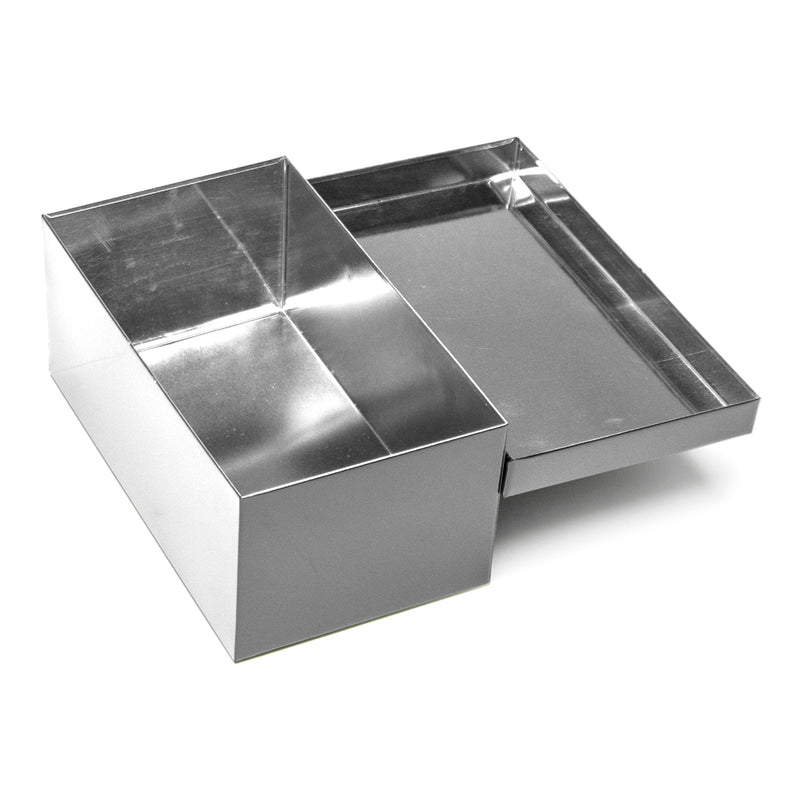
Specify those conditions before choosing the containers. A useful assortment provides appropriate support during preparation, preserves the intended condition afterward and makes the next portion accessible. The purchase includes the matching covers, inserts, contact materials and replacements that make the working pieces usable throughout service.
In this guide5 sections
01 / Equipment & Specialty Supplies
Nori Storage: Reserve Packs, Working Tins & Powered Boxes
Match the container to the nori format
Nori selection begins with how the sushi will be eaten. Maruyama recommends tender, crisp-breaking Saga nori for hand rolls eaten immediately, while directing customers toward sturdier sushi nori or its Kontobi range for futomaki and hosomaki eaten after standing. Its guidance also distinguishes half sheets for hosomaki from whole sheets for futomaki. Specify the nori for its intended texture when eaten as well as its cut at assembly. Maruyama's nori guidance
The corresponding container must accommodate the actual working cut. Whole sheets, half sheets and narrow gunkan strips require different floor space and different access to the stack. Enough exterior volume is of little use if the sheet catches under a rim or must be bent to pass through the opening. Check the usable interior, the opening and the space needed to lift the next piece.
Pack counts also need a format. Ichiyanagi's commercial assortment includes 100 whole sheets and 200 half sheets, with a whole-sheet example measuring approximately 21 × 19 cm. Those packs contain different numbers of working pieces even when the whole-sheet equivalent is the same. Record the cut and piece count together when ordering nori and selecting its working container. Ichiyanagi commercial nori
Protect the reserve and replenish the working supply
The reserve protects the unused ingredient; the working vessel accommodates repeated access. Separating those jobs lets the chef retrieve the required cut without repeatedly opening the entire supply.
Cold-stored nori requires particular attention at opening. Sukiyabashi Jiro's packaged-product guidance calls for letting the closed refrigerated bag approach room temperature before opening, removing what is needed and closing it again. It also advises against returning removed sheets to the bag. Apply the handling instructions for the nori actually purchased, including its closure and desiccant provisions. Jiro's product FAQ
Choose a working amount that can be replenished from that protected remainder. Whole sheets for larger rolls and smaller cuts for gunkan or temaki need not share one open stack. Where the menu uses several cuts, the provision should keep each recognizable and accessible without exposing the unused formats every time a sheet is taken.
Position the working container so its lid can open fully and the stack can be lifted clear of wet preparation. That object-level placement becomes especially important during repeated hand-roll assembly; the wider service arrangement belongs in the Hand-Roll & Temaki Restaurants guide.
Compare hinged tins, sealed containers and powered boxes
A hinged working tin, a gasketed reserve vessel and a powered nori box perform different jobs. The closure and usable space matter more than how elaborate the container appears.
Scroll to read all columns
| Construction | Actual example | Selection consequence |
|---|---|---|
| Hinged working tin | ERS NC-1, 8½ × 5⅛ × 3¾ in exterior; NC-2, 9 × 8½ × 4½ in exterior. Both are tin with a stainless-steel inner base. | Select the footprint around the working cut and retrieval. The listings do not establish airtight sealing or usable interior capacity. |
| Gasketed cut-nori container | Koasa one-touch container, 700 ml, Ø120 × H153 mm, with a polyethylene gasket; specified for 50 quarter-cut pieces. | A documented closure and cut-specific capacity. Its stated capacity does not establish whole-sheet fit. |
| Powered working box | Netsuken NN-260, with a 200 × 152 × 40 mm nori compartment. | A bulb-heated compartment for the working supply; check the cut against its actual chamber and the supplied electrical configuration. |
The ERS NC-1 and larger NC-2 give a practical choice of working footprints. Both lids are hinged. Their stainless component is the inner base, not a documented full stainless lining. The simple construction suits accessible working storage; reserve protection must be established separately.
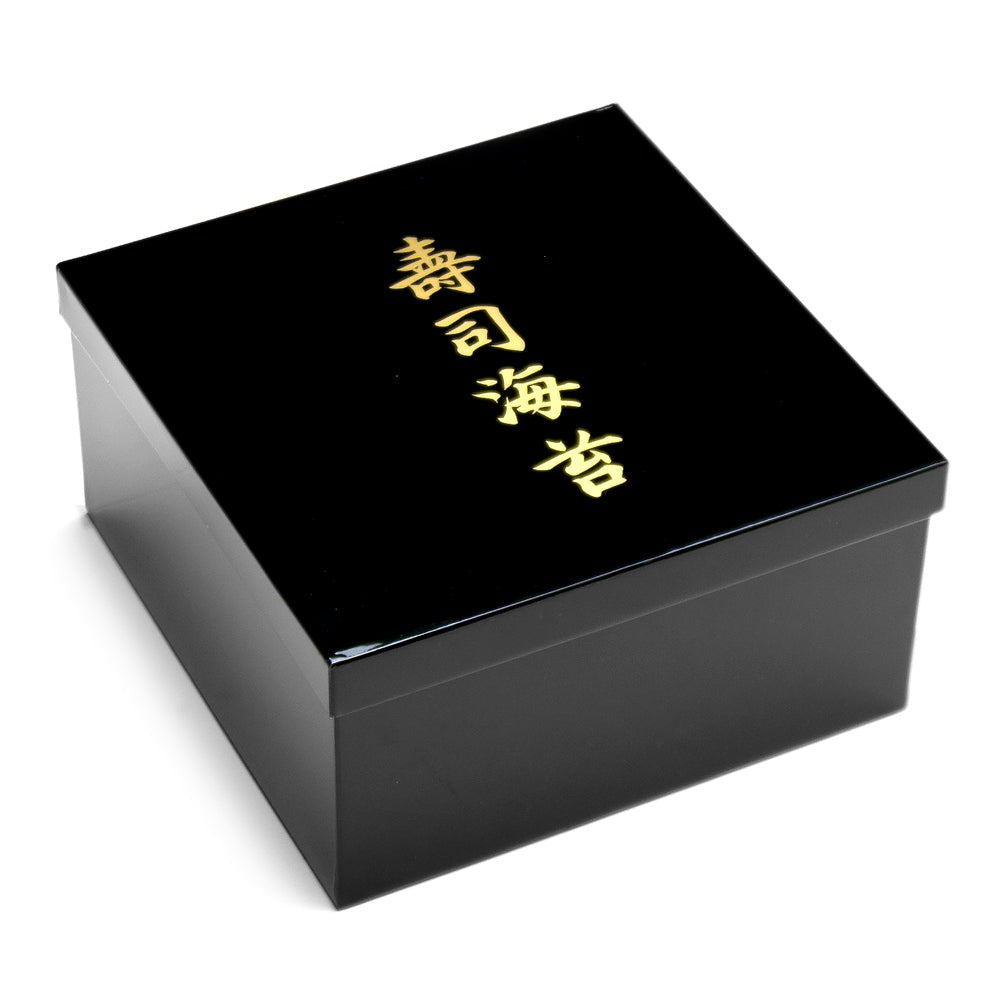
Koasa's supplier-listed container illustrates the other closure choice. Its saturated-polyester body, ABS lid and polyethylene gasket are specified components, and the seller recommends using the nori pack's desiccant. It is a useful seal-equipped example for its stated cut, rather than an ERS item or a container sized for every sushi program. Koasa one-touch nori container
Netsuken's NN-260 uses the heat of an E17 bulb to dry the storage compartment. The maker specifies AC100V, 15W, a hinoki body and lid, and stainless-steel internal shelf construction within a 263 × 181 × 138 mm exterior. Its chamber is illustrated for cut nori; the approximately 210 × 190 mm whole sheet cited above cannot lie flat and unfolded inside it. Netsuken NN-260 catalog, printed p. 30, NN-260 drawing
Select powered storage for conditioning the working compartment, with reserve protection handled separately. Roasting is a distinct processing stage: Maruyama describes roasting its nori before packaging and sale. Maruyama's production account
For the Japanese-market NN-260, confirm installation suitability, operating and care instructions, and exact replacement support before ordering. The bulb is part of the heat-producing design; matching its screw base alone does not establish an equivalent replacement.

Scroll diagram horizontally on smaller screens.
Approximately 210 × 190 mm. The actual purchased cut and pickup space control the working-container choice.
200 × 152 × 40 mm. Japanese AC100V / 15W bulb-heated design; reserve protection remains separate.
Explore the ERS collection
Nori Containers
Compare the assortment for this part of your service.
-
 Image unavailable
Sushi Nori Container 9" Black
View details & options : Sushi Nori Container 9" Black
Image unavailable
Sushi Nori Container 9" Black
View details & options : Sushi Nori Container 9" Black
-
 Image unavailable
Sushi Nori Container 9.7" Red
View details & options : Sushi Nori Container 9.7" Red
Image unavailable
Sushi Nori Container 9.7" Red
View details & options : Sushi Nori Container 9.7" Red
-
 Image unavailable
Sushi Nori Container 8-1/2" Red
View details & options : Sushi Nori Container 8-1/2" Red
Image unavailable
Sushi Nori Container 8-1/2" Red
View details & options : Sushi Nori Container 8-1/2" Red
-
 Image unavailable
Nori Container 8.5", Black
View details & options : Nori Container 8.5", Black
Image unavailable
Nori Container 8.5", Black
View details & options : Nori Container 8.5", Black


02 / Equipment & Specialty Supplies
Neta Preparation: From Purchased Form to Service-Ready Ingredient
Start with the purchased form
The neta assortment begins with the work remaining after purchase. A whole fish, a saku and a finished topping place different demands on the preparation area and the assembly position. Equipment should follow that division of work.
JFC's restaurant-use item 36351 is a frozen bluefin akami saku. Ahjikan's commercial range includes vinegared mackerel fillets, salmon-trout slices, scored squid portions and formed kazunoko toppings. These are materially different starting points, each with its own remaining preparation and handling. JFC akami saku, Ahjikan sushi ingredients
Scroll to read all columns
| Supplied form | Establish before selecting the working vessels |
|---|---|
| Whole or partly prepared seafood | Which breakdown, trimming and treatments occur here, and where the completed neta will be placed. |
| Fillet, loin or saku | The block's usable footprint, any treatment still required and the point of final portioning. |
| Sliced or prepared topping | What the exact product requires before service and how portions can be retrieved from the working arrangement. |
| Cooked, cured or liquid-packed component | The condition that must be retained until assembly, including deliberate liquid contact and finishing. |
A block awaiting the next cut needs an unobstructed supporting surface. Completed portions need enough area and access to lift the required piece. An intermediate preparation may require another object altogether. Buying prepared toppings changes the remaining work; it does not remove the need to specify that work accurately.
Keep the ingredient's identity and handling instructions attached when it leaves the supplier pack. Detailed thawing and refrigeration decisions belong to Seafood Refrigeration, Freezers & Cold-Chain Equipment; knife, board and sharpening choices belong to Professional Sushi Knives, Cutting Boards & Sharpening.
Let the preparation determine the holding requirement
The chef's shigoto changes what the support must do. Jiro's published technique account relates kohada's salt and vinegar treatment to the fish's size, thickness and fat condition. Readiness is a preparation judgment, not simply the point at which seafood has been sliced and placed in a cold tray. Jiro's technique account
That judgment has physical consequences. A treatment vessel must accommodate the fish in its intended contact arrangement; a support used while liquid passes over the ingredient must let that liquid leave. The completed-neta arrangement must preserve the result and leave access for final cutting or retrieval. Intermediate supports belong in the preparation inventory even when they never enter the display case.
Tsuji's kisu kombujime account explains why the intermediate support matters. Tomio Nishigaki describes arranging the fish on slats and treating the skin with hot water so it could be served skin-on. The slats let the poured water leave. The subsequent arrangement keeps fish and kombu in contact before final cutting and presentation. The preparation calls for two physical jobs: an open support during pouring, then close fish–kombu contact. Tsuji's kisu preparation
Liquid can also belong with the prepared ingredient. In an interview published in a 2023 Cultural Affairs commissioned report, Mamoru Sugiyama of Ginza Sushi Ko Honten describes cooked hamaguri returned to seasoned cooking liquid. For that condition, a suitable solid vessel and cover are the relevant starting point. Installing a draining insert would change the preparation being preserved. Cultural Affairs report, printed pp. 50–51
Use these examples to select the support and contact arrangement, not as transferable curing or holding schedules. Salting, vinegar, kombu contact and brief skin treatments do not themselves validate the restaurant's seafood-safety process. The wider requirements are addressed in Equipment Specifications, Food-Safety Controls & Commercial Requirements.
Treat delicate, liquid-packed and cooked toppings individually
Tender cooked neta places support and retrieval ahead of nominal container volume. Tsuji's nianago technique describes lifting the cooked anago onto a flat bamboo sieve. The important physical feature is broad support during gentle handling. A deep vessel may contain the same amount of food while making the next portion harder to lift without disturbing the rest. Tsuji's nianago technique
Select the working arrangement around that lift. Allow access to the portion rather than requiring an implement to dig beneath a piled supply. Where the preparation calls for a glaze, provide the finishing sauce separately and choose its application vessel deliberately. Tsukiji Sushiko's account links its anago preparation with making the finishing tsume, a useful reminder that the prepared topping and its final sauce are distinct provisions. Tsukiji Sushiko's anago
Brine-packed uni presents another transfer decision. Hokkaido Gyoren directs customers to drain its product for eating and warns that quality can deteriorate after draining even under refrigeration and within the original date. The drained serving condition should therefore not automatically become the condition of the entire protected reserve. Prepare the working amount according to the supplied product and the restaurant's controls. Gyoren brine-packed uni
Tray-packed uni, loose roe and formed toppings also create different retrieval tasks. A delicate piece to be lifted, a component to be spooned and a product intentionally retained in liquid should not inherit one universal liner or draining arrangement.
The decisive question is what the ingredient needs at this stage: support above collected liquid, interception of released drip, intentional dehydration, or containment with its liquid intact. That answer determines the tray and contact material.
03 / Equipment & Specialty Supplies
Neta Trays, Covers, Draining Inserts & Preparation Sheets
Choose the tray, lid and food-contact construction
Usable area, support height and access determine how a neta vessel works. A shallow arrangement can keep portions accessible; a deeper inner vessel can hold and lift a preparation as a unit. A cover may protect an unused portion, accommodate an implement or provide a more secure closure for transfer. Specify those features together.
A low stainless false bottom raises the ingredient above liquid collected in the pan beneath it. Winco's SPFB-3 is an 18/8 stainless third-size insert, listed at 10.5 × 4.88 × 0.63 inches. Its low profile is a different construction from a deep colander. Winco SPFB-3
The ERS SPFB-3 offer is the false bottom itself. A complete order also needs a compatible catch pan and cover. Winco offers the SPJP-302 third-size, 2½-inch-deep stainless pan and SPSCT solid third-size cover. These provide same-maker components for the proposed arrangement; confirm the assembled clearance rather than subtracting listed exterior heights and treating the result as usable depth. Winco SPJP-302, Winco SPSCT
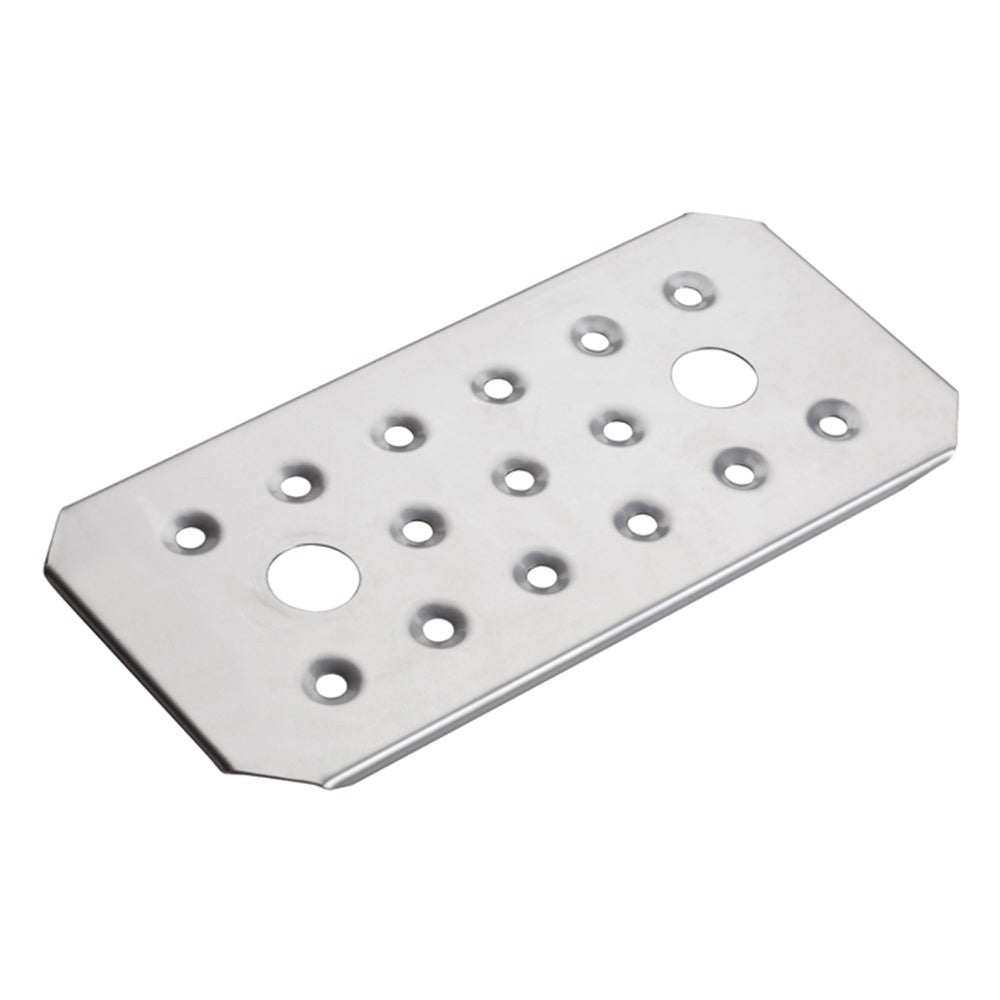
Choose this low-support construction for working portions that should remain above collected liquid while readily accessible. For a preparation intentionally held in seasoning liquid, use an appropriate solid pan without the draining insert.
A deeper removable colander makes the inner vessel a more substantial part of the preparation. Cambro documents a 3-inch colander inside a 4-inch Camwear pan, with a separately selected cover. The third-size example comprises:
Scroll to read all columns
| Component | Exact example | Function |
|---|---|---|
| Perforated inner vessel | 33CLRCW, 3-inch-deep third-size colander | Supports the food while released liquid passes into the outside pan. |
| Outside pan | 34CW, 4-inch-deep third-size Camwear pan | Collects the liquid and contains the inner vessel. |
| Cover | 30CWC, third-size flat cover | Completes the covered arrangement. |
The depth pairing appears in Cambro's manufacturer catalog; current maker pages identify the corresponding pan, colander and cover families. Cambro colanders, Camwear pans, catalog, printed pp. 157–159
The colander earns its extra depth when the preparation calls for lifting the inner vessel and its contents out together. A low false bottom keeps the focus on retrieving individual portions from above. Choose between them by that handling action as well as capacity; the deeper arrangement also needs room for the upward lift.
Camwear's solid-pan family has documented acid resistance and dishwasher suitability. For a vinegar-bearing preparation, that material information is more useful than an unsupported assumption that any metal tray will serve. Specify the actual food-contact construction and the permitted cleaning method, including the cover and insert.
A specialist wooden neta box offers another complete physical arrangement. Yamaco's small 35583 includes a support insert and acrylic lid. Its current specification is spruce with EX-polymer coating, with these distinct dimensions:
- Exterior: 34.5 × 27.5 × 7.9 cm
- Interior: 32.2 × 25.2 × 6 cm
- Clearance above the insert: 4.3 cm
The food sits in the space above the insert, not in the full outside height. This is why usable clearance belongs in a specification even when the overall footprint appears generous. The maker excludes dishwasher use; select the coated box only where its exact care requirements can be accommodated. Yamaco 35583 neta box
Choose the cover for the action. A flat cover, a cover with a handle and a notched cover are different access choices. Cambro's 30CWC, 30CWCH and 30CWCHN illustrate those options in third size. A notched cover can accommodate an implement; a separate 30PPCWSC seal cover provides an inner-seal design for compatible pans where improved spill resistance is required. The seal cover and ordinary Camwear lids have different listed temperature limits, so the assembly must respect each component's specification. Camwear cover options, Cambro seal covers
The Cambro and Yamaco arrangements are manufacturer examples. Their inclusion identifies useful constructions; it does not imply that they are bundled with the ERS false bottom or available as an ERS kit.

Scroll diagram horizontally on smaller screens.
10.5 × 4.88 × 0.63 in listed exterior
Third-size · 2½ in listed depth
Third-size · 3 in listed depth
Third-size · 4 in listed depth
Confirm usable assembled space. Subtracting outside heights does not establish food clearance. The colander adds an upward removal movement.
Separate drainage, drip absorption and dehydration
These mechanisms should be purchased for different purposes. A perforated support creates a route for liquid to leave the food's immediate surroundings. A contact sheet absorbs released drip. A dehydration sheet deliberately removes moisture during preparation. None is the default treatment for every topping.
Scroll to read all columns
| Intended condition | Appropriate construction | What to specify |
|---|---|---|
| Food supported above collected liquid | False bottom or colander with catch vessel | Support geometry, collection space, cover and access. |
| Released drip intercepted at the contact surface | Purpose-made absorbent food-contact sheet | Exact product, food-facing surface and usable format. |
| Deliberate moisture removal | Selected dehydration-sheet grade | Treatment purpose, intact-sheet fit and product directions. |
| Ingredient retained with its liquid | Suitable solid vessel and closure | Compatible contact material and transfer to serving condition. |
Fresh Master illustrates contact absorption. Unicharm's white tray sheets combine a perforated film with a pulp absorbent layer; its sushi-case examples direct the smooth perforated-film face toward the food. The catalog includes 130 × 180 and 250 × 350 mm tray-sheet formats. The contact face is part of the product specification, as important as the dimensions. Unicharm Fresh Master catalog, printed p. 10
Select the sheet for the required contact and footprint. A generic paper liner should not inherit a specialist product's construction or instructions, and an absorption claim does not establish a longer safe holding period.
Pichit performs an intentional dehydration treatment. Its maker describes two food-contact polyvinyl-alcohol membranes enclosing concentrated food sugars and a water-retaining thickener. Water moves from the ingredient through the membrane into that enclosed material by osmosis. The sheet therefore acts on the ingredient's moisture rather than simply collecting released liquid beneath it. This construction also explains why the sealed sheet must remain intact. Pichit mechanism
The grade matters. Mild is presented for refrigerated fresh-food management including sashimi; Super is directed toward stronger dehydration work such as drying and smoking preparation. Pichit must be used intact, without cutting, heating or reuse, and removed before cooking. The maker directs meat and fish dehydration or thawing to refrigeration. Select a grade and factory format for the intended preparation rather than trim a sealed sheet to fit. The 18 × 25 cm Mini belongs to the Regular range; it is not simply a smaller Mild sheet. Pichit products and directions
A stronger moisture-removal product is useful only when stronger moisture removal is wanted. It is the wrong purchasing criterion for an ingredient whose liquid is part of its prepared condition. Fresh Master and Pichit are specialist manufacturer examples; confirm the exact variant and supplied directions through the source from which they will be purchased.
Food → perforated support → collected liquid in the catch vessel.
Fresh Master: smooth perforated-film food face → pulp absorbent layer.
Pichit: food-contact membrane → enclosed concentrated material. Keep the sealed sheet intact.
Ingredient + intended liquid stay together in a suitable solid covered vessel.
Check the assembled fit in the refrigerated case
A food-pan arrangement is not automatically a compatible sushi-case arrangement. The selected refrigerator determines where and how its food supports are intended to operate.
Hoshizaki's HNC-BA-SL instructions tie food-mount orientation to cooling, define a display-height limit relative to the interior bottom and require ingredients to be refrigerated before display. That is an exact series-specific arrangement. Changing the support, adding a deeper vessel or building up liners and ingredients can change the relationship the maker intended. Hoshizaki HNC-BA-SL manual, printed p. 9
Check the complete height and the movement needed to lift the lid or inner vessel, then preserve the manufacturer's support requirements. Exterior length and width alone are insufficient. Case types, cooling arrangements and model selection are covered in Sushi Display Cases & Refrigerated Neta Cases.
Explore the ERS collection
Food Pans
Compare the assortment for this part of your service.
-
 Image unavailable
Cover For 1/3 Size Anti-Jam Pan, Slotted
View details & options : Cover For 1/3 Size Anti-Jam Pan, Slotted
Image unavailable
Cover For 1/3 Size Anti-Jam Pan, Slotted
View details & options : Cover For 1/3 Size Anti-Jam Pan, Slotted
-
 Image unavailable
1/2 Size Anti Jam Pan 6" Deep 10-1/2 x 12-3/4"
View details & options : 1/2 Size Anti Jam Pan 6" Deep 10-1/2 x 12-3/4"
Image unavailable
1/2 Size Anti Jam Pan 6" Deep 10-1/2 x 12-3/4"
View details & options : 1/2 Size Anti Jam Pan 6" Deep 10-1/2 x 12-3/4"
-
 Image unavailable
1/6 Size Poly Carbornate Pan 2-1/2" Deep
View details & options : 1/6 Size Poly Carbornate Pan 2-1/2" Deep
Image unavailable
1/6 Size Poly Carbornate Pan 2-1/2" Deep
View details & options : 1/6 Size Poly Carbornate Pan 2-1/2" Deep
-
 Image unavailable
Cover For 1/2 Size Anti-Jam Pan, Long Flat
View details & options : Cover For 1/2 Size Anti-Jam Pan, Long Flat
Image unavailable
Cover For 1/2 Size Anti-Jam Pan, Long Flat
View details & options : Cover For 1/2 Size Anti-Jam Pan, Long Flat
-
 Image unavailable
Cover For 1/2 Size Anti-Jam Pan, Solid
View details & options : Cover For 1/2 Size Anti-Jam Pan, Solid
Image unavailable
Cover For 1/2 Size Anti-Jam Pan, Solid
View details & options : Cover For 1/2 Size Anti-Jam Pan, Solid
-
 Image unavailable
Cover for Full Size Poly Carbornate Slotted
View details & options : Cover for Full Size Poly Carbornate Slotted
Image unavailable
Cover for Full Size Poly Carbornate Slotted
View details & options : Cover for Full Size Poly Carbornate Slotted
-
 Image unavailable
1/3 Size Poly Carbornate Pan 6" Deep
View details & options : 1/3 Size Poly Carbornate Pan 6" Deep
Image unavailable
1/3 Size Poly Carbornate Pan 6" Deep
View details & options : 1/3 Size Poly Carbornate Pan 6" Deep
-
 Image unavailable
Cover For 1/3 Size Anti-Jam Pan, Solid
View details & options : Cover For 1/3 Size Anti-Jam Pan, Solid
Image unavailable
Cover For 1/3 Size Anti-Jam Pan, Solid
View details & options : Cover For 1/3 Size Anti-Jam Pan, Solid


04 / Equipment & Specialty Supplies
Wasabi, Garnishes, Fillings & Finishing Sauces
Wasabi: powder, prepared product and freshly grated supply
Wasabi creates several different provisions at the station. Dry powder needs protected dry storage. Mixed paste needs a suitable working vessel and cover. A purchased frozen preparation follows its supplied handling instructions. Fresh rhizome and the amount already grated for service require separate consideration.
The commercial distinction is real: Kinjirushi's A-32 is a dry powder containing horseradish and mustard, while FS-208 Hon Wasabi is a frozen prepared product. TO Foods' professional guidance separately addresses powder and mixed paste, including limiting air exposure and refrigerating prepared paste when held. Specify the route actually used before allocating mixing and working vessels. Kinjirushi powder, Hon Wasabi, TO Foods FAQ
For fresh wasabi, grating initiates the chemistry of pungency. Cell disruption allows the enzyme myrosinase to act on sinigrin, producing volatile allyl isothiocyanate. The ungrated rhizome and freshly grated provision therefore represent different stages of flavor development and exposure. Wasabi characteristics
For the remaining rhizome, provide a separate protected refrigerated bag or covered container with room for retrieval. The Japan Wasabi Association's storage guidance emphasizes limiting moisture loss; the small covered working vessel serves the separately grated portion. Wasabi Association storage guidance
Choose a working vessel that allows the paste to be taken cleanly with the intended implement and covered between uses. A narrow opening or unnecessarily deep vessel can make a small working amount awkward to reach. Where mixing occurs away from assembly, the station may need a prepared portion rather than another mixing setup. Detailed grater and hand-tool selection belongs in Manual Sushi Preparation Tools & Specialty Utensils.
Garnishes, cut vegetables and cooked fillings
Whole leaves need shape and surface protection. JA Aichi's guidance for shiso emphasizes protection from drying in bags or packs and notes that excessive cold can cause blackening. For the working assortment, provide covered space that allows leaves to be lifted without compressing or disturbing the remainder. Whole leaves should not automatically receive the moisture-removal treatment chosen for a fish block. JA Aichi shiso
Fine-cut garnish is another prepared state. Its pickup, usable depth and exposure differ from those of a stack of whole leaves. Select the container for the prepared garnish, rather than assume that the leaf's original pack or a whole-leaf handling method will suit it.
Vegetable preparation can change the amount and location of water. In Kikkoman's chirashi demonstration, the cucumber's seed core is removed before dicing because of the water it would contribute to that dish. That is a specific preparation choice, not a rule for every cucumber used in sushi. Diced cucumber for a bowl and long cuts for a roll still need different floor area and retrieval. Kikkoman chirashi demonstration
Long fillings make length a purchasing specification. Ahjikan supplies aligned, seasoned kampyo in a 20 cm cut; Onoguchi offers 18 cm and 40 cm forms. Decide whether the restaurant receives a finished working length or performs another cutting stage. A long filling intended to remain straight needs the corresponding usable support, regardless of the container's liter capacity. Ahjikan sushi ingredients, Onoguchi kampyo
That decision also separates cooking from assembly. An operation preparing kampyo from dried material needs vessels for that preparation; one receiving a seasoned component needs containment and pickup suited to the supplied form. A prepared roll core changes the work again. Specify the objects at the stage where they are used, rather than buying the same assortment for all three routes.
Tamago is a family of prepared forms. Ahjikan's range includes blocks, cut portions, roll cores, thin sheets and kinshi garnish. A block awaiting slicing needs a supporting area for that work. Long cores need lengthwise access. Delicate cut toppings need room for lifting, while fine egg garnish is retrieved differently again. Ahjikan egg products
Compatible pan families can serve several of these ingredients, but standardization should follow the preparation. Choose usable geometry and the cover first; use common sizes where they genuinely work. Uniform containers are not a substitute for appropriate support.
Ginger, roe and spooned components
The opened reserve and the serving provision can be different objects. Iwashita directs transfer of relevant pickled products with their liquid into suitable closed containment under refrigeration after opening. That liquid belongs with the protected supply; the serving vessel should not force the whole reserve to be drained prematurely. Iwashita product FAQ
The ERS O-1-95 ginger container is a red plastic-and-lacquer specialist serving object. Use it for the working presentation and access it provides. Its listing does not establish an airtight reserve seal or a dishwasher-care specification, so those functions should not be inferred from its covered appearance.
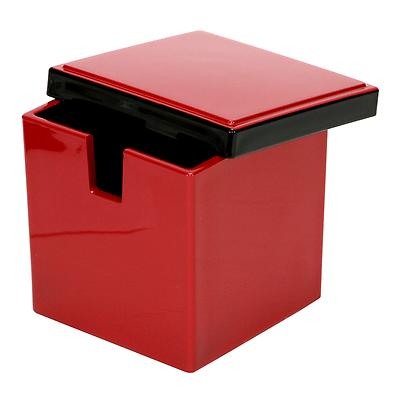
Loose roe, soft mixtures and other spooned components require their own access decision. Match the vessel's depth and opening to the intended implement, and decide how the cover is used during service. A notched working cover accommodates an implement differently from the solid closure used on a protected replacement. The portion being served and the remainder awaiting service need not share the same opening or exposure.
Match sauce and finishing dispensers to the application
Start with the finish. A brush, a spoon, a single stream and several parallel lines produce different results and require different working provisions. Kikkoman's foodservice Sushi Sauce is a ready-to-use unagi-style glaze for brushing and drizzling; the maker directs refrigeration after opening. Keep that instruction with the sauce when transferring it. A house-mixed nikiri or diluted preparation needs its own handling specification. Kikkoman Sushi Sauce
The bottle has two important openings: the mouth used for filling and cleaning, and the outlet used to apply the sauce. Choose both deliberately.
Scroll to read all columns
| Application decision | ERS example | Relevant construction |
|---|---|---|
| Ordinary squeeze delivery | PSB-12C, 12 oz | Conventional clear bottle with an open dispensing tip. |
| Wider access for filling and cleaning | PSW-24, 24 oz | Wide-mouth construction with an open dispensing tip. |
| Multiple-stream finish | 3316-1344, 16 oz | Wide-mouth clear polyethylene bottle with a blue Tri Tip top. |
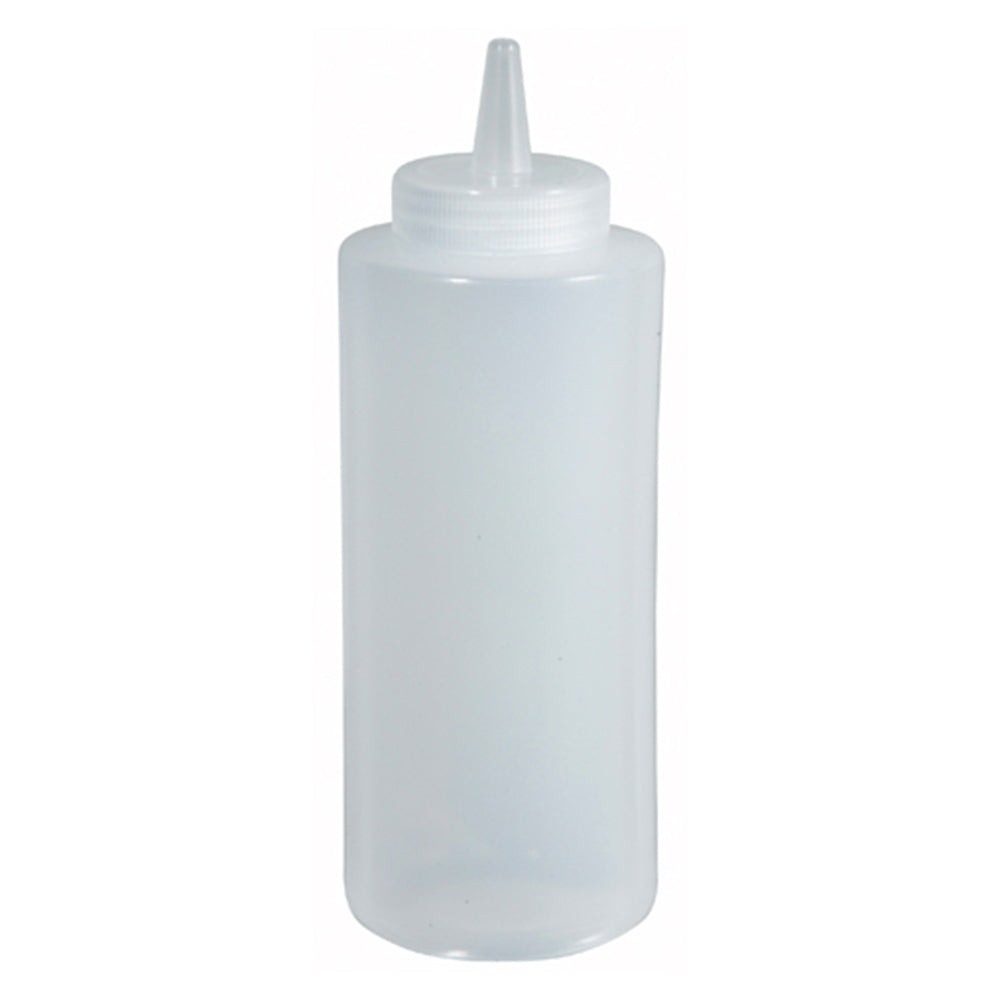
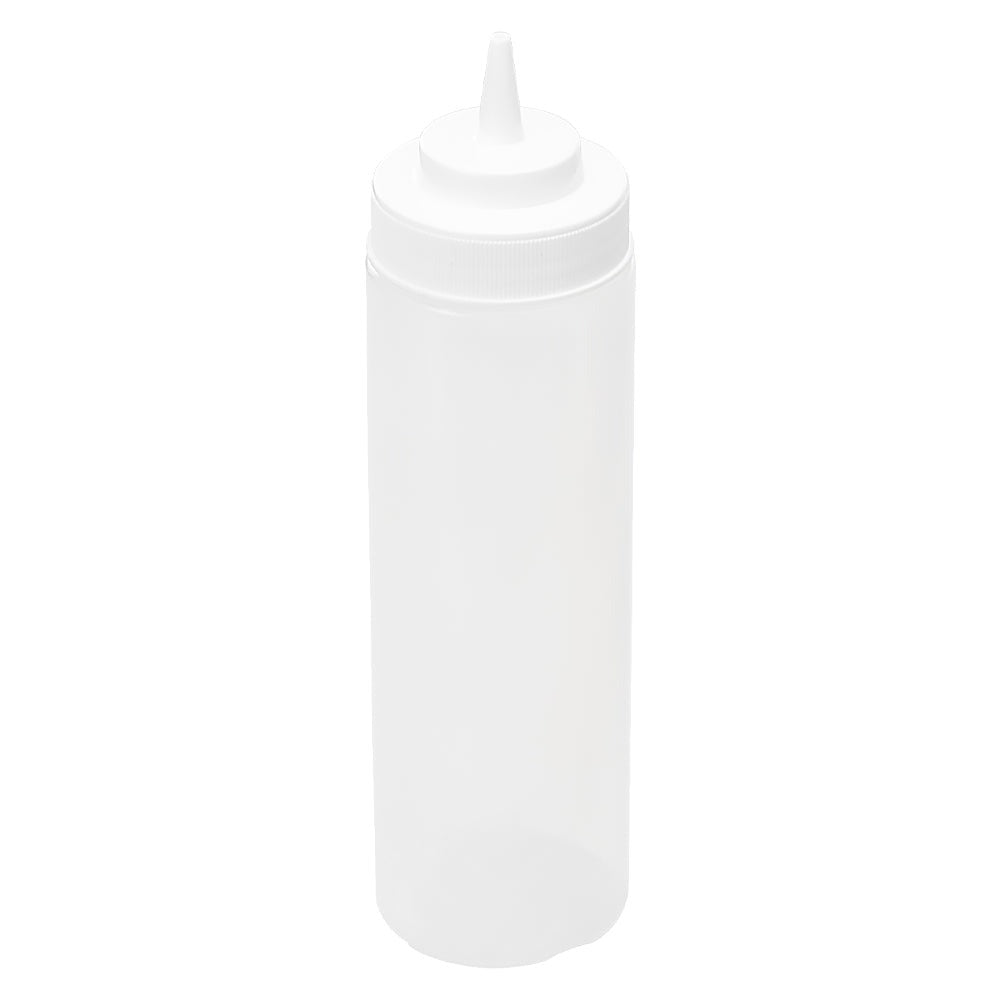
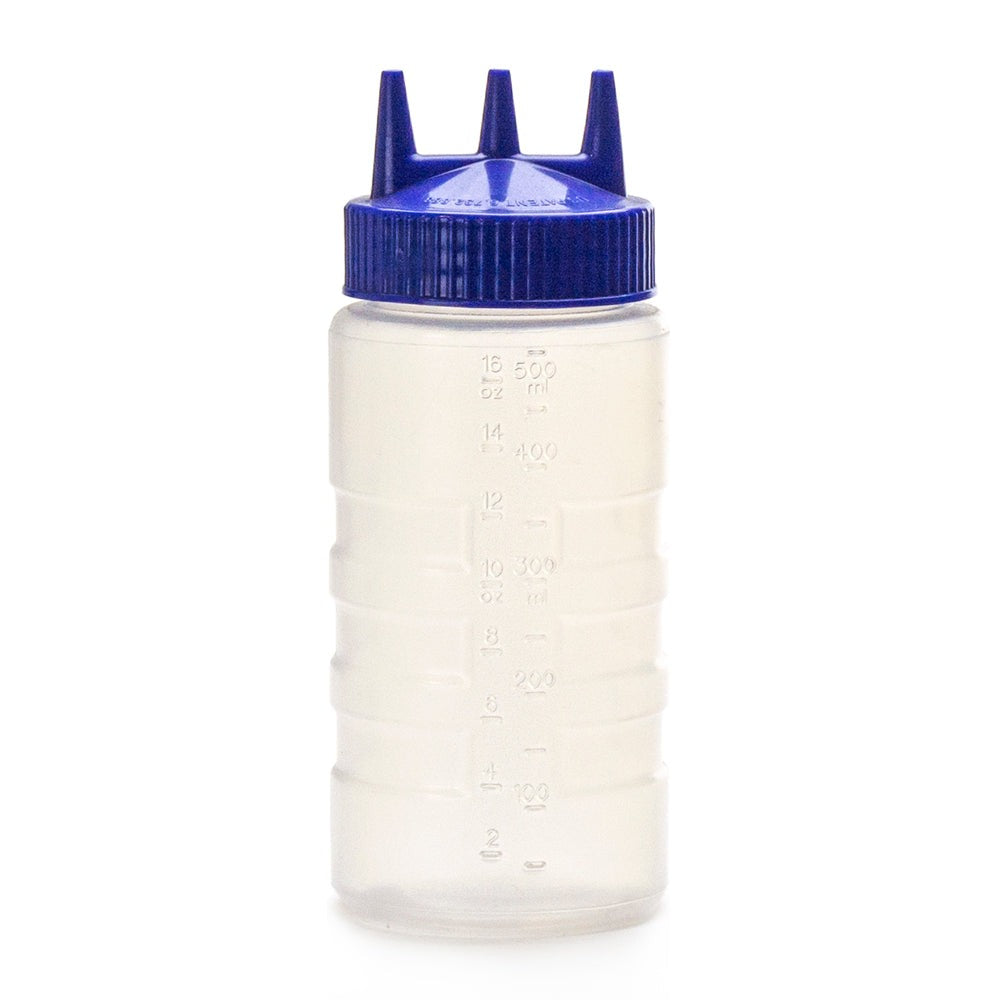
Winco describes the wider mouth of PSW-24 in terms of refilling and cleaning access; the PSB and PSW tips are already open. Vollrath's exact 3316-1344 record allows tip trimming for more viscous sauces and identifies both bottle and top as dishwasher-safe. That permission belongs to the named design, not to every squeeze bottle. Winco PSB-12C, Winco PSW-24, Vollrath 3316-1344
Match the outlet to viscosity, particles and the intended line or coating. More tips are useful when that finish is wanted; they are not inherently better portion control. A wider fill opening addresses another problem entirely and does not require the working bottle to be filled to capacity.
Keep washing exposure separate from sauce-service temperature. Vollrath's linked Traex bulletin distinguishes short water exposure up to 170°F from a maximum recommended working temperature of 105°F. Those are product-use limits, not food-holding targets; dishwasher suitability does not make this a hot-glaze dispenser. Vollrath technical bulletin
Dry finishes need a different provision. Whole roasted sesame and ground sesame differ in particle form, and the chosen outlet must suit the actual ingredient. Winco's DRG-10H is a 10-ounce stainless dredge, an example of a dry dispenser rather than a sauce vessel. Where the intended ingredient or finish does not suit shaking, use a covered vessel and the appropriate implement. Sesame product forms, Winco DRG-10H
Explore the ERS collection
Graters
Compare the assortment for this part of your service.
-
 Image unavailable
8" Citrus Juicer Rimmer Plate, White Ceramic
View details & options : 8" Citrus Juicer Rimmer Plate, White Ceramic
Image unavailable
8" Citrus Juicer Rimmer Plate, White Ceramic
View details & options : 8" Citrus Juicer Rimmer Plate, White Ceramic
-
 Image unavailable
Grater For Ginger 7-1/8", White Ceramic
View details & options : Grater For Ginger 7-1/8", White Ceramic
Image unavailable
Grater For Ginger 7-1/8", White Ceramic
View details & options : Grater For Ginger 7-1/8", White Ceramic
-
 Image unavailable
Grater & Slicer (A8-09)
View details & options : Grater & Slicer (A8-09)
Image unavailable
Grater & Slicer (A8-09)
View details & options : Grater & Slicer (A8-09)
-
 Image unavailable
Stainless-steel grater (100814)
View details & options : Stainless-steel grater (100814)
Image unavailable
Stainless-steel grater (100814)
View details & options : Stainless-steel grater (100814)
-
 Image unavailable
Aluminum grater (AAO-668)
View details & options : Aluminum grater (AAO-668)
Image unavailable
Aluminum grater (AAO-668)
View details & options : Aluminum grater (AAO-668)
-
 Image unavailable
Plastic grater 9.25 in L (D-5142)
View details & options : Plastic grater 9.25 in L (D-5142)
Image unavailable
Plastic grater 9.25 in L (D-5142)
View details & options : Plastic grater 9.25 in L (D-5142)
-
 Image unavailable
Aluminum grater 9 in L (DH8031)
View details & options : Aluminum grater 9 in L (DH8031)
Image unavailable
Aluminum grater 9 in L (DH8031)
View details & options : Aluminum grater 9 in L (DH8031)
-
 Image unavailable
Plastic grater 5 in D x 2.5 in H (K468)
View details & options : Plastic grater 5 in D x 2.5 in H (K468)
Image unavailable
Plastic grater 5 in D x 2.5 in H (K468)
View details & options : Plastic grater 5 in D x 2.5 in H (K468)


05 / Equipment & Specialty Supplies
Specify the Working Set and Its Replacements
Set working quantities from the menu and service
Count the work occurring at the assembly point before counting vessels. Sushi Nozawa Group describes central ingredient preparation at its Quality Center and task-focused final assembly for nigiri, hand rolls and cut rolls. That division creates different equipment needs from a counter performing more of the ingredient treatment and final cutting itself. SUGARFISH's operations account
Service format matters as well. Jiro describes a planned sequence of individual nigiri. KazuNori's takeout menu distinguishes finished cut-roll sets from a kit with separate fillings, rice, seaweed and condiments. These formats require different access and portioning; their menus do not establish a universal pan layout. Jiro menu, KazuNori takeout menu
Build the assortment from the ingredients used simultaneously, their prepared forms, where the remaining work occurs and how the station is replenished. Whole-operation throughput and quantity modeling belong in Sushi Production Workflow, Capacity & Equipment Sizing; the wider production arrangement is covered in Takeout, Delivery & Sushi-Only Production Kitchens.
Plan prepared replacements and complete assemblies
An extra pan is not necessarily a ready replacement. If the working arrangement needs a lid, draining support and contact sheet, the replacement needs the corresponding pieces. A sauce exchange requires the correct bottle and top. Decide what is exchanged as a prepared vessel and what is transferred at the point of use.
Consider a finishing-sauce exchange: the empty working bottle and its used top leave service; a prepared bottle with its own matching top takes their place. The sauce's recipe identity and required handling information accompany the replacement. Both removed pieces remain unavailable until the required cleaning, sanitizing and air drying or adequate draining are complete. The purchase must support that complete bottle-and-top exchange; a spare cap alone cannot cover it.
The FDA's 2026 Food Code is a model for adoption, so local requirements govern. Its provisions address common-name identification for transferred working ingredients, with an exception for unmistakably recognizable foods; applicable date continuity when refrigerated ready-to-eat TCS ingredients are combined; and air drying or adequate draining after cleaning and sanitizing. Its annex also cautions against stacking wet pans. Preserve the food's necessary information through each transfer. A clean replacement vessel does not create a new preparation date. FDA 2026 Food Code, §§3-302.12, 3-501.17 and 4-901.11
Specify real replacements where they exist. Vollrath's 3300-44 is a separately identified blue Tri Tip cap for its Traex wide-mouth family. That is useful replacement support, distinct from assuming every removable top can be purchased separately. Confirm the exact part and seller's unit; this manufacturer listing does not establish ERS cap stock. Vollrath 3300-44 replacement cap
Check the order at the object level
ERS's 2025 review of 24 sushi-station specifications examined 96 ingredient-to-vessel decisions in which a draining insert or contact sheet had initially been proposed. We classified each decision by the principal food-contact requirement and recommended the corresponding construction:
Scroll to read all columns
| Principal requirement | Recommended construction | Decisions |
|---|---|---|
| Separate the ingredient from released liquid | Draining support and catch vessel | 32 |
| Intercept released drip at the contact surface | Purpose-made absorbent sheet | 16 |
| Intentionally remove moisture during preparation | Selected dehydration-sheet grade | 8 |
| Preserve deliberate liquid contact | Solid covered vessel retaining the required liquid | 24 |
| Preserve shape and pickup without adding moisture removal | Broad protected support, without a drain or contact sheet | 16 |
| Total reviewed | One principal recommendation per decision | 96 |
In 40 of those 96 decisions, the final recommendation removed the proposed draining or sheet treatment. The more appropriate purchase was a solid liquid-holding vessel or a better supporting surface. The review exposed a recurring specification error: moisture-removal equipment had been selected before the required condition of the prepared ingredient was settled.
That finding changes the purchase priority: settle the prepared condition first, then spend on the required support, closure or contact treatment.
The final order should resolve five concrete points:
- Ingredient and prepared form: the actual nori cut, fish block or portion, long filling, leaf, paste, liquid-held component or sauce application.
- Usable fit: interior floor and pickup space, height above the support, lid movement and any case-specific arrangement.
- Complete construction: vessel, matching cover, support and contact material, including the exact finish or food-facing surface.
- Return to use: permitted care, complete replacement arrangements and any essential matching parts.
- Selling unit: what the offer includes, exact consumable grade and format, and pieces per bag, pack or case.
The cited ERS bottle offers are per each even when a maker's record gives a multipack or case. Sheet packaging requires the same attention: Unicharm's catalog lists its white 130 × 180 mm Fresh Master sheets at 100 per bag and the 250 × 350 mm format at 50 per bag, with 16 bags per catalog case for each. Those are different working-piece counts and Japanese catalog units, not an ERS offer. Unicharm packaging table, printed p. 17
Unused consumables also need their prescribed protection. Pichit directs individual sheet removal and careful reclosing of the resealable pack within its outer box. Keep that reserve intact rather than setting out all the unused sheets as an open stack. Pichit storage instructions
Purchase the assortment that preserves the preparation and supports the next service action: protected supply, useful working access and complete replacements. For the rest of the restaurant's equipment and supply specification, continue to the Sushi Restaurant Equipment & Supplies guide.