

Sushi Restaurant Concepts
Takeout, Delivery & Sushi-Only Production Kitchens

A takeout sushi kitchen has to supply usable rice and service-ready ingredients, assemble the food, complete every part of the meal and accommodate the order until it leaves. Packing and collection are production requirements. They deserve the same attention as the cooker, refrigerated preparation position and sushi-making equipment.
The right arrangement depends on what the customer receives and how collection works. An existing restaurant may need a dedicated packing and waiting provision while continuing to share production. A pickup-and-delivery storefront must supply the whole sequence. An operator in shared premises must establish exactly which equipment, storage and services it can use, including access after production finishes.
This guide addresses identified customer orders for pickup or delivery. Producing self-selected retail stock, supplying other locations and serving an event introduce different duties. Within takeout, the central purchasing question is specific: can the kitchen produce, complete, appropriately hold and release the intended meal under its actual service conditions?
In this guide 11 sections
02 / Sushi Restaurant Concepts
Size the work around complete orders
Preparation, packing and collection are different stages
Follow the actual work from usable rice and prepared ingredients through assembly, cutting or finishing, packing, complete-order checking, waiting and collection. Several duties may share a position when their access, hygiene and timing permit it. Each still needs usable space and a suitable arrangement.
The point of completion matters. A roll leaving a machine still needs cutting and packing. A closed tray can be awaiting its sauce or hot side. A complete checked meal can occupy storage while the courier is absent. Equipment capacity must account for the work at each of those points.
Identify where unfinished or waiting work accumulates before adding machinery. Insufficient usable rice calls for attention to the batch sequence. Repeated trips for neta can indicate poor ingredient access or replenishment. Finished sushi accumulating beside the cutting board can indicate inadequate packing provision. Ready orders filling every available position can indicate a waiting or collection constraint.
Buy the remedy for that duty. Increasing rice-sheet output is useful when sheeting limits the required work and the rest of the kitchen can finish and release the additional production.
Use the actual order mix and pickup pattern
Size the arrangement using the products ordered together, their packages and the pattern in which they leave. Record the busiest relevant service periods, including:
- Work prepared ahead and work started with the ticket.
- Simultaneously incomplete orders and the components they are awaiting.
- Complete orders entering waiting space, including multiple bags or separate hot/cold locations.
- Scheduled pickups, immediate orders, delayed couriers and uncollected food.
For an existing restaurant, examine the combined demand from takeout and its other service. For an opening, make the planned menu and service assumptions explicit and establish workable capacity before relying on them. A ticket count alone conceals too much variation to size packing or waiting space.
Ordering controls can help govern when work enters the kitchen. Square, for example, distinguishes preparation time, advance lead time, pickup scheduling, order limits and ticket timing. Specify which channels a chosen limit actually controls and when a preparation ticket is released. These functions support the operating arrangement; their settings are not measured kitchen capacity. Square pickup documentation.
Preparing food substantially ahead of collection transfers work into waiting space. The purchase decision therefore includes both production capacity and the suitable occupied space required after production finishes.
03 / Sushi Restaurant Concepts
Confirm what the premises will actually provide
Receiving, allocated storage and protected preparation
Establish the receiving, reserve and thawing arrangement appropriate to the seafood being purchased and its supplier packaging. Service-ready neta, covered reserve ingredients and finished customer orders are different loads. Assign their locations, protection and replenishment rather than treating the assembly refrigerator as an unlimited home for all three.
Dry nori and clean packaging need protected storage. Shipping cartons need an opening and disposal route that does not take over exposed-food work. The kitchen also needs preparation surfaces and clean tools appropriate to its actual cutting, rolling and finishing duties.
In shared premises, the useful question is what this operator can use during its service period. A refrigerator elsewhere in the building only contributes capacity when the operator has suitable allocated space and access. The same applies to a mixing position, wash provision and completed-order destination.
Rice power, hot equipment and cleaning access
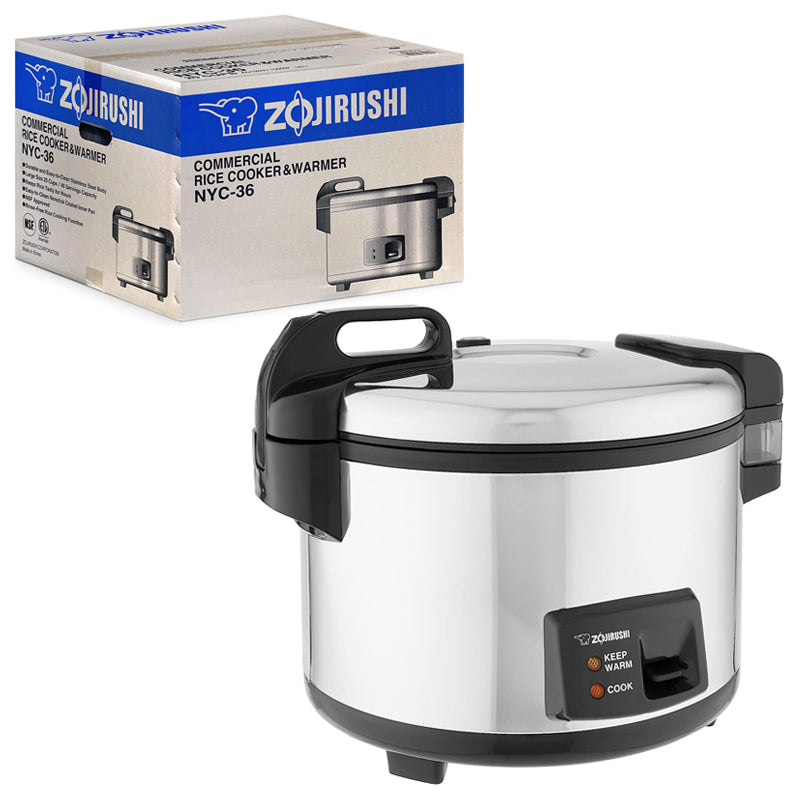
Allow for rinsing, cooking, steaming, transfer, mixing and working rice supply. The appliance body represents only part of that provision. Zojirushi's NYC-36 instructions address a suitable electrical outlet, stable heat-suitable support and steam accumulating beneath shelving. A low overshelf cannot be justified simply because the closed cooker fits under it. NYC-36 operating instructions.
Provide accessible handwashing and a suitable method for washing, sanitizing, drying and storing the tools and removable components. A takeout kitchen without dining-room plate returns still has knives, boards, mixing vessels, food containers and potentially machine parts to clean. Check those parts against the actual equipment instructions before assuming they can go through a shared automatic dishwasher.
A hot-food menu adds its own cooking duty, electrical or fuel requirements, heat and any required ventilation. Resolve those provisions for the selected food and appliance. If the premises cannot support a proposed duty, obtain a suitable provision or change the equipment/menu arrangement before treating the site as ready.
Shared kitchens and the route to pickup
Specify working hours, assigned storage, access to equipment, cleaning, maintenance and the transfer from production to collection. Responsibility must continue while an order remains on the premises, including when the operator's scheduled production period has ended.
Orange County's shared-food-facility guidance is a useful local example: it addresses identified storage, scheduling and responsibility for shared equipment and exclusively used tools. Its defined dependent operator also has no public-facing storefront at the primary premises. The applicable permit and collection arrangement therefore need explicit confirmation; a building's advertised pickup service does not settle them. Orange County shared-food-facility guidance.
The collection route should let staff transfer and release the order without directing customers or couriers into food-preparation work. Where another party operates a locker or collection desk, establish who loads it, associates components, responds to faults and removes uncollected food.
04 / Sushi Restaurant Concepts
Set the controls for rice, fish and waiting orders
Rice and the assembled meal are different control questions
Establish the food-control method before selecting holding equipment. The FDA's 2026 Food Code is a model offered for jurisdictional adoption; the requirements applying to a particular operation must be confirmed with its authority.
Its sushi-rice discussion distinguishes controlled acidification intended to change the rice's time/temperature control for safety, or TCS, status from vinegar added for flavor. Acidified rice does not adequately acidify raw fish or other TCS fillings in the finished food. The assembled meal retains the controls appropriate to those ingredients. Specify the actual process, required measurements and records rather than treating a mixer, vinegar addition or warmed hopper as proof of an acceptable method. FDA 2026 Food Code, Annex 6.
Raw-fish sourcing and applicable parasite-control evidence also affect the equipment inquiry. Establish whether the necessary treatment and records come through the supplier or require another properly specified arrangement. An ordinary storage freezer is not automatically a treatment system. Receiving, packaged-fish thawing and protection of raw ready-to-eat sushi fish from other raw animal foods must also be provided for, particularly in a mixed-menu or shared kitchen. The FDA model addresses these duties separately in §§3-302.11, 3-402.11–12 and 3-501.13.
Holding, delivery and uncollected food
Under the FDA model's ordinary TCS holding provisions, cold food is maintained at 41°F or below and hot food at 135°F or above, subject to its specified exceptions. A time-control method has its own applicable conditions, procedures, identification, monitoring where required and disposition. Establish the actual jurisdiction's method before equipping an ambient waiting position. FDA 2026 Food Code, §§3-501.16 and 3-501.19.
The food's condition on entry matters. Holding an already controlled chilled load is a different duty from cooling newly assembled food containing warmer components. A cold controller setting does not establish a cooling process, and an instruction to cool food before loading is not permission for uncontrolled counter cooling.
Keep the control history with the food through preparation, packing, waiting and handoff. Printing a new label, transferring an order to a locker, marking it ready or giving it to a courier does not restart that history. Returning an affected package to refrigeration does not create a fresh allowance either.
Assign responsibility for delays and noncollection. The operation needs a defined point of intervention and the appropriate disposition under its procedure. A screen that still says ready must not leave an unsuitable order available for release.
Order identification, retail labels and tamper-evident closure
An order identifier associates food with the customer. A food-control mark supplies the relevant control information. Required food information addresses matters such as allergens and applicable raw-food advisories. A tamper-evident closure provides evidence of interference. Specify each function the order requires, even where one physical label performs more than one of them.
The FDA model's definition of packaged excludes food placed by an employee into a protective carryout container at the consumer's request. That distinguishes this packing duty from self-selected retail inventory; it does not remove applicable allergen information, raw/undercooked advisories or other requirements. FDA 2026 Food Code, §§1-201.10, 3-602.12 and 3-603.11.
For a specific legal example, California §113982(b)(2) requires the food facility to close the relevant bags or containers of ready-to-eat food with a tamper-evident method before a third-party-platform deliverer takes possession, subject to the section's exceptions. An ordinary adhesive order sticker does not establish that function. Select the closure for the actual package, surface and handling conditions. California Retail Food Code, §113982.
05 / Sushi Restaurant Concepts
Equip rice supply and refrigerated mise en place
Batch input, usable shari and the next cook
Size the rice provision around the complete batch sequence and usable working supply. Raw input, cooked rice, seasoned shari and completed sushi are different quantities. The cooker may also remain occupied after active cooking, affecting when the next batch can begin.
The Zojirushi NYC-36 makes the distinction concrete. Its instructions specify a ten-to-twenty-cup cooking range using an approximately 180 mL rice cup; the manufacturer's twenty-cup rating refers to raw short-grain rice. The unit is rated 120 V/1,300 W, with instructions for an outlet rated at least 15 A and no other device connected to that outlet. These are the appliance's requirements, not a calculated sushi-output rate or the electrical design for a whole kitchen. Zojirushi NYC-36 information.
The surrounding work is equally important. Its instructions call for rinsing ordinary rice in a separate vessel, account for steaming beyond the stated cooking time, and caution against vinegar in the nonstick inner pan. Provide the rinsing position, transfer and mixing space, suitable utensils and subsequent working supply. Its stated keep-warm use does not establish a seasoned-sushi-rice holding program.
A cooker holding the previous batch cannot simultaneously cook the next one. Resolve that occupation through an appropriate transfer/holding arrangement, additional cooking provision or a batch schedule that supports service. The commercial rice-cooker guide and rice-holding guide develop those selections; the NYC-36ST listing is the specific commercial example here.
Manual mixing needs a genuine working position. Hasegawa's FHG-48 bowl measures 480 mm in diameter and 110 mm high. Allow space to work around the vessel, transfer the rice and wash it; its diameter alone makes clear why a narrow preparation refrigerator's front board cannot be presumed to supply the mixing position. Match the vessel to the batch actually handled. Hasegawa mixing bowls.
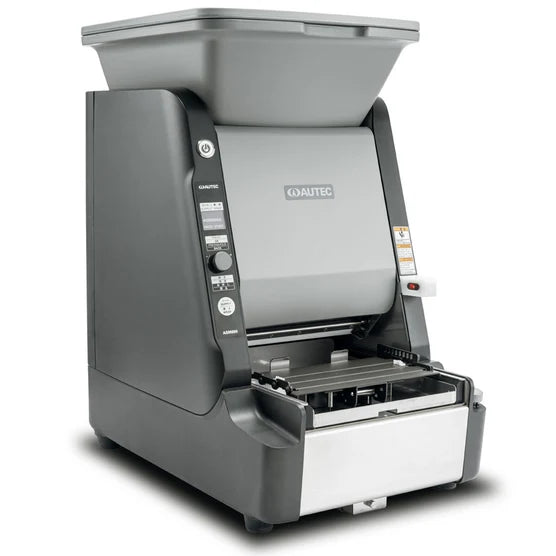
Mechanized mixing changes that provision. AUTEC lists the ASM730A at 24 inches in normal height and 46.1 inches in maximum height. The operating envelope, handling and cleaning access must fit as well as the closed body. Choose powered mixing for the actual repeated task and downstream rice demand. AUTEC ASM730A.
Refrigerated rails, drawers and covered reserve
Select working refrigeration around the ingredient portions, pan arrangement and replenishment. A rail offers access to multiple working portions. Drawers offer enclosed pull-out access to assigned pans. A door cabinet can support a different covered-reserve arrangement. The available assembly surface and the route for replenishing each position matter alongside refrigerated volume.
Two documented configurations show why the detailed drawing and manual belong in the purchase specification:
Scroll to read all columns
| Equipment example | Working arrangement | Detail that changes the specification |
|---|---|---|
| Turbo Air MST-48-18-N | Eighteen supplied one-sixth-size, four-inch-deep pans; six-inch-deep pans accepted; 9½-inch front cutting board | Body dimensions exclude specified projections/allowances. The family manual separately recommends at least five inches behind the unit, unobstructed airflow and a dedicated outlet. The front board must suit the work assigned to it. |
| Hoshizaki UR48B-D4 | Four-drawer ingredient access with position-specific pan arrangements | The table gives 48-inch width and 31-inch depth including the rear bumper, increasing to 52 inches with a drawer fully open. Top-drawer depth depends on the pan and position. |
These are documented technical comparisons; obtain the current exact-model submittal and market-specific purchase availability for the intended installation. Sources: MST-48-18-N sheet, MST/MST Mega instructions, UR48B-D4 sheet.
The drawer qualification deserves attention. The UR48B-D4's lower drawers take six-inch-deep pans. Its documented mixed top-drawer arrangement places six-inch-deep half- and third-size pans at the front and four-inch-deep quarter- and sixth-size pans at the rear; the sheet recommends HS-5432 for that arrangement. A full-size top pan in the documented orientation is four inches deep. Specify the intended pans, lids and support components, and establish what the offer includes. Four drawer fronts do not represent four identical pan cavities.
Similarly, the rear spacer on a preparation refrigerator is not automatically its full installation clearance. A body depth, an open-drawer depth and a required working aisle answer different questions. Keep the manufacturer's airflow and access conditions intact.
Give dry nori its own suitable working provision. Maruyama's producer guidance emphasizes moisture protection and care when opening cold-stored nori. Choose and handle the product for the intended presentation rather than leaving dry ingredients exposed beside the refrigerated rail. A refrigerated neta showcase can be selected for its actual access or presentation duty; a pickup kitchen does not require one merely to resemble a dining counter. Maruyama nori guidance.
Explore the ERS collection
Commercial Rice Cookers & Warmers
Compare the assortment for this part of your service.
-
 Image unavailable
Hattori Natural Gas Deck Rice Cooker, 3-Deck, 21 kg - LG-000-150
View details & options : Hattori Natural Gas Deck Rice Cooker, 3-Deck, 21 kg - LG-000-150
Image unavailable
Hattori Natural Gas Deck Rice Cooker, 3-Deck, 21 kg - LG-000-150
View details & options : Hattori Natural Gas Deck Rice Cooker, 3-Deck, 21 kg - LG-000-150
-
 Image unavailable
Hattori Natural Gas Deck Rice Cooker, 2-Deck, 14 kg - LG-000-100
View details & options : Hattori Natural Gas Deck Rice Cooker, 2-Deck, 14 kg - LG-000-100
Image unavailable
Hattori Natural Gas Deck Rice Cooker, 2-Deck, 14 kg - LG-000-100
View details & options : Hattori Natural Gas Deck Rice Cooker, 2-Deck, 14 kg - LG-000-100
-
 Image unavailable
Rinnai Commercial Natural Gas Rice Cooker, 55-Cup - RER-55AS
View details & options : Rinnai Commercial Natural Gas Rice Cooker, 55-Cup - RER-55AS
Image unavailable
Rinnai Commercial Natural Gas Rice Cooker, 55-Cup - RER-55AS
View details & options : Rinnai Commercial Natural Gas Rice Cooker, 55-Cup - RER-55AS
-
 Image unavailable
CUCKOO Commercial Rice Cooker & Warmer, 30-Cup - CR-3032
View details & options : CUCKOO Commercial Rice Cooker & Warmer, 30-Cup - CR-3032
Image unavailable
CUCKOO Commercial Rice Cooker & Warmer, 30-Cup - CR-3032
View details & options : CUCKOO Commercial Rice Cooker & Warmer, 30-Cup - CR-3032
-
 Image unavailable
Zojirushi Commercial Electric Rice Warmer, 8L (44-Cup) - THA-803S
View details & options : Zojirushi Commercial Electric Rice Warmer, 8L (44-Cup) - THA-803S
Image unavailable
Zojirushi Commercial Electric Rice Warmer, 8L (44-Cup) - THA-803S
View details & options : Zojirushi Commercial Electric Rice Warmer, 8L (44-Cup) - THA-803S
-
 Image unavailable
Tiger 3-Cup Rice Cooker & Warmer, Floral White - JNP-0550-FL
View details & options : Tiger 3-Cup Rice Cooker & Warmer, Floral White - JNP-0550-FL
Image unavailable
Tiger 3-Cup Rice Cooker & Warmer, Floral White - JNP-0550-FL
View details & options : Tiger 3-Cup Rice Cooker & Warmer, Floral White - JNP-0550-FL
-
 Image unavailable
Zojirushi Commercial Thermal Rice Warmer, 4L (22-Cup) - RDS-400
View details & options : Zojirushi Commercial Thermal Rice Warmer, 4L (22-Cup) - RDS-400
Image unavailable
Zojirushi Commercial Thermal Rice Warmer, 4L (22-Cup) - RDS-400
View details & options : Zojirushi Commercial Thermal Rice Warmer, 4L (22-Cup) - RDS-400
-
 Image unavailable
Zojirushi Commercial Thermal Rice Warmer, 6L (33-Cup) - RDS-600
View details & options : Zojirushi Commercial Thermal Rice Warmer, 6L (33-Cup) - RDS-600
Image unavailable
Zojirushi Commercial Thermal Rice Warmer, 6L (33-Cup) - RDS-600
View details & options : Zojirushi Commercial Thermal Rice Warmer, 6L (33-Cup) - RDS-600


06 / Sushi Restaurant Concepts
Match assembly tools and machines to the menu
The manual work that still needs space
Provide suitable knives, boards, rolling or shaping tools and clean working space for portioning, filling, cutting, finishing and transfer. Delicate sets and irregular products can impose handling requirements quite independently of rice-sheet production. Replenishment must reach the work without consuming the space needed to finish it.
Tool construction affects care. Hasegawa's FMK mat uses an embossed plastic/monofilament construction described for inside-out rolling. Its handling instructions discourage knife contact and brush cleaning and call for a soft sponge. Supply the appropriate cutting surface and cleaning method instead of treating a synthetic mat as maintenance-free. Hasegawa FMK mat, handling instructions.
Manual production is a legitimate primary arrangement. It needs appropriate tools, available trained labor, working space and consistent supply. Those provisions also remain important around machinery.
Sheeting, wrapping and the remaining work
Compare machines by the operation they perform and the work their output still requires.
Scroll to read all columns
| Machine example | Machine duty | Work still requiring provision |
|---|---|---|
| AUTEC ASM895A | Produces a rice sheet | Product-specific nori/filling work, rolling or shaping, cutting, finishing, transfer and packing |
| AUTEC ASM890A | Combines rice sheeting and powered wrapping | Nori placement, manual ingredient placement between rice supply and wrapping, roll removal, cutting, finishing and packing |
The ASM895A's removal-triggered operation has sheet-geometry and sensor conditions. Specify the intended sheet size and operating mode for the product. For the ASM890A, identify the required wrapping unit, hopper configuration and accessories in the actual offer. A list of compatible options does not mean every component is supplied. AUTEC ASM895A, AUTEC ASM890A.
The purchase must also supply the working envelope, rice replenishment, room for the intervening manual work, and suitable disassembly, washing, drying and reassembly. The applicable manuals restrict automatic-dishwasher cleaning of removable components; confirm the right method before fitting a machine into shared premises.
Mechanize a consequential repeated task whose additional output the kitchen can use. Complete-order capacity still depends on cutting, packing, component checking and collection. A credible interruption plan may use a suitable manual method, a reduced menu or a pause in affected production; equal backup output must be established rather than assumed.
The sushi-machinery collection and specific ASM895A and ASM890A listings provide commercial starting points after the task and configuration are defined.

Explore the ERS collection
Sushi Robots & Sushi Machines
Compare the assortment for this part of your service.
-
 Image unavailable
Autec Maki Sushi Maker Rice Sheeter ASM895A
View details & options : Autec Maki Sushi Maker Rice Sheeter ASM895A
Image unavailable
Autec Maki Sushi Maker Rice Sheeter ASM895A
View details & options : Autec Maki Sushi Maker Rice Sheeter ASM895A
-
 Image unavailable
AUTEC Maki Sushi Maker Rice Sheeter & Wrapper ASM890A
View details & options : AUTEC Maki Sushi Maker Rice Sheeter & Wrapper ASM890A
Image unavailable
AUTEC Maki Sushi Maker Rice Sheeter & Wrapper ASM890A
View details & options : AUTEC Maki Sushi Maker Rice Sheeter & Wrapper ASM890A
-
 Image unavailable
AUTEC Maki Sushi Roll Wrapper ASA190A
View details & options : AUTEC Maki Sushi Roll Wrapper ASA190A
Image unavailable
AUTEC Maki Sushi Roll Wrapper ASA190A
View details & options : AUTEC Maki Sushi Roll Wrapper ASA190A
-
 Image unavailable
AUTEC Automatic Maki Sushi Roll Cutter ASM260A
View details & options : AUTEC Automatic Maki Sushi Roll Cutter ASM260A
Image unavailable
AUTEC Automatic Maki Sushi Roll Cutter ASM260A
View details & options : AUTEC Automatic Maki Sushi Roll Cutter ASM260A
-
 Image unavailable
AUTEC Nigiri Sushi Maker Rice Ball Shaper ASM440A
View details & options : AUTEC Nigiri Sushi Maker Rice Ball Shaper ASM440A
Image unavailable
AUTEC Nigiri Sushi Maker Rice Ball Shaper ASM440A
View details & options : AUTEC Nigiri Sushi Maker Rice Ball Shaper ASM440A
-
 Image unavailable
AUTEC Onigiri & Musubi Rice Ball Maker ASM575A
View details & options : AUTEC Onigiri & Musubi Rice Ball Maker ASM575A
Image unavailable
AUTEC Onigiri & Musubi Rice Ball Maker ASM575A
View details & options : AUTEC Onigiri & Musubi Rice Ball Maker ASM575A
-
 Image unavailable
AUTEC Shari Sushi Rice Mixer ASM730A
View details & options : AUTEC Shari Sushi Rice Mixer ASM730A
Image unavailable
AUTEC Shari Sushi Rice Mixer ASM730A
View details & options : AUTEC Shari Sushi Rice Mixer ASM730A
-
 Image unavailable
AUTEC Shari Sushi Rice Mixer ASM780A
View details & options : AUTEC Shari Sushi Rice Mixer ASM780A
Image unavailable
AUTEC Shari Sushi Rice Mixer ASM780A
View details & options : AUTEC Shari Sushi Rice Mixer ASM780A


07 / Sushi Restaurant Concepts
Build a packing station that completes the meal
Support, food and engaged lidSauces &
small componentsIdentification &
opening instructionsUtensils & accompaniments
Separate open-food work from reserve packaging
Specify the packing position around the largest routine presentation while it is being completed: food, open container and lid, relevant tools and the accompaniments being gathered. The clean working field must remain usable through placement and closure. A shipping carton occupying the same surface is not a reserve-stock solution.
Provide protected working quantities of the assigned trays, matching lids, portion containers and other consumables. Replenishment should reach them without staff reaching through waste, dirty carriers or courier possessions. Keep carton opening and disposal away from exposed-food work, with a practical route from protected reserve to the active position.
Closed-package gathering and complete-order checking need space too. A main tray, sauce portions, instructions and two outer bags can require a different working area from placing the sushi. Label and seal supplies must be accessible without obstructing the food work or cleaning.
The later waiting destination also needs a definite assignment. An ambient shelf holding clean supplies performs a different duty from storage of completed food. Separating these duties physically can be simple; the essential requirement is that they remain usable and suitable during the busy period.
Match containers, sauces and components to the order
Assign packages to the actual food presentation. Check usable space and closed height, including garnish and anything projecting above the tray rim. A familiar format class helps compare products but does not establish lid compatibility or interchangeable food wells. The container size-and-shape guide develops those product-specific comparisons.
ERS's ED-07 / YP-1.5 provides a straightforward purchasing example: a plastic tray with an included lid, listed at 8½ × 5⅜ × 1¾ inches and supplied in a stated fifty-count pack. Those figures start the geometry check. They do not establish usable interior measurements, a universal sushi-piece count or the size of the final bagged order. Select it against the actual presentation. ED-07 tray-and-lid pack.
For composed sets, confirm lid clearance over the finished food and a suitable arrangement for separate sauces. Portion containers need compatible closures and handling appropriate to their contents. For kits, account for every filling, rice portion, dry nori component, condiment and instruction. The customer should be able to identify and use the complete meal without guessing which separate container belongs to which task.
Hot additions need suitable packages and their own control arrangement. A paper divider and a common order number do not provide thermal separation. Placing a hot container and cold sushi inside the same insulated cavity changes the load that must be assessed. Larger platters likewise need their filled container, closed lid, outer bag, waiting position and carrier considered together.
Keep complete compatible packages available. A stock of bodies without the required lids cannot close the assigned meals. Establish the fit and duty of any alternative pack before relying on it during a shortage. The sushi to-go collection serves the core sushi formats; the broader to-go assortment supports adjacent meal-packaging decisions.
Close, identify and verify the complete order
Check the ordered food and modifications, appropriate accompaniments, instructions, associated packages and identifier before releasing the order into waiting. Make separately held components visible in the order record or identification method. A common identifier and clear bag/component count help staff retrieve the whole meal, including the hot portion waiting elsewhere.
Where a tamper-evident method is required, select it for the actual package surface and expected handling, including relevant condensation. Its placement must preserve its intended function. Order identification, food-control marks and closure each need to work; the presence of a printed label proves none of the others automatically.
Provide a way to resolve a missing or incorrect component without leaving the partial meal marked complete. This is particularly important when an order has already been associated with a waiting position or a readiness notification.
Label equipment can help make the work orderly. Epson's TM-L100 uses a paper-removal detector that can sequence printing around removal of the previous printed piece. Specify the actual ordering-system compatibility, media, firmware/settings and installation. Its technical guide, for example, gives particular orientation and standby requirements for strong full-adhesive liner-free media. Those details can change a proposed printer position. Epson TM-L100 Technical Reference Guide.
Removal of the printed piece is still different from attaching it to the correct package. Retain the physical check, access for roll replacement and manufacturer-directed cleaning, and an appropriate identification method during interruption. That alternative must preserve the required food information and controls as well as the customer identifier.
Explore the ERS collection
Sushi To-Go Containers
Compare the assortment for this part of your service.
-
 Image unavailable
Kamon Sushi To-Go Tray with Lid (50 pc) - YP-2.0, 9"
View details & options : Kamon Sushi To-Go Tray with Lid (50 pc) - YP-2.0, 9"
Image unavailable
Kamon Sushi To-Go Tray with Lid (50 pc) - YP-2.0, 9"
View details & options : Kamon Sushi To-Go Tray with Lid (50 pc) - YP-2.0, 9"
-
 Image unavailable
Long Kamon Sushi To-Go Tray with Lid (50 pc) - YP-0.6, 8-5/8"
View details & options : Long Kamon Sushi To-Go Tray with Lid (50 pc) - YP-0.6, 8-5/8"
Image unavailable
Long Kamon Sushi To-Go Tray with Lid (50 pc) - YP-0.6, 8-5/8"
View details & options : Long Kamon Sushi To-Go Tray with Lid (50 pc) - YP-0.6, 8-5/8"
-
 Image unavailable
Kraft Paper Sushi To-Go Tray with Clear Anti-Fog Lid (600 pc) - PH-09
View details & options : Kraft Paper Sushi To-Go Tray with Clear Anti-Fog Lid (600 pc) - PH-09
Image unavailable
Kraft Paper Sushi To-Go Tray with Clear Anti-Fog Lid (600 pc) - PH-09
View details & options : Kraft Paper Sushi To-Go Tray with Clear Anti-Fog Lid (600 pc) - PH-09
-
 Image unavailable
Kamon Sushi To-Go Container with Clear Lid (50 pc) - Large 10-1/2" x 7-3/4"
View details & options : Kamon Sushi To-Go Container with Clear Lid (50 pc) - Large 10-1/2" x 7-3/4"
Image unavailable
Kamon Sushi To-Go Container with Clear Lid (50 pc) - Large 10-1/2" x 7-3/4"
View details & options : Kamon Sushi To-Go Container with Clear Lid (50 pc) - Large 10-1/2" x 7-3/4"
-
 Image unavailable
Long Black Sushi To-Go Tray with Clear Lid (50 pc) - ED-30B, 9-1/4"
View details & options : Long Black Sushi To-Go Tray with Clear Lid (50 pc) - ED-30B, 9-1/4"
Image unavailable
Long Black Sushi To-Go Tray with Clear Lid (50 pc) - ED-30B, 9-1/4"
View details & options : Long Black Sushi To-Go Tray with Clear Lid (50 pc) - ED-30B, 9-1/4"
-
 Image unavailable
Sushi To-Go Tray with Clear Lid (100 pc) - Large Red & Silver
View details & options : Sushi To-Go Tray with Clear Lid (100 pc) - Large Red & Silver
Image unavailable
Sushi To-Go Tray with Clear Lid (100 pc) - Large Red & Silver
View details & options : Sushi To-Go Tray with Clear Lid (100 pc) - Large Red & Silver
-
 Image unavailable
Sushi & Bento To-Go Tray with Clear Lid (100pc) - Small Red & Silver
View details & options : Sushi & Bento To-Go Tray with Clear Lid (100pc) - Small Red & Silver
Image unavailable
Sushi & Bento To-Go Tray with Clear Lid (100pc) - Small Red & Silver
View details & options : Sushi & Bento To-Go Tray with Clear Lid (100pc) - Small Red & Silver
-
 Image unavailable
Kamon Sushi To-Go Tray with Clear Lid (50 pc) - ED-03 / YP-0.8
View details & options : Kamon Sushi To-Go Tray with Clear Lid (50 pc) - ED-03 / YP-0.8
Image unavailable
Kamon Sushi To-Go Tray with Clear Lid (50 pc) - ED-03 / YP-0.8
View details & options : Kamon Sushi To-Go Tray with Clear Lid (50 pc) - ED-03 / YP-0.8


08 / Sushi Restaurant Concepts
Provide suitable waiting space and a dependable pickup
Choose holding conditions before pickup hardware
Begin with the food's required conditions and the state in which it arrives at waiting. Suitable cold storage, hot holding, protected storage for dry components and an applicable time-control arrangement are different provisions. One customer order may occupy several suitable locations until collection.
Hoshizaki's R1A-FS illustrates a defined back-of-house duty: staff-accessed holding of protected, already temperature-controlled food. Its Steelheart instructions prohibit warm or hot loading. It should therefore not be specified as the cooling solution for newly assembled warmer sushi merely because it has a refrigerator controller. Establish any necessary cooling process and equipment separately. R1A-FS product and documents.
The installation location also matters. The model sheet lists a 4.6-ounce R290 charge; the applicable manual prohibits public-corridor or lobby installation above four ounces. Taken together, those documents keep this example in staff-accessed kitchen holding, with the actual unit's nameplate, instructions and site conditions confirmed. The public collection point can be elsewhere. R1A-FS(L) specification, Steelheart upright instructions.
Fit complete orders into the occupied space
Use the real closed load for capacity planning. Include outer bags where they are stored, handles, separate sauce packages, tall lids, larger presentations and room to identify and retrieve the correct order. A multi-bag meal must remain visible as one order even if its components occupy different storage positions.
The R1A-FS's published geometry is useful for screening: three supplied shelves, each 21¼ × 26 inches; a 21¾-inch-wide door opening; and overall dimensions of 27½ × 33½ × 79½ inches with standard casters. Its depth with the door open 90 degrees is 59¼ inches. Those dimensions do not establish an order count. The actual arrangement must preserve air paths, spacing, stable shelf-supported loads and access.
Dividing shelf area by the ED-07 footprint would omit bag bulk, retrieval and airflow. Likewise, a matching lid does not establish an acceptable loaded stack height. Check the complete arrangement with the actual packages and the retrieval pattern it must serve.
Record how the occupied load builds and clears during the relevant service period. Identify what is fully complete, what waits elsewhere and what remains delayed. A waiting area can fill while assembly still has spare capacity. The remedy may be another suitable storage provision, different preparation-ticket timing or a limit on accepted work.
Allow for the refrigerator's electrical, ventilation and service requirements as well as the door swing. Load it only after it reaches operating condition. Cleaning also requires a destination for the food: the Steelheart manual directs users to move it into another clean refrigerator or freezer before cleaning. For chilled sushi, the alternative must preserve the food's appropriate conditions. Suitable allocated storage, an empty-unit cleaning schedule or a controlled pause must be available. An unassigned corner of a shared walk-in is insufficient.
Attended handoff, shelves and lockers
Compare pickup equipment by what it actually contributes:
Scroll to read all columns
| Arrangement | Useful function | What the operation must establish |
|---|---|---|
| Attended retrieval from suitable storage | Staff can reconcile identity and gather separately held components | Suitable storage, usable retrieval capacity and a response to delay |
| Protected ambient position | Straightforward visibility and access | Appropriate food/control method, protection, identification and intervention |
| Ambient access-controlled locker | Assigned compartment and code/link-based release | Temperature suitability, complete contents, multi-compartment association and removal of affected orders |
| Heated/ambient locker | Hot or unheated operation in the specified configuration | Correct mode and food conditions; unheated operation does not provide refrigeration |
| Refrigerated locker | A cold-holding collection interface where the selected model supports the duty | Actual entry load, temperature performance, alarms, cleaning, service and failure response |
Manufacturer examples reinforce the distinction. Apex's OrderHQ Exterior documentation describes ambient holding, while Hatco's Flav-R 2-Go manual distinguishes heated and ambient operation. Neither category supplies refrigerated holding. A compartment timer remains an order-management function unless the operation has separately established its applicable food-control procedure. Apex OrderHQ Exterior specification, Hatco Flav-R 2-Go instructions.
Nehmo provides a useful example of the customer interface: its FAQ describes a texted hyperlink that opens an assigned pickup locker. The published instructions do not specify the locker temperature or the operation's food-control method. Those conditions must be established for the actual installation; the link-opening experience alone cannot answer them. Nehmo pickup FAQ.
Tie ready status to actual collection
Give each system action a clear physical meaning. A complete checked meal needs identified suitable waiting locations before readiness is communicated. Collection is the later release of all associated components to the intended person. A printed label, opened compartment or cleared screen is not by itself evidence that the complete correct meal left.
Toast's documented two-expediter workflow illustrates the underlying distinction between food preparation, complete-order verification and later delivery to the guest. For takeout, establish the corresponding events and responsibilities in the chosen system; the documented dine-in example does not establish a courier integration. Toast workflow documentation.
Resolve exceptions before committing to unattended release. Someone must be able to deal with a missing hot side, several bags, an early or late courier, a wrong identifier, a failed link or lock, lost power or temperature control, and an order that is never collected. Specify the ability to intervene, obtain the necessary order information, withdraw or block release, and manage affected food under the operating procedure.
Attended retrieval remains a strong option where a person needs to reconcile components or handle variation. A self-service system earns its place when its actual functions support the food and the complete handoff.
A printed label, opened compartment or cleared screen does not by itself establish that the complete correct meal left.
09 / Sushi Restaurant Concepts
Specify delivery equipment for the packed meal
Fit the carrier to the load and route
Select a carrier around the complete closed, bagged load. Its limiting dimension may come from a soup container, kit component, outer-bag handle or large platter rather than the main sushi tray. Check the opening, closure, stable orientation, support, retrieval and handling of several orders.
Cambro's Delivery GoBags provide useful manufacturer-stated interior dimensions:
Scroll to read all columns
| Model | Interior length × width × height |
|---|---|
| GBD101011 | 10 × 10 × 11 inches |
| GBD121515 | 12 × 15 × 15 inches |
| GBD211414 | 21 × 14 × 14 inches |
These dimensions screen possible fits; they are not capacities expressed in customer orders. Assess the real package combination through the opening and with the bag closed. Cambro Delivery GoBags.
Insulation is passive. It does not provide powered refrigeration or establish the temperature history of a particular sushi load. Where the selected method uses a cold source, establish its conditioning, quantity, placement and duration for the actual food and packaging. Keep liquids stable and hot/cold components appropriately separated, and prevent movement or compression from damaging lower packages or closures.
Include carrier care in the purchase. Cambro's delivery brochure calls for keeping GoBags closed during delivery, promptly removing spills, wiping after use and air-drying. Provide space and time for the applicable care, with a clean, dry replacement where service requires one. Follow the exact product instructions for any washing program. Cambro delivery brochure.
For restaurant-controlled delivery, specify the carriers, loading and care arrangement directly. For third-party collection, establish actual equipment expectations, responsibilities and the response to an unsuitable handoff. Applicable transport rules and local guidance still need their own review; Los Angeles County's delivery guidance, for example, is a separate local source from California's statutory transport and time-control provisions. Do not combine their periods into a new allowance. Los Angeles County delivery guidance.
Include bags, handles and companions
- GBD101011
- 10 × 10 × 11 in
- GBD121515
- 12 × 15 × 15 in
- GBD211414
- 21 × 14 × 14 in
Check the opening, closure, stable orientation and retrieval. Passive insulation does not provide powered refrigeration or establish the load’s temperature history.
Check arrival quality under defined conditions
Before relying on the delivery arrangement, carry out acceptance work using the actual meal, packaging, carrier and intended service conditions. Include credible small and large loads, waiting and delayed-collection conditions, route and handling variation, and relevant seasonal conditions. An empty carrier on an ideal short trip tells little about the real offer.
Assess food control and meal quality separately. Use appropriate calibrated instruments and the operation's defined assessment procedure for the food conditions that matter. A vehicle or carrier-air display alone does not establish every component's temperature. Specify who can withhold or otherwise manage an affected order.
Then examine the meal: lid contact, piece movement, leakage, seal integrity, condensation, dry-component protection, information legibility and the customer's ability to identify and assemble the complete order. Assess sensory quality only where the food remains safe to evaluate. Attractive presentation does not establish safe control, and temperature compliance alone does not establish an acceptable eating experience.
If the arrangement fails, change the presentation, package, carrier, waiting/release timing or offered service conditions. Withhold the delivery offer where the necessary controls or quality cannot be achieved. Reassess a material change in the load, package or service, and use routine checks to confirm that the established arrangement is being followed. CFP's voluntary delivery guidance usefully distinguishes establishing controls from verifying them in operation. CFP delivery guidance.
The delivery promise should follow demonstrated conditions for the complete food-and-package arrangement. A map radius or an insulated bag's general marketing claim is insufficient to establish it.
10 / Sushi Restaurant Concepts
Proposed equipment arrangements for three takeout operations
The following are proposed planning arrangements. They show the equipment relationships and purchasing priorities; the actual site, menu, load and controls determine the final specification.
Adding takeout to an existing sushi restaurant
Keep shared rice and ingredient production where it can support the combined service. Add or allocate a clear transfer to a protected takeout packing/check position, suitable waiting destinations and an identified collection point. Customers and couriers can collect without occupying the chef's exposed-food counter.
The first purchase may be completion provision rather than another production appliance: usable packing surface, protected package supply, sauce/instruction access, identification and closure, and suitable finished-order storage. An existing refrigerator can support an assigned load when its food application, capacity, protection and access permit it. Establish those conditions before counting it as available capacity.
Expand the part of the arrangement that cannot perform its actual duty. Rice shortage may require a different transfer/holding sequence or additional cooking. Replenishment can justify another working-ingredient position. Packing congestion can justify additional completion space. Ready orders awaiting late collection can require a different waiting arrangement or control over accepted work.
Keep the hot/cold components associated through release and provide an intervention point for incomplete or delayed orders. If a fault prevents a suitable complete meal, reduce or stop the affected takeout work. Existing dining-service equipment should not be treated as unlimited backup.
A dedicated pickup-and-delivery storefront
Supply the entire sequence: receiving and reserve storage; rice preparation and working supply; protected ingredients; assembly, cutting and finishing; packing/checking; suitable waiting; and the public collection interface. Adjacent duties can share a compact arrangement where the actual work permits it.
Give rice its rinsing, cooking, steaming, transfer and mixing provisions, with operating space above and around the equipment. Choose manual or powered mixing for the task. Select the rail, drawers or other ingredient-access arrangement for the actual pans and replenishment; the alternatives do not form a mandatory pair. Protect dry nori and provide the manual tools and finishing space the menu needs even when sheeting is mechanized.
Place packing and complete-order checking where the assembled food can arrive without reserve cartons consuming the work surface. Assign appropriate waiting destinations to the components. Staff-accessed controlled storage and the public collection fixture can be separate equipment. The R1A-FS example remains confined to its already-controlled load and applicable kitchen siting conditions.
Choose attended or suitably specified self-service release around the real handoff. A hot-menu branch adds its cooking, utilities/ventilation where required, suitable package and waiting method, and association with the cold meal. Include cleaning access and a way to empty holding equipment appropriately. The purchasing priority is a complete usable sequence, with every selected machine's output able to reach the customer as a finished order.
A sushi-only operation in shared premises
Secure a definite allocation of usable resources and responsibilities before buying around a building's equipment list. The arrangement must connect the operator's receiving/storage and working period to rice supply, ingredient access, assembly, protected packaging, packing/checking, suitable finished-food storage and the authorized pickup interface.
Identify what the operator provides and what the premises supply. Tools, mixing vessels, containers, packaging inventory, identification and carriers may still be required even where larger appliances are included. Confirm the actual configurations and access rather than inferring inclusions.
The practical interfaces deserve close attention: rice equipment must remain usable through steaming and pan handling; selected machine parts need a compatible washing method; refrigerated allocation must remain available during other tenants' demand; packaging needs protection between shifts; and someone needs appropriate access to orders still waiting after production ends.
Agree who loads and identifies the order at pickup, associates separately held components, handles access failures, withdraws affected food and disposes of uncollected orders under the procedure. Where the building controls the pickup hardware, its responsibilities must connect to the sushi operator's food controls. Cleaning and maintenance also need suitable food-storage alternatives or an empty-equipment schedule.
Buy only around provisions that can actually be operated, cleaned, stored and accessed. A modest manual arrangement can serve the intended menu well when those requirements are met.
11 / Sushi Restaurant Concepts
Write the purchase specification around the complete duty
Compare the installed package
Compare offers against the same food and service duty. Give the supplier the intended menu, load, food-entry condition, production method and pickup/delivery arrangement, then require a definite scope:
Scroll to read all columns
| Specification field | What the offer needs to settle |
|---|---|
| Exact supplied equipment | Model, market, current documents, configuration and included components |
| Usable capacity | Actual pan, package or load arrangement; access and appropriate food conditions |
| Operating envelope | Opening, loading, retrieval, cleaning and service space as well as closed dimensions |
| Site requirements | Utilities, support, ventilation/clearance where applicable, relevant approvals and installation responsibility |
| Delivered/installed scope | Access, uncrating, positioning, assembly, connections, startup, training and removal as applicable |
| Support | Applicable warranty, service method, parts identification and interruption provisions |
A machine with one wrapping unit is a different offer from one with additional configurations. A drawer arrangement needing specified supports must be quoted accordingly. A unit price does not resolve installation, training or service inclusions.
Identify replacement components precisely. Zojirushi, for example, lists pan 6-NYC-P110 and dew collector 6-NYC-P190 for the NYC-36. Confirm actual supply and commercial terms. A spare pan can address a pan problem; it cannot replace a failed cooker. NYC-36 replacement pan, dew collector.
Secure recurring supplies and interruption options
Compare packaging on complete compatible units. ED-07's stated fifty-count sales pack and eight-pack/400-container master-case description are different purchasing quantities. Confirm the unit actually quoted and ordered. A case conversion does not establish a separately offered ordering option.
Component-only purchases need separate accounting. ED-8306B is listed as fifty five-compartment bodies with lids excluded. JC-390 is fifty lids specified for YOG-12 twelve-ounce paper containers. These illustrate why a body balance or lid balance alone cannot describe the number of complete packages available. Match every component to the actual food and package specification. ED-8306B bodies, JC-390 lids.


Include sauce portions and closures, outer bags, applicable tamper-evident supplies, label media, instructions and essential serving items in the recurring requirement. Use the packaging assortment and reorder planner for the detailed relationship between assigned presentations, usable stock and incoming supply.
Establish credible interruption responses. Alternative rice production must suit the menu and available time. Manual assembly needs suitable tools and capable staff. A refrigeration interruption needs appropriate alternative storage or a pause. A packaging substitute needs established complete fit and function. A printer or pickup fault needs an identification and release method that retains the required controls. Reducing affected orders is preferable to relying on backup capacity that has never been established.
Buy the arrangement that can produce, complete, appropriately hold and release the intended meal. Include the supplies, access and interruption provisions that make that arrangement usable every service.