

Equipment & Specialty Supplies
Sushi Catering, Banquet & Mobile Service Equipment
A catered sushi service is built around several very different loads: finished platters that must travel flat, chilled neta in covered reserve, prepared shari in its chosen container and tray arrangement, dry nori, and a chef's working kit. The portable bar has to accommodate those loads, their replacement during service, and the equipment needed to bring everything home.
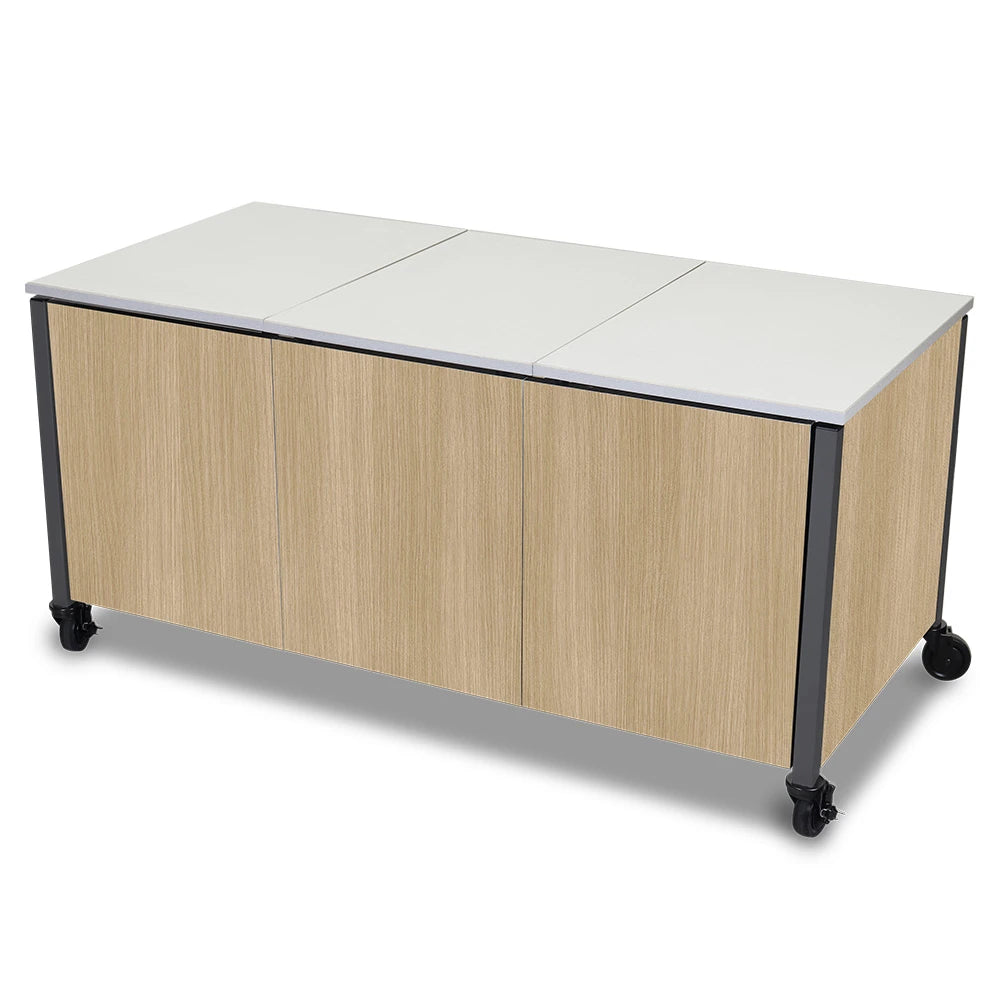
EQUIPMENT REFERENCE
For recurring work, standardize the containers and closures that genuinely repeat across the menu. Then select the display, furniture and movement equipment around their actual interfaces. That approach gives a buyer something concrete to compare: a supported platter, a covered replacement pan, a complete shari assembly, a packed station and a defined installation at the destination.
This guide covers insulated carriers, refrigerated reserves and powered transport, specialist shari equipment, mobile preparation tools, portable stations, banquet displays, utilities and the commercial scope of owning, renting or commissioning the equipment. It follows the equipment from load-out through service and return.
Eden Restaurant Supply serves the Asian dining community from its Los Angeles base, with roots in the industry since 2002. Our recommendation for off-site sushi work is to specify the equipment and the venue together. A good machine on an unsuitable support, a handsome platter in the wrong carrier, or a rental delivered without its required installation is still the wrong purchase for that service.
Jump to: Transport & Holding · Sushi Station & Display · Site & Mobile Requirements · Buying & Specification
In this guide 14 sections
01 / Equipment & Specialty Supplies
01. Start with the sushi service and the site
The service format determines what the equipment must receive and what it must allow the chef or service team to do. Delivering completed platters puts the first emphasis on package geometry, flat support and protected handoff. An attended temaki station puts more emphasis on working shari, dry nori and rapid ingredient access. A banquet line needs an effective replacement unit and a place for outgoing ware.
Those differences should be settled before comparing portable bars.
Scroll to read all columns
| Service | Primary equipment decisions |
|---|---|
| Finished platter delivery | Closed platter dimensions, supporting tray, carrier configuration, receiving surface and any returnable equipment |
| Separate-component kit | Containers and closures for each component, transport conditions and the receiving party's assembly arrangement |
| Attended nigiri or temaki service | Working shari and neta, dry nori access, board and protected knives, reserve position and finished-food handoff |
| Banquet or buffet presentation | Supported pans or platters, guest or staff access, cold-presentation arrangement, replacement loads and used-ware landing |
| Relocatable hospitality station | Complete packed furniture, route between storage and service, assembly space and available back-of-house support |
| Temporary-event or mobile operation | Permitted on-site tasks and the resulting preparation, refrigeration, washing, water and waste equipment |
An operation can use several of these formats. It should not assume that the same loaded carrier, rice-box arrangement or display serves all of them equally well.
- 01Load-out
- 02Transport
- 03Setup and readiness
- 04Service + replenishment
- 05Collection
- 06Return care
Specify the packed objects and the venue together, including the route at collection.
Record the actual on-site work
Describe the work as precisely as the menu: assembling from prepared portions, slicing neta, cutting washed produce, rolling, finishing, cooking, plating or handing over sealed packages. “Sushi catering” does not say which of those tasks takes place at the destination.
That description determines the working surface, knives and boards, ingredient containers and washing provision. It also matters to the applicable approval category. A private off-site catering operation, a public temporary food facility and a compact-mobile cart can have different equipment and preparation requirements; Section 10 addresses the consequential distinctions.
For the service itself, decide what moves between reserve and the working position. A covered replacement pan, a shari tray and a completed platter demand different receiving space. If replenishment requires transferring food to another container, provide a deliberate staging and utensil arrangement for that transfer. A counter already occupied by the case, rice box and cutting board has no spare landing area simply because the furniture is sold as a sushi station.
Establish what the venue actually supplies
A venue refrigerator is useful only when its location, available space, access and readiness fit the service. The same applies to a worktable, sink, power connection and drain. Record the provisions supplied by the venue separately from equipment brought by the caterer or rental company.
The resulting brief should identify the preparation location, on-site work, service pattern, reserve and replenishment method, and the support facilities at the destination. Attendance and peak demand then inform the quantities within that arrangement. They should not be used to jump directly from a guest count to an undefined “portable sushi package.”
For the wider operating model, see Sushi Programs in Hospitality Venues. Production and reserve sizing belong alongside this event brief, using the methods in Sushi Production Workflow, Capacity & Equipment Sizing.
02 / Equipment & Specialty Supplies
02. Insulated carriers, food pans and platter transport
Choose the load format before the carrier. Food-pan carriers are valuable because they organize a repeatable set of covered containers. Sheet-pan carriers support another format. Finished sushi platters may travel on those supports, but the platter's actual closed envelope and the supporting surface determine whether that arrangement works.
The catalog's pan count is therefore the beginning of the comparison. The useful capacity is the configuration that accommodates the selected food, covers, supports and conditioning accessories while allowing the load to be removed intact.
Food-pan and sheet-pan carriers
Cambro's expanded polypropylene (EPP) carriers, EPP300 and EPP400, illustrate the food-pan approach. Both use a 13-inch-wide interior; their principal capacity difference is vertical. The 1826MTC and Carlisle TC1826N01 illustrate full-sheet support formats.
Scroll to read all columns
| Carrier | Documented loading basis | Relevant stated interior |
|---|---|---|
| Cambro EPP300 | Three full-size four-inch-deep food pans, or equivalent | 21 × 13 × 14.6 in. |
| Cambro EPP400 | Four full-size four-inch-deep food pans, or equivalent | 21 × 13 × 20.7 in. |
| Cambro 1826MTC | Six 18 × 26-inch sheet pans in the manufacturer listing | Select through its actual sheet-pan supports and loaded clearances |
| Carlisle TC1826N01 | Seven 18 × 26-inch trays | 26.12 × 18.37 × 15.12 in. |
Sources: Cambro delivery brochure, Cambro Camcarriers, Carlisle TC1826N01.
A taller food-pan carrier gives more space for the appropriate vertical arrangement. It does not broaden the pan format. A sheet-pan carrier offers a wider support, but its number of tracks does not establish the number of finished sushi platters that can be loaded between them. Food height, lid projection and removal space can consume more vertical room than the bare tray.
EPP and rigid-shell carriers also deserve comparison as actual constructions. The Carlisle full-sheet example specifies a polyethylene shell with polyurethane insulation and identifies replacement closure hardware. Cambro's EPP family offers a different shell and handling arrangement. Compare the selected unit's weight, closure, cleaning, supports and parts rather than assuming a universal durability or ownership-cost winner from the material name alone.
A real platter mismatch: HP-65 versus EPP300 and EPP400
ERS's HP-65 round sushi party tray is a 15-inch-diameter plastic tray supplied with a clear anti-fog lid. The EPP300 and EPP400 have a published 13-inch-wide cavity.
The tray is two inches too wide for flat carriage in either box. Buying the taller EPP400 does not solve that mismatch. The circular outline also leaves no helpful in-plane rotation, and tilting a completed sushi platter is not an equivalent flat-transport arrangement.
13-inch published cavity width
2 inches too wide for flat carriage
Original dimensional illustration, showing only the documented width rejection. No lid height, usable level count, positive carrier fit or allowable tilt is asserted. Sources: ERS HP-65 and Cambro carrier specifications.
There are two sensible purchasing routes. Keep the platter and select a larger-format carrier/support arrangement, or choose a presentation unit that matches the intended food-pan carrier. Make that decision before standardizing either the packaging or the transport fleet.
A full-sheet carrier is a credible candidate for the larger platter, but the actual combination still needs its supporting tray, closed loaded height, stable bearing, removal access and restraint established. HP-65's published two-inch height is not separately identified as the body height versus the complete closed-lid envelope, so it should not be used to calculate a finished-platter count per carrier.
The party-tray collection and sushi takeout-container guide are useful starting points for choosing the presentation load. Pair that choice with the transport specification rather than treating packaging as a later accessory.
Specify the pan and transport closure together
For a repeat pan-based service, Cambro's 14CW is a concrete reference: full-size Gastronorm (GN), 20⅞ × 12¾ inches, four inches deep. The corresponding full-size 10PPCWSC Seal Cover and 10CWGL GripLid are identified components, not generic lids for any similarly sized pan. Seal Covers are described as spill resistant; GripLids use a molded-in gasket and are positioned for liquid-containing loads. Camwear pans, Seal Covers, GripLids.
A service cover with a utensil notch prioritizes access. A transport closure prioritizes containment and protection. Select each for its job, and include the closed load in the carrier fit check. Spill resistance should not be rewritten as an inversion-safe shipping guarantee.
Where the receiving food bar accepts the same pan format, this purchase can support replacement by the pan rather than repeated repacking. Where the receiving neta case uses different supports, a transfer remains part of the service. The distinction becomes decisive in Section 07.
Conditioning accessories change the load
The empty carrier is a poor estimate of what someone will lift. Cambro lists the EPP300 at 7 lb and its compatible CP3253 cold plate at 8.6 lb. Those two components alone total 15.6 lb before pans, covers and food. The corresponding EPP400-plus-plate sum is 17.2 lb. CP3253 itself occupies 20.9 × 12.8 × 1.2 inches. These are sums of published component figures, not measured event loads. Cambro delivery brochure, carrier and accessory tables
Record the conditioning tool and its support in the loading arrangement. A simple subtraction of its thickness from cabinet height does not prove that every nominal pan position remains usable with the chosen lids. Rail positions and clear withdrawal matter as much as remaining volume.
The access direction matters during service, too. A front-loader permits withdrawal from individual levels; a top-loader needs clear access above its contents. Choose around where the reserve will stand and how it will be replenished or depleted. A carrier that will be repeatedly opened under a station should not depend on moving unrelated equipment every time a pan is needed.
Include the movement accessory in the order
Cambro expressly lists CDC300 for EPP300 and EPP400. Its published 300-pound capacity belongs to that dolly; the loaded stack and route still require their own appropriate instructions. A similar-looking dolly with a different fit list is not an automatic substitute. Camdolly Compact specification
The complete order should identify the load, pan or supporting tray, cover, carrier, conditioning arrangement and named movement accessory. That is the useful unit of comparison between transport offers. A closed-carrier temperature-retention claim is a separate performance statement with its own load, initial condition, ambient and opening assumptions; it should never be converted into an unrestricted sushi-service duration.
Explore the ERS collection
Party Trays
Compare the assortment for this part of your service.
-
 Image unavailable
Kamon Round Sushi Party Tray with Lid (20 pc) - ED-63, 13"
View details & options : Kamon Round Sushi Party Tray with Lid (20 pc) - ED-63, 13"
Image unavailable
Kamon Round Sushi Party Tray with Lid (20 pc) - ED-63, 13"
View details & options : Kamon Round Sushi Party Tray with Lid (20 pc) - ED-63, 13"
-
 Image unavailable
Round Sushi Party Tray with Clear Anti-Fog Lid (50 pc) - HP-65, 15" Gold Brush
Image unavailable
Round Sushi Party Tray with Clear Anti-Fog Lid (50 pc) - HP-65, 15" Gold Brush
Currently unavailable online
View details & options : Round Sushi Party Tray with Clear Anti-Fog Lid (50 pc) - HP-65, 15" Gold Brush -
 Image unavailable
Kamon Round Sushi Party Tray with Lid (20 pc) - ED-65, 15"
View details & options : Kamon Round Sushi Party Tray with Lid (20 pc) - ED-65, 15"
Image unavailable
Kamon Round Sushi Party Tray with Lid (20 pc) - ED-65, 15"
View details & options : Kamon Round Sushi Party Tray with Lid (20 pc) - ED-65, 15"
-
 Image unavailable
Round Sushi Party Tray with Clear Anti-Fog Lid (50 pc) - HP-63, 13" Gold Brush
View details & options : Round Sushi Party Tray with Clear Anti-Fog Lid (50 pc) - HP-63, 13" Gold Brush
Image unavailable
Round Sushi Party Tray with Clear Anti-Fog Lid (50 pc) - HP-63, 13" Gold Brush
View details & options : Round Sushi Party Tray with Clear Anti-Fog Lid (50 pc) - HP-63, 13" Gold Brush
-
 Image unavailable
Round Sushi Party Tray with Lid (50 pc) - HP-64, 14" Gold Brush
View details & options : Round Sushi Party Tray with Lid (50 pc) - HP-64, 14" Gold Brush
Image unavailable
Round Sushi Party Tray with Lid (50 pc) - HP-64, 14" Gold Brush
View details & options : Round Sushi Party Tray with Lid (50 pc) - HP-64, 14" Gold Brush
-
 Image unavailable
Kamon Round Sushi Party Tray with Lid (20 pc) - ED-64, 14"
View details & options : Kamon Round Sushi Party Tray with Lid (20 pc) - ED-64, 14"
Image unavailable
Kamon Round Sushi Party Tray with Lid (20 pc) - ED-64, 14"
View details & options : Kamon Round Sushi Party Tray with Lid (20 pc) - ED-64, 14"


03 / Equipment & Specialty Supplies
03. Refrigerated reserves and powered transport
A reserve should be selected for where it operates and how staff access it. Passive transport, powered holding at a venue and refrigeration powered during travel can all serve an off-site operation, but they solve different parts of the journey.
The practical choice is often a combination. Covered ingredients may travel in one arrangement and become the reserve for another. The equipment schedule should make that transition explicit so that unloading does not become an unplanned change in operating conditions.
Scroll to read all columns
| Cold-equipment role | Suitable purchasing emphasis |
|---|---|
| Passive transport of preconditioned loads | Carrier, closure, actual load and conditioning arrangement, with a defined food-control procedure |
| Powered holding at the venue | Holding capability, preconditioning, supplied power, ventilation and convenient reserve access |
| Refrigeration powered from a vehicle supply | Exact model, correct electrical source, installation, environmental protection and securing |
| Internal-battery refrigerated transport | Battery architecture, charger version, initial charge and the required operating stages |
| Venue-provided reserve refrigeration | Named equipment, actual available capacity, access, readiness and responsibility |
Mains-supported reserve holding
Cambro's Pro Cart Ultra, configured with the appropriate cold module, provides an example of powered reserve holding. The unit is for indoor use and must not be used in wet or damp conditions. Its manual describes holding preconditioned food, calls for cabinet preconditioning and ventilation, and requires the unit to be unplugged before movement. Pro Cart Ultra manual
For a banquet program, this type of equipment is useful when the venue can support a powered reserve with convenient replenishment access. Decide where it stands, which side staff open, which covered loads it accepts and how they reach the working station. A reserve placed behind a crowded guest-service line may have adequate nominal capacity and still impose a poor replenishment route.
The move to or from that position must be specified separately. Once unplugged, the cart is no longer operating in its electrically supported state. Its insulation may still be useful, but that does not turn it into a powered-in-transit refrigerator.
Refrigeration intended for transport
Coldtainer's January 2026 manual provides a stronger basis for the active-transport category than a bare sales-table temperature range. It describes maintaining preconditioned goods, uses closed food containers, and calls for prior cabinet conditioning, airflow around the load, weather protection and suitable restraint. It specifies at least 50 mm above and around the unit for ventilation. Coldtainer user manual, January 2026
Those requirements affect vehicle packing. The refrigerator needs operating space as well as cargo space. Surrounding it with tightly packed equipment can defeat the installation conditions that make the selected refrigeration useful. The quote should also distinguish operation in the vehicle, the unloading interval and the eventual reserve position.
For this category, release the exact current model and electrical configuration together. A family name, a capacity in liters and a “12 V” label are not enough to establish how the supplied unit connects or charges.
AuO battery configurations are materially different
Coldtainer's additional instructions distinguish an integrated 12 V VRLA-gel battery arrangement from its removable-lithium MY2022 arrangement. In the integrated version, refrigeration operates from the internal battery and the red connection serves the specified charger. In the removable-battery arrangement, switching between external power and battery is manual; the optional mains supply powers the refrigerator but is not the battery charger. Coldtainer AuO instructions
This is an order-level distinction. Identify the battery type, charger, correct-market supply and the expected charging/operating sequence on the quotation. Do not treat the integrated-battery connector as interchangeable with a standard vehicle-powered model's connection.
Battery duration belongs to a defined configuration and operating condition. A generic shift-length claim is less useful than knowing whether the unit will be charged at the base, powered during travel, opened repeatedly during service and recharged before the next assignment. Where the intended event exceeds what the quoted configuration supports, the equipment or service arrangement must change.
Specify the operating state at each stage
Scroll to read all columns
| Stage | What the equipment brief should establish |
|---|---|
| Base preparation | Cabinet conditioning, food condition, battery charge and loaded container arrangement |
| Travel | Passive, vehicle-powered or battery-powered operation; actual securing and ventilation |
| Unloading and positioning | Any disconnection, change of power source or manufacturer movement restriction |
| Service | Power and environment, reserve access, replacement loads and food-condition checks |
| Return | Remaining load, shutdown, charging and cleaning/storage responsibilities |
The cabinet setpoint or probe reading describes the equipment at its measurement point. The operation still needs to determine the food's condition under its applicable procedure. Equally, the reserve capacity should be expressed through its real covered loads and access pattern, not translated directly into guests from cabinet volume.
For wider refrigerator and seafood-storage selection, use Seafood Refrigeration, Freezers & Cold-Chain Equipment. Here, the priority is a reserve that remains usable through the actual off-site journey.
04 / Equipment & Specialty Supplies
04. Shari containers, tray stacks and working batches
Shari transport deserves its own equipment specification. Bulk prepared rice, formed portions and trays of completed food can use different arrangements inside superficially similar insulated bodies. The body, lid, tray family and working support determine what the purchase can actually do.
Start with the intended reserve state and how the chef will draw from it. A bulk reserve may favor a different opening and handling pattern from separate trays of formed portions. In either case, the closed transport assembly and the opened working arrangement need to be specified together.
The body-only price is not the assembly price
A U.S. retailer lists the Sekisui Esuren SP-20, SKU 68862, without a lid. Its listed outside dimensions are 19 × 14.7 × 10.1 inches, with a stated interior of 14.6 × 12 × 7.1 inches. The corresponding lid is separately offered as SKU 84616. The same retailer also lists inner tray 95437, 14.75 × 12 × 1.2 inches, described as polypropylene. Third-party retail product records for the SP-20 body, matching lid and inner tray.
For purchasing, those are separate line items with separate identities. Specify whether the order contains the complete closed container and the intended number and type of trays. That is particularly important when adding a second container or replenishing components: a body description alone does not identify the complete kit already in use.
The final closed envelope should include the actual lid and loading arrangement. It is also the relevant envelope for shelving or transport. The chef then needs somewhere to put the removed lid and any tray being withdrawn; the reserve should not require clearing the cutting position every time it is opened.
Deep and shallow trays change more than nominal capacity
Endo's Japanese TKG catalog documents the SP-20-D deep, supplied with lid, at 483 × 373 × 256 mm, with a stated interior of 372 × 305 × 180 mm. Its tray table provides a useful comparison of alternative arrangements.
Scroll to read all columns
| SP tray | Outside dimensions, mm | Published interior, mm | Alternative count in SP-20-D deep |
|---|---|---|---|
| Shallow | 370 × 300 × 31 | 364 × 294 × 28 | 5 |
| Medium | 371 × 294 × 45 | 323 × 287 × 38 | 4 |
| Deep | 374 × 294 × 60 | 323 × 287 × 53 | 3 |
The catalog identifies these trays as ABS and associates the shallower arrangement with shari portions/neta, the medium arrangement with foods such as inari and hosomaki, and deeper trays with taller loads. These are alternative stack configurations. Endo TKG catalog, p. 164
370 × 300 × 31 mm outside
371 × 294 × 45 mm outside
374 × 294 × 60 mm outside
Illustrative alternatives: five shallow OR four medium OR three deep; not an additive stack. Medium and deep SP trays can stack together; shallow trays stack only with shallow. The U.S. retail PP tray offer is a separate record. Sources: Endo TKG p.164 and Sekisui Pack.
A deeper tray provides more vertical room, but the usable floor and number of levels also change. That is the meaningful selection question for formed portions: the food's footprint and height, the tray's usable area, and how each level will be reached. A large liters figure cannot answer it.
The catalog also identifies tapered interiors. Use the maker's matched tray/body arrangement rather than treating one bottom-interior dimension as a complete description of every seating edge. The counts above do not imply that five shallow, four medium and three deep trays fit at the same time, or that any level can be filled to an arbitrary sushi-piece count.
Tray families determine replacement compatibility
Sekisui Pack states that medium and deep SP trays can stack with each other, while the shallow type stacks only with shallow trays. That distinction should remain on the order and in the operation's component identification. A replacement tray of approximately the same footprint is not necessarily a replacement for the chosen stack. Sekisui Pack Eslen information
Keep the U.S. importer offer and the Japanese catalog system on their own documented terms. The dimensions resemble one another, but the importer describes its tray as polypropylene while the Japanese catalog specifies ABS. That is insufficient evidence to merge the material, count and SKU information into a single cross-market assembly.
For a repeat operation, retain the actual body designation, lid identity, tray family and quantity supplied. This gives subsequent purchases a precise reference and avoids a mixed stack that looks plausible only when it is empty.
Support, chef access and return care
The Endo catalog offers a dedicated S-No.20D stand for the pictured deep container. A purpose-made support is worth evaluating where the reserve must remain close to the chef without occupying the principal cutting surface. Its actual installed height, seating arrangement and loading still belong in the specification; adding two catalog heights is not a reliable way to calculate the finished working position.
The working layout should make the shari accessible while protecting the remaining reserve. Position the body so the lid and selected tray can be removed deliberately, with a stable destination for each. A container that technically fits beneath a station may be inconvenient if opening or lifting its contents requires reaching around the display case.
The return process also matters. Sekisui's care information specifies neutral-detergent washing at no more than 60°C, prohibits steam cleaning and cautions against drying at 80°C or above. The selected assembly must be compatible with the base facility's actual wash/dry process. Sekisui handling instructions
Our purchasing recommendation is to specify five things together: the reserve state, body and lid, tray family, working support/access, and the operation's approved holding and return procedure. The insulated container serves that procedure; it does not determine whether shari is held under temperature control or another approved method.
Cooking appliances, hangiri and production equipment are a separate purchase. The commercial rice-equipment research provides that wider context; the event container must be selected for the prepared load that actually travels.
05 / Equipment & Specialty Supplies
05. Neta, nori, knives and the mobile preparation kit
Build the working kit around what the chef will actually do on site. A compact nigiri/temaki service and a delivered banquet platter program should not acquire identical tools merely because both serve sushi. The useful grouping is working equipment, protected replenishment and used-ware return.
Neta containers and the receiving position
Covered ingredient reserve should connect to the way the station is replenished. Where the receiving food bar accepts the same pan format, a compatible replacement pan can move directly into its service position. Where the neta case uses another food mount or container, the transfer needs a landing, appropriate utensils and room to work.
Specify transport closures and working covers separately, and include the chosen cover in the carrier's loaded-height check.
Select the container arrangement around the actual assortment and any ingredient separation the menu requires. The goal is a working quantity that is accessible without exposing every replacement load each time the chef reaches for one item. Separate reserve positions are particularly valuable when a station is replenished repeatedly rather than loaded once for a short presentation.
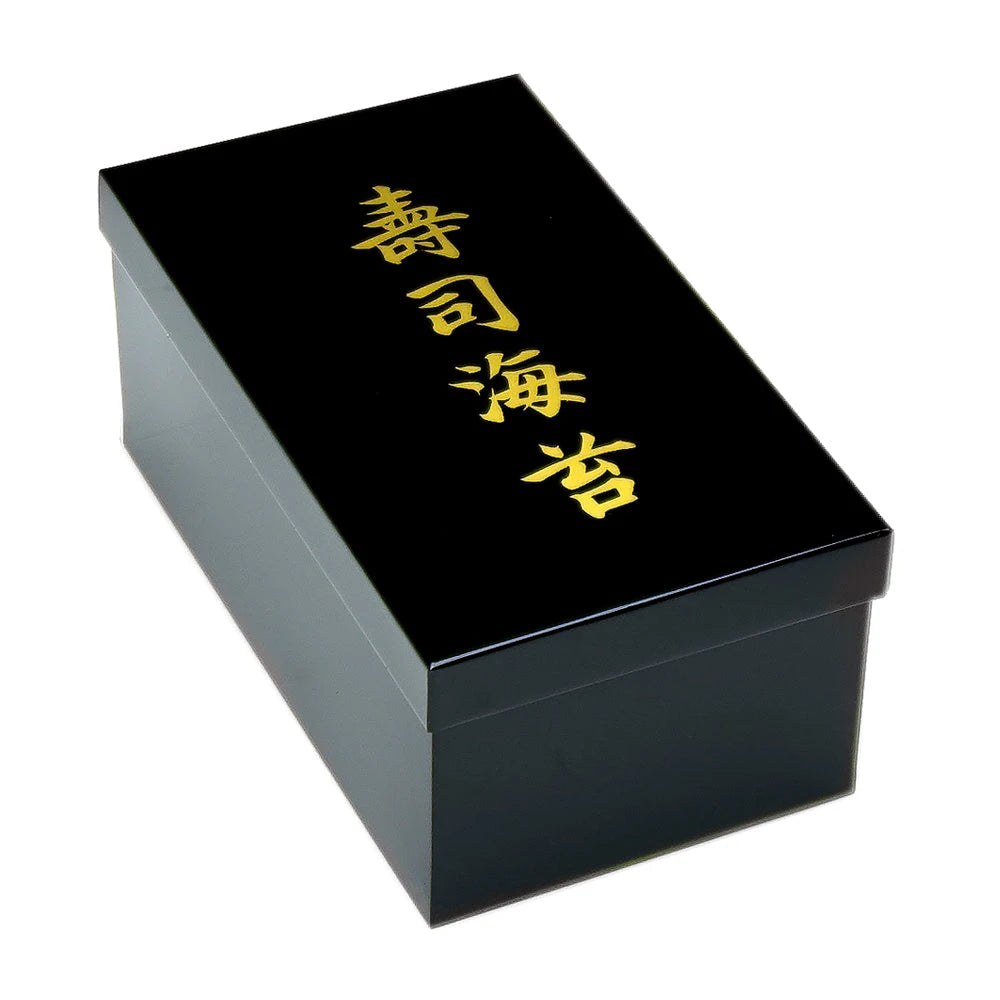
Nori: accessible working supply, protected reserve
Nori format comes before container size. Whole sheets, half sheets and quarter-cut pieces impose different floor dimensions, openings and retrieval patterns. A nominal volume tells little about whether a sheet can lie flat or be withdrawn cleanly.
ERS's NC-1 nori tin is a hinged working-container example with a stainless inner base. Use it for the working-access role its construction supports; the listing does not establish an airtight transport seal. Protected reserve can remain in an appropriate closed original package rather than all being transferred into the container the chef repeatedly opens.
Koasa's own shop offers a different, cut-specific example: a gasket-equipped container described for 50 quarter-cut nori pieces, 120 mm in diameter and 153 mm high, with instructions to use the package's desiccant. It illustrates how closure and cut format can be matched. It is not a full-sheet carrier simply because its stated volume is 700 ml. Koasa nori container
Give the working nori a dry position away from wet-ice splash, steam and incoming used ware. Its reserve should remain separately protected. That arrangement is more useful than adding a powered appliance without a defined need or assuming every hinged tin performs sealed storage.
Long knives need a complete protected fit
The documented canvas knife roll, natural-white SKU 47333, is a six-slot Shionoya Hosei collaboration with an attached utility pouch. The seller describes accommodation of blades up to 330 mm with a wooden saya, including yanagiba. The roll measures 20 × 27.2 inches when opened. Third-party retail canvas knife-roll specification.
A third-party knife retailer provides a padded-case alternative. Its Large Padded Knife Case is listed at 580 × 130 × 40 mm, and the supplier recommends a sheath, blade protector or saya inside it. Those dimensions are not separately identified as usable interior clearance. Third-party retailer padded-case specification.
A roll organizes several selected tools; a padded case provides another enclosure. Choose through the complete protected knife, including handle and saya, and through the way adjacent tools are separated. A 300 mm blade label is not the overall package length.
At the venue, clean protected tools need a landing separate from the used-ware return. Wet or soiled knives should not disappear back into the clean fabric roll at breakdown. The return container and edge protection must suit the actual tools and the operation's cleaning arrangement.
Board dimensions have three consequences
Hasegawa's FSR20-6030 Pro-Soft board is a useful physical reference at 600 × 300 × 20 mm, with a listed mass of 2.4 kg. Its size affects the cutting position, the equipment used to carry it, and the washing/drying route at the base or venue. Hasegawa Pro-Soft
The station must allow the actual cutting or assembly motion around that board. Placing its outline between a case and a rice box is not enough if the handle, long blade stroke or ingredient transfer has nowhere to go. Equally, a manufacturer's machine-washing claim does not establish that the board fits the available machine or every cycle used there.
Specify clean substitutes where the actual service and permitted washing arrangement require them. Their number should follow the operation, not a universal “mobile sushi kit” count. The professional knives, boards and sharpening reference covers the broader tool selection and care decisions.
A selective equipment grouping
Scroll to read all columns
| Group | Include because it performs this job |
|---|---|
| Covered ingredient reserve | Protects replenishment and matches the working receiver or a defined transfer procedure |
| Shari assembly | Carries the selected bulk or portioned reserve and supports the chef's working method |
| Nori working supply and reserve | Matches the actual cut while separating frequent access from protected stock |
| Protected knives and supported board | Performs the menu's on-site cutting or assembly and has a suitable clean/used route |
| Selected smallwares | Supplies the paddles, mats, tweezers, dispensing or finishing tools the menu actually uses |
| Measurement and identification | Provides suitable food-temperature measuring instruments, plus the labels and records required to check and identify loads through transport, service and return |
| Used-ware return | Contains the actual pans, boards and tools separately from clean reserve, with edges protected |
Menu changes and allergen requests should be reflected in the working arrangement and procedures. Additional tools can be part of that plan, but a compact kit should never be represented as guaranteeing allergen-free service.
The complete mise-en-place treatment belongs in Nori Storage, Neta Preparation & Sushi Mise en Place. For off-site work, the purchasing test is whether every selected item has a useful working position, a protected journey and a defined return.
Explore the ERS collection
Nori Containers
Compare the assortment for this part of your service.
-
 Image unavailable
Sushi Nori Container 9" Black
View details & options : Sushi Nori Container 9" Black
Image unavailable
Sushi Nori Container 9" Black
View details & options : Sushi Nori Container 9" Black
-
 Image unavailable
Sushi Nori Container 9.7" Red
View details & options : Sushi Nori Container 9.7" Red
Image unavailable
Sushi Nori Container 9.7" Red
View details & options : Sushi Nori Container 9.7" Red
-
 Image unavailable
Sushi Nori Container 8-1/2" Red
View details & options : Sushi Nori Container 8-1/2" Red
Image unavailable
Sushi Nori Container 8-1/2" Red
View details & options : Sushi Nori Container 8-1/2" Red
-
 Image unavailable
Nori Container 8.5", Black
View details & options : Nori Container 8.5", Black
Image unavailable
Nori Container 8.5", Black
View details & options : Nori Container 8.5", Black


06 / Equipment & Specialty Supplies
06. Portable sushi bars, carts and modular workstations
Select the station through its working area, packed form and supporting equipment. The three principal approaches are a suitable work surface with separate equipment, modular furniture with selected work or appliance tiles, and an integrated or commissioned assembly. Each can be the right choice for a different service.
A work surface with separate equipment
This is a strong option where the venue can reliably provide support and back-of-house facilities, and where the operating components change between events. The buyer can select the board, shari support, ingredient arrangement and presentation equipment independently rather than acquiring a fixed appliance package for every menu.
The surface still needs to support the actual installation. Record its usable dimensions, loading and cleanable construction, then account for equipment contact, appliance access and any required connections. A rented banquet table should not be presumed suitable for a display case merely because both appear on the rental list.
This approach is particularly attractive when the service does not need a large guest-facing refrigerated showcase. It can concentrate the available working area on assembly and handoff while using a separately specified reserve. Choose it because that arrangement serves the menu, not because it is the cheapest table in isolation.
Folding and modular stations
Forbes's TRIO 5070A makes the modular purchase concrete. The system contains three folding stations and a transport cart. Each station is listed at 66 × 30 × 32.5 inches; the complete kit cart is 78.8 × 37 × 64.2 inches. The current configuration page requires at least nine selected tiles. Forbes TRIO 5070A
For cold-only sushi service, the relevant options include 5076A blank and 5076D insulated ice-well tiles, plus two cutting-board tile options, 5076E and 5076F. Cooking and warming induction tiles are other offered options; they belong in the order only when the menu uses those functions.
The purchasing value is the coordinated furniture and component set: selected working surfaces, interchangeable functions, panels and an organized packed form. A program running different banquet arrangements can evaluate that reconfiguration value alongside its vehicle, storage and setup resources.
Specify the tile schedule expressly. A photograph may show a combination of options rather than the contents of the quoted package. The same applies to the remaining service equipment: principal reserve, shari, dry nori, tools, washing and waste provisions must all have a place, whether integrated elsewhere or supplied separately.
Scroll to read all columns
| Architecture | Where it is particularly useful | What completes the purchase |
|---|---|---|
| Separate surface and equipment | Venue-supported service or a changing component package | Verified support and installation, actual working positions and dependable venue facilities |
| Folding/modular station | Repeated banquet work requiring organized storage and different layouts | Exact panels/tiles, complete packed route, assembly responsibility and separate support equipment |
| Integrated or commissioned assembly | Stable menu and working requirements that justify coordinated appliance placement | Named appliances, support and service access, utilities, transport form and applicable approvals |
Integrated cold-service assemblies
Forbes's A2 catalog illustrates a sushi configuration combining a fixed two-pan frost top, a cutting-board tile and an insulated sink/ice-well tile. It is a useful example of an appliance zone combined with interchangeable surfaces. Forbes action-station catalog, pp. 8–9
The next purchasing step is to identify the actual appliances and their installation requirements. A cold well supports a food arrangement; a hand sink provides a different function. The catalog's sink/ice-well label does not establish the washing provision for an entire sushi operation.
Commissioned furniture is most useful when its dimensions follow settled tasks: the chef's cutting and assembly area, the selected display, shari access, dry nori, serving handoff, reserve approach and service/cleaning access. Build those requirements into the drawing before fixing the exterior finish.
The resulting quotation should include deployed and packed dimensions, named appliances, the support/load information, utility terminations and access to components that need cleaning or service. A broad “sushi cart” description is insufficient to compare two assemblies with different refrigeration and washing content.
Preserve the working area
The working side should be reviewed with the selected equipment in place. A rice-box lid needs somewhere to land. A tray needs a withdrawal path. The board needs the actual knife or assembly motion around it. The chef needs a stable handoff position after finishing the food, and incoming reserve should not have to pass through outgoing used ware.
A case that is nominally shorter than the counter may still consume the space required by its own installation and the chef's work. For example, the HNC-150 exterior length is below TRIO's station length, but that alone does not establish a supported, ventilated, sealed and usable combined installation. The furniture/appliance pairing requires the actual support and installation information.
Keep permanent counter design with the sushi bar and chef-workstation reference. For portable service, judge the station in both of its commercially important states: the equipment the chef works at and the complete load the operation must store and move.
07 / Equipment & Specialty Supplies
07. Cold displays and banquet platter service
Select the display around the food's working or presentation role and the way it will be replaced. A chef-facing neta case, a guarded food bar and a frost top can all belong in catered sushi service, but the container interfaces and service patterns differ.
For repeated banquet work, a receiving display that accepts the transport pan format can simplify changeover. For an attended counter, the chosen neta presentation may justify transferring ingredients into the case's appropriate mounts or containers. Make that labor and staging decision deliberately.
Chef-facing neta cases
Hoshizaki's HNC-150BA-L/R-SLH provides a documented countertop example. Its specification gives a 59.1 × 13.6 × 11-inch exterior, 45.1 × 11.3 × 6.2-inch interior, and four food mounts. The left/right suffix identifies the condenser arrangement and belongs on the order. HNC-SLH specification
The operating manual is equally important for event use:
Scroll to read all columns
| Installation or operating item | HNC-SLH instruction relevant to temporary service |
|---|---|
| Location | Indoor use; normal ambient 50–80°F |
| Support and access | Firm, level support beneath the entire bottom; 6 in. at the designated condenser air inlet/outlet, open space above and rear access |
| Counter and utilities | Counter-contact perimeter sealed; independent grounded supply; more than 2 in. of vertical air gap from drain-hose end to receiving floor drain or sink |
| Loading | Pre-operate for about one hour and load already refrigerated ingredients |
| Food height | Maximum 3.5 inches above the interior bottom |
| Reserve and operating cycle | Separate refrigeration during defrost and after service; the showcase is not intended for continuous operation or overnight storage |
Hoshizaki installation and operating manual, pp. 5–7 and 10
Those instructions define a real event installation. The case needs a suitable surface, airflow, utilities and enough advance access to become ready. A rental delivery or a canopy over an outdoor location does not change its intended environment.
Food height is particularly easy to misread from a dimensional drawing. The 6.2-inch interior enclosure does not provide a 6.2-inch permitted food stack. The lower operating limit determines how the displayed load is arranged. Select the case through its useful working assortment and replenishment, not cabinet volume alone.
The permanent counter may conceal the installation behind cabinetry; at an event, the same requirements still need a workable arrangement. Resolve the counter contact and receiving drain with the provider and venue rather than assuming the machine can sit on any cloth-covered table and discharge into any convenient receptacle.
For the wider comparison of case constructions and food supports, see Sushi Display Cases & Refrigerated Neta Cases. The ERS food-display collection includes sushi showcases alongside other commercial display equipment.
Guarded food bars and compatible replacement pans
Cambro's Versa tabletop bar offers another service architecture. The four-foot 4TTFSB110 base is listed at 50¾ × 26¼ × 10½ inches. The guard-equipped 4TTFSBSG110 is 50¾ × 39 × 29 inches. The four-foot unit accepts three full-size GN pans; the five- and six-foot versions accept four and five. Versa tabletop brochure
The deployed guard increases the overall width substantially beyond the base. Account for that projection and the selected service side when placing the unit on its support. The complete assembly's height is measured above the supporting surface, not from the floor.
Pan depth changes the cold-accessory choice. Cambro documents 2½- and four-inch-deep GN pans with Buffet Camchillers, while six-inch-deep pans fit without them. A deeper pan is therefore not a free capacity upgrade within the same cold arrangement.
The matched buffet accessory is CPB1220, listed at 18½ × 12⅝ × 4 inches for the Versa food bar, work table and tabletop bar. It is a different object from the CP3253 transport plate used in the carrier discussion. Specify each at the stage where it is intended to work. Versa tabletop accessories
The tabletop brochure calls for 8–12 hours of pre-freezing for the Buffet Camchiller. Include that freezer space and preparation time in the base operation; a nonpowered service bar still depends on a prepared cold accessory. Versa tabletop brochure, accessory page
The manufacturer's handling and support instructions complete the comparison. The tabletop bar requires at least two people for movement, lifted at the body rather than the guards. Its four-foot model has a stated 120-pound load limit, with 40 pounds per food-pan compartment; the supporting table needs its own appropriate rating. The manual's placement diagram limits the guard's bottom edge to 52 inches above the floor. This is an instruction for the selected product, not a universal guard-height rule. Versa owner manual
A complete pan changeover
The four-inch-deep 14CW pan introduced earlier belongs to the full-size GN format accepted by the Versa arrangement. That provides a documented receiving interface for a pan-based service.
Prepare the covered replacement load in its selected carrier configuration. At the destination, bring the receiving bar, its correct cold accessory and protection into the required operating arrangement. Keep the replacement protected until changeover, remove the transport cover as appropriate, and place the pan into its supported service position. Give the outgoing pan a separate used-ware landing rather than setting it among clean replacements.
The practical benefit is continuity of the food-bearing container. Where the menu suits that presentation, the operation can replace a defined unit rather than repeatedly transferring food into an unrelated vessel. The carrier, pan cover, receiving support and return container can then be specified around the same recurring load.
The positive interface is the documented pan format and depth. The actual carrier loading still has to accommodate its lids, food height, rail positions and conditioning arrangement. It does not follow that every nominal pan position remains usable with every accessory, or that equipment compatibility establishes a service holding time.
The same pan does not drop into the HNC-150
The 14CW's short side is 12¾ inches; HNC-150's stated interior depth is 11.3 inches. That rejects a flat, direct drop-in presentation of this full-size pan in that case.
For a neta-case service, select the case-appropriate receiving arrangement and provide the transfer space and utensils. For a pan-based buffet, select a receiver engineered for the pan. Both can be sound choices. They involve different handling, and the quotation and station layout should reflect it.
The same discipline applies to accessories that appear to match one dimension. Cambro's SBH15 is described for a 15-inch bowl. That description does not establish stable support for the 15-inch HP-65 party tray. Rim geometry, bearing and the intended load matter as well as diameter.
Frost tops and decorative presentation
Hatco's frost-top guide describes short-term presentation of prechilled food in suitable containers. The food and its serving container must both be prechilled: the surface slows warming rather than chilling an unconditioned load. Highly perishable foods require ongoing product-temperature monitoring throughout service under the selected food-control procedure. The selected vessel and its contact with the chilled surface are part of that arrangement. A large decorative boat with raised feet or a separate elevated serving platform cannot be credited with a cooling path through an air gap simply because the surface below it is cold. Hatco frost-top guide
Servingware can still be an important part of banquet sushi. Specify the food-bearing component, transport support, presentation support and replacement method together. An elaborate large presentation may be visually appropriate, while smaller replaceable units can be easier to remove and renew without disturbing the whole display. The right choice follows the service and the actual food-control arrangement, not a universal tray-size rule.
A presentation's exterior length also says little about its usable food area or handling. Raised ends, rails, separate inserts and covers can all affect how it is carried and cleaned. Keep those object-specific decisions with Traditional Sushi Servingware; use this page to coordinate the serving object with its off-site journey and replacement load.
08 / Equipment & Specialty Supplies
08. Loading, access, setup and the return trip
Treat delivery to the service position as part of the equipment scope. The complete moving module, the space needed to unpack it and the usable service layout are three different footprints. The return journey adds drained tanks, removed panels, used ware and components that must be protected separately.

Measure the complete transported object
The CDC300 dolly is listed at 24.9 × 17.4 × 7.3 inches. Both EPP300 and EPP400 have a published exterior length of 25.2 inches and width of 17.3 inches. In an aligned plan-view comparison, the widest nominal dimensions therefore extend to at least 25.2 × 17.4 inches, before any further projection from the actual transported arrangement. The dolly footprint alone understates the carrier's length. CDC300 specification, carrier dimensions.
This is a dimensional calculation, not a measurement of a loaded and restrained stack. Seating geometry may overlap vertically, so adding nominal component heights is not a reliable gross-height calculation. Measure or obtain the actual released assembly where that dimension controls access.
Likewise, separate the weight of a component lifted by hand from the complete rolling module and the stored stack. A dolly's capacity does not rate the ramp, elevator, liftgate or vehicle restraint used elsewhere in the journey.
The straight, upright width rejection for the complete Forbes TRIO kit cart. Length, turning, thresholds and unloading remain separate checks.
A doorway test for the packed TRIO cart
Consider a venue with a measured 36-inch clear opening. The complete TRIO kit cart's nominal width is 37 inches. It is one inch too wide for a straight upright passage in its normal rolling orientation. The less-than-nine-inch profile of an individual folded frame does not solve that problem for the loaded cart. TRIO 5070A
Resolve the wider route or an appropriate agreed component-handling plan before dispatch. A doorway that clears the width removes only that particular obstruction. The cart's 78.8-inch length, approaches, turns, thresholds, elevator and unloading position still govern whether the route is workable.
The same route must work at collection, when the venue may have different access hours or another event in progress. Include the location for the empty transport cart during service; it cannot be assumed to remain beside the guest-facing station.
Setup includes assembly and appliance readiness
Forbes's TRIO instructions move from a stable unpacking position through frame extension, locked casters, secured support rods, seated panels and supported tiles before the operating load is added. Breakdown removes the load and components before folding and securing them in their storage positions. TRIO setup and use instructions
Assign that work. Delivery of the packed kit to a room is different from assembly of the station, and assembly is different from readiness of its refrigeration and washing equipment. The packed-component harness described by Forbes secures the stored components; it should not be described as a complete vehicle tie-down or crash-rated restraint system.
The appliance schedule must begin early enough for the actual startup sequence. HNC's approximate one-hour pre-operation instruction is not a one-hour total load-in promise. Unloading, support, connections and checks also have to occur. A heated hand-sink cart requires its water path established before the heater is energized. A powered holding cart that was unplugged for movement must reach its required service condition again.
Use separate milestones for equipment delivered, assembled, connected and ready. That makes the caterer, venue and rental provider's responsibilities reviewable without inventing a universal setup duration.
Return care should influence the purchase
The return facility has to receive and process the actual mix of equipment. Large guards, rice-box lids, long boards, protected knives, tanks and electrical equipment do not share one wash treatment.
Scroll to read all columns
| Component | Return requirement that affects the arrangement |
|---|---|
| HNC showcase | Unplug before maintenance, protect the machine compartment, avoid exterior water jets and follow its interior/drain cleaning instructions |
| CamKiosk KSC402 | Empty and wash fresh/waste tanks, store them empty and inspect/service casters as directed |
| Versa tabletop assembly | Treat clear guards, base/uprights and drain according to their separate care instructions |
| Sekisui shari system | Follow its wash/dry limits and no-steam restriction |
| Finished buffet furniture | Match care to wood, hard-surface and guard materials; use the appliance manuals for installed equipment |
| Knives and boards | Keep used equipment separate from clean reserve and return it through a suitable cleaning, drying and protected-storage arrangement |
Sources: HNC manual, KSC402 manual, Versa manual, Sekisui care information, Forbes buffet-care sheet.
The material differences are commercially consequential. Versa's manual allows steam cleaning for its base/uprights while prescribing different care for the clear guards. The selected shari system has its own no-steam restriction. “Easy to clean” is not a common cleaning specification for the whole kit.
Choose equipment the base can actually wash, drain, dry and store, and recover the complete component set after each event. The initial order record should retain model/suffix, lid/tray identities, selected tiles and the relevant manuals. For the CamKiosk, the cart and heater identities are specifically needed to determine replacement parts. A description such as “rice-box lid” or “blue cold block” is too imprecise for reliable replacement.
The broader program belongs in Maintenance, Cleaning & Replacement Parts. For this purchase, establish the feasible return route before the equipment becomes a recurring asset.
09 / Equipment & Specialty Supplies
09. Power, water, handwashing and waste
A useful utility schedule names the equipment, its operating stage, the supply it needs and the party providing that supply. Keep the venue connection separate from the person delivering the appliance. Both must be resolved before service.
Electrical data must retain its meaning
HNC-150's specification lists 115 V/60 Hz/single-phase, a NEMA 5-15P plug and a 6.5-foot cord. It distinguishes 0.9 A rated current from 15 A starting current and separately states a power-supply-capacity figure. Those are different fields. Quoting only the low rated current does not complete the venue's supply assessment. HNC-SLH specification
For each selected appliance, supply the actual model/nameplate information and intended operating period: preconditioning, active service, charging or another defined stage. The venue or appropriate supplier should confirm the actual available supply and connection arrangement. Generator, breaker, cable and battery sizing should follow that equipment and site information rather than a generic catering allowance.
The distinction matters especially when equipment shares a temporary location. A case, heated sink and cooking tile may have different startup and ongoing needs. An unused induction tile need not be added to a cold-only service, while a menu that genuinely uses it must carry its electrical requirements into the schedule.
Heated and foot-pump hand-sink carts
Cambro's CamKiosk family distinguishes electrically heated KSC402 from nonheated foot-pump KSC402CFP. The KSC402 operating manual requires the fresh-water connection and pump filling/purging to be completed with the heater off before the heater is energized; it allows approximately ten minutes for heating. Changing to the second fresh-water tank is an operator action rather than an automatically combined uninterrupted supply. CamKiosk product family, KSC402 manual.
The correct setup sequence belongs in the service responsibility, not only in the box of manuals. Confirm the supplied heater's actual nameplate and electrical needs; the model family's voltage description is not a substitute for its complete electrical specification.
Cambro's MHWS18 offers a separate foot-pump architecture with an 18-gallon fresh-water tank, 20.5-gallon waste tank and published 21.1 × 19 × 63.6-inch envelope. The maker lists 53.6 lb empty and 224.7 lb full. Its brochure does not establish a heater. MHWS18 brochure
This removes an operating electrical/plumbing hookup while retaining filling, wastewater, handling and return obligations. Use the maker's full-weight figure as labeled; it does not establish a condition with both tanks simultaneously full. The applicable operation's water-temperature and washing requirements still determine whether this architecture is suitable.
Scroll to read all columns
| Water-related job | What to specify |
|---|---|
| Handwashing | Actual unit, required water condition, access, consumables and readiness |
| Utensil washing | Facilities or permitted arrangement for the actual knives, boards, trays and implements |
| Potable-water supply | Source, filling, connections, tank change and responsible person |
| Wastewater and drainage | Receiving arrangement, collection, disposal and return condition |
An insulated ice well performs a cold-service job; a hand sink performs a washing job. A portable hand sink does not by itself provide a complete warewashing arrangement for the sushi kit. Equally, a manufacturer's tank capacities or advertised handwash count do not establish adequacy for every menu and operating category.
The venue confirmation should also address the selected appliances' environment, overhead protection where applicable, working light, receiving drains and the location for waste removal. Resolve those as concrete site provisions, not as assumptions attached to the words “self-contained” or “mobile.”
10 / Equipment & Specialty Supplies
10. Sushi carts, food vehicles and temporary-event operations
Resolve the operation and permitted on-site process before ordering a complete cart or commissioning a vehicle. The equipment package should follow that determination. Adding refrigeration or a sink after the furniture is built may not address the preparation or facility category the operation actually requires.
“Mobile” can describe furniture rolled through a hotel, food delivered in a vehicle, an off-site catering setup, a public temporary-event booth or a mobile food facility. Those are different equipment briefs.
Scroll to read all columns
| Operation | Equipment question to settle before release |
|---|---|
| Service within a permitted venue operation | Which reserve, washing and utility facilities are actually available to this service? |
| Off-site catering | What is prepared at the permitted base, what is permitted on site, and what support equipment travels? |
| Public/community event | Which temporary-event arrangement governs the booth, preparation and support facilities? |
| Mobile or compact-mobile food operation | What menu/process and complete equipment arrangement will be accepted for that category? |
| Vehicle used only for transport | How are the food/equipment loads held and secured, without assuming the vehicle is an approved preparation or sales facility? |
California and Los Angeles provide a useful local example. The county's January 2026 catering guidance describes off-site work linked to a permitted permanent facility and approved procedures, while distinguishing that category from delivery/takeout and community events. Community-event materials address temporary food facilities separately. Los Angeles catering operations, community events.
Raw-fish handling and raw-fish cutting are different specification questions
Los Angeles's compact-mobile construction guidance includes a raw-meat/poultry/fish column requiring handwashing, utensil washing, a water heater, mechanical refrigeration for temperature-controlled food and commissary support. Its limited-preparation scope still applies. Compact-mobile construction guidelines
California Retail Food Code §113818 includes specified assembly and portioning activities but excludes slicing or chopping potentially hazardous food other than produce unless performed on a heated cooking surface. That matters to ordinary raw-fish knife work on a compact-mobile cart. Section 114314 also allows qualifying unenclosed-mobile sinks on an approved auxiliary conveyance; the sink arrangement is not universally restricted to a single cart body. 2026 California Retail Food Code, §§113818 and 114314
The practical distinction is whether prepared portions arrive for assembly or the chef intends to slice raw fish at the service position. A three-compartment sink does not, by itself, authorize every preparation task. Conversely, the limited-preparation rule should not be misrepresented as a blanket prohibition on all off-site sushi cutting across other approved operating categories.
Define the base preparation and on-site work, obtain the applicable category/process determination, and then fix the cart's refrigeration, washing, water and working-surface package. That sequence gives the fabricator or equipment supplier a clear target. A cuisine label and a seller's statement that a cart is self-contained cannot supply it.
For broader requirements, use Equipment Specifications, Food-Safety Controls & Commercial Requirements. Where the service depends on a base kitchen, Commissaries, Central Kitchens & Multi-Location Production covers the wider operating relationship.
11 / Equipment & Specialty Supplies
11. Owning, renting and commissioning equipment
Buy recurring interfaces for their repeat value, and evaluate large assets through the operation that will support them. Pans and closures, the chosen shari assembly and protected tools may remain consistent across many services. A particular showcase, furniture package or water cart may vary with the venue and menu.
That makes mixed ownership a legitimate strategy. Standardize the equipment that genuinely repeats, while obtaining event-dependent display and furniture through an appropriate rental or venue arrangement. The decision should follow actual use, storage, transport and cleaning capability rather than a universal number of events per year.
Compare complete obligations
Scroll to read all columns
| Approach | What it can deliver | What the operator still has to support |
|---|---|---|
| Own repeat-use containers and kit | Consistent pan/closure interfaces, a known shari assembly, familiar protected tools and repeatable packing | Cleaning, inspection, component replacement, storage and actual load discipline |
| Rent display or station equipment | Access to the required equipment type without permanently storing every large item | Exact supplied model, installation scope, route, utilities, readiness, return and collection |
| Own modular furniture | Consistent presentation and a controlled component set across different layouts | Packed-cart transport/storage, assembly, finish care and separate reserve/washing provision |
| Commission an integrated assembly | Coordinated appliances and work positions for a defined recurring service | Technical drawings, complete scope, utilities, approval requirements and acceptance checks |
The acquisition price alone understates ownership. Storage and movement of the packed asset, setup and breakdown, cleaning/drying, damage, service and missing parts all affect the recurring task. The rental price can be equally incomplete if it describes only the item leaving the warehouse.
Rental delivery is not installed readiness
Del Rey Party Rentals offers a Hoshizaki sushi-display rental in the Los Angeles market, but its public item listing does not identify the exact HNC model and suffix. Its FAQ states that setup is separate from the item rental and describes standard delivery to an accessible agreed location. Access and timing can change the labor involved; its refrigeration return instructions include removing food and unplugging the unit. Del Rey sushi-display listing, rental FAQ.
Use that distinction when comparing offers. A delivered case, an installed case and a complete staffed sushi service are different scopes. Public rental availability establishes a category to investigate; it does not confirm the model reserved for an event, the installation services included or the terms of a particular quotation.
For a display rental, the useful quote identifies:
- Exact model/suffix, condenser orientation and permitted substitutions.
- Supplied food mounts, pans, guards, supports, drain components and transport protection.
- Delivery endpoint and responsibility for the route beyond it.
- Assembly, support, connections and readiness checks.
- Site access early enough for the actual startup/preconditioning procedure.
- Separate reserve and the replacement-container arrangement.
- Shutdown, cleaning, drying, component count and collection condition.
- The actual damage, missing-item, timing and return terms applicable to that order.
The first four items often explain why apparently similar rental prices are not equivalent. A machine that reaches the loading dock still needs to become a usable appliance at the service position.
Commission through the working arrangement
A custom station should begin with settled tasks and selected appliances. The drawing needs to show the chef's actual work, the display and reserve relationship, shari opening and tray withdrawal, dry nori, handoff and used-ware movement. Then the assembly can be coordinated around its appliances and finishes.
Require both deployed and complete packed/transport information. Include exact appliance identities, supports and load information, service/cleaning openings, electrical and plumbing terminations, removable components and the relevant manuals. A fixed frost-top zone with swappable tiles is a meaningful architecture; it still requires the technical information for the appliances and complete assembly being ordered.
Acceptance should follow that defined scope. Check the supplied models and components, access to the working positions, appliance startup and the agreed utility interfaces. A front rendering and finish sample are important design decisions, but they cannot establish those equipment functions.
Preserve the component identities
The repeating items in this guide show why model-level records matter: the shari lid and tray family, the transport pan cover, the buffet versus carrier cold accessory, the selected station tile, and the cart or heater requiring service. Some components are expressly offered separately; availability and price for every possible replacement have to be established for the actual order.
Keep that information with the equipment record. It makes a replacement enquiry specific and helps maintain the configuration the operation originally selected. Wider supplier evaluation and parts strategy belong in How to Evaluate Sushi Equipment & Suppliers and Ongoing Supply & Multi-Location Standardization.
12 / Equipment & Specialty Supplies
12. The event equipment and venue specification
Use one coordinated brief for the quotation, rental confirmation or equipment release. Keep the equipment facts separate from the venue confirmations, and identify who closes each unresolved item. A manufacturer dimension, a proposed load and a measured site opening are different kinds of information.
Equipment schedule
Scroll to read all columns
| Field | Record for the actual service |
|---|---|
| Service job | Menu, preparation location, on-site tasks and service pattern |
| Equipment identity | Manufacturer, exact model/suffix, quantity and allowed substitutions |
| Food and container load | Actual food form; pan/tray, lid and support identities; closed loaded envelope and mass where relevant |
| Food-control procedure | Selected holding/control procedure for shari, chilled ingredients and finished sushi; applicable limits, required checks and their timing, measuring instruments, records and responsible person |
| Carrier arrangement | Usable positions, conditioning accessories, access direction and the permitted simultaneous configuration |
| Movement | Complete packed/rolling envelope, loaded mass, named dolly or transport cart, stack and securing instructions |
| Working arrangement | Supported board, shari access, dry nori, neta display, handoff and incoming/outgoing load positions |
| Reserve | Equipment and actual container capacity, access, operating state at each stage and responsible operator |
| Utilities and environment | Exact electrical data, supply/charging stages, ambient/exposure conditions, ventilation, drain and washing functions |
| Readiness | Assembly, connection, priming/preconditioning and the person confirming ready-for-service condition |
| Return and documentation | Cleaning/drying, separate used-ware containment, component inventory, collection condition, manuals and parts identities |
For each equipment line, mark whether the value is proposed, documented by the supplier, or confirmed for this event. That distinction is more useful than placing every uncertain value into one apparently finished schedule.
Venue and service confirmation
Scroll to read all columns
| Field | Confirm with the responsible party |
|---|---|
| Operation and location | Applicable event/facility category, permitted on-site tasks and any site-specific requirements |
| Unloading and access | Delivery endpoint, measured clear openings, approaches, turns, thresholds, lifts and access restrictions |
| Assembly and service space | Unpacking area, appropriate supports, working positions, reserve access and empty-cart storage |
| Electrical provision | Actual supply locations and capacity, connection responsibility and required access before service |
| Water and waste | Potable filling, required washing facilities, receiving drains, collected wastewater and disposal responsibility |
| Service movement | Replacement route, finished-food handoff and separate used-ware landing/return |
| Timing | Load-in, assembly, startup/preconditioning, service, breakdown and collection windows |
| Handoff | Named operator, venue and supplier contacts responsible for the respective confirmations |
| Open items | Missing dimensions, model details, approvals or services, with an owner and resolution before release |
Use the actual project values. A generic “standard outlet,” “table provided” or “delivery included” leaves too much unresolved for equipment whose support, drain, power or assembly requirements are specific.
This brief complements the Complete Sushi Restaurant Equipment & Supplies Checklist. It focuses the event order on the interfaces that determine whether the selected equipment can be transported, used and returned as intended.
13 / Equipment & Specialty Supplies
13. Practical questions
Does a catered sushi station need a refrigerated neta case?
A neta case is useful when the service needs a chef-accessed refrigerated working display. Other services may prioritize a supported assembly area, covered working containers or a guarded pan-based line instead. Choose through the actual process, presentation and food-control arrangement. A case does not replace the principal reserve; the documented HNC-SLH example requires separately refrigerated ingredients and removal to refrigeration outside its display operation.
Does a carrier's pan count tell me how many finished sushi platters fit?
No. The count belongs to a specified pan or tray format. A finished platter adds its own footprint, support, food and cover height. The 15-inch HP-65 is wider than the EPP300/EPP400's 13-inch cavity regardless of the box's stated pan count. Select the actual covered load and supporting arrangement before calculating usable levels.
Can one carrier handle both shari and chilled ingredients?
Only through a configuration and operating procedure that actually support both loads. Insulation or a barrier accessory alone does not establish independently controlled compartments or compatible holding conditions. Specify shari and chilled-ingredient requirements separately, then determine whether the selected equipment can meet them together. Separate containers remain appropriate where the required combined arrangement has not been established.
Can a rented or countertop sushi display be used outdoors?
Use the exact supplied model's instructions. The HNC-SLH example in this guide is intended for indoor use within its stated ambient conditions. A canopy, rental label or short event duration does not establish outdoor suitability. Confirm the real location, exposure and installation before accepting the equipment.
Does a complete portable sushi bar include everything required for approval?
The package contents and the operating approval are separate questions. Establish the actual menu/process and category, then confirm the required preparation, refrigeration, washing, water, waste and base-facility support. A modular bar may be excellent furniture while leaving several of those functions to other equipment. A self-contained sink does not settle the whole operation's requirements.