

Flagship & Reference
Illustrated Sushi Restaurant Equipment, Tools & Supplies Encyclopedia
An illustrated field guide to the objects of the sushi restaurant. Begin with a name or a photograph, then continue to materials, variations, applications and the specialist references.

In this guide 23 sections
01 / SUSHI RESTAURANT REFERENCE
A working vocabulary of the sushi restaurant
Every sushi restaurant has a physical vocabulary. Some of its objects—hangiri, makisu, yanagiba, and wooden neta boxes—come from established Japanese working traditions. Others are commercial refrigeration systems, precision instruments, rice-forming machines, conveyor equipment, packaging lines, and everyday service supplies. This illustrated encyclopedia identifies those objects, explains what they do, and distinguishes forms that are commonly confused. Explore by photograph, function, or English and Japanese name, then follow each category to the relevant technical reference or real product.
Eden Restaurant Supply has supplied Japanese and sushi restaurants from Los Angeles since 2002. This reference draws on that commercial perspective while including relevant objects whether or not they are presently stocked by ERS.
Find an object · Browse equipment chapters · English/Japanese name index · Main Sushi Restaurant Guide
Explore sushi restaurant equipment and supplies
01 / ILLUSTRATED REFERENCE
Find an Object
You do not need to know the Japanese name to use this encyclopedia. Begin with a familiar silhouette, the work an object performs, or a term you have encountered on a menu, equipment plan, catalog, or restaurant counter. Each route leads to the same object entry.
Recognize it by appearance






Browse by function
These chapters follow the restaurant from its counter and storage areas through preparation, service, packaging, and support.
-
13 — Sushi Bar Display Accessories, Neta Plates & Decoration
-
18 — Sushi Chef Uniforms, Hospitality & Restaurant Environment
-
19 — Cleaning, Sanitation, Equipment Care & Replacement Parts
Find a Japanese or English name
Know the term already? Use the alphabetical equipment index, including common alternate names. For visually similar objects, begin with the six comparisons.
02 / ILLUSTRATED REFERENCE
Objects Commonly Confused
Several equipment names span different physical forms, while superficially similar objects can perform completely different jobs. These six comparisons resolve the distinctions that matter most when identifying a sushi restaurant's tools and supplies.
01. Rice vessels: hangiri, ohitsu and lacquered serving oke
A hangiri is a wide, shallow vessel for seasoning and turning cooked rice; its open surface and wooden construction distinguish it immediately. An ohitsu is deeper and covered, intended for holding cooked rice. The lacquered sushi-serving oke is a finished-food presentation vessel. Catalogs may use “sushi oke” for both preparation and serving forms, so the name alone cannot establish the function. Compare the vessel's depth, lid, surface finish, and intended job.
Deeper reference: Sushi Rice Equipment; Traditional Servingware.
02. Counter displays: refrigerated showcase or wooden neta box?
A refrigerated sushi showcase is a powered, glazed display appliance with manufacturer-defined refrigerated operation. A covered wooden neta box is a traditional ingredient presentation vessel without built-in mechanical refrigeration. Both may appear at a sushi counter, but one is a cooling appliance and the other is not. A wooden box cannot be assumed to provide the temperature control of a commercial refrigerator, and a showcase must be used within its manufacturer's specified purpose.
Deeper reference: Refrigerated Neta Cases; Seafood Storage.
03. Knife silhouettes: yanagiba, takobiki and deba
The yanagiba is a long slicer often recognized by its pointed tip. A classic takobiki is long and relatively straight, often with a square-ended tip. The deba has a deeper, heavier blade for fish breakdown. These are characteristic shapes, not a universal rule for every maker or grind. A silhouette comparison communicates their roles more clearly than an undifferentiated photograph labeled “sushi knives.”
Deeper reference: Sushi Knives & Sharpening.
04. Sushi machines: nigiri former, rice sheeter and roll former
A nigiri rice former produces discrete shaped rice portions. A rice sheeter produces a flat rice layer ready for a subsequent rolling stage. A maki former shapes a layered assembly into a roll. They solve different production problems; one machine may be combined with another, but the output of a rice sheeter should not be described as a complete finished roll. Identify each machine by its documented input and output.
Deeper reference: Sushi Robots & Machines.
05. Serving forms: geta, boat, bridge and oke
A geta is a low raised platform; a sushi boat has a recognizable elongated hull; a sushi bridge uses an arched presentation form; a serving oke is typically a round vessel. These are shapes and service objects, not portion-count standards. Construction may be wood, lacquered material, or a manufactured substitute, so appearance and material should both be identified before selecting a specific product.
Deeper reference: Traditional Sushi Servingware.
06. Warming sake: dispenser or vessel warmer?
A sake warmer-dispenser heats and delivers sake into a receiving serving vessel through a dispensing outlet. A sake vessel warmer heats sake already poured into a compatible bottle or cup. In the first design the flow of sake passes through the appliance; in the second the filled vessel is placed into a warming arrangement. Actual heating and dispensing methods differ by model, making manufacturer photographs especially useful.
Deeper reference: Sake Warmers & Service.
Rice vessels
Neta display
Japanese knives


Rice automation


Serving shapes


Sake warming

Photographs identify the actual forms; objects are not shown at a calibrated common scale.
Functional output schematic; topping, filling, cutting and finishing depend on the documented machine and work cell.
Functional comparison. The filled-vessel warmer does not dispense sake through a machine tap.
03 / ILLUSTRATED REFERENCE
Sushi Counters & Chef Workstations
The sushi counter is where preparation becomes service. A guest may see a single uninterrupted surface, while the chef works among cutting boards, ingredient wells, storage, and a deliberate handoff point. These objects form a workstation together, but they are not one standardized piece of equipment. The entries below distinguish the counter from the fixtures and tools arranged around it.
Principal objects
OBJECT REFERENCE
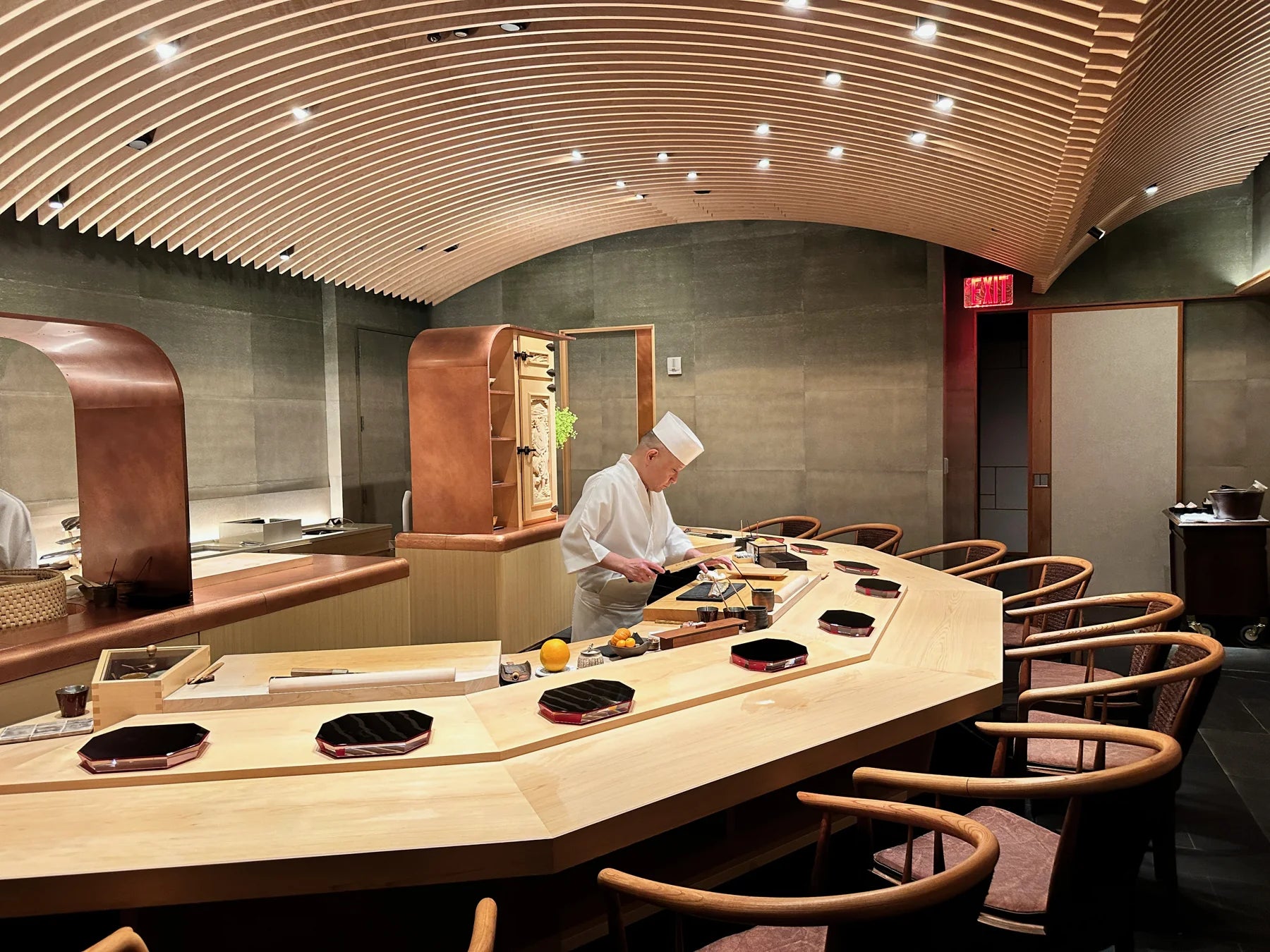
Chef-facing sushi counter
The chef-facing sushi counter is both a working surface and a point of direct service. From the guest's side, it may appear as a continuous wood or stone counter; from the chef's side, it can accommodate cutting boards, rice handling, tools, ingredient access, and a clear handoff area. Its arrangement changes between traditional sushi bars, omakase counters, and faster service formats. Distinguish the counter itself from the individual tables, display cases, and storage units positioned behind or within it. An integrated chef station describes an arrangement of equipment, not a universally standardized manufactured appliance.
Additional objects and equipment
Fixed preparation counter
A fixed preparation counter is a durable working surface behind or beside the sushi counter. It supports preparation that does not need to take place in the guest's view; it is not necessarily the guest-facing counter itself.
Removable counter cutting-board station
A removable cutting-board station is a replaceable board or fitted work insert at the chef's counter. The removable surface provides a defined cutting area without making the entire counter a cutting board.
Counter ingredient rail or well
An ingredient rail or well keeps prepared toppings, garnishes, and other mise en place within the chef's working reach. Some are refrigerated; others are simply fitted organizers or containers.
Dedicated handwashing station
A dedicated handwashing station is a handwash sink placed for staff access. It is separate in purpose from sinks used to wash food or equipment.
Knife storage rail or knife cabinet
A knife rail, block, or enclosed cabinet stores working blades near the sushi station. The mounting and protective arrangement differ from a display stand for serving knives.
Continue into the specialist reference: Sushi Bar Design, Counters & Chef Workstations.
Related ERS resources and equipment: Browse sushi restaurant equipment.
04 / ILLUSTRATED REFERENCE
Seafood Receiving, Cold Storage & Preservation
Before fish reaches the counter, it passes through receiving, storage, portioning, and preparation. The objects in this chapter include passive containers, powered refrigerators and freezers, transfer equipment, and instruments for measuring conditions. Each serves a different physical purpose. Neither an attractive fish tray nor an insulated tote should be mistaken for a complete temperature-control system.
Principal objects

OBJECT REFERENCE
Specialized low-temperature seafood freezer
A specialized low-temperature seafood freezer is built to operate at temperatures lower than those of many ordinary commercial freezers. It may take the form of a chest, upright cabinet, or dedicated fish-storage appliance. Its defining features are the manufacturer-rated operating range, insulation, and system intended for the specified application—not the color or brand of the cabinet. Certain seafood-handling processes require particular freezing conditions, but a freezer's appearance or label alone does not establish that a process or regulatory requirement has been met. Detailed technical selection belongs in the seafood-refrigeration guide.
Additional objects and equipment
Walk-in refrigerated storage room
A walk-in refrigerator is an enclosed cold room for larger quantities of seafood and other refrigerated inventory. Shelving, racks, and storage bins organize its interior; its job is bulk storage rather than countertop presentation.
Reach-in commercial refrigerator
A reach-in refrigerator is a cabinet with door-accessible refrigerated shelves. It keeps ingredients near a preparation area without the footprint of a walk-in room.
Commercial freezer
A commercial freezer is a cabinet or walk-in compartment designed for frozen inventory. Standard freezer storage and specialized low-temperature fish applications should not be treated as the same equipment specification.
Refrigerated preparation table
A refrigerated preparation table combines an accessible worktop with refrigerated drawers, doors, or ingredient compartments. Its function differs from an enclosed reach-in dedicated primarily to storage.
Ice-making machine
An ice-making machine produces ice in a specified form and volume for the operation. Ice may support beverage service, preparation, or properly designed ingredient-handling systems; its availability alone does not establish a safe holding method.
Receiving fish tote
A receiving fish tote is a durable container used to transfer seafood during delivery and receiving. Look for a washable body, secure handling points, and a size suited to the receiving process.
Insulated seafood shipping box
An insulated seafood transport box reduces heat gain during transfer. Unlike active refrigerated transport, insulation by itself supplies no mechanical cooling.
Lidded fish storage container
A lidded fish-storage container separates portions or inventory within controlled storage. The container's lid, interior surface, and drainage arrangement distinguish it from an open display plate.
Draining seafood tray
A draining seafood tray uses a perforated or raised insert to separate fish from liquid collecting below. The tray is a storage or handling accessory, not a cooling appliance.
Absorbent seafood preservation sheet
An absorbent fish-storage sheet is a disposable moisture-management layer placed with seafood according to its product instructions. It does not replace appropriate temperature controls or establish a universal shelf-life extension.
Refrigerated ingredient pan
A refrigerated ingredient pan holds prepared toppings, sliced garnishes, or other mise en place inside suitable refrigerated equipment. The pan itself is a removable food-contact container.
Probe thermometer
A probe thermometer uses an inserted sensor to check the temperature of an item. It differs from a display showing the air temperature inside a refrigerator.
Cold storage monitoring device
A cold-storage monitoring device measures or records equipment conditions, sometimes with alarms or data logging. It is separate from an occasional handheld product-temperature check.
Receiving / portioning scale
A receiving or portioning scale measures fish, rice, and prepared ingredients. Platform and compact countertop forms serve different weighing tasks.
Ice bin and dedicated ice scoop
An ice bin stores ice after production, while a dedicated scoop moves it without hand contact. The bin and scoop are distinct from the ice machine that makes the ice.
Continue into the specialist reference: Seafood Refrigeration, Freezers & Cold-Chain Equipment; Equipment Specifications & Food-Safety Controls.
Related ERS resources and equipment: Explore sushi restaurant equipment.
05 / ILLUSTRATED REFERENCE
Refrigerated Sushi Cases & Neta Display
The low case behind a sushi counter may be a powered refrigerated showcase, a traditional covered wooden neta box, or part of a different presentation system. These objects can look superficially alike when filled with ingredients, but their construction and operating purpose differ substantially. The distinction between visible display and primary storage is one of the most important identifications in the restaurant.
Principal objects
OBJECT REFERENCE
Countertop refrigerated sushi showcase
A refrigerated sushi showcase is a low, glazed countertop appliance designed to make sushi toppings or prepared products visible while providing a manufacturer-defined refrigerated display environment. Its recognizable features include a long glass viewing area, chef-side access, removable display plates, and a condenser located at one end in many self-contained models. Curved and straight glazing, case lengths, and left- or right-side condenser arrangements are variations within the same equipment family. A showcase is not automatically a replacement for primary cold storage: Hoshizaki, for example, specifies that its HNC sushi-case family is for refrigerated display, not overnight storage.
OBJECT REFERENCE
Traditional covered wooden neta box
A traditional wooden neta box is a compact, covered vessel for arranging sushi toppings at the counter. Its defining form is a low wooden box with a lid or transparent cover and, on some models, removable internal supports. It presents and organizes ingredients at the chef's station, but the box itself does not contain an integrated compressor or powered refrigeration system. It must therefore be distinguished from a refrigerated glass showcase; appropriate ingredient temperature control depends on the full setup, not the appearance of a wooden box.
Additional objects and equipment
Refrigerated open-front display merchandiser
An open-front refrigerated merchandiser is designed for customer-accessible packaged sushi or other retail foods. Its open presentation and traffic pattern differ from a chef-operated countertop sushi showcase.
Ice-assisted display tray or case
An ice-assisted display uses an ice bed, tray, or nested vessel to create a presentation arrangement. It is not the same as a powered refrigerated display case and needs its own handling and temperature controls.
Neta box removable tray or insert
A removable neta-box tray or insert supports ingredients inside a covered wooden box. Its shape and slatted or raised construction can distinguish it from an ordinary dining plate.
Case temperature gauge
A sushi-case temperature gauge displays a measured case condition. A built-in or accessory gauge is not, by itself, proof of the temperature of every ingredient inside the case.
Continue into the specialist reference: Sushi Display Cases & Refrigerated Neta Cases; Seafood Refrigeration.
Related ERS resources and equipment: Shop refrigerated sushi cases.
06 / ILLUSTRATED REFERENCE
Japanese Sushi Knives, Cutting Boards & Fish Tools
The professional sushi station brings together blades for different tasks, boards that support the work, and small tools for fish cleaning and precise plating. Distinctive Japanese knife silhouettes are not merely decorative. A long slicer, a heavy fish-breaking knife, and a thin vegetable knife have different roles. Small tools such as honenuki, meuchi, and sasara deserve equally accurate identification.
Principal objects
OBJECT REFERENCE
Yanagiba slicing knife
The yanagiba is a long Japanese slicing knife commonly associated with drawing clean slices of sashimi and fish toppings for nigiri. A narrow blade, long cutting edge, and pointed tip give it a recognizable silhouette; many traditional examples are single-bevel. The length allows a chef to complete a slice with fewer interruptions to the cut. It differs from the heavier deba used for fish breakdown and from the straighter, often square-tipped takobiki. Blade steel, handedness, grind, and length vary by maker, so the form should not be reduced to one universal specification.
OBJECT REFERENCE
Takobiki slicing knife
A takobiki is a long Japanese fish-slicing knife associated with sushi and sashimi work. Classic versions have a comparatively straight edge and a squared-off or truncated tip, making their silhouette distinct from the pointed yanagiba. Despite the name's association with octopus, the knife is not restricted to one species. Its thin slicing role differs fundamentally from the thicker deba's breakdown role. Regional and maker-specific forms vary; readers should identify the actual blade profile rather than assume every knife sold as a takobiki has identical geometry.
OBJECT REFERENCE
Deba fish butchery knife
The deba is a substantial Japanese knife used in fish preparation and breakdown. Its broad blade, weight, and relatively thick spine distinguish it immediately from long sashimi slicers such as the yanagiba and takobiki. Traditional forms commonly feature a single bevel, though modern alternatives exist. A deba supports controlled fish butchery and filleting; it is not a substitute for every delicate presentation cut, nor should every deba be assumed suitable for heavy bone cutting. Models differ in weight, size, and grind.
OBJECT REFERENCE
Fish-bone tweezers
Fish-bone tweezers, often called honenuki, grip small pin bones so they can be withdrawn from fish flesh. They usually have short, firm jaws rather than the long, delicate tips of plating tweezers. Different jaw angles and handle designs support different working preferences. A honenuki is a removal tool; it is not a knife, a fish scaler, or a device for cutting bones. Some specialist catalogs identify regional jaw profiles, but those variations belong within one object family.

OBJECT REFERENCE
Sushi cutting board
A sushi cutting board provides the defined work surface for fish slicing, portioning, vegetable preparation, and assembly at the chef's station. Boards may be wood or suitable commercial synthetic materials, and may be removable from the counter. Its function is more specific than a decorative wooden presentation plank: a cutting board is intended to withstand working blade contact and cleaning. Size, surface behavior, maintenance, and sanitation suitability depend on the actual material and equipment setup, so this encyclopedia identifies the family rather than prescribing one universal board.
Additional objects and equipment
Fugubiki slicing knife
The fugubiki is a long, slender slicing knife associated with very fine cuts of fugu and other delicate sashimi work. Its thin profile distinguishes it from a heavier fish-breaking knife.
Usuba vegetable knife
The usuba is a traditional Japanese vegetable knife with a tall, thin blade designed for controlled vegetable preparation. Its profile and traditional single-bevel construction distinguish it from the common double-bevel nakiri.
Mioroshi-deba fish filleting knife
A mioroshi-deba is a Japanese fish knife with a profile between a heavy deba and a more slender slicing or filleting form. It is still distinct from a long yanagiba used principally for presentation slices.
Sushikiri knife
A sushikiri is a specialized knife form associated with cutting prepared sushi, especially certain pressed or layered forms. It should not be used as an umbrella name for every knife a sushi chef carries.
Maguro knife
A maguro knife is a long specialist blade for portioning large tuna. Its unusual length and handling arrangements distinguish it from a standard counter-sized sashimi knife.
Gyuto chef knife
A gyuto is a versatile Japanese chef's knife used for general cutting tasks, including ingredients prepared in a sushi kitchen. It is not a specialized single-purpose sashimi knife.
Sujihiki slicer
A sujihiki is a slim, usually double-bevel slicing knife for long, clean cuts of meat or fish. It resembles a general slicer more than a traditional single-bevel yanagiba.
Nakiri vegetable knife
A nakiri is a rectangular-profile, usually double-bevel vegetable knife. Its blade shape resembles certain traditional vegetable knives, but its typical grind differs from a single-bevel usuba.
Japanese knife sheath
A saya is a fitted blade sheath, traditionally often wooden, that encloses a knife during storage or transport. It is different from the knife's handle or the sharpening accessories used to maintain the edge.
Whetstone
A whetstone is an abrasive sharpening stone used to maintain a knife edge. Coarse, medium, and fine stones serve different sharpening stages; a stone is not a substitute for proper blade-specific technique.
Fish-scale remover
A fish scaler has a toothed or textured head for removing scales from fish skin. It is a separate tool from the fine tweezers used to remove pin bones.
Shellfish opener
A shellfish-opening tool uses a thin blade or narrow tip to release flesh from a shell. Some Japanese specialist suppliers call a particular form mukibō; the exact term depends on the tool and shellfish.
Eel preparation pin
A meuchi is a pointed implement used to secure an eel during preparation. It functions as a holding pin, not a cutting blade or bone-removing tweezer.
Bamboo fish-cleaning brush
A sasara is a bundled-bamboo brush or scraper. In certain fish-preparation work it helps clear residue from cleaned interior surfaces; other sasara forms are also used for cleaning cookware.
Fish-bone extraction tool
A specialized bone-locating or extraction implement assists fish-bone work. Catalog terminology for some forms is inconsistent, so its physical job matters more than assigning an unverified Japanese label.
Fish shears
Fish shears are robust kitchen scissors used for trimming fins and selected preparation tasks. They differ from fine scissors for nori, herbs, or packaging.
Fish-slicing / plating tweezers
Fine plating tweezers position fish edges, garnishes, and small ingredients during presentation. Their narrow tips differ from the broad, gripping jaws of honenuki bone tweezers.
Continue into the specialist reference: Professional Sushi Knives, Cutting Boards & Sharpening; Craft & Objects of the Sushi Restaurant.
Related ERS resources and equipment: Explore commercial cutlery.
07 / ILLUSTRATED REFERENCE
Sushi Rice Equipment, Mixing & Holding Vessels
The rice system has several distinct stages: measuring, washing, cooking, seasoning, handling, and holding. The most easily confused objects are the traditional vessels. A hangiri is for turning rice with seasoning; an ohitsu is a covered holding vessel; a lacquer serving oke belongs to the presentation table. Modern cookers, washers, mixing machines, and measuring instruments occupy their own stages.
Principal objects
OBJECT REFERENCE
Hangiri rice mixing vessel
A hangiri is a broad, shallow wooden vessel used to turn cooked rice with sushi seasoning. Also called handai—and sometimes sold as sushi oke—it offers an open surface for mixing and releasing heat and moisture. Recognizable forms have a circular, low-sided body and external hoops or bands; wood species, hoop materials, diameter, and depth vary. The vessel is used for seasoning and spreading rice, not principally for holding finished rice throughout service. It must be distinguished from the deeper, covered ohitsu and from the lacquered sushi-serving oke, which is a presentation vessel despite the overlapping commercial name.
OBJECT REFERENCE
Ohitsu rice-holding vessel
An ohitsu is a covered vessel intended for holding cooked rice after preparation. Its relatively deep body and fitted lid distinguish it from the wide, shallow hangiri used for turning rice with seasoning. Traditional versions are wooden, while commercial holding containers also appear in other constructions. Edobitsu and meshibitsu occur as related rice-holding terms in some contexts; none should be assumed to mean exactly the same shape in every catalog. Komebitsu is more commonly used for uncooked-rice storage and should not be automatically substituted for ohitsu.

OBJECT REFERENCE
Shamoji rice paddle
A shamoji is a rice paddle with a broad, usually flat face for transferring, spreading, portioning, and handling cooked rice. Wood, plastic, and textured nonstick designs are common material variants. Unlike a ladle, its flat head is meant to lift or separate rice rather than scoop liquids. Large paddles used in hangiri work are related but can have different proportions from small service paddles. The paddle is identifiable by its short handle and broad blade-like working surface, not by a fixed size or material.

OBJECT REFERENCE
Commercial rice cooker
A commercial rice cooker is a powered appliance that cooks measured uncooked rice using a controlled heating process. Commercial models vary in batch capacity, energy source, pot construction, controls, and cooking method. It must be distinguished from a holding warmer, which primarily maintains already cooked rice. Cooking rice for sushi adds workflow considerations around transfer, seasoning, cooling, and service; the cooker alone is only one part of that system. ERS's separate rice-equipment research provides detailed cooker comparisons and measured production data.

OBJECT REFERENCE
Rice-washing machine
A rice-washing machine automates the washing and rinsing of measured uncooked rice before cooking. Its physical features include a rice-loading area, water flow, an agitation or circulation mechanism, and a discharge arrangement, depending on the model. It performs a different stage of production from a cooker, rice mixer, or nigiri former. Manufacturers supply manual, semi-automatic, and automated systems with different capacities; no single design represents the category. Its role in a sushi operation is preparation of raw rice rather than finished shari shaping.
Additional objects and equipment
Electric rice holding warmer
An electric rice warmer is intended mainly to hold cooked rice using an active heating system. Do not mistake it for a rice cooker, or assume the same holding method suits every seasoned sushi-rice workflow.
Non-electric insulated rice container
An insulated rice-holding container retains heat without a powered heater. A lidded insulating body distinguishes it from an electric warmer and from the wooden hangiri used for seasoning.
Rice measuring vessel
A rice-measuring cup or vessel portions uncooked rice before washing and cooking. Manufacturer-supplied rice cups may use a different capacity convention from ordinary U.S. measuring cups.
Uchiwa rice cooling fan
An uchiwa is a rigid hand fan that can be used while turning sushi rice to help move air across the surface. It is a simple manual accessory, not a rice-cooling machine.
Rice cooking insert
The removable rice-cooking insert or inner pot is the vessel heated inside a cooker. Its dimensions and material are model-specific, so compatibility must be verified against the actual appliance.
Sushi vinegar measuring/dosing jug
A sushi-vinegar measuring or dosing jug holds and pours a prepared seasoning mixture. Markings or spouts can help distribute a measured amount, but the jug itself does not mix rice.
Shari holding container
A shari-holding container keeps seasoned sushi rice available near the assembly station. It should be distinguished from the hangiri where rice is initially seasoned and from a generic heated soup container.
Rice spreading spatula
A large rice-spreading spatula helps fold and separate rice across a larger vessel or mixing surface. Its broader working end distinguishes it from a small table-service paddle.
Rice cooling or aeration fan
A rice aeration or cooling fan circulates air during preparation. Whether handheld or powered, its purpose is airflow; it does not wash, cook, or automatically season rice.
Sushi rice pH measurement device
A sushi-rice pH measuring instrument reads acidity from a prepared sample when a documented rice-acidification process calls for it. The instrument does not, by itself, establish that a process is approved or compliant.
Continue into the specialist reference: Sushi Rice Equipment, Hangiri & Shari Production; Commercial Rice Equipment Research.
Related ERS resources and equipment: Read ERS commercial rice research · Shop rice cookers and warmers.
08 / ILLUSTRATED REFERENCE
Nori, Condiments, Garnishes & Mise en Place
Many of a sushi chef's most distinctive implements are compact: a box protecting nori, a fine grater, a divided garnish pan, precise chopsticks, and brushes for finishing sauces. These are preparation tools rather than dining accessories. Their shape and surface reveal the job they perform, particularly when similar-looking tools have very different applications.
Principal objects
OBJECT REFERENCE
Nori storage container
A nori storage container protects sheets of dried seaweed at the sushi station from surrounding air and moisture. Typical forms are lidded rectangular boxes sized for sheets, though materials, seals, and internal organizers vary. Its function is protected dry storage, not heating or toasting; a nori warmer or roaster is a different device. This distinction becomes especially visible in hand-roll service, where sheets may be stored, portioned, and handed off rapidly. The container is identifiable by its sheet-oriented shape and protective lid rather than its exterior decoration.

OBJECT REFERENCE
Sharkskin wasabi grater
A sharkskin grater is a fine, textured surface traditionally associated with grating fresh wasabi into a soft paste. It often consists of treated sharkskin fixed over a wooden board or frame. Its delicate working surface distinguishes it from a stamped-metal grater with clearly raised cutting teeth. Other grating surfaces are used commercially, so the term should identify the physical construction rather than imply that every wasabi grater uses sharkskin. This is a condiment-preparation object, not a sushi knife or a general plate.

OBJECT REFERENCE
Japanese metal grater
An oroshigane is a Japanese-style metal grater with an abrasive face or raised teeth used to grate ingredients such as daikon and aromatic condiments. Copper, stainless steel, and other materials appear in commercial versions. Its metal cutting surface distinguishes it from a sharkskin wasabi grater, even though both may appear in a Japanese chef's prep area. The exact fineness and suitability for particular ingredients depend on the grater's teeth. A related draining tray may form a set, but it is not a separate grating surface.
Additional objects and equipment
Sushi sauce pot and brush pair
A small tareire-style sauce container and a separate hake-style application brush may be used together for glazing or finishing. They are two physical objects, not interchangeable names for one tool.
Yakumi ingredient pan
A yakumi pan or divided container holds aromatic garnishes and condiments within reach. Yakumi describes the ingredients; it is not one universal standardized container design.
Nori cutting tool
Nori cutters range from simple scissors to dedicated guides or strip cutters. Their job is to divide dried sheets, not protect them against humidity.
Sushi topping preparation tray
A sushi topping-preparation tray separates prepared neta portions at the working station. It differs from a decorative neta display plate used for presentation inside a case.
Foodservice sauce pourer
A counter sauce pourer directs soy-based sauces or dressings into smaller containers or onto food. Its spout and grip distinguish it from a dipping dish used by guests.
Suribachi mortar
A suribachi is a Japanese grinding bowl with a textured interior. Its ridges work with a pestle to crush or combine ingredients; it is distinct from an ordinary smooth-sided serving bowl.
Surikogi pestle
A surikogi is the pestle used with a suribachi. Wood is common, and the shape is designed for grinding against the bowl's ridged interior.
Plating chopsticks
Moribashi and manabashi are names encountered for fine-tipped chef's chopsticks used for precise handling and plating. The exact form and use vary; identify the pictured tool rather than treating all chopsticks as identical.
Cooking chopsticks
Saibashi are longer cooking chopsticks for turning or handling food during preparation. Their job differs from fine plating chopsticks or short dining pairs.
Plating tweezers
Plating tweezers grip small garnish pieces, herbs, or toppings. Their pointed tips differ from heavier fish-bone tweezers designed to pull pin bones.
Nori warming/toasting device
A nori toasting or warming device applies heat to seaweed sheets in certain workflows. A roaster is not the same item as a sealed nori storage box, and not every hand-roll counter uses one.
Continue into the specialist reference: Nori Storage, Neta Preparation & Sushi Mise en Place.
Related ERS resources and equipment: Browse sushi supplies.
09 / ILLUSTRATED REFERENCE
Manual Sushi-Making Tools, Mats, Molds & Presses
A flexible makisu shapes a roll by hand; a rigid oshizushi press compresses layered sushi; a nigiri mold shapes rice into individual portions. All three work without an electric drive, yet their output and construction are distinct. Manual forms should be identified by the sushi shape they help produce rather than grouped indiscriminately as “sushi molds.”
Principal objects
OBJECT REFERENCE
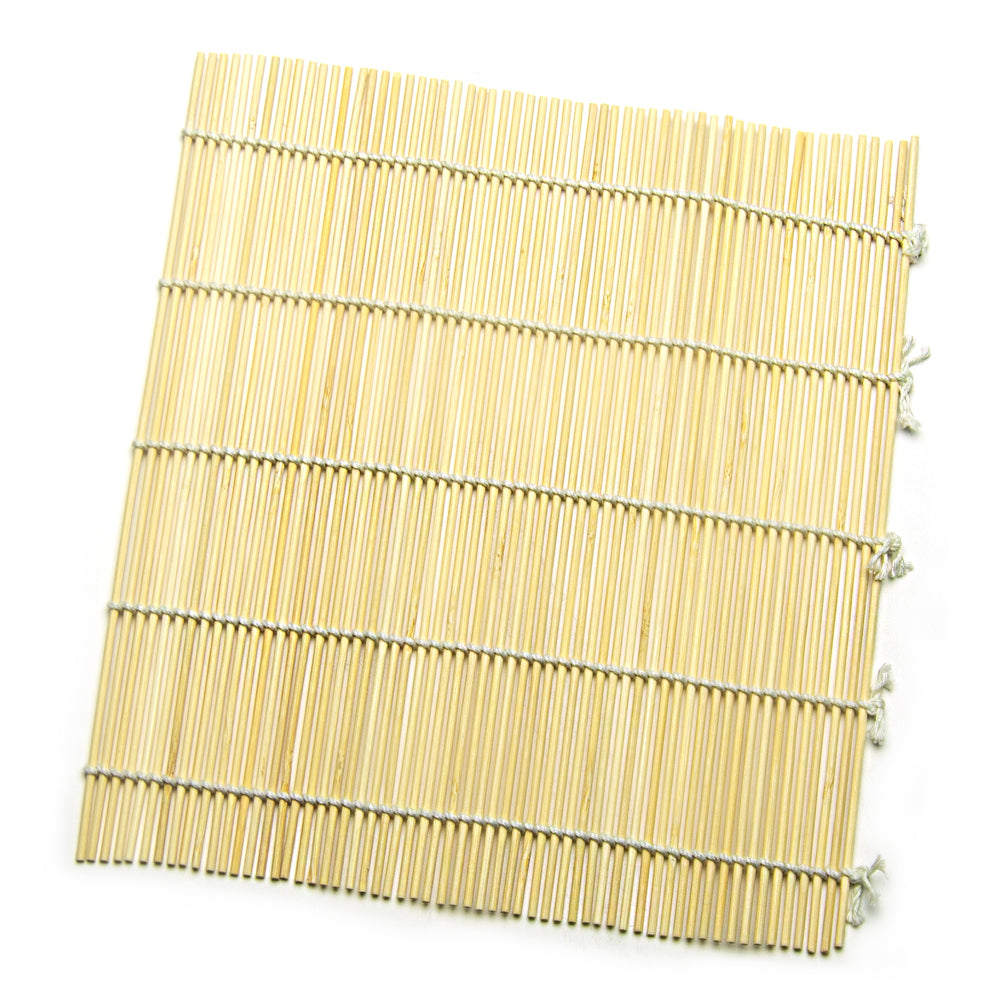
Makisu sushi rolling mat
A makisu is a flexible sushi rolling mat, traditionally made from slender bamboo slats held together with thread. The mat bends around a filling and rice arrangement to help the chef shape a maki roll evenly. Different slat thicknesses, spacing, overall dimensions, and synthetic alternatives create recognizable variations within the same family. It is not the same as a rigid box press for oshizushi or a machine that forms a roll mechanically. A makisu is identified by its repeated parallel slats and flexible tied construction.
OBJECT REFERENCE
Oshizushi box press
An oshizushi box press compresses sushi rice and toppings into a defined rectangular or other molded shape. Traditional wooden box-and-plunger designs are recognizable by their fitted frame and pressing lid; battera presses are a closely related specialized form. This is a manual pressed-sushi tool, not a flexible makisu for rolling or a powered nigiri-forming machine. Sizes, wall heights, materials, and release mechanisms differ by maker, while the central function remains shaping rice and toppings under pressure.
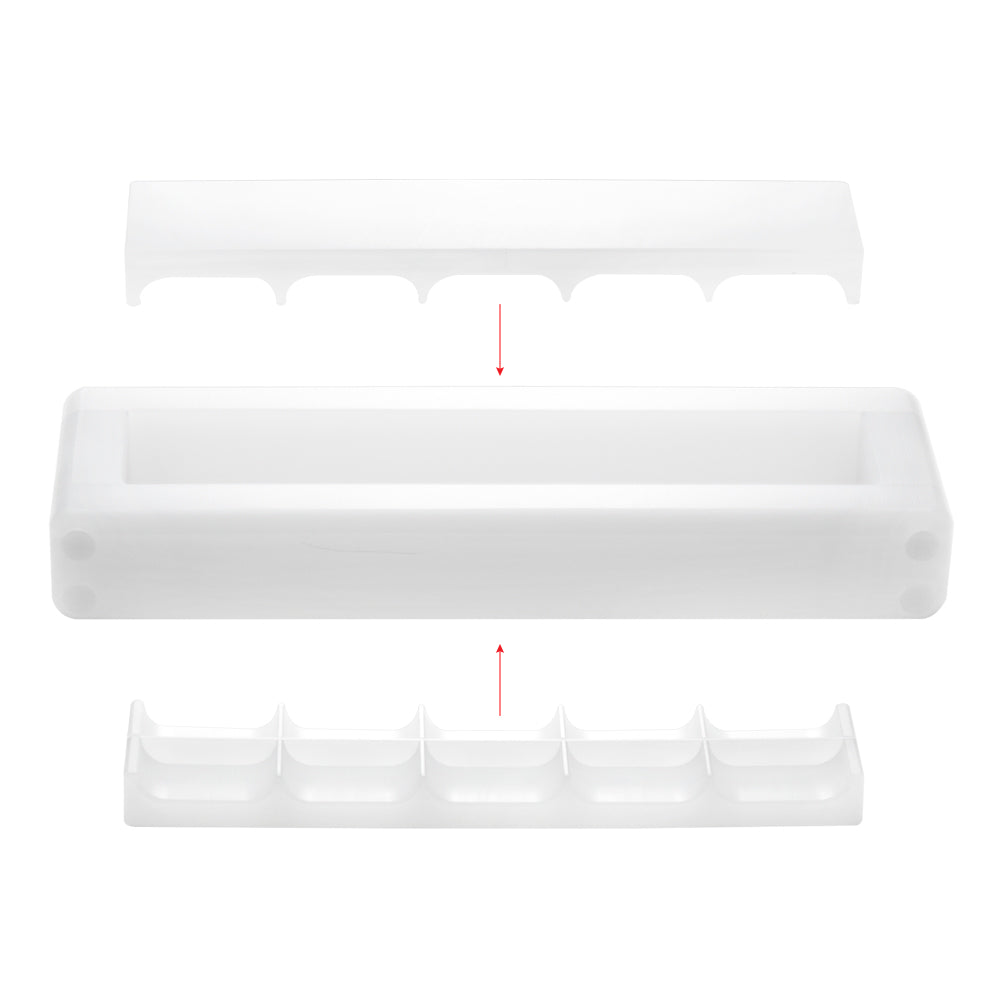
OBJECT REFERENCE
Manual nigiri shaping mold
A manual nigiri mold is a handheld or countertop cavity form used to create repeatable portions of nigiri rice. It may have individual wells, a removable release piece, or a simple pressing arrangement. Unlike a powered nigiri former, the portioning and shaping effort remains manual. A mold produces shaped rice portions, not a completed piece with fish applied. Materials and cavity numbers vary among commercial models, so the principal distinction is manual shaping rather than one fixed silhouette.
Additional objects and equipment
Gunkan rice mold
A gunkan rice mold helps shape rice bases for gunkan-style pieces. It is a manual aid and should not be confused with an automatic gunkan-forming module.
Temaki shaping guide
A temaki guide helps position rice and fillings for a cone-shaped hand roll. Not every temaki chef uses a dedicated guide; the object is conditional to the workflow.
Manual sushi-roll cutting guide
A manual sushi-roll cutting guide presents evenly spaced slots or marks for portioning a finished roll. It guides a separate blade rather than cutting automatically.
Manual sushi rolling tray/former
A manual rolling tray or former supports a specified rolled shape without an electric drive. The frame should be identified by its actual geometry, not described as a sushi robot.
Onigiri/musubi mold
An onigiri or musubi mold forms compact rice portions, often triangles or rectangles. It belongs to a neighboring rice-product family rather than being a standard nigiri mold.
Inari sushi stuffing or shaping aid
An inari filling or shaping aid helps place seasoned rice into a prepared tofu pocket. It differs from molds that compress a rice base for nigiri or gunkan.
Manual sushi roll slicer
A hand-operated sushi roll slicer positions or cuts a completed roll in repeatable segments. Designs with integrated blades differ from simple slot guides used with a separate knife.
Continue into the specialist reference: Manual Sushi Preparation Tools & Specialty Utensils.
Related ERS resources and equipment: Browse sushi-making supplies.
10 / ILLUSTRATED REFERENCE
Sushi Robots & Automated Production
“Sushi robot” is a commercial umbrella term rather than one universal machine. A nigiri former produces discrete rice portions; a rice sheeter creates a flat layer; a maki former shapes a roll; a cutter portions one. Mixers, portion dispensers, and integrated production lines perform still other jobs. To recognize a machine correctly, look at what goes in, what operation happens, and what comes out.
Principal objects
OBJECT REFERENCE
Automatic nigiri rice former
An automatic nigiri rice former portions and shapes cooked sushi rice into repeated nigiri-sized bases. Look for a rice hopper and a shaping or discharge area that delivers separate oblong portions; machine layouts differ by manufacturer. The equipment handles rice formation, not automatically every topping, garnish, or finishing step. Its output is distinct from the broad flat rice layer produced by a sheeter and from the cylindrical result of a roll-forming machine. Shaping attachments and portion settings are model-specific, so a photograph of the actual machine output is the best identifier.
OBJECT REFERENCE
Automatic sushi rice sheeter
An automatic sushi rice sheeter spreads seasoned rice into a flattened, relatively even sheet for use in roll production. The identifying output is a rice mat or layer rather than separate nigiri portions or a completed cylinder. Mechanisms, sheet width, and associated transfer units differ among models. A sheeter may be paired with rolling equipment, but should not be labeled a complete maki-making machine merely because it supplies the rice layer. For a representative commercial example, AUTEC identifies its ASM895 family as rice-sheet equipment.
OBJECT REFERENCE
Automatic maki roll former or wrapper
An automatic maki former or wrapper shapes a prepared combination of rice, nori, and fillings into a roll, using a forming mechanism suited to the manufacturer's system. Its distinguishing output is a shaped roll rather than an unrolled rice sheet. Some machines include interchangeable forming units, while others require separate sheeting, rolling, or cutting stages. Identify the machine by its documented operations and final output, not by a generic "sushi robot" label. It also differs from a roll cutter that only portions a roll already formed.

OBJECT REFERENCE
Automatic sushi roll cutter
An automatic sushi roll cutter divides a completed maki roll into repeated pieces. Typical systems use a guided cutting mechanism and a feed arrangement; blade style, allowable roll size, and cleaning parts vary by model. The machine does not necessarily sheet rice or roll ingredients. Its identifying action occurs after a roll has already been formed. A fixed manual slicing guide belongs to the hand-tool category, while an automated cutter carries out the cutting cycle mechanically.

OBJECT REFERENCE
Automated sushi rice mixer
An automatic sushi rice mixer distributes seasoning through cooked rice using a controlled turning or mixing motion. Many systems also include a cooling or airflow arrangement, but actual functions vary. It occupies the rice-seasoning stage after cooking and before shaping. Do not confuse it with a rice-washing machine that works on uncooked grain, a cooker that heats rice, or a nigiri former that shapes prepared shari. The mixing vessel, paddles, guard, and transfer points are identifying features to show in equipment photography.

OBJECT REFERENCE
Industrial sushi production line
An industrial sushi production line coordinates several operations—such as rice preparation, forming, topping placement, cutting, conveying, or packaging—across connected machines. Its defining characteristic is integration, not simply a larger individual sushi robot. A line can be configured for particular products and throughputs, so photographs should label the functions actually present. No single conveyor, forming module, or packaging unit represents every industrial line. Central kitchens and retail sushi operations may use only selected stages rather than a complete automated system.
Additional objects and equipment
Automated rice portion dispenser
An automated rice dispenser meters prepared rice into bowls, trays, or other portions. Its output is a measured amount, not necessarily a shaped nigiri body or flat sheet.
Automated onigiri or musubi former
An automated onigiri or musubi former shapes prepared rice into a specified non-nigiri form. It may share rice-handling technology with sushi equipment while producing a different finished shape.
Nigiri transfer or plating unit
A nigiri transfer or plating unit moves shaped rice portions onto a tray or service plate. It is a separate function from shaping the rice itself, and may be an accessory or integrated module rather than a standalone machine.
Roll-forming cassette or interchangeable unit
A roll-forming cassette is a removable, machine-specific forming unit that helps set a roll shape or size. It is a component of a compatible machine—not a complete independent sushi maker.
Continue into the specialist reference: Sushi Robots & Machines; Production Workflow & Capacity.
Related ERS resources and equipment: Explore sushi robots and machines.
11 / ILLUSTRATED REFERENCE
Hot Kitchen Equipment & Specialty Finishing
A sushi restaurant's menu may include tamago, tempura, grilled fish, soups, and seared items. These dishes bring conventional commercial cooking equipment into the sushi kitchen alongside Japanese specialty cookware. The rectangular tamagoyaki pan is particularly recognizable; most other appliances need only enough explanation to identify their function and place in the kitchen.
Principal objects
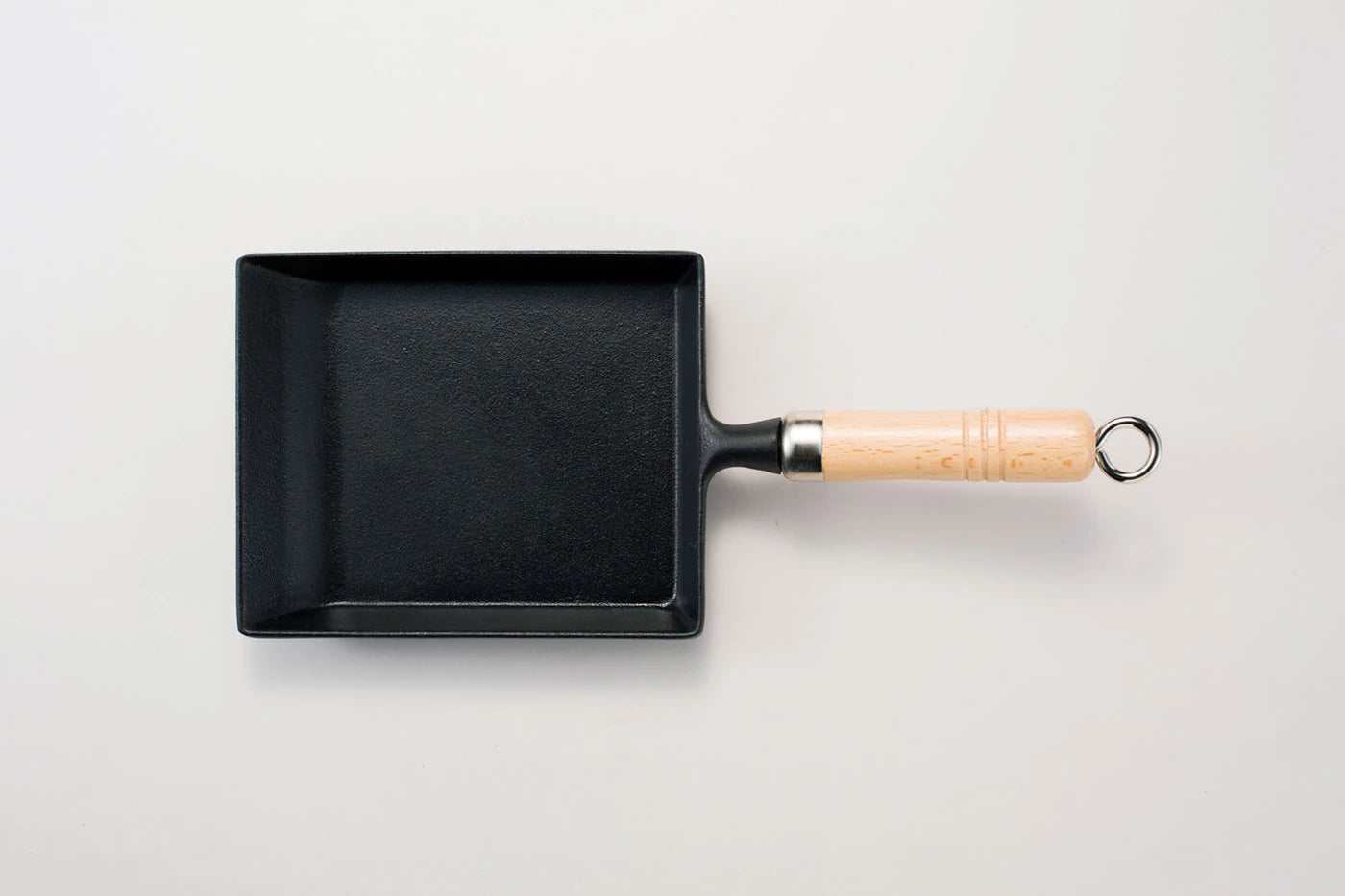
OBJECT REFERENCE
Tamagoyaki rectangular pan
A tamagoyaki pan is a rectangular or square frying pan used to make layered Japanese omelet. Its straight sides and flat, angular cooking surface distinguish it from an ordinary round skillet. Copper, coated metal, and other constructions exist, with handle orientation and dimensions varying by maker. It is a kitchen preparation tool for tamago and related menu items, not a sushi-rice mold or serving tray. Some operations use a dedicated spatula sized to lift or turn the layered egg as it cooks.
Additional objects and equipment
Culinary finishing torch
A culinary finishing torch provides a controllable flame for selective surface searing, including some aburi-style preparations. It should not be confused with a built-in grill or broiler.
Commercial tempura fryer
A commercial tempura fryer heats oil for fried supporting menu items. Tank capacity, filtration, and ventilation requirements belong in the hot-kitchen equipment guide, not this identification entry.
Countertop induction burner
A countertop induction burner heats compatible cookware through an electromagnetic cooktop. It is portable or modular equipment, unlike a permanent gas range.
Charbroiler or Japanese grill
A charbroiler or Japanese grill provides direct high-heat cooking for fish or other menu items. Open-grid, infrared, and specialty charcoal arrangements are different constructions within a broad grilling family.
Steam oven or commercial steamer
A commercial steamer or steam oven heats food with steam, with equipment styles ranging from compartment steamers to combi ovens. It is ancillary to many sushi menus rather than uniquely a sushi machine.
Yukihira saucepan
A yukihira saucepan is a Japanese-style multipurpose saucepan, often identifiable by its light metal body and pouring lips. It belongs to sauce and broth preparation rather than sushi shaping.
Specialty tamagoyaki spatula
A tamagoyaki spatula or turner has a blade suited to lifting layered omelet inside a rectangular pan. Its specific width and material vary with the cooking vessel.
Continue into the specialist reference: Hot Kitchen Equipment for Sushi Restaurants.
Related ERS resources and equipment: Browse sushi restaurant equipment.
12 / ILLUSTRATED REFERENCE
Traditional Sushi Servingware & Wooden Presentation
Sushi presentation uses a vocabulary of shapes: a raised geta, an elongated boat, an arched bridge, a round serving oke, a flat plank, or a small stand for a hand roll. The physical silhouette is often the fastest way to identify an unfamiliar item. Material and finish matter, but they do not turn every size or color into a different kind of vessel.
Principal objects
OBJECT REFERENCE
Sushi geta raised serving tray
A sushi geta is a low, elevated serving platform associated with presenting nigiri, maki, or other pieces at the sushi counter or table. Its recognizable form is a relatively flat tray supported by short feet or blocks, often in a rectangular footprint. Wood, bamboo, lacquered and modern commercial versions vary in finish and construction. The name refers to its raised-platform appearance; it should not be confused with the long hull of a sushi boat, an arched bridge display, or a round lacquer serving oke. Sizes describe product dimensions, not a fixed universal number of pieces.
OBJECT REFERENCE
Sushi boat presentation vessel
A sushi boat is a boat-shaped vessel for arranging sushi or sashimi into a lengthwise presentation. Some commercial designs have wood or lacquered hulls, decorative ends, removable inserts, or net-like supports; melamine and other manufactured alternatives also exist. The elongated hull silhouette distinguishes a boat from a flat geta platform or curved bridge. A boat is primarily a serving and presentation object, not evidence of how the food was prepared or preserved. Material, usable food-contact surfaces, and maintenance are product-specific.
OBJECT REFERENCE
Sushi bridge display vessel
A sushi bridge is an elongated presentation platform built around a visible arched or bridge-like form. It creates height and a distinctive service silhouette, frequently in wood or wood-look construction. It differs from the level raised deck of a geta and the concave hull of a sushi boat. Commercial bridges can have supports, rails, or flat serving surfaces integrated into the span. Their visual architecture is the category-defining feature; any advertised serving capacity belongs to an actual product, not to the generic object name.
OBJECT REFERENCE
Lacquered sushi-serving oke
A lacquered sushi-serving oke is a shallow, usually round or barrel-like presentation vessel used for an assortment of sushi. Commercial versions may have black, red, or decorative finishes and can be lacquered wood or molded synthetic constructions, depending on the product. Although many American catalogs call these vessels "sushi oke," their service function differs from a wooden hangiri used to season rice. Their recognizable features are a broad serving interior and presentation finish rather than a cooking or seasoning surface. Do not assume all pieces marketed as lacquerware use the same underlying substrate.
Additional objects and equipment
Chirashi serving vessel
A chirashi serving vessel is a bowl, tub, or lidded container sized and shaped for a bed of sushi rice with toppings. Its purpose is finished food presentation, not seasoning a full batch of rice.
Bamboo sushi serving tray
A bamboo sushi tray uses woven or assembled bamboo as a serving support. Trays differ in rim height, weave, liner needs, and whether food directly contacts the surface.
Wooden sushi presentation plank
A wooden presentation plank is a flat or gently raised board for finished sushi. Unlike a sushi cutting board, it is chosen for service presentation rather than routine knife work.
Sashimi presentation stand
A sashimi presentation stand raises a serving vessel, plate, or arrangement above the table. It may be tiered or sculptural, but remains a display support rather than a refrigeration device.
Temaki hand-roll stand
A temaki stand holds finished cone-shaped hand rolls upright or at an angle. It is a service accessory, not a tool required to form the hand roll.
Decorative rock/stone serving plate
A stone or stone-look presentation plate provides a distinctive surface for finished food. Natural stone and molded alternatives require different handling and food-contact considerations.
Lacquer service tray
A lacquer service tray carries cups, bowls, utensils, or finished servings. It is a broader service object; not every lacquer tray is specifically a sushi oke.
Continue into the specialist reference: Traditional Sushi Servingware; The Craft & Objects of the Sushi Restaurant.
Related ERS resources and equipment: Explore sushi geta · Explore sushi boats.
13 / ILLUSTRATED REFERENCE
Sushi Bar Display Accessories, Neta Plates & Decoration
Some of the smallest sushi objects are made for presentation rather than preparation. Plates inside neta displays, leaf-shaped dividers, garnish supports, risers, and decorative fences organize how ingredients or finished food appear. Their function is visual or structural; they are not refrigeration substitutes or universal food-safety devices.
Principal objects

OBJECT REFERENCE
Neta display plate
A neta display plate is a removable dish or support used to arrange fish toppings and other prepared ingredients inside a sushi showcase or neta presentation area. Some are shallow porcelain trays, while others use raised or draining inserts depending on the display system. Its defining function is ingredient presentation within the chef-facing display, not individual guest dining service. Dimensions and compatibility vary with the actual case or box. It should be differentiated from the refrigerated appliance surrounding it and from a regular sashimi plate served to a guest.
Additional objects and equipment
Decorative sushi baran divider
Baran is commonly used for the leaf-shaped divider found in sushi and bento arrangements, often manufactured from plastic. It separates or visually frames pieces; a synthetic divider is not the same as a fresh leaf.
Natural decorative bamboo leaf
Natural bamboo leaves and related leaves may be used as decorative elements in Japanese food presentation. Haran is associated with the leaf tradition underlying modern baran, but naming and plant materials vary by context.
Sashimi garnish bed/support
A sashimi garnish bed or support helps arrange shredded garnishes and fish slices at different heights. Its form may be a simple tray insert or a specific sculpted support.
Decorative bamboo presentation fence
A bamboo presentation fence is a short decorative divider or railing used to frame part of a serving arrangement. It is a presentation object, not a food-storage barrier.
Sashimi display riser or pedestal
A sashimi riser or pedestal elevates part of a display above its base plate. It differs from a full-length sushi bridge or boat.
Ice display support mold
An ice-display mold or support forms and positions ice used in a presentation arrangement. Its geometry does not, by itself, establish safe seafood holding conditions.
Decorative sushi skewers or picks
Decorative sushi skewers or picks secure small presentation elements or individual portions. Material, food contact, and intended use vary by product.
Continue into the specialist reference: Sushi Bar Presentation, Display Accessories & Decorations.
Related ERS resources and equipment: Browse sushi specialty supplies.
14 / ILLUSTRATED REFERENCE
Sushi Dining Tableware & Utensils
The objects on a guest's table—plates, soy-sauce dishes, chopsticks, rests, soup bowls, and serving utensils—deserve accurate names, but this encyclopedia is not the place to repeat a full dinnerware buying guide. The definitions here identify the forms. Materials, assortment planning, presentation levels, and purchasing decisions belong to ERS's dedicated sushi and omakase tableware reference.
Additional objects and equipment
Sushi dining plate family
Sushi dining plates range from narrow rectangular plates to broad presentation dishes for nigiri, maki, and mixed assortments. They are tableware rather than cutting equipment or refrigerated display inserts.
Sashimi serving dish
A sashimi serving dish is a guest-facing plate or platter for sliced fish and garnishes. Its role differs from a neta plate inside a refrigerated display case.
Soy-sauce dipping dish
A soy-sauce dipping dish is a small, shallow tabletop vessel for individual dipping or seasoning. It may be round, square, or compartmented.
Sushi chopsticks
Sushi dining chopsticks are eating utensils offered at the counter or table. Reusable and disposable materials are separate purchasing families; neither is the same as long cooking or plating chopsticks.
Chopstick rest
A chopstick rest supports the tips of eating chopsticks between uses, keeping them off the dining surface. Form and material are part of tabletop presentation.
Small appetizer dish
A small appetizer dish—often grouped commercially with kobachi-style pieces—holds a side, pickle, or tasting portion. It is smaller than a main sushi serving platter.
Japanese soup bowl
A Japanese soup bowl serves accompanying soup, sometimes with a fitted lid. It is a dining vessel rather than a rice-mixing or holding tub.
Japanese soup spoon
A Japanese soup spoon is a tabletop utensil for broth or soft dishes. Its shape and material vary across Japanese and broader Asian service styles.
Tabletop soy-sauce dispenser
A tabletop soy-sauce dispenser is a pourable bottle or pot for guest seasoning. It differs from the back-of-house tare container and application brush.
Bento serving box
A bento serving box organizes a complete meal into one or more compartments. Reusable tableware and disposable takeout forms should be identified separately.
Serving chopsticks
Serving chopsticks are utensils used to transfer food to plates or between service containers. They are distinct from guests' individual dining chopsticks.
Continue into the specialist reference: Sushi & Omakase Restaurant Tableware Guide.
Related ERS resources and equipment: Read the Sushi & Omakase Tableware Guide · Browse sushi serviceware.
15 / ILLUSTRATED REFERENCE
Sake, Tea & Complementary Beverage Service
Sake service includes both appliances and traditional vessels. The equipment that warms and dispenses a beverage is different from an appliance that heats a filled tokkuri; a tokkuri is different from the cup or masu used to drink it. Tea preparation has its own equipment and vessel vocabulary. Identifying the form and its job prevents these categories from collapsing into generic “sake sets” or “tea supplies.”
Principal objects
OBJECT REFERENCE
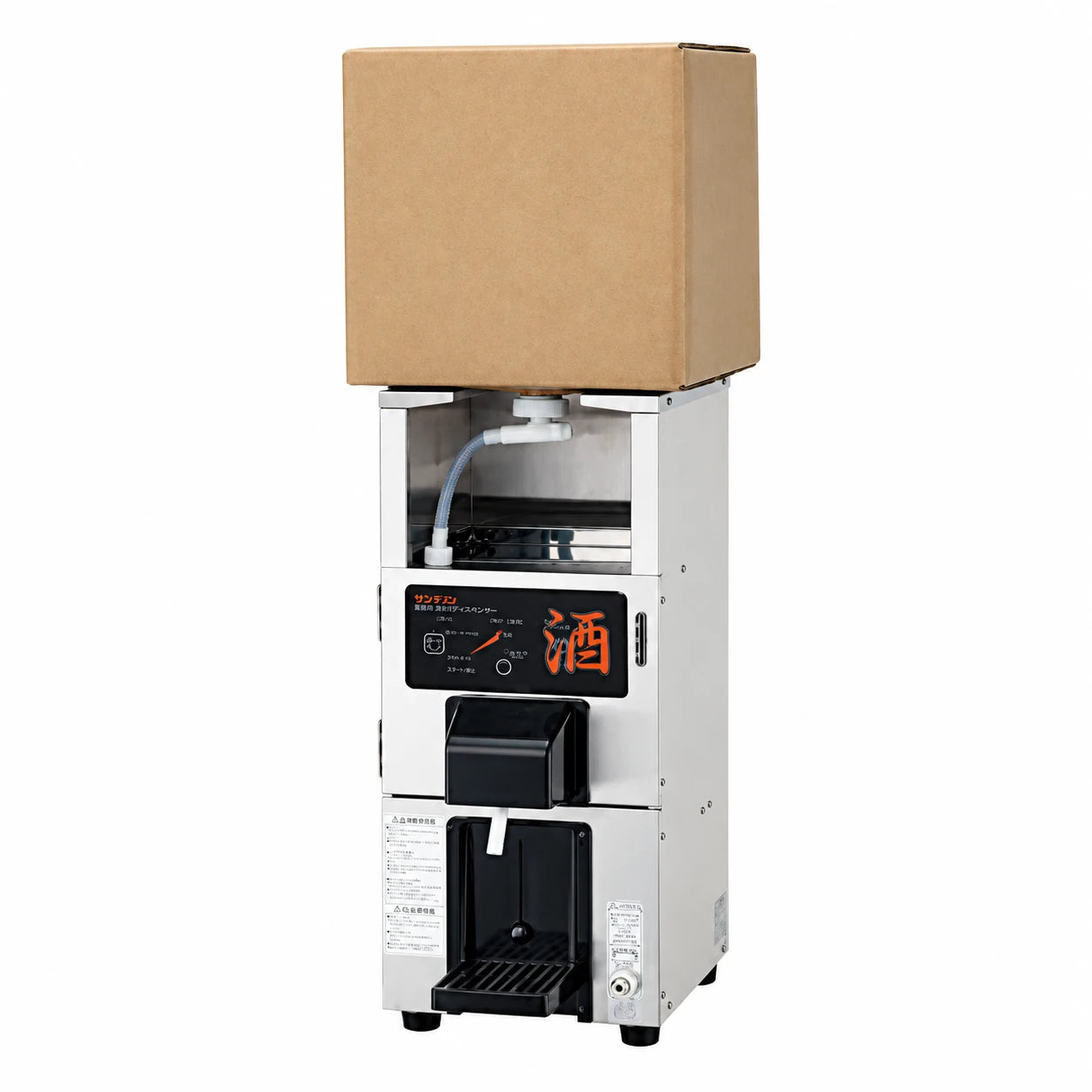
Sake warmer-dispenser
A sake warmer-dispenser is a commercial appliance that heats sake and dispenses it into a serving vessel, often through a dedicated outlet or tap. Depending on the manufacturer, sake may be supplied from a bottle or reservoir, then warmed along a defined pathway before dispensing. Its distinguishing job is both heating and delivery: the operator receives warmed sake from the machine. It is different from a vessel warmer, which heats sake already inside a tokkuri or other container. Capacity, temperature control, and compatible containers are model-specific; the appliance family should be identified by its actual flow of liquid.
OBJECT REFERENCE
Sake vessel warmer
A sake vessel warmer heats sake after it has been poured into a bottle, flask, or other suitable serving container. Familiar examples use a heated water bath or a fitted chamber sized for particular vessels. The guest-facing vessel goes into or onto the warmer, rather than receiving sake dispensed from a separate machine tap. This distinguishes it from a sake warmer-dispenser. The vessel material and the model's heating method matter in real use; not every glass or ceramic bottle is automatically compatible with every warmer.

OBJECT REFERENCE
Tokkuri sake serving bottle
A tokkuri is a Japanese flask used for pouring sake into individual cups. Common silhouettes include a narrowed neck and broader body, but ceramic, glass, and other constructions vary widely. It is a serving vessel, not necessarily a bottle in which sake was manufactured or sold. A tokkuri can be associated with warm or chilled service depending on the actual beverage and service arrangement. Distinguish it from the drinking vessels—ochoko, guinomi, or masu—into which sake is poured.
OBJECT REFERENCE
Masu sake vessel
A masu is a square wooden box traditionally associated with measuring rice and serving sake. In restaurant beverage service it is recognizable by straight sides, an open square mouth, and its wooden construction, sometimes accompanied by an inner glass. It differs visibly from the rounded ceramic ochoko, guinomi, or flask-shaped tokkuri. Modern restaurant versions may have markings or finishes; verify the product's intended food-contact and beverage use rather than assume all display masu are interchangeable with drinking vessels.

OBJECT REFERENCE
Kyusu Japanese teapot
A kyusu is a Japanese teapot for preparing and pouring tea, often recognizable by a side handle, though rear-handled and top-handled forms exist. Ceramic, metal, and other materials are used, and many designs incorporate a strainer near the spout. Its primary function is tea preparation, not sake dispensing. It differs from a yunomi, which is a drinking cup, and from an electric hot-water dispenser that supplies water without steeping leaves.
Additional objects and equipment
Ochoko sake cup
An ochoko is a small sake drinking cup, commonly paired with a tokkuri. Designs and capacities vary; there is no single universally binding volume that defines the name.
Guinomi sake cup
A guinomi is another sake drinking cup form, often somewhat more substantial than a small ochoko. The naming overlaps in practice, so identify the actual cup rather than impose a rigid volume cutoff.
Sake chiller
A sake chiller cools sake bottles or serving vessels for chilled beverage service. Ice-bath and purpose-built equipment styles should be distinguished from a warmer.
Sake carafe
A sake carafe is a pouring vessel, often glass, used to serve chilled or room-temperature sake. It differs in shape from a traditional tokkuri but performs a similar pouring role.
Sake tasting-flight tray
A sake tasting-flight tray holds several small sake cups or glasses for comparison service. It is the supporting tray, not an appliance or sake measuring system.
Tea cup
A yunomi-style teacup is typically a handleless vessel for drinking tea. It is separate from the kyusu teapot that prepares and pours the beverage.
Hot-water dispenser
A hot-water dispenser supplies hot water for tea preparation or related service. It does not steep tea leaves unless its design also includes a brewing function.
Tea strainer and filter
A tea strainer or filter contains or separates tea leaves from the brewed liquid. It may be built into a teapot or supplied as a removable component.
Tea canister
A tea canister protects dried tea from the environment during storage. Its storage role differs from a beverage pot or cup.
Ice bucket or sake bucket
An ice bucket or chilled-sake bucket holds ice around bottles or service vessels. It is not necessarily mechanically refrigerated.
Japanese beer or sake glassware
Japanese beverage glassware includes beer glasses, sake tasting glasses, and specialized serving shapes. Vessel identity follows its actual form and use rather than a decorative Japanese motif.
Continue into the specialist reference: Sake Warmers, Dispensers, Cups, Sets & Masu; Japanese Tea & Beverage Service.
Related ERS resources and equipment: Browse sakeware · Browse teapots.
16 / ILLUSTRATED REFERENCE
Conveyor, Automated Service & Retail Systems
A conveyor restaurant contains more than a moving belt. Continuous circulating loops, targeted express lanes, shuttle vehicles, plate covers, identification hardware, dish returns, and guest ordering terminals are separate objects or systems. Not every operator installs every component. The clearest way to understand the equipment is to distinguish how food travels, how plates are handled, and which devices coordinate the process.
Principal objects
OBJECT REFERENCE
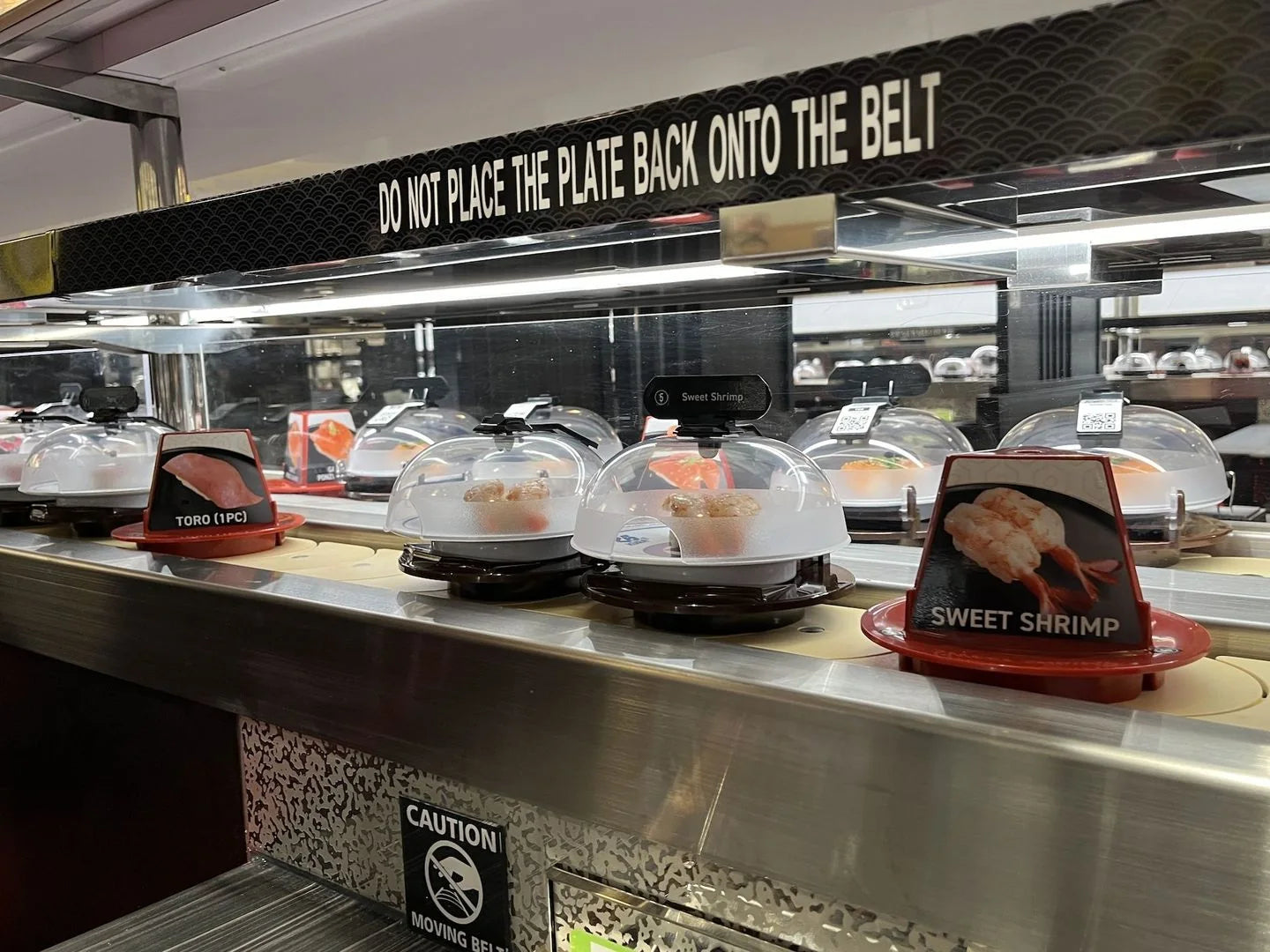
Continuous revolving sushi conveyor
A continuous revolving sushi conveyor circulates plates along a loop or track that passes guest seating. Its defining feature is repeated circulation rather than delivery to one selected table only. Physical systems can incorporate guards, supports, motors, and access points; plate design and presentation rules vary by operator. The circulating belt is distinct from a separately ordered express lane and from a train-like shuttle that makes targeted deliveries. Other components—tracking, protective covers, return slots, and plate washing—may be present, but are not automatically parts of every conveyor installation.

OBJECT REFERENCE
Express food delivery lane
An express delivery lane moves a guest's specific order from the kitchen or preparation area to a designated seat or station. It may run parallel to a revolving conveyor, use its own rail, or form the entire delivery system in a noncirculating sushi concept. Its distinguishing behavior is targeted, usually on-demand transport rather than the continual display loop of a kaiten conveyor. Track layout, vehicle type, stopping method, and ordering integration vary by maker; a sushi train is one recognizable shuttle form rather than a synonym for every express lane.

OBJECT REFERENCE
Sushi train delivery shuttle
A sushi train delivery shuttle is a small rail-guided vehicle—sometimes shaped like a train—that carries food to a target position. It belongs to the family of express-delivery equipment, not to the continuously circulating plate loop. Some shuttles move a tray along a dedicated lane and return after service; others are customized for different stations. The distinctive physical vehicle and stopping function are its identifiers. It should be shown with the rail and delivery position, not isolated as a decorative miniature train.
OBJECT REFERENCE
Conveyor sushi plate protective cover
A conveyor sushi plate cover encloses or shields a serving plate as it travels through a circulating display. A dome or fitted protective structure is the principal visual identifier, though opening mechanisms and tracking arrangements vary by system. The cover is not a standalone refrigerated container. It should be distinguished from an ordinary takeout lid, which is designed for packaged transport, and from a glass guard built into the conveyor infrastructure. The covered plate remains part of a coordinated serving system with its own cleaning and handling requirements.

OBJECT REFERENCE
Automated plate return unit
An automated plate-return unit accepts used dishes through a guest-facing slot or collection point and directs them into the restaurant's return or processing system. Some designs also support counting or identification, but those functions depend on the manufacturer. The defining object is the mechanized receiving and transfer assembly; it differs from an ordinary open bus tub or collection bin. Its presence is concept-dependent and should not be implied at all conveyor restaurants. Associated warewashing equipment is a separate system that handles cleaning after return.
Additional objects and equipment
Conveyor-specific sushi plate
A conveyor-specific sushi plate is designed for repeated handling on an automated belt or rail system. Certain programs associate plate types or markings with pricing and tracking; others do not.
Dedicated conveyor-sushi plate washer
A specialized conveyor-plate washer is warewashing equipment configured for repeated standardized plates. It is separate from the belt that delivers food and the slot that accepts used dishes.
Plate identification or RFID system
A plate identification system uses RFID, optical, barcode, or comparable sensing equipment to recognize or track serving plates. Actual hardware and information flow vary by manufacturer.
Plate counting and billing unit
A plate-counting or billing unit supports checkout based on plates collected or identified. It can be electronic or integrated into a return system, but it is not the conveyor itself.
Conveyor controller and emergency stop
A conveyor controller and emergency-stop device operate or stop the transport equipment. Safety controls and interfaces are system-specific components rather than independent sushi preparation tools.
Counterside hot-water tap
A guest-side hot-water tap is a fixed dispensing fixture provided at some counter seats for tea service. It is distinct from the kitchen's main hot-water dispenser.
Food ordering touch-panel terminal
A touch-panel ordering terminal records guest menu selections. It may control a targeted delivery system but is not a mechanical sushi train or belt.
Kitchen display screen
A kitchen display screen shows received orders and preparation status to staff. It is a restaurant information device, not physical sushi-making equipment.
Refrigerated retail sushi merchandiser
A refrigerated retail sushi merchandiser displays prepackaged items for customer self-selection. Its shelf and access design differ from a low chef-facing glass sushi case.
Retail shelf labeling and price display
A retail shelf label or price display identifies packaged items and pricing at the point of sale. Electronic shelf displays and printed holders are format variants.
Plate collection bin
A plate collection bin is a nonmechanized container for holding used plates before warewashing. It differs from an automated plate-return unit.
Continue into the specialist reference: Conveyor Belt Sushi & Automated Service Equipment; Conveyor & Kaiten Restaurants.
17 / ILLUSTRATED REFERENCE
Sushi Takeout, Catering & Retail Packaging
Sushi packaging is easiest to recognize by format and purpose: narrow roll containers, rectangular and square trays, round party platters, bowl containers, disposable boats, and the machinery used for retail sealing or labeling. Detailed container dimensions, interchangeability, and purchasing evidence belong to ERS's existing Sushi Takeout Containers Research. This chapter identifies the physical types and their related equipment.
Additional objects and equipment
Rectangular sushi takeout tray with lid
A rectangular takeout sushi container pairs a shallow rigid tray with a fitted lid for transporting an arranged sushi assortment. Materials, footprints, and lid heights vary across manufacturers.
Long-format sushi-roll container
A long-format roll container is an elongated tray suited to a single roll or linear arrangement. Its narrow footprint distinguishes it from a broad party platter.
Square sushi takeout container
A square sushi takeout box has nearly equal-length sides and a fitted cover. It is a distinct assortment footprint, not merely a shorter rectangular roll tray.
Round party-platter container
A round party-platter container is a large circular tray with a matching cover for group orders. Its round format differs from narrow roll packages and individual rectangular trays.
Disposable sushi boat
A disposable sushi boat provides boat-shaped single-use presentation or takeaway. It is not the durable wooden or lacquer boat used for repeated dine-in service.
Takeout bento container
A takeout bento container separates different foods into compartments for off-premises service. The format differs from a reusable dining bento box.
Sushi bowl container
A bowl-style sushi container holds chirashi, poke-style, or related rice-and-topping preparations in a covered bowl. It differs from a shallow nigiri display tray.
Takeout sauce cup and lid
A takeout sauce cup and lid is a small separate container for soy sauce or other accompaniments. Its seal is designed for transport rather than tabletop dipping.
Retail tray wrap and sealing machine
A tray-wrapping or sealing machine applies film or a specified closure to prepared retail packages. It is packaging equipment, not a sushi-forming machine.
Food label and label printer
A food-label printer produces product, order, or retail information labels. It is separate from the container and label stock it prints on.
Tamper-evident seal
A tamper-evident seal is a closure indicator used to show whether a package has been opened or disturbed. It differs from a structural lid that keeps food contained.
Disposable chopstick and paper sleeve
Disposable chopsticks and their paper sleeve form an off-premises dining accessory pair. The sleeve protects or presents the utensils but is not a food container.
Insulated delivery bag
An insulated delivery bag helps limit temperature change during transport. It is not an active refrigerated cabinet unless it includes a separate cooling system.
Chilled catering transport box
A chilled catering transport box holds finished or staged food during off-site movement. Insulated and active-cooling arrangements are distinct product types.
Mobile sushi preparation cart
A mobile sushi preparation cart is a moveable workstation used for events or temporary service. Equipment and utility requirements depend on how the cart is configured.
Portable refrigerated transport unit
A portable refrigerated transport unit provides active chilled holding for mobile or temporary service. It differs from a passive insulated carrying box.
Continue into the specialist reference: Sushi Takeout Containers Research; Catering, Banquet & Mobile Service.
Related ERS resources and equipment: Read Sushi Takeout Containers Research · Shop sushi takeout containers.
18 / ILLUSTRATED REFERENCE
Sushi Chef Uniforms, Hospitality & Restaurant Environment
The physical environment also includes objects of Japanese hospitality: guest hand towels, towel cabinets, entrance curtains, service trays, uniforms, and counter furnishings. These deserve precise identification without attributing a particular historical practice to every contemporary restaurant. Some are genuinely traditional forms; others are ordinary commercial hospitality equipment.
Principal objects
OBJECT REFERENCE
Oshibori guest hand towel
An oshibori is a prepared hand towel offered to a guest as part of Japanese hospitality service. Its identity lies in its service use: the towel is presented for hand cleaning rather than as a dining napkin or a chef's general-purpose wiping cloth. Cotton and disposable formats exist, with warm, cool, and ambient presentation depending on the operation. In restaurants, the towel may arrive folded, rolled, or on a small tray. It should be distinguished from a tenugui, the multipurpose cloth often associated with work, headwear, or wrapping.

OBJECT REFERENCE
Oshibori towel warmer or cooler
An oshibori towel warmer or cooler is an appliance used to hold prepared guest towels for service at a selected condition. A compact cabinet with shelves, baskets, or a fitted door is the usual recognizable form, though some devices warm and others cool. Its purpose is hospitality preparation, not food holding or rice cooking. It must be distinguished from the oshibori towels themselves and from the individual trays on which towels are offered. Actual loading and sanitation practices should follow the appliance and towel manufacturer's instructions.
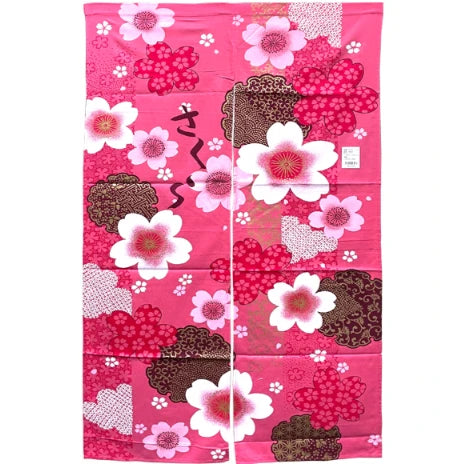
OBJECT REFERENCE
Noren entrance curtain
A noren is a hanging Japanese fabric curtain, commonly divided into vertical panels with openings along the lower portion. In restaurants it may mark an entrance, separate dining from working space, or create a visual threshold. Its physical identity comes from the hanging cloth panels rather than a fixed rigid partition. Materials, lengths, branding, and panel counts vary. A noren is not a chef's headband or hand towel, even though all may involve Japanese restaurant textiles.
Additional objects and equipment
Sushi chef coat or uniform jacket
A sushi chef coat or jacket is commercial workwear for kitchen preparation and visible counter service. It is a uniform garment, not protective refrigeration or preparation equipment.
Chef apron
A chef apron is a protective garment worn over work clothing during preparation. Length, pockets, material, and fastening style vary across kitchen environments.
Chef headwear or headband
Chef headwear includes caps, wraps, and headbands used for personal presentation and hair control. Specific historical or cultural names should not be applied indiscriminately to contemporary uniform accessories.
Tenugui multipurpose cloth
A tenugui is a rectangular Japanese cloth used for numerous practical purposes, including wrapping, work, or headwear. It differs from an oshibori prepared for guest hand service.
Guest oshibori tray
An oshibori tray is a small holder on which a prepared hand towel is presented to the guest. Its role is presentation, not heating or cooling the towel.
Counter service tray
A counter service tray carries completed food, small dishes, or beverage items to a guest. It differs from the sushi geta or decorative serving vessel used to present pieces themselves.
Menu holder or signage fixture
A menu holder or signage fixture displays ordering information at an entrance, table, or counter. Its physical construction may be stand-alone, wall-mounted, or integrated.
Counter seating and stools
Counter stools are guest seating arranged at the sushi bar. The proper relationship to counter height is a layout question, not an object definition.
Restaurant divider or screen
A restaurant divider or screen separates portions of a dining or service area. Folding screens and fixed partitions differ from a textile noren hanging in an opening.
Continue into the specialist reference: Sushi Chef Uniforms, Counter Service & Restaurant Environment; Craft & Objects.
19 / ILLUSTRATED REFERENCE
Cleaning, Sanitation, Equipment Care & Replacement Parts
Many supplies essential to keeping a sushi operation running are specific to the object they maintain. A machine-cleaning brush, manufacturer-approved anti-stick oil, knife stone, or wooden-vessel drying rack is not interchangeable with every other cleaning accessory. In this reference they are identified by physical use; model-specific maintenance procedures and replacement compatibility belong in the support guides and manufacturer instructions.
Additional objects and equipment
Sushi robot cleaning and disassembly tool kit
A sushi robot cleaning or disassembly kit contains brushes or special-purpose tools used to access and clean removable food-contact assemblies. Tool requirements depend on the exact machine model.
Robot food-contact anti-stick oil
Food-contact anti-stick oil for sushi equipment is a machine-specified operating consumable used where a manufacturer calls for it. Only the type approved for that model and food-contact application should be used.
Wooden hangiri care brush
A hangiri care brush is a cleaning implement selected for wooden rice vessels. Its purpose differs from a stiff metal scrubber that could damage a finished or unfinished wood surface.
Commercial warewashing machine
A commercial warewashing machine cleans reusable plates, trays, and smallwares through controlled wash and rinse cycles. Conveyor-type and undercounter formats serve different production volumes.
Dishwashing rack and drying station
Dish racks and drying stations hold reusable service items through washing, drainage, and storage. Plate racks and long-tool holders are separate arrangements within this family.
Knife maintenance kit
A knife-care kit may contain sharpening stones, protective sheaths, and suitable maintenance accessories. It is not a substitute for identifying the blade steel or grind of the knife.
Food-contact sanitizing test strip
Sanitizer test strips are chemical indicators used to check the concentration of specified sanitizing solutions. Different sanitizer types require matching test methods.
Machine brush set
A machine brush set contains shaped brushes intended to reach particular slots, rollers, or removable assemblies. Brush compatibility varies by machine design.
Conveyor service belt and wear component
Conveyor wear components include belts, chains, rollers, and other replacement parts within a sushi transport system. These are model-specific spares, not universally interchangeable products.
Woodware drying rack
A woodware drying rack holds washed wooden vessels or trays with space for airflow. It is supporting care equipment rather than a sushi-serving object.
Continue into the specialist reference: Sushi Equipment Maintenance, Cleaning & Replacement Parts; relevant equipment guides.
20 / ILLUSTRATED REFERENCE
Find Equipment by Sushi Restaurant Type
Sushi formats share many objects but combine them differently. The cross-references below show useful entry points for a given operation; they are not universal equipment checklists. A hand-roll bar, omakase counter, supermarket sushi department, and conveyor restaurant can all have different production and service systems.
Traditional sushi bar & full-service restaurant. Chef-facing sushi counter; Countertop refrigerated sushi showcase; Hangiri rice mixing vessel; Makisu sushi rolling mat; Sushi dining plate family.
Omakase / Edomae chef counter. Chef-facing sushi counter; Traditional covered wooden neta box; Yanagiba slicing knife; Hangiri rice mixing vessel; Sushi geta raised serving tray.
Hand-roll / temaki bar. Hangiri rice mixing vessel; Nori storage container; Makisu sushi rolling mat; Temaki hand-roll stand; Chef-facing sushi counter.
Conveyor / kaiten sushi. Automatic nigiri rice former; Continuous revolving sushi conveyor; Express food delivery lane; Conveyor sushi plate protective cover; Automated plate return unit.
All-you-can-eat / high-volume. Refrigerated preparation table; Commercial rice cooker; Automatic nigiri rice former; Commercial warewashing machine; Sushi dining plate family.
Fast-casual / express sushi. Chef-facing sushi counter; Refrigerated preparation table; Manual nigiri shaping mold; Rectangular sushi takeout tray with lid; Food label and label printer.
Takeout / delivery kitchen. Refrigerated preparation table; Automatic sushi rice sheeter; Rectangular sushi takeout tray with lid; Food label and label printer; Insulated delivery bag.
Supermarket / grab-and-go. Refrigerated retail sushi merchandiser; Retail tray wrap and sealing machine; Food label and label printer; Automatic nigiri rice former; Cold storage monitoring device.
Commissary / multi-location production. Specialized low-temperature seafood freezer; Rice-washing machine; Industrial sushi production line; Retail tray wrap and sealing machine; Portable refrigerated transport unit.
Hotel / casino / food hall. Chef-facing sushi counter; Lacquered sushi-serving oke; Sake warmer-dispenser; Oshibori guest hand towel; Mobile sushi preparation cart.
For complete concept-specific equipment schedules and purchasing decisions, continue to the corresponding restaurant guide and the main sushi restaurant guide.
Explore the ERS collection
Sushi Rice Tubs
Compare the assortment for this part of your service.
-
 Image unavailable
Wooden Sushi Rice Container (23.5"D x 6-1/2"H)
View details & options : Wooden Sushi Rice Container (23.5"D x 6-1/2"H)
Image unavailable
Wooden Sushi Rice Container (23.5"D x 6-1/2"H)
View details & options : Wooden Sushi Rice Container (23.5"D x 6-1/2"H)
-
 Image unavailable
Wooden Sushi Rice Container (26"D x 7"H)
View details & options : Wooden Sushi Rice Container (26"D x 7"H)
Image unavailable
Wooden Sushi Rice Container (26"D x 7"H)
View details & options : Wooden Sushi Rice Container (26"D x 7"H)
-
 Image unavailable
Wooden Sushi Rice Container (28.5"D x 7"H)
View details & options : Wooden Sushi Rice Container (28.5"D x 7"H)
Image unavailable
Wooden Sushi Rice Container (28.5"D x 7"H)
View details & options : Wooden Sushi Rice Container (28.5"D x 7"H)
-
 Image unavailable
Wooden Sushi Rice Container (29.5"D x 7"H)
View details & options : Wooden Sushi Rice Container (29.5"D x 7"H)
Image unavailable
Wooden Sushi Rice Container (29.5"D x 7"H)
View details & options : Wooden Sushi Rice Container (29.5"D x 7"H)
-
 Image unavailable
Rice Tub (CK36)
View details & options : Rice Tub (CK36)
Image unavailable
Rice Tub (CK36)
View details & options : Rice Tub (CK36)
-
 Image unavailable
11.75"D Wood Rice Tub (HK30-N)
View details & options : 11.75"D Wood Rice Tub (HK30-N)
Image unavailable
11.75"D Wood Rice Tub (HK30-N)
View details & options : 11.75"D Wood Rice Tub (HK30-N)
-
 Image unavailable
13"D Wood Rice Tub (HK33-N)
View details & options : 13"D Wood Rice Tub (HK33-N)
Image unavailable
13"D Wood Rice Tub (HK33-N)
View details & options : 13"D Wood Rice Tub (HK33-N)
-
 Image unavailable
14"D Wood Rice Tub (HK36-N)
View details & options : 14"D Wood Rice Tub (HK36-N)
Image unavailable
14"D Wood Rice Tub (HK36-N)
View details & options : 14"D Wood Rice Tub (HK36-N)


02 / SUSHI RESTAURANT REFERENCE
From object name to commercial decision
Name & form
English and Japanese terms, photographs and defining parts.
Material & variation
Construction, dimensions, finishes and model-specific differences.
Use & specification
Restaurant applications, care, purchasing questions and technical references.
NAME INDEX
English & Japanese Equipment Name Index
Names are indexed to their single canonical entry. A Japanese term may describe more than one object in commercial usage; where necessary the use is qualified in parentheses. Aliases point to the same entry rather than repeating the definition.
ANames
BNames
CNames
DNames
ENames
FNames
GNames
HNames
INames
JNames
KNames
LNames
MNames
NNames
ONames
PNames
RNames
SNames
TNames
UNames
WNames
YNames
Some specialist Japanese words have multiple transliterations or refer to different objects in different settings. The identifier and function in the linked entry take precedence over an ambiguous catalog label. The index is a reference aid, not a claim that every regional name has one fixed translation.
About This Reference, Its Evidence & Terminology
Eden Restaurant Supply has supplied Japanese and sushi restaurants from Los Angeles since 2002. That work crosses traditional Japanese serving objects, commercial preparation tools, contemporary equipment, and the practical demands of American restaurant supply. The encyclopedia is organized by an object's physical identity and professional function—not by the assortment of a single manufacturer or by an assumption that every sushi concept uses the same supplies.
We use established English and Japanese object names where they are well supported. A Japanese name may appear in multiple forms in American catalogs, and different products sometimes share a familiar commercial label. In those situations, the reference identifies the actual object and explains the difference rather than imposing an artificial universal translation. For equipment, the manufacturer's own documentation is the appropriate authority on machine functions and model-specific limitations. For heritage tools and specialty serving objects, commercial makers, specialist suppliers, and Japanese culinary references inform the descriptions.
This is an identification reference, not a substitute for manufacturer manuals, an installation plan, a food-safety program, or local regulatory approval. Where those matters determine a purchasing or operating decision, the relevant specialist guide provides the next step.
Selected technical and specialist references
- Hoshizaki America — Refrigerated Sushi Cases: equipment family, configurations and manufacturer documentation.
- AUTEC — Sushi Equipment Families: rice sheeting, forming, rolling and related production functions.
- TAIJI — Sake Warming Equipment: differences between warmer-dispensers and filled-vessel warmers.
- Kikkoman — Ohitsu Reference: traditional cooked-rice holding vessel.
- Nippon.com — Baran and Haran: modern dividers and their leaf antecedents.
- Sushi University — Traditional Sushi Tools: specialist utensil vocabulary and examples.
- ERS — Sushi & Omakase Tableware Guide: detailed dining ware and presentation reference.
- ERS — Sushi Takeout Containers Research: packaging formats, dimensions and purchasing research.
- ERS — Commercial Rice Equipment Research: cooking and holding systems, buying guidance and measured research.
For a particular machine model, vessel material, temperature-control instrument, or accessory, consult its current technical documentation and the applicable operating requirements.
Explore the Sushi Restaurant Guides
An object identified here belongs to a larger restaurant system. The related ERS guides develop specification, selection, equipment sizing, maintenance, and the differences among sushi concepts without repeating every definition in this encyclopedia.
Equip and design: Sushi Counters & Workstations · Sushi Display Cases · Seafood Refrigeration · Sushi Rice Systems · Sushi Knives · Manual Tools · Nori & Mise en Place · Sushi Robots · Conveyor Systems.
Present and serve: Traditional Servingware · Display Accessories · Sake Service · Tea & Beverages · Hot Kitchen · Uniforms & Hospitality · Catering & Mobile Service.
Plan and maintain: Complete Equipment Checklist · Production Capacity & Sizing · Equipment and Food-Safety Requirements · Maintenance & Replacement Parts · Replenishment & Standardization.
Understand the history and craft: Supplying American Sushi Restaurants Since 2002 · Craft and Objects of the Sushi Restaurant · How Sushi Equipment & Supplies Have Evolved.
Explore established original research: Sushi & Omakase Tableware · Sushi Takeout Containers · Commercial Rice Equipment.
Return to the Sushi Restaurant Equipment & Supplies Guide for the full commercial overview, or browse ERS sushi restaurant equipment and supplies to see the available assortment. For a complete restaurant project, ERS can help coordinate sourcing across equipment and supply categories.
CONTINUE THROUGH THE LIBRARY
Related equipment, concepts & decisions
- Sushi Rice Equipment, Hangiri & Shari Production
- Professional Sushi Knives, Cutting Boards & Sharpening
- Manual Sushi Preparation Tools & Specialty Utensils
- Traditional Sushi Servingware: Geta, Boats, Oke & Wooden Presentation
- The Craft and Objects of the Sushi Restaurant
Connected ERS reports
Plates, bowls, assortment and the complete tabletop.
The established ERS cooking and holding research.
Container formats and packaging decisions.
FROM REFERENCE TO RESTAURANT
Bring your project into focus.
Discuss the menu, service format, equipment list and supply needs with ERS.